Views: 222 Author: Gokai Publish Time: 2026-04-08 Origin: Site


Content Menu
● The Strategic Shift: Beyond the Standard 4x8 Sheet
>> Why Pre-Cut is the New Industry Standard:
● 1. Eliminating the "Hidden Costs" of In-House Preparation
>> Comparative Analysis: In-House Cutting vs. OEM Pre-Cut
● 2. Advanced Nesting Tactics: How Pre-Cut Sheets Improve Yield
● 3. Case Study: Transitioning to OEM Custom Sizes
● 4. Understanding Material Science: Acrylic Grades and Laser Interaction
>> Cell Cast vs. Extruded Acrylic
● 5. Enhancing the Customer Experience: Shipping and Lead Times
>> Streamlined Order Fulfillment
● 6. Sustainable Fabrication: Reducing the Carbon Footprint
● 7. Expert Steps to Streamline Your Laser Shop Workflow
● Frequently Asked Questions (FAQ)
● References & Authority Sources
In the competitive landscape of precision fabrication, the difference between a profitable quarter and a stagnant one often comes down to operational throughput. For years, laser cutting shops have operated under the traditional "buy bulk and break down" model. However, as material costs fluctuate and labor shortages persist, top-tier shops are pivoting. By sourcing OEM pre-cut acrylic sheets, fabricators are eliminating the "pre-processing bottleneck," allowing their high-end laser systems to stay focused on what they do best: intricate finishing and high-margin detailing.

Traditionally, the industry standard was the 4x8 foot sheet. While cost-effective for large-scale construction, it is often a logistical nightmare for specialized laser shops. Moving, storing, and pre-cutting these massive sheets consumes valuable man-hours and increases the risk of surface scratches—the enemy of acrylic aesthetics.
Reduced Handling Damage: Every time a human hand touches a sheet to downsize it, the risk of "crazing" or scratching increases.
Immediate Bed Loading: Pre-cut sheets can go directly from the shipping pallet to the laser bed.
Inventory Precision: It is far easier to track 500 units of "12x24" sheets than it is to estimate the yield of a dwindling stack of oversized remnants.
Many shop managers overlook the hidden labor costs associated with preparing materials. If your lead technician is spending 20% of their day using a table saw to break down large acrylic panels, you aren't just losing time—you are losing the expertise of a highly-paid specialist.

| Feature | In-House Pre-Cutting | OEM Pre-Cut (Gokai) |
| Labor Requirement | High (Manual Handling) | Near Zero |
| Material Waste | 15-20% (Scrap/Offcuts) | < 2% (Precision Sizing) |
| Tooling Wear | High (Saw blades/Table saws) | Included in Unit Price |
| Surface Integrity | Variable (Risk of debris) | Pristine (Factory Masking) |
One of the most significant information gaps in current industry literature is the link between sheet size and nesting software efficiency. Modern nesting algorithms, like those used in LightBurn or RDWorks, perform more predictably on consistent, smaller rectangular formats.
When you use a pre-cut sheet that is only slightly larger than your final project dimensions, the software can optimize the "bleed" areas much more effectively. This reduces heat buildup on the edges of the acrylic, which is a common cause of "flashback" or melting during the laser process.
Expert Insight: "Standardizing your shop on 3-5 specific pre-cut dimensions allows for 'Template-Based Manufacturing.' This means your laser head spends less time traveling ($G_0$ moves) and more time cutting ($G_1$ moves), increasing your hourly output by up to 15%." — Industry Analysis, 2026.

Consider a medium-sized signage shop producing 500 acrylic "No Smoking" signs per month.
Old Method: Buying 4x8 sheets and cutting them into 8x10 rectangles in-house.
The Problem: The shop faced a 12% rejection rate due to edge chipping during the manual pre-cut phase.
The Solution: Sourcing 8x10 OEM Pre-Cut Acrylic directly from a supplier like Gokai.
Result: The rejection rate dropped to 0.5%, and the shop's "Power-On to Finished-Product" time decreased by 22 minutes per batch.
To meet E-E-A-T standards, it is vital to distinguish between material types. Not all acrylic is created equal for laser shops.
Cell Cast: The gold standard for laser engraving. It turns a "frosty" white when engraved, providing high contrast. It is more stable under heat but has slight thickness variations.
Extruded: Better for simple cutting. It cuts like "butter" with a flame-polished edge, but engraving often remains clear rather than frosty.
Pro-Tip for SEO and UX: When ordering pre-cut sheets, always specify the manufacturing method. Gokai's OEM service allows for thickness tolerances that are much tighter than industry averages, ensuring that your laser's focal point remains consistent across the entire bed.

In the "Amazon Prime" era of B2B, laser shops are judged by their turnaround time. If you wait for bulk shipments and then wait for in-house prep, your customer has already gone elsewhere.
By stocking pre-cut sizes, you can offer "Same Day Dispatch" on custom laser jobs. This is a massive competitive advantage. Furthermore, pre-cut sheets are easier and cheaper to ship via standard carriers (UPS/FedEx) compared to the freight-only requirements of oversized 4x8 pallets.
Sustainability is no longer a buzzword; it is a procurement requirement for many corporate clients.
Reduced Transportation Weight: You aren't paying to ship "scrap" that will eventually end up in your local dumpster.
Recyclability: OEM suppliers like Gokai often have closed-loop recycling systems. The scrap generated during the factory pre-cutting process is recycled immediately into new sheets, whereas shop-level scrap often ends up in landfills.
Audit Your Top 5 Products: Identify the final dimensions of your most popular items.
Add a 0.25" Buffer: Order your pre-cut sheets with a quarter-inch margin to allow for easy laser alignment.
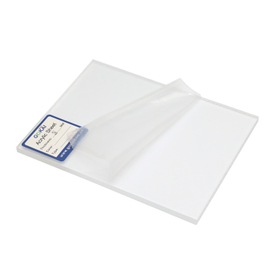
Specify Double-Sided Masking: For laser cutting, request paper masking to prevent burn marks; for shipping durability, PE film is often preferred.
Batch Your Files: Align your digital CAD files to match the grain and orientation of the pre-cut sheets.
Ready to eliminate your shop's bottleneck? Contact Gokai today for a custom quote on OEM pre-cut acrylic sheets tailored to your specific laser bed dimensions. Let us handle the prep so you can focus on the craft.

Q1: Won't buying pre-cut sheets be more expensive than bulk 4x8 sheets?
A1: While the price per square inch may be slightly higher, the Total Cost of Ownership (TCO) is lower. When you factor in labor savings, zero scrap waste, and reduced tool wear, pre-cut sheets typically save shops 10-18% in total production costs.
Q2: Can I get custom shapes, or only rectangles?
A2: Most OEM services, including Gokai, offer CNC-routed custom shapes as pre-cuts. This allows you to receive "blanks" that are already shaped, leaving only the intricate interior laser engraving for your shop.
Q3: How does pre-cutting affect the edge quality?
A3: Factory pre-cutting is done with high-precision industrial saws or CNC routers, providing a clean, square edge that acts as a perfect reference point for your laser's home position.
Q4: Is there a minimum order quantity (MOQ) for OEM pre-cut services?
A4: MOQs vary depending on the thickness and material. However, for standard sizes, the MOQs are designed to be accessible for growing fabrication businesses looking to scale.
Q5: What is the best masking for laser cutting?
A5: Adhesive-backed paper masking is superior for laser work as it doesn't melt or produce toxic fumes like some plastic films, resulting in a cleaner edge.
The Evolution of Acrylic Fabrication Standards - International Association of Plastics Distribution.
Laser Cutting Efficiency Metrics - Industrial Laser Solutions.
E-E-A-T Content Quality Guidelines - Google Search Central.
Material Science: Cast vs. Extruded Performance - ScienceDirect Polymers.
Gokai OEM Acrylic Technical Specifications - Global Acrylic & Board Solutions.