Views: 255 Author: Gokai Publish Time: 2026-08-21 Origin: Site


Content Menu
● Why PVC Foam Board Is Popular for OEM Projects
>> Moisture-resistant closed-cell structure
>> Excellent fabrication flexibility
● PVC Foam Board Types: Which Grade Fits Your Application?
● How to Choose PVC Foam Board Density and Thickness
>> The most important specification questions
● PVC Foam Board Applications by Industry
>> Signage, digital printing and displays
>> Furniture, cabinets and interior decoration
>> Construction and architectural trim
>> Transportation, marine and industrial fabrication
● Our OEM Quality-Control Checklist
>> A practical incoming-inspection process
● Fabrication and Installation Tips
>> Printing, painting and bonding
● Sustainability and Responsible End-of-Life Planning
● Partner With a PVC Foam Board OEM Manufacturer
>> 1. Is PVC foam board waterproof?
>> 2. Can PVC foam board be used outdoors?
>> 3. What is the difference between PVC Celuka board and free-foam board?
>> 4. Can you print directly on PVC foam board?
>> 5. Can PVC foam board be cut with standard tools?
>> 6. Is PVC foam board recyclable?
>> 7. What information do I need for an OEM PVC foam board quote?
When global buyers source PVC foam board, they are rarely looking for "a plastic sheet" alone. They need a reliable material solution: a board that prints cleanly, machines consistently, survives the intended environment, arrives flat and protected, and can be customized for a specific product, market, or production process.
As a PVC foam board OEM manufacturer, we work with sign makers, display fabricators, furniture producers, construction-material distributors, and project contractors. In practice, the best PVC foam sheet is not always the densest or the lowest-priced option. It is the board whose density, surface finish, thickness tolerance, color, flame-performance requirement, and packaging match the final application.
This guide explains how PVC foam board is made, where it performs best, how to compare grades, and what international buyers should verify before placing an OEM order.

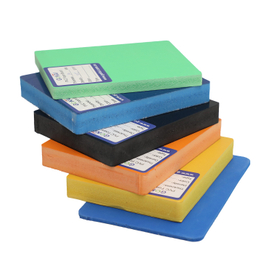
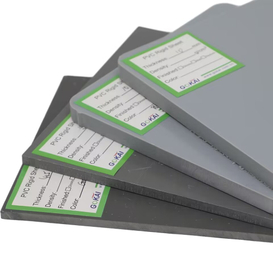
PVC foam board, also called expanded PVC sheet, foamed PVC board, PVC foam sheet, or rigid PVC foam sheet, is a lightweight cellular plastic panel made primarily from polyvinyl chloride resin. During production, a controlled foaming process creates a closed-cell internal structure that reduces weight while retaining rigidity and a smooth printable surface.
Unlike ordinary paper foam board, PVC foam board is designed for demanding commercial applications. It is widely used for signage, digital printing, exhibition displays, decorative panels, cabinet components, partitions, and fabricated industrial parts.
A typical board has three functional characteristics:
- A smooth outer surface for printing, painting, lamination, or vinyl application
- A closed-cell foam core that helps reduce weight and resist moisture
- A rigid PVC structure that can be cut, drilled, routed, engraved, bonded, or mechanically fastened
For buyers, the central benefit is simple: PVC foam board provides a practical balance between appearance, fabrication flexibility, and cost.
From an OEM perspective, PVC foam sheet has become a preferred substrate because it can be adapted to many product categories without requiring a completely different base material.
Compared with many solid plastic sheets, plywood, MDF, or metal panels, expanded PVC can reduce handling weight significantly. This can make fabrication, installation, packaging, and international shipping more manageable.
However, buyers should avoid treating "lightweight" as a substitute for structural engineering. PVC foam board is excellent for signs, display panels, trim, and non-load-bearing components. It should not be specified as a structural building material unless the relevant design, local code, loading requirement, and certified test data support that use.
The closed-cell structure helps PVC foam board resist water absorption and humidity-related swelling. That makes it useful in applications where wood-based panels may warp, rot, or require frequent sealing.
Common examples include:
- Indoor and outdoor signs
- Bathroom or kitchen decorative panels
- Temporary construction-site signage
- Retail displays
- Marine-interior decorative parts
- Cabinet panels in humid environments
For outdoor use, moisture resistance is only one part of the specification. Buyers should also evaluate UV stabilization, thermal movement, graphics protection, mounting method, and expected exposure time.
A major reason fabricators choose PVC foam board is that it can be processed with common tools and equipment. Depending on board grade and thickness, it can be cut with saws, drilled, CNC-routed, engraved, thermoformed, bonded, painted, screen printed, or direct-printed.
For a sign shop, this means one board can support flat-panel printing, dimensional lettering, routed logos, and display components. For an OEM buyer, it means fewer material changes across a product range.
Not all PVC foam boards have the same surface quality, density profile, or performance. Selecting the right type early reduces quality disputes, material waste, and unnecessary cost.
| PVC foam board type | Typical characteristics | Best-fit applications | OEM consideration |
|---|---|---|---|
| Free-foam PVC board | Uniform cellular structure; economical; versatile | Indoor signs, displays, crafts, temporary graphics | Good all-purpose choice when premium surface hardness is not required |
| PVC Celuka board | Denser, harder surface skin with foam core | CNC routing, engraving, cabinetry, decorative panels | Better surface quality and edge definition for higher-value products |
| Co-extruded PVC foam board | Foam core with denser solid PVC skins | Premium signage, durable panels, specialized fabrication | Suitable when surface strength, flatness, or finish consistency is a priority |
| Laminated PVC foam board | Foam board combined with decorative or protective facing | Interior decoration, furniture panels, retail fixtures | Confirm laminate adhesion, edge treatment, and thermal compatibility |
Free-foam board is often selected for cost-sensitive applications. It offers a uniform cellular structure and good processability for cutting, printing, and basic fabrication.
It is a practical option for indoor POP displays, temporary advertising panels, event graphics, model making, and standard signage. When the final product requires high-resolution graphics or fine engraved detail, buyers should request surface samples rather than relying only on photos.
PVC Celuka board is valued for its denser surface layer. In our experience, it is commonly preferred for applications where the visible surface and machined edge matter as much as weight reduction.
It can be a stronger choice for:
- Routed letters and logos
- Engraved signs
- Furniture and cabinet components
- Wall and decorative panels
- Display fixtures
- CNC-machined parts
The higher surface density often improves the appearance of cut edges and helps maintain detail in engraving. It may also cost more than standard free-foam board, so the business case is strongest when appearance, machining precision, or durability justify the upgrade.
Co-extruded PVC foam board uses a foam core with denser outer layers. This construction can provide a smoother, more consistent surface for demanding printing, finishing, or fabrication applications.
For OEM programs, co-extruded material may be appropriate when buyers need:
- A more refined surface finish
- Better resistance to surface damage during handling
- Improved board flatness
- Consistent color and appearance across repeat orders
- Premium display or architectural-panel performance
The important question is not whether co-extruded board is "better" in every case. It is whether its higher performance aligns with the product's required service life and selling price.
Density and thickness influence weight, rigidity, machining performance, surface feel, and cost. They should be specified together, not independently.
A lower-density board can be ideal for lightweight indoor displays. A higher-density grade may be more appropriate for CNC routing, durable signs, or panels that need stronger screw retention.
| Project requirement | Practical selection direction |
|---|---|
| Low-weight indoor display | Lower-to-medium density; thinner board where rigidity is sufficient |
| UV-printed retail sign | Medium density; white smooth surface; protective film recommended |
| CNC-routed letters or logos | Medium-to-high density; Celuka or co-extruded surface preferred |
| Cabinet or decorative panel | Medium-to-high density; confirm thickness tolerance and surface finish |
| Outdoor sign | UV-stabilized formulation; confirm mounting design and exposure requirement |
| Custom export distribution | Stable quality grade; strict packaging; repeatable sheet dimensions |
Before requesting a quotation, define these points:
1. What is the final application?
Indoor display, outdoor sign, furniture panel, construction trim, printing substrate, or industrial component?
2. What thickness is required?
Thickness should be based on panel size, support spacing, fabrication method, and desired appearance—not habit alone.
3. What density range is acceptable?
A target density helps ensure consistent weight, rigidity, and machining behavior.
4. What surface finish is needed?
Matte, smooth, glossy, printable, laminated, or protective-film-covered surfaces can affect cost and lead time.
5. What environmental exposure will the board face?
UV, rain, humidity, chemicals, heat, transport vibration, and cleaning agents all matter.
6. What OEM customization is needed?
Color, size, thickness, logo film, printed protective film, private-label packaging, or special pallet configuration may be available.
PVC foam board's versatility comes from its balance of smooth surface quality, moisture resistance, low weight, and straightforward fabrication.
This is one of the largest application areas for expanded PVC sheets. White PVC foam board can be used for UV printing, screen printing, vinyl mounting, painted graphics, and routed dimensional signs.
Typical uses include:
- Retail point-of-purchase displays
- Storefront signage
- Exhibition and trade-show panels
- Directional and wayfinding signs
- Real-estate boards
- Promotional displays
- Menu boards and interior branded graphics
- CNC-cut lettering and logos
For print projects, buyers should test ink adhesion, color appearance, surface cleanliness, board flatness, and protective-film removal before mass production. A board that looks smooth in a warehouse may still behave differently under a specific UV, solvent, latex, or screen-printing system.
PVC foam board can be used in selected furniture and interior applications, particularly where moisture resistance is more valuable than the natural look of wood.
Potential uses include cabinet panels, decorative wall panels, display fixtures, shelving components, partitions, and interior trim. For these projects, surface quality, screw holding, edge finishing, and long-term dimensional stability should be assessed through actual prototypes.
PVC foam board can be fabricated into non-structural architectural elements, interior wall coverings, trim components, ceiling panels, and moisture-resistant decorative parts.
For construction-related orders, buyers should verify the exact standards required in their target market. Do not assume that a generic PVC foam board automatically meets local building, fire, smoke, or certification requirements.
Weight-sensitive applications may use PVC foam sheet for interior panels, compartment dividers, display boards, equipment covers, decorative parts, and non-structural fabricated components.
In these industries, OEM buyers should evaluate vibration resistance, temperature range, chemical exposure, fastening design, and flame-performance requirements at the project level.

A reliable PVC foam board supplier should not only offer sizes and prices. They should have a repeatable method for controlling batch consistency.
From the factory side, the most useful quality checks include the following:
- Thickness tolerance: Measure at multiple points across each sheet, not only at the edge.
- Density consistency: Confirm that weight and foam structure remain within the agreed range.
- Surface inspection: Check for pits, scratches, contamination, visible cells, dents, and color variation.
- Flatness control: Inspect sheets on a flat reference surface before packing.
- Edge quality: Confirm clean, straight edges with no major compression damage.
- Color consistency: Compare against an approved sample or color standard for repeat OEM orders.
- Protective-film integrity: Ensure film adheres properly but can be removed cleanly.
- Packaging strength: Use appropriate interleaving, corner protection, pallet support, and moisture protection for export transport.
For distributors and large buyers, we recommend a simple receiving protocol:
1. Inspect the outer packaging and pallet condition before unloading.
2. Check sheet count, dimensions, thickness, and color against the purchase order.
3. Inspect several boards from the top, middle, and lower pallet positions.
4. Test one or more sheets using the actual cutting, printing, routing, or bonding process.
5. Record defects with photographs and lot information before the material enters production.
This process protects both buyer and supplier. It also turns vague complaints such as "the board is not good" into measurable quality data.

PVC foam board is easy to process, but poor handling can still damage a good sheet.
Use sharp tools and stable sheet support. Dull blades can produce rough edges, heat buildup, or chipping. For CNC routing, select tooling and feed settings based on sheet density, thickness, and required edge finish.
Always make a trial cut before production, especially when switching from one board grade to another.
Avoid over-tightening screws. Excessive compression can create surface dimples or weaken the cellular core around the fastener.
For larger panels or outdoor installations, account for thermal expansion and contraction in the mounting design. A board's material properties are only one part of a successful installation; the fastening pattern and support structure are equally important.
Clean the surface before printing, painting, or applying vinyl. Verify the compatibility of inks, adhesives, cleaners, and solvents on a sample first.
Some aggressive solvents can soften or damage PVC surfaces. Material compatibility testing is inexpensive compared with the cost of reworking a full production run.
PVC foam board can deliver a long service life, which may reduce replacement frequency in suitable applications. Its lower weight can also support more efficient handling and transportation than heavier panel materials.
At the same time, responsible sourcing requires a realistic view of PVC's environmental profile. PVC is not biodegradable, and end-of-life recycling options vary by region, collection infrastructure, contamination level, and local regulations. Buyers should avoid unsupported "fully eco-friendly" claims.
A more credible approach is to:
- Specify the longest appropriate service life for the application
- Reduce waste through optimized cutting plans
- Separate clean production offcuts where local recyclers accept them
- Ask suppliers about recycled-content options where technically appropriate
- Use local recycling or specialized disposal channels at end of life
- Consider PVC-free alternatives when a project's policy or environmental criteria require them
Choosing a PVC foam board supplier is not simply about comparing price per sheet. The better question is: Can the supplier consistently produce the board your application needs, protect it during export, and support repeat orders with stable quality?
For global OEM customers, we can support customized PVC foam board programs with options for thickness, density, sheet size, color, surface type, protective film, packaging, and private-label requirements.
Send us your target application, board specifications, dimensions, monthly volume, destination market, and any required certifications. We will help you identify a suitable PVC foam board grade and prepare samples for evaluation before production.

PVC foam board has a closed-cell structure and is generally highly resistant to moisture. It does not behave like MDF or plywood, which can swell when exposed to water. However, overall outdoor performance also depends on UV exposure, mounting design, surface treatment, and the specific grade selected.
Yes, PVC foam board is used for many outdoor signs and panels. For long-term exposure, specify a UV-stabilized grade and evaluate the expected service environment. Dark colors, direct sunlight, wind load, installation method, and graphic protection can affect long-term appearance.
Free-foam board generally has a more uniform foam structure, while PVC Celuka board has a denser outer surface and foam core. Celuka board is often preferred for cleaner CNC edges, engraving, and applications needing a stronger surface finish.
Yes. PVC foam board is commonly used for UV printing, screen printing, and vinyl-mounted graphics. Buyers should test the actual ink system, board surface, curing conditions, and color requirements before full-scale production.
In many cases, yes. It can be cut, drilled, and routed using suitable woodworking or plastic-fabrication equipment. Tool choice, blade sharpness, speed, sheet support, and board density affect the final edge quality.
PVC foam board may be recyclable where suitable PVC collection and processing channels exist. However, access to recycling varies by market, and printed, laminated, contaminated, or mixed-material boards may be more difficult to process. Confirm local recycling requirements before making environmental claims.
Provide the thickness, density, sheet size, color, board type, surface requirement, protective-film requirement, packaging preference, estimated quantity, destination port or country, and any requested certifications or test standards.
1. Laird Plastics. "The Complete Guide to PVC Foam Board." Covers composition, density ranges, processing options, applications, material comparisons, and quality considerations.
[https://lairdplastics.com/resources/the-complete-guide-to-pvc-foam-board/] [lairdplastics]
2. Piedmont Plastics. "Expanded Foam PVC: Lightweight Rigid PVC Foam." Product information describing expanded foam PVC applications and cited compliance categories including UL-94, REACH, and RoHS for applicable products.
[https://www.piedmontplastics.com/products/expanded-foam-pvc] [piedmontplastics]
3. A&C Plastics. "Expanded PVC Sheets for Signage & Fabrication." Product information on expanded PVC applications and stated flammability-related product specifications for its material range.
[https://www.acplasticsinc.com/product-category/shop-by-materials/pvc/expanded-pvc/] [acplasticsinc]
4. ONE Plastic. "Guide to Printing on PVC Foam Boards." Practical overview of PVC foam board printing preparation and UV/screen-printing workflows.
[https://one-plastic.com/Guide-to-Printing-on-PVC-Foam-Boards-id47868727.html] [one-plastic]
5. Graphic Warehouse. "Foam PVC for Signage & Display Graphics: Environmental Impacts and Alternatives." Discusses disposal, recycling, PVC-free alternatives, and environmental trade-offs in signage applications.
[https://graphicwarehouse.co.uk/blog/2023/04/25/foam-pvc-for-signage-display-graphics-environmental-impacts-the-alternatives/] [graphicwarehouse.co]
6. Boardway Building. "Technical Data Sheet (TDS) of PVC Foam Board." Example of manufacturer-provided technical data and third-party laboratory testing context; performance values must be confirmed against the final supplied grade.
[https://www.boardwaybuilding.com/n1879214/Technical-Data-Sheet-TDS-of-PVC-Foam-Board.htm] [boardwaybuilding]