Shanghai Gokai Industry Co,.Ltd.
Call Us: +86-18918606548
Call Us: +86-18918606548
- Product Name
- Product Keyword
- Product Model
- Product Summary
- Product Description
- Multi Field Search
Views: 258 Author: Gokai Publish Time: 2026-11-13 Origin: Site


Content Menu
● How Data Center Aisle Containment Improves Airflow
>> Cold Aisle Containment vs. Hot Aisle Containment
● Polycarbonate vs. PVC Sheet for Aisle Containment Panels
>> Solid Polycarbonate Sheet for Clear Containment Panels
>> Twinwall Polycarbonate for Lightweight Panels
>> PVC Sheet Requires a More Specific Specification
● Fire and Smoke Requirements: Check the Evidence Before Ordering
>> ASTM E84 and UL 94 Are Different Evaluations
>> Review the Complete Containment Arrangement
● Turn Aisle Containment Into Measurable Cooling Improvements
>> Commission the Enclosure Before Changing Controls
● A Practical Installation Checklist for Polycarbonate Containment Panels
>> Confirm Cleaning Compatibility
>> Preserve Maintenance Access
● An OEM Procurement Checklist for Global Buyers
>> Approve a Representative Sample
● Discuss Your OEM Aisle Containment Panel Requirements With Gokai
>> What Is the Main Purpose of Data Center Aisle Containment?
>> Is Polycarbonate Better Than PVC for Containment Panels?
>> Does Every Polycarbonate Sheet Have the Same Fire Rating?
>> Can Aisle Containment Guarantee Energy Savings?
>> Can PVC Foam Board Replace Clear PVC Panels?
>> What Should I Send Gokai for an OEM Inquiry?
Data center aisle containment separates cold supply air from hot equipment exhaust. For buyers comparing polycarbonate sheet and PVC sheet, the challenge is not simply finding a transparent panel. It is specifying a barrier that controls airflow, fits the supporting frame, accommodates maintenance, and satisfies project-specific safety requirements.
At Gokai, we supply polycarbonate and PVC sheets and offer OEM services for global customers. Our recommendation is to evaluate the panel, installation method, and operating environment together.

Servers draw cooling air through their inlets and discharge warmer air through their exhausts. Without effective separation, hot exhaust can return to equipment inlets, while conditioned air bypasses the equipment it should cool.
Containment uses doors, roof panels, partitions, and seals to reduce this mixing. However, panels alone cannot resolve every airflow problem. Unused rack spaces, cable openings, missing floor seals, and poorly balanced air delivery can undermine the enclosure.
A successful project therefore connects three activities:
1. Separate supply and exhaust air.
2. Identify and reduce unintended leakage.
3. Adjust cooling operation using measured conditions.
Containment enables efficiency improvements. It does not guarantee lower electricity consumption if cooling settings remain unchanged.
Cold aisle containment encloses the space supplying air to rack fronts. Hot aisle containment encloses the exhaust side and directs warmer air toward the cooling return.
| Selection factor | Cold aisle containment | Hot aisle containment |
|---|---|---|
| Enclosed airflow | Cold supply air | Hot exhaust air |
| Design priority | Deliver sufficient air to equipment inlets | Maintain an effective exhaust return path |
| Panel consideration | Visibility, access, and leakage control | Temperature suitability, access, and leakage control |
| Retrofit question | Can the supply arrangement support the enclosure? | Can the return arrangement capture enclosed exhaust? |
Neither approach is universally superior. Existing cooling infrastructure, rack arrangement, maintenance practices, and fire-protection design should determine the choice.
Material names are starting points, not complete specifications. Solid polycarbonate, multiwall polycarbonate, rigid clear PVC, and PVC foam board have different structures and performance characteristics.
Compare the actual grade and thickness rather than assuming every product within a material family performs alike.
| Material | Potential application | Main selection advantage | What buyers should verify |
|---|---|---|---|
| Solid polycarbonate sheet | Transparent doors and partitions | Visibility and impact resistance | Fire documentation, support spacing, cleaning compatibility |
| Twinwall polycarbonate sheet | Lightweight enclosure panels | Low weight and cellular construction | Edge closure, stiffness, appearance, tested configuration |
| Rigid clear PVC sheet | Transparent partitions in suitable conditions | Visibility and fabrication options | Service temperature, impact performance, fire documentation |
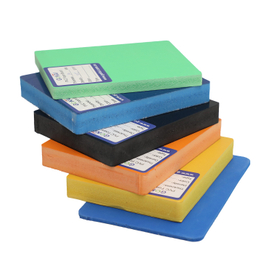
| PVC foam board | Selected opaque components | Opaque finish and fabrication flexibility | Structural suitability, temperature limits, permitted application |
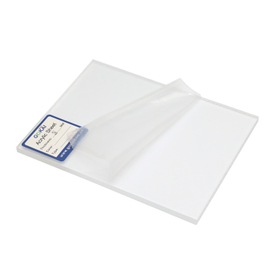
Solid polycarbonate is a practical candidate where operators need clear sightlines and resistance to accidental impact.
Visibility can help technicians inspect equipment without opening the enclosure. Nevertheless, scratch resistance, chemical resistance, and fire performance depend on the selected product.
Do not describe every polycarbonate sheet as fire-rated or suitable for unrestricted overhead use. Request evidence for the proposed grade, thickness, and application.
Twinwall polycarbonate uses a cellular structure to reduce weight. It can be useful where panel handling and enclosure weight matter.
Its appearance differs from solid glazing, so confirm whether the project requires clear inspection views or simply light transmission.
Detail the cut edges carefully. Open channels can collect contamination, while unsuitable closure materials may complicate cleaning or maintenance. Follow the selected product's guidance rather than treating all multiwall sheets identically.
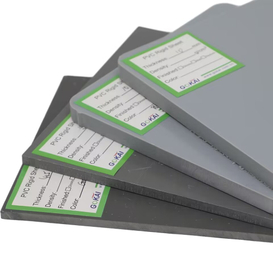
"PVC sheet" can mean rigid clear sheet, flexible material, or foam board. These are not interchangeable.
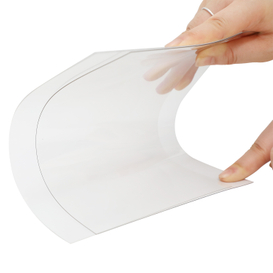
For transparent containment, identify rigid clear PVC explicitly. Check its documented operating-temperature range against the expected conditions, particularly near hot exhaust paths.
PVC foam board may suit some opaque components, but it should not be presented as an automatic replacement for transparent rigid PVC or polycarbonate glazing.
Fire-performance language is one of the easiest places for a material specification to become misleading.
A statement such as "flame-retardant plastic" does not explain the test method, specimen thickness, mounting arrangement, or conditions of acceptance.
ASTM E84 evaluates surface-burning characteristics, including flame spread and smoke development. UL 94 evaluates the flammability of plastics used in parts for devices and appliances under defined small-scale test conditions.
A UL 94 V-0 classification is not a substitute for a project requirement calling for ASTM E84 evidence.
Likewise, a surface-burning classification does not establish an hourly fire-resistance rating or prove that a material is noncombustible.
Before approving a purchase, request:
- The exact product designation and manufacturer.
- Tested thickness and applicable color or formulation.
- The test method and complete report.
- Mounting details and any stated limitations.
- Confirmation that the evidence addresses the project specification.
Do not transfer another manufacturer's test results to a Gokai product. Material resemblance is not certification equivalence.
An enclosure can affect the conditions under which detection and suppression systems operate.
Roof panels, doors, and partitions must therefore be reviewed alongside fire protection, emergency access, and exit arrangements. A compliant sheet does not automatically create an approved containment system.
Have the responsible project professionals confirm requirements under the applicable codes and adopted editions before installation.
A common procurement mistake is requesting a guaranteed savings percentage before documenting baseline conditions.
Savings depend on the existing airflow problems, cooling equipment, control strategy, and IT load. A facility with substantial mixing may offer different opportunities from one already operating efficiently.
Before installation, record:
- Rack inlet temperatures at representative positions and heights.
- IT electrical load.
- Cooling-unit power where separately measurable.
- Fan settings and supply-air conditions.
- Recurring hot spots and operating alarms.
- Relevant outdoor conditions and equipment operating modes.
Whole-facility efficiency metrics can provide context, but they do not isolate the effect of containment. Changes in IT load or weather can obscure the comparison.
After installation, check doors, panel joints, rack gaps, cable openings, and return-air connections.
Then let the facility team adjust airflow or supply-air settings gradually while monitoring equipment inlet conditions. Avoid increasing temperatures simply because the enclosure appears complete.
The acceptance question is practical: can the facility maintain suitable equipment conditions with less cooling effort?
That requires measurements, not an assumed percentage copied from another installation.
Fabrication quality matters, but installation details determine whether panels remain serviceable.
Polycarbonate expands and contracts with temperature changes. If the frame prevents movement, panels can distort or develop stress.
Ask the material supplier and system designer to confirm:
- Expansion allowances for the actual panel dimensions.
- Suitable hole or slot details.
- Edge engagement and support requirements.
- Gasket and sealant compatibility.
- Fastening methods that avoid excessive restraint.
Do not apply a universal gap or fastener spacing to every product. The correct detail depends on the sheet, frame, temperature range, and loading.
A transparent panel that becomes scratched or chemically damaged loses practical value.
Use the selected manufacturer's cleaning instructions. Mild detergent, suitable water temperature, and soft cleaning materials are commonly recommended, but compatibility must be checked for the actual product.
Also review sealants, adhesives, gaskets, and any nearby flexible materials. Chemical compatibility depends on contact conditions, temperature, and stress—not merely the name of the polymer.
Containment should support routine operations rather than obstruct them.
Check door clearance, removable-panel access, equipment replacement routes, and how technicians will inspect seals. Include spare-panel identification in the maintenance documentation so replacements match the approved specification.
For international projects, purchasing accuracy depends on translating engineering requirements into an unambiguous request.
When approaching Gokai for OEM sheet supply, provide the following information:
| Requirement | Information to include |
|---|---|
| Application | Door, partition, roof panel, or opaque component |
| Material | Solid polycarbonate, twinwall polycarbonate, or a defined PVC product |
| Dimensions | Finished sizes, tolerances, and thickness |
| Appearance | Transparency, color, surface finish, and inspection expectations |
| Environment | Expected temperatures and cleaning chemicals |
| Compliance | Required standards and supporting documentation |
| Fabrication | Drawings, holes, cutouts, and edge requirements |
| Logistics | Quantity, destination, packaging, and labeling needs |
Discuss the availability of each customization before finalizing the order. An OEM request should not imply that every size, formulation, fabrication service, or certification is already available.

A sample review can identify issues that a quotation cannot.
Where practical, test the proposed panel in a representative frame. Check fit, visibility, door movement, gasket contact, cleaning response, and replacement access.
For repeat orders, retain the approved specification and sample reference. Define how material substitutions or production changes will be reviewed before shipment.
A reliable enclosure begins with a clear specification, not an unsupported material claim.
Contact Gokai with your panel drawings, operating-temperature range, required fire documentation, and order quantity. We can discuss polycarbonate and PVC sheet options, review your OEM requirements, and identify the product information needed before procurement.
Its main purpose is to reduce mixing between cold supply air and hot equipment exhaust. This improves airflow management and can enable cooling adjustments while maintaining suitable equipment inlet conditions.
Not in every application. Polycarbonate is often considered where impact resistance and transparency matter. Rigid clear PVC may suit other requirements. Compare documented temperature limits, fire performance, fabrication needs, and installed cost.
No. Performance can vary by formulation, thickness, and tested configuration. Obtain documentation for the exact product proposed. Do not assume a rating applies to an entire material family.
No. Containment can enable savings, but the result depends on baseline conditions and subsequent cooling operation. Verify results through commissioning and a meaningful before-and-after comparison.
Not directly. PVC foam board is opaque and structurally different from rigid clear PVC. Any substitution requires a fresh review of visibility, support, temperature, fire-performance, and application requirements.
Send drawings, material preferences, thickness, quantity, operating conditions, destination, and required documentation. Identify whether you need sheet supply or additional customization so the proposed scope can be confirmed.
1. Piedmont Plastics. "Why Plastics Are Ideal for Data Center Aisle Containment Systems." July 31, 2025. Original article used to identify the topic, material categories, and areas requiring greater qualification. [piedmontplastics]
2. Lawrence Berkeley National Laboratory. "Air Management in Small Data Centers." Technical report explaining hot/cold air separation, containment approaches, and why physical airflow improvements must be paired with operational changes to realize savings. [datacenters.lbl]
3. UL Solutions. "Understanding UL 94 Rating Certifications and Limitations." December 14, 2021. Explains the scope of UL 94 and why its ratings cannot replace building-code fire-performance requirements. [code-authorities.ul]
4. UL Solutions. "NFPA 75 and Fire Protection and Suppression in Data Centers." Technical white paper discussing containment materials and review of detection and suppression systems. This is background guidance, not confirmation of a particular project's current code requirements. [code-authorities.ul]
5. Palram Americas. "SUNLITE® Multiwall Polycarbonate." Manufacturer guidance covering thermal movement, installation, cleaning, and product-specific compatibility considerations. Its properties are not presented as Gokai product specifications. [palram]
6. PLASKOLITE. "TUFFAK Polycarbonate Sheets: Chemical Compatibility." Technical guidance explaining the influence of chemical concentration, temperature, exposure, and internal stress on compatibility. Its findings should not replace verification for the selected Gokai grade. [plaskolite]