Shanghai Gokai Industry Co,.Ltd.
Call Us: +86-18918606548
Call Us: +86-18918606548
- Product Name
- Product Keyword
- Product Model
- Product Summary
- Product Description
- Multi Field Search
Views: 256 Author: Gokai Publish Time: 2026-11-04 Origin: Site


Content Menu
● Why PVC Trim Often Performs Better in Wet Conditions
>> Moisture Resistance Reduces Rot-Related Repairs
>> Lower Maintenance Does Not Mean No Maintenance
● Where Wood Trim Can Still Be the Better Choice
● Exterior PVC Trim Is Not the Same as Every PVC Foam Board
>> Verify the Intended Application
● Heat, Expansion, and Paint: The Trade-Off Buyers Must Understand
>> Dark Colors Need Specific Approval
● Is PVC Trim Cheaper Than Wood Over Time?
>> An Illustrative Cost Comparison
● Fire Performance: Avoid "Fireproof" Claims
● A Practical Installation Checklist for PVC Exterior Trim
>> 1. Inspect and Prepare the Supporting Assembly
>> 2. Store and Handle Boards Correctly
>> 4. Follow the Product-Specific Fastening Schedule
● An OEM Procurement Checklist for Global Buyers
● Choose the Right PVC Trim Solution with Gokai
>> Is PVC Trim Better Than Wood for Exterior Windows?
>> Can PVC Trim Be Left Unpainted?
>> Can PVC Foam Board Replace Structural Timber?
>> Does PVC Trim Warp in Hot Weather?
>> How Long Does PVC Trim Last Compared with Wood?
>> What Should OEM Buyers Check Before Ordering PVC Trim Boards?
Is PVC trim better than wood? For moisture-exposed, nonstructural exterior applications, properly specified cellular PVC trim often offers lower maintenance and better resistance to rot. Wood remains attractive when natural grain, traditional craftsmanship, or specific structural properties matter more.
The right answer depends on the application—not simply the material name. Exterior PVC trim, general-purpose PVC foam board, and printing-grade sheets are not automatically interchangeable.
At Gokai, we supply PVC foam board and related sheet materials with OEM services for global customers. Our recommendation is straightforward: compare the exact product grade, installation requirements, and ownership costs before choosing a wood replacement.
This guide explains where PVC performs well, where wood remains competitive, and what buyers should verify before placing an order.
For busy contractors and purchasing teams, this table summarizes the main decision points.

| Selection Factor | Cellular PVC Trim | Wood Trim |
|---|---|---|
| Moisture exposure | Resists water uptake and does not undergo wood-type decay | Performance depends on species, treatment, coatings, and drainage |
| Maintenance | Usually lower; cleaning and joint inspections remain necessary | May require repainting, resealing, and localized repairs |
| Appearance | Consistent surfaces; smooth and textured options vary by product | Authentic grain and natural variation |
| Dimensional movement | Temperature-driven expansion and contraction require planning | Moisture changes cause swelling and shrinkage |
| Painting | Requirements depend on grade and color | Coatings commonly protect and decorate exterior surfaces |
| Fabrication | Can be cut and routed with suitable equipment | Familiar woodworking processes |
| Structural use | Do not assume load-bearing suitability | Suitable graded products can serve structural functions |
| Cost | Compare installed and maintenance costs | Initial pricing varies widely by species and finish |
The most useful comparison is between two complete systems: material, finish, fasteners, installation, and future maintenance.
Wood exchanges moisture with its surroundings. When moisture conditions support decay organisms over time, deterioration can develop, especially around poorly drained joints and exposed end grain.
Cellular PVC does not provide the same wood substrate for decay. That makes exterior-grade PVC trim attractive around windows, doors, fascia details, and other moisture-exposed decorative components.
However, moisture-resistant trim does not waterproof the building behind it. Flashing, drainage, and weather-resistant layers still need correct detailing.
I would treat repeated trim failure as a reason to inspect the entire assembly—not simply replace wood with plastic and assume the problem has disappeared.
PVC trim can reduce the recurring work associated with protecting exterior wood. Some white exterior products can remain unpainted, while other grades require a coating.
Even suitable PVC trim benefits from:
- Periodic cleaning with compatible products.
- Inspection of sealants and joints.
- Checks for loose fasteners or impact damage.
- Removal of dirt that collects near drainage details.
Surface mildew can still develop where contamination and moisture accumulate. Avoid promising a permanently spotless or completely mold-proof surface.
The practical advantage is durability with fewer wood-decay concerns—not freedom from every maintenance task.
Wood deserves a fair comparison rather than dismissal.
For a heritage renovation, a visible natural-grain finish may be essential. Solid wood can offer an appearance that a painted polymer surface cannot fully reproduce.
Wood may also suit projects where local carpenters have established repair methods, matching profiles are readily available, or the specification requires a particular timber species.
Its performance varies substantially. Species, preservative treatment, moisture management, coating quality, and workmanship all affect service life.
A well-detailed wood assembly can perform well. Conversely, poorly installed PVC can develop movement-related defects. Material selection cannot compensate for inadequate design.
For dry interiors or protected decorative applications, the maintenance advantage of PVC may be less significant. Compare appearance, fastening needs, price, and repairability before deciding.
This distinction is critical for international buyers.
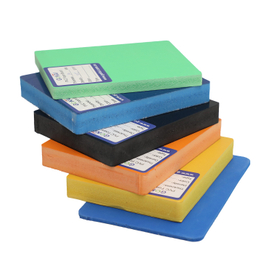
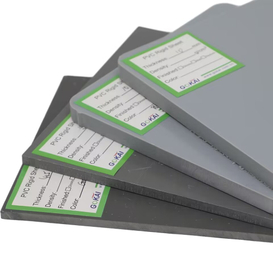
"PVC foam board" describes a broad product category. Sheets may be intended for indoor displays, printing, furniture components, fabrication, or exterior applications.
A board that prints beautifully is not automatically suitable for a sun-exposed fascia.
Before specifying PVC foam board for exterior trim, request written confirmation covering:
- Exterior exposure suitability.
- UV protection or weathering requirements.
- Permitted service conditions.
- Recommended coatings and colors.
- Fastening and joint details.
- Applicable warranty limitations.
Density and thickness matter, but neither proves exterior suitability by itself. Surface construction, formulation, processing consistency, and the complete installation system also matter.
Do not transfer another manufacturer's test results or warranty claims to a visually similar product.
For Gokai OEM enquiries, identify the end use first. "Exterior window surround in a hot climate" provides a much stronger specification than "white PVC board."
Cellular PVC trim expands as it warms and contracts as it cools. Long runs need particular attention because movement can become visible at joints and ends.
A reliable installation plan should address:
1. Board temperature during installation.
2. Run length and profile dimensions.
3. Fastener type and spacing.
4. Joint design and compatible adhesive.
5. Clearances at adjoining materials.
There is no universal expansion gap suitable for every board and climate. Use the selected product's current installation instructions.
Dark finishes absorb more solar energy and can raise surface temperatures.
Some established PVC trim systems use an LRV threshold around 55 for conventional acrylic coatings. LRV, or light reflectance value, indicates how much visible light a color reflects.
However, this is a product-specific guideline—not a universal specification for every PVC foam sheet. Approved heat-reflective coatings may permit additional colors under defined conditions.
Before approving a dark finish, obtain written confirmation for the exact board, coating system, and color. A successful small indoor paint sample does not establish outdoor heat performance.
PVC trim is not automatically the cheapest option. Local labor rates, wood species, access equipment, coating choices, and repair frequency can change the result.
Compare total ownership cost:
Total cost = material + installation + finishing + maintenance + repairs + replacement.
The figures below are hypothetical budgeting assumptions, not market prices or Gokai quotations.
| Cost Item Over 15 Years | PVC Trim | Wood Trim |
|---|---|---|
| Material and installation | $2,400 | $1,800 |
| Three planned repainting visits | $0 | $1,350 |
| Cleaning and inspection allowance | $300 | $300 |
| Total under these assumptions | $2,700 | $3,450 |
In this example, PVC costs $600 more initially but $750 less over the comparison period.
The result changes if PVC requires painting, wood needs fewer maintenance visits, or access costs differ. Financing, inflation, unexpected repairs, and residual value are excluded.
The lesson is not that PVC always saves money. It is that purchase price alone can hide the cost of maintaining difficult-to-reach trim.
Ask installers to quote equivalent finished assemblies and state their maintenance assumptions.
PVC products may achieve particular flame-performance classifications, but that does not make every PVC board noncombustible or suitable for every building application.
Likewise, self-extinguishing behavior under a laboratory test does not establish the fire resistance of an installed wall or trim assembly.
UL 94 evaluates small-scale flammability characteristics of plastics used in devices and appliances. It is not a substitute for the fire-performance requirements applicable to building construction.
For a regulated project, request:
- The relevant test standard.
- The exact tested product identification.
- Specimen thickness and configuration.
- The full report and classification.
- Confirmation of suitability for the intended jurisdiction and assembly.
Never approve an order using the word "fireproof" alone.
Good installation protects the value of the material.

Check that substrates are sound and properly detailed. Confirm flashing and drainage before covering vulnerable areas.
Decorative trim should not conceal unresolved leaks or deteriorated backing.
Support boards adequately and protect surfaces from contamination and damage. Follow supplier instructions for storage and temperature conditioning.
Inspect flatness and dimensions before cutting.
Use the proposed tools, adhesive, fasteners, and finish on an offcut assembly. Evaluate cut quality, joint appearance, and coating compatibility.
A trial assembly is especially valuable when introducing a new OEM formulation or profile.
Select corrosion-resistant fasteners suitable for the exposure and backing material.
Do not assume decorative pins or adhesive alone can control thermal movement. Required fastener size, penetration, and spacing must come from the approved installation system.
Check joints, clearances, fasteners, drainage paths, and surface finish. Give the owner cleaning guidance and a record of the installed product.

A purchase order should describe measurable acceptance criteria—not just a product name.
For PVC foam board intended for trim fabrication, confirm:
- Application: interior or exterior, decorative or otherwise.
- Dimensions: thickness, width, length, and agreed tolerances.
- Material characteristics: density range and relevant mechanical properties.
- Surface quality: color, texture, flatness, and acceptable defects.
- Fabrication requirements: cutting, routing, drilling, bonding, and finishing.
- Performance evidence: weathering and fire documentation where required.
- Packaging: edge protection, pallet support, and identification.
- Commercial terms: approved sample, inspection method, delivery conditions, and claims procedure.
Evaluate samples using the intended production process. A small visual sample cannot demonstrate every aspect of fastening performance, long-board movement, or outdoor durability.
Retain an approved reference sample and its specification. For repeat orders, agree how material changes will be disclosed and approved.
This creates a clearer basis for consistent supply than selecting on price per sheet alone.
PVC trim is often a strong choice for moisture-exposed, nonstructural applications where reduced maintenance matters. Wood remains competitive when authentic appearance or project-specific requirements take priority.
Gokai supplies PVC foam board and related sheet materials with OEM services for global customers.
Send your application drawings, target dimensions, installation environment, preferred finish, destination market, and estimated order quantity. Request a product recommendation, sample plan, and quotation based on the actual use conditions.
Confirm exterior suitability and required documentation before approving bulk production.
It often offers an advantage where moisture exposure creates recurring wood-decay problems. However, the selected PVC grade must suit exterior use, and the surrounding assembly still needs correct flashing, drainage, fastening, and movement detailing.
Some white exterior PVC trim products can remain unpainted. Other grades require painting within a specified period. Confirm the requirement for the exact product rather than assuming all PVC trim behaves alike.
Do not assume so. General-purpose PVC foam board and decorative trim are not substitutes for load-bearing timber without appropriate engineering, product evidence, and approval for the intended application.
Excessive heat and restrained thermal movement can cause deformation. Risk depends on the product, color, installation, support, and exposure. Follow the approved coating and fastening instructions, especially for long runs and dark finishes.
There is no defensible universal lifespan comparison. Product grade, exposure, installation, maintenance, and wood species all influence performance. Compare written warranties and service conditions rather than relying on "lifetime" marketing claims.
Verify intended use, exterior suitability, dimensional tolerances, density, surface quality, fabrication behavior, and relevant test reports. Approve a representative sample and agree on inspection criteria before placing the production order.
1. [AIBO — "Is PVC Trim Better Than Wood?"]
Original article used to identify the comparison topic and claims requiring qualification, including maintenance, moisture, painting, and fire performance. Its personal-experience statements and unsupported numerical comparisons have not been adopted. [aibofoamboard]
2. [AZEK Exteriors — Trim & Moulding Installation Guide]
Manufacturer guidance on temperature-related movement, fastening, joints, painting, and product-specific installation requirements. These instructions apply to the identified AZEK products, not automatically to Gokai materials. [azekexteriors]
3. [AZEK Exteriors — Trim, Moulding & Fastening FAQ]
Guidance distinguishing paint-optional and paint-required trim grades, explaining LRV, and identifying fastening considerations. Supports the discussion of why requirements must be checked by product. [azekexteriors]
4. [Palram — PALIGHT Foamed PVC Sheets]
Manufacturer portfolio distinguishing general fabrication and printing applications from a specifically formulated outdoor grade. Supports the distinction between the broad PVC foam board category and application-specific products. [palram]
5. [USDA Forest Products Laboratory — "Your Wood Can Last for Centuries"]
Technical discussion of moisture, joints, protective detailing, and wood decay. Used for the underlying moisture-management principles rather than contemporary pricing or product comparisons. [fpl.fs.usda]
6. [UL Solutions — "Understanding UL 94 Rating Certifications and Limitations"]
Explains the scope of UL 94 and why its small-scale classifications do not replace building-code fire-performance requirements. [code-authorities.ul]