Shanghai Gokai Industry Co,.Ltd.
Call Us: +86-18918606548
Call Us: +86-18918606548
- Product Name
- Product Keyword
- Product Model
- Product Summary
- Product Description
- Multi Field Search
Views: 258 Author: Gokai Publish Time: 2026-11-12 Origin: Site


Content Menu
>> What Does Foam Core Mean on a Purchase Order?
● What Is Styrene Sheet, and How Does It Compare?
>> Foam Board vs Styrene Comparison Table
● When Paper Foam Board Is the Better Choice
>> Short-Term Indoor Promotional Displays
>> Models and Presentation Boards
● When Styrene or Another Board Makes More Sense
>> Styrene for Supported Graphics and Inserts
>> Plastic-Faced Foam Boards for Repeated Handling
>> Expanded PVC for More Demanding Applications
● How to Choose Board Thickness Without Guesswork
● A Five-Step Sample Approval Process for Printed Foam Boards
>> 1. Confirm Construction and Dimensions
>> 2. Evaluate Flatness Under Agreed Conditions
>> 3. Print Representative Artwork
>> 4. Test Cutting and Mounting
>> 5. Simulate Handling and Packing
● Compare Total Project Cost, Not Just Sheet Price
● An OEM Paper Foam Board Checklist for Global Buyers
● Request a Material Recommendation from Gokai
>> 1. Is foam board the same as foam core?
>> 2. Is Paper Foam Board waterproof?
>> 3. Is styrene stronger than foam board?
>> 4. Can Paper Foam Board be printed directly?
>> 5. Which material is best for reusable displays?
>> 6. Can foam board be recycled?
>> 7. What should I send for an OEM quotation?
Foam board vs foam core vs styrene is a comparison that often starts with a misunderstanding: foam board and foam core usually describe the same paper-faced display material, while styrene generally means a solid plastic sheet. Understanding that distinction helps buyers choose the right substrate for printing, mounting, retail displays, and international sourcing.
My starting point is construction, not the product name. A lightweight foam center with paper facers behaves differently from solid polystyrene, even when both materials look white and smooth.
At Gokai, we supply Paper Foam Board and other board materials to global customers, with OEM services available. This guide explains how to compare materials, verify samples, and prepare clearer purchasing specifications.

In everyday signage and mounting terminology, "foam board," "foam core," and "foamcore" commonly refer to a sandwich panel with a lightweight foam center and paper surfaces.
However, foam board is also a broader category. It can include plastic-faced foam panels and expanded PVC sheets. That is why ordering "white foam board" without describing its construction creates unnecessary risk.
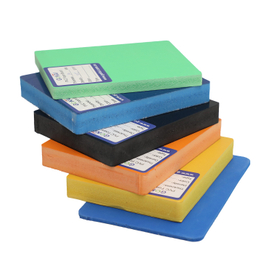
Paper Foam Board typically combines a polystyrene foam core with paper facers on both sides. Its appeal comes from low weight, a smooth working surface, and straightforward fabrication.
Common applications include:
- Indoor promotional signs.
- Presentation and exhibition graphics.
- Photo mounting and framing.
- Architectural models and prototypes.
- Temporary point-of-purchase displays.
Not every grade offers the same surface, stiffness, or mounting performance. Paper coating, core structure, thickness, and adhesive system all influence the finished result.
"Foam core" describes a construction concept rather than a complete specification.
A reliable purchase order should identify the core material, facer material, thickness, sheet dimensions, surface finish, and intended processing method.
For example, "paper-faced polystyrene foam board for indoor printed displays" communicates more than "foam core sheet." Add measurable tolerances and approved samples before production.
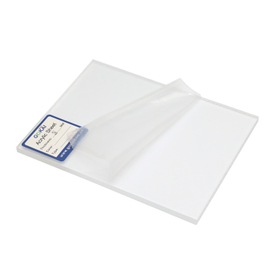
In display manufacturing, styrene sheet commonly refers to high-impact polystyrene, or HIPS. Unlike Paper Foam Board, it is a solid plastic sheet without a separate foam center.
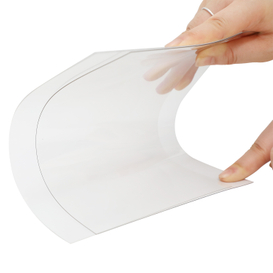
Thin styrene can flex, making it useful for supported graphics, sign inserts, and certain shaped displays. However, flexibility does not automatically make it suitable for rolling into shipping tubes.
Whether a sheet can be rolled depends on thickness, temperature, bending radius, printing, and the supplier's handling instructions. Test the finished graphic before choosing rolled packaging.
| Selection factor | Paper Foam Board | Solid styrene sheet |
|---|---|---|
| Construction | Foam center with paper facers | Solid polystyrene plastic |
| Typical handling | Lightweight, relatively rigid panel | Flexible or rigid depending on thickness |
| Moisture exposure | Paper surfaces and edges need protection | Better moisture tolerance than paper facers |
| Common applications | Mounted graphics, models, indoor displays | Sign inserts, supported graphics, display components |
| Fabrication | Often suitable for knife cutting | Cutting method depends on gauge and equipment |
| Main purchasing concern | Flatness, facer quality, edge damage | Thickness, surface treatment, flexibility |
| Outdoor suitability | Standard grades are generally indoor materials | Requires grade-specific verification |
This comparison is directional, not a universal ranking. Finished size, mounting, exposure, and handling can change which material performs best.
Paper Foam Board is worth considering when the project needs a lightweight, flat panel for a controlled indoor environment.
Its value is especially clear when fabrication speed and low handling weight matter more than resistance to repeated knocks or water exposure.
For event graphics and regularly replaced retail campaigns, standard paper-faced foam board can provide a practical balance of presentation quality and cost.
Calling it "single-use only" is too simplistic. Its useful life depends on handling, storage, installation, and environmental conditions.
A protected sign in a stable indoor location faces different risks from an exposed panel transported between venues.
Surface selection matters when mounting photographs or artwork.
General display board should not automatically be described as archival. If preservation is important, request a specifically documented conservation or archival mounting grade and check the complete mounting system.
The board, adhesive, artwork, and framing environment must work together.
Paper-faced foam board is useful for mockups and presentation structures because it can be cut and assembled without heavy machinery.
Use a sharp blade and several controlled passes rather than forcing a deep cut. Approve adhesives on offcuts first, since unsuitable formulations can damage surfaces or the foam core.
A different substrate may be justified when moisture, repeated handling, or installation demands exceed the selected Paper Foam Board grade.
Thin styrene sheets suit applications where a frame, holder, or backing provides support.
Check opacity for double-sided printing. Also confirm how the panel fits into the holder: a material can print well yet fail because its thickness or flexibility does not match the hardware.
Plastic-faced foam boards combine a lightweight center with more durable surfaces than ordinary paper facers.
For example, UltraBoard Classic uses polystyrene faces around a polystyrene foam core. Such products can suit longer-term interior graphics and displays requiring additional surface durability.
They are not interchangeable with every other foam panel. Compare the specific grade rather than transferring one manufacturer's performance claims to another product.
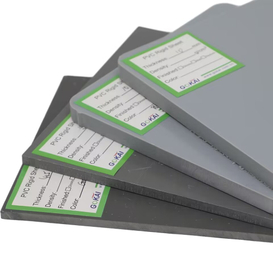
Expanded PVC is another option for fabricated signs and display components. Selected grades support interior and exterior applications.
However, a general material name does not establish outdoor service life. Confirm the grade, exposure conditions, mounting requirements, and manufacturer guidance.
Water resistance alone does not prove resistance to sunlight, heat, wind, or long-term dimensional movement.
Thickness matters, but it is not a complete measure of quality.
Two boards of equal thickness can behave differently because their facers, core structure, and bonding differ.
I would assess thickness alongside four project variables:
1. Finished panel dimensions.
2. Unsupported span.
3. Mounting method.
4. Expected handling and exposure.
A small framed sign and a large suspended display should not receive the same recommendation simply because both are indoor graphics.
For unfamiliar applications, request a full-size sample or prototype. Small samples help evaluate appearance and cutting, but they cannot fully demonstrate large-panel sagging or installation behavior.
Avoid approving a material solely by pressing a sample between your fingers.
Sample approval should reproduce the real production process as closely as practical.

Record the core type, facer type, nominal thickness, and sheet dimensions.
Measure thickness at agreed locations. Define whether dimensions refer to supplied sheets or finished cut panels, and record acceptable tolerances.
Place the sample on a suitable reference surface after conditioning it in the intended working environment.
Agree on a flatness assessment method. "Looks flat" is difficult to enforce when different teams inspect the same shipment.
Use the intended printer, ink system, curing settings, and handling process.
Include solid colors, fine text, and areas that reveal surface inconsistency. Assess color appearance and adhesion using a method agreed with the printer and supplier.
Compatibility with a general ink category does not guarantee success on every machine.
Produce the actual edge details, corners, holes, or shapes required.
Then apply the intended adhesive, laminate, or mounting system. Check for crushed edges, lifting facers, surface damage, and distortion.
Pack a finished sample using the proposed corner protection, interleaving, carton, and pallet arrangement.
Inspect it after representative handling. For larger orders or vulnerable shipping routes, agree on an appropriate packaging trial before committing to volume.
Retain an approved reference sample and written acceptance criteria.
The cheapest sheet may not produce the lowest-cost finished display.
International buyers should evaluate:
- Purchased sheet price.
- Cutting yield and usable area.
- Printing and finishing labor.
- Packaging and freight.
- Damage and rejection rates.
- Installation and replacement costs.
For illustration, imagine two quotations for the same project. One supplier offers cheaper sheets, but the available dimensions generate more offcuts and the packaging leaves corners vulnerable.
A higher-priced alternative could deliver a lower cost per accepted finished panel.
This is a purchasing scenario, not a claim about current market prices. The practical lesson is to compare quotations using the same finished output and acceptance requirements.
Ask suppliers to explain sheet layout and packaging assumptions, not merely their unit price.

A clear specification helps both buyer and supplier avoid preventable misunderstandings.
Before requesting an OEM quotation from Gokai, prepare:
| Specification area | Information to provide |
|---|---|
| Application | Display, mounting, model making, or another use |
| Environment | Indoor conditions, moisture risks, expected exposure |
| Construction | Required core and facer materials |
| Dimensions | Sheet size, finished size, thickness, tolerances |
| Surface | Color, finish, coating, printing requirements |
| Processing | Cutting, mounting, laminating, or fabrication |
| Quality checks | Flatness, dimensions, appearance, sample approval |
| Packaging | Quantity per pack, edge protection, labeling |
| Commercial details | Order quantity, destination, delivery requirements |
Request confirmation of which customization options are available rather than assuming every specification is standard.
For repeat purchases, reference the approved sample and specification revision. If materials or manufacturing details change, agree on whether renewed approval is required.
Any customer feedback should also be converted into measurable requirements. "Good quality" is encouraging, but "no visible facer lifting after the approved mounting process" provides a clearer inspection target.
Choosing between Paper Foam Board, foam core, and styrene becomes easier when the application is clearly defined.
Send Gokai your finished dimensions, preferred thickness, printing method, installation environment, order quantity, and destination country. Include artwork or a drawing when available.
Ask for a suitable material recommendation, available OEM options, sample arrangements, and a quotation based on an agreed specification. Approve the representative sample before placing a production order.
Usually, yes, in printing and mounting discussions. Both commonly describe paper-faced foam panels. However, "foam board" can also refer to other constructions, so confirm the core and facers before ordering.
Standard paper-faced foam board should not be treated as waterproof. Moisture can affect the paper surfaces, edges, and dimensional stability. A protective finish does not automatically make the complete panel suitable for outdoor use.
There is no single answer. Thin styrene can tolerate flexing but may need support. A thicker foam sandwich panel can offer greater panel stiffness at low weight. Compare the specific dimensions and loading conditions.
Suitable grades can support direct printing, but performance depends on the surface, printer, ink, and processing conditions. Test the selected board with the actual production setup before approving a bulk order.
Plastic-faced foam board or another durable substrate may be appropriate when repeated handling is expected. Evaluate edge protection, mounting, transport, and storage alongside the board itself.
Acceptance depends on construction and local facilities. Paper-faced composites and all-polystyrene panels may require different recovery routes. Confirm collection availability rather than assuming a technically recyclable product belongs in ordinary recycling bins.
Provide the intended application, dimensions, thickness, quantity, surface requirements, processing details, packaging needs, and destination. Add measurable acceptance criteria and an approved sample when available.
1. [AIBO — "Foam Boards Vs Foam Core Vs Styrene"]. Original article used to establish the comparison topic and identify claims requiring qualification. Its broad statements about durability, outdoor life, and rolled shipping are not treated as universal specifications. [aibofoamboard]
2. [3A Composites USA — FOME-COR Product Collection]. Manufacturer information on paper-faced polystyrene construction, lightweight handling, fabrication, and short-term interior display applications. Product-specific features should not be assumed for all paper foam boards. [3acompositesusa]
3. [3A Composites USA — FOME-COR FOUNDATION]. Information on a specifically formulated mounting and framing grade with acid-free paper facers; supports the distinction between ordinary display materials and documented preservation products. [3acompositesusa]
4. [United Industries — UltraBoard Styrene]. Manufacturer specifications for print-grade high-impact polystyrene sheets, including surface treatment availability and printing compatibility categories. [ultraboard]
5. [United Industries — UltraBoard Classic]. Manufacturer description of polystyrene facers surrounding a polystyrene foam core, with interior signage, mounting, and fabrication applications. [ultraboard]
6. [United Industries — "UV Degradation and Yellowing Sign Substrates"]. Manufacturer discussion of light exposure, polymer degradation, and formulation-dependent yellowing. Used to support caution about treating moisture resistance as proof of outdoor durability. [ultraboard]
7. [3A Composites USA — SINTRA XT]. An example of a specifically formulated expanded PVC grade intended for interior and exterior applications, illustrating why grade-level selection matters. [3acompositesusa]
8. [3A Composites USA — Fabrication Quick Reference Guide]. Supports trial fabrication and suitability verification before full-scale production. The sample-approval workflow and purchasing checklists above are editorial recommendations, not a standardized test protocol. [cdn.3acompositesusa]