Shanghai Gokai Industry Co,.Ltd.
Call Us: +86-18918606548
Call Us: +86-18918606548
- Product Name
- Product Keyword
- Product Model
- Product Summary
- Product Description
- Multi Field Search
Views: 244 Author: Gokai Publish Time: 2026-11-19 Origin: Site


Content Menu
● Choose the Right Plastic Sheet Before Planning Installation
● Prepare the Structure, Materials, and Work Area
>> Confirm Support and Project Requirements
>> Store and Handle Sheets Carefully
>> Prepare Tools and Accessories
● Calculate Thermal Movement Before Fixing Panels
>> A Worked Polycarbonate Expansion Example
>> Why One Oversized-Hole Rule Is Not Enough
● How to Install Polycarbonate Sheets
>> 1: Measure, Mark, and Dry-Fit
>> 2: Cut and Drill Without Damaging the Sheet
>> 3: Fit Compatible Profiles and Fasteners
>> 4: Follow the Corrugated Panel's Fixing Pattern
>> 5: Finish Multiwall Ends and Drainage Details
● How to Install PVC Wall Panels
>> Check the Substrate Before Applying Adhesive
>> Acclimate Panels and Plan Movement Joints
>> Apply the Specified Adhesive System
● Design Water Management Into the Assembly
>> Keep Degrees and Percentage Slope Separate
>> Treat Sealant as a Compatible Component
● Diagnose Problems Before Replacing Panels
● Reduce Installation Risk During OEM Procurement
● Inspect and Maintain the Finished Installation
● Discuss Your Polycarbonate or PVC Sheet Project With Gokai
>> Can polycarbonate and PVC panels use the same installation method?
>> How much expansion clearance does polycarbonate need?
>> Can I glue polycarbonate roofing panels together?
>> Which direction should multiwall polycarbonate channels face?
>> Should I tighten screws until the washer compresses completely?
>> Can PVC panels be installed on an uneven wall?
Knowing how to install plastic panels correctly starts with recognizing that polycarbonate sheet and PVC sheet require different installation methods. A greenhouse roof, a protective screen, and an interior wall lining may all use plastic panels, but they do not share the same fixing, sealing, or support requirements.
At Gokai, we supply polycarbonate and PVC sheets to global customers and offer OEM services. Our approach to installation planning is straightforward: identify the exact sheet, understand the application, and confirm how the complete assembly will accommodate movement and moisture.

Material selection determines more than appearance. It affects the supporting structure, joint design, compatible accessories, and installation sequence.
| Panel type | Typical applications | Installation priority |
|---|---|---|
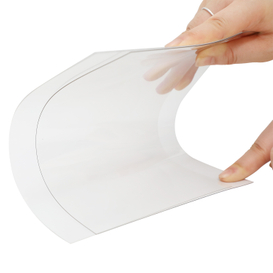
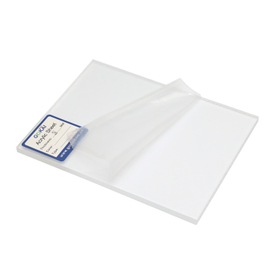
| Solid polycarbonate sheet | Glazing, protective screens, transparent partitions | Edge support, movement clearance, compatible gaskets |
| Multiwall polycarbonate sheet | Greenhouses, roof glazing, translucent walls | Channel direction, end treatment, condensation drainage |
| Corrugated polycarbonate panel | Canopies, agricultural roofing, covered walkways | Profile-specific fixings, overlaps, closures |
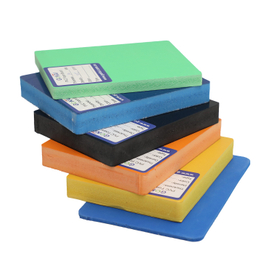
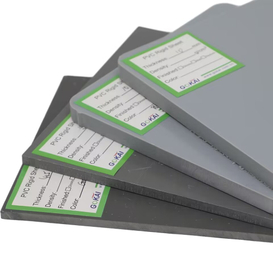
| Rigid PVC wall sheet | Interior cladding and suitable washable wall systems | Substrate preparation, compatible adhesive, movement joints |
Corrugated describes a shape, not a material. Always identify both the polymer and the panel profile before selecting accessories.
Likewise, PVC foam board, solid PVC sheet, and interlocking PVC panels are not interchangeable installation systems. Confirm that the specific grade suits the intended environment.
For exterior polycarbonate, check the product's UV-protection specification. Do not assume every transparent sheet has the same weathering protection.
Before cutting panels, obtain the current installation instructions for the exact product.
Check:
- Permitted support spacing for the sheet thickness and design loads.
- Required roof slope and allowable panel dimensions.
- Fastener type, spacing, and edge distances.
- Expansion allowances and profile engagement.
- Applicable local building and fire requirements.
There is no universal support spacing for plastic sheets. A span suitable for one thickness or panel structure may be unsuitable for another.
Roofing projects also require safe access. Never treat plastic roof panels as a walking surface. Use suitable access equipment and load-distributing arrangements specified for the work.
Store sheets flat on a suitable support, protected from direct sunlight and contamination. Follow the packaging instructions rather than leaving wrapped stacks exposed outdoors.
Lift sheets instead of dragging them across rough surfaces. Keep protective film in place during handling where practical, but remove it within the supplier's recommended period.
Before installation, identify any marked UV-protected face. For single-sided protected polycarbonate, that face must point toward the sunlight.
Depending on the system, you may need:
- A measuring tape, square, and marking tools.
- A supported cutting surface and suitable saw blade.
- A drill with appropriate bits.
- Approved screws, washers, and gaskets.
- Joining profiles, closures, flashing, and end tapes.
- Compatible sealant or adhesive.
- Eye protection and task-appropriate protective equipment.
Check accessory compatibility before work begins. A sealant being waterproof does not automatically make it suitable for polycarbonate or PVC.
Thermal expansion is a design requirement, not a minor finishing detail. Panels expand as they warm and contract as they cool. Restrained movement can cause bowing, stressed joints, or cracking around fixings.
A published coefficient for one polycarbonate sheet range is approximately 0.065 mm per metre per degree Celsius.
Using that value for illustration:
Length change=coefficient×panel length×temperature change
For a 3 m panel across a 50°C temperature difference:
0.065×3×50=9.75 mm
That represents approximately 9.8 mm of total length change across the assumed temperature range.
It does not automatically mean leaving 9.8 mm at every edge. The required clearances depend on installation temperature, fixing arrangement, profile engagement, and the system's designated movement points.
Use the coefficient and temperature assumptions applicable to the actual sheet.
A recommendation such as "drill every hole 2 mm larger" cannot safely cover every panel length and fixing system.
Through-fixed panels may require clearance holes. Other assemblies accommodate movement within glazing profiles or purpose-designed connections.
Follow the product's specified hole diameter, edge distance, and fastening arrangement. Do not substitute a generic allowance for an engineered installation detail.

Measure the supporting structure, including its diagonals where relevant. Check alignment before cutting several sheets to identical dimensions.
Allow for expansion spaces, profile engagement, and specified overhangs. Dry-fit the first panel and its accessories before repeating the layout.
For multiwall panels, orient channels down the roof slope or vertically on walls so condensation can drain by gravity.
Support the sheet close to the cutting area. Use a blade appropriate for the material and thickness, following the sheet supplier's machining guidance.
Where drilling is required:
1. Mark positions using the approved fixing layout.
2. Support the area around each hole.
3. Drill square to the sheet surface.
4. Remove debris without scratching the surface.
5. Check clearance before inserting fasteners.
Remove cutting debris from multiwall channels before fitting end treatments. Trapped particles become harder to remove after installation.
Use joining profiles and gaskets matched to the panel thickness and intended application.
Do not assume an H-profile provides structural support simply because it connects two sheets. Confirm whether the profile is a connector, a supported glazing component, or part of a tested spanning system.
For through-fixings, use the specified corrosion-resistant screws and sealing washers. Tighten enough to seat the gasket without crushing the sheet or preventing intended movement.
A visibly dished panel around a screw is a warning sign, not evidence of a better seal.
Many corrugated roofing systems use crest fixings, but this is not universal. Some products require a different position.
Follow the exact profile's instructions for:
- Crest or valley fixing.
- Side-lap and end-lap dimensions.
- Closure strips.
- Edge and corner fastening.
- Wind-exposed installation details.
Arrange overlaps as specified to manage rain and reduce wind-driven uplift at exposed edges.
Multiwall panels need an end-treatment system that limits contamination while managing condensation.
A common arrangement uses solid aluminum tape at the upper end and ventilating tape at the lower end. However, regional and product-specific systems can differ. Follow the current instructions supplied for the selected panel.
Fit compatible end profiles and preserve any specified drainage openings. Do not fill internal channels with silicone or block designed weep paths.
PVC wall-sheet installation requires a different mindset from roof glazing. The condition of the underlying wall and the adhesive system can determine the quality of the finished surface.
The substrate should meet the adhesive and panel suppliers' requirements for cleanliness, dryness, flatness, and soundness.
Remove loose coatings and contamination. Correct high spots and depressions rather than expecting adhesive to compensate for an unsuitable wall.
Check whether a primer is needed. If substrate compatibility is uncertain, conduct a representative adhesion trial before full installation.
Follow the selected PVC system's acclimation requirements. One published wall-lining guide specifies 24–36 hours at room temperature, but this should not be treated as a rule for every PVC product.
Plan clearances at sheet joints, corners, perimeters, and penetrations according to the system instructions.
A neat joint still needs enough space to perform its intended function.
Confirm adhesive compatibility with both the PVC sheet and the substrate.
Follow the stated coverage, application method, open time, working temperature, and curing conditions. Do not replace a specified full-coverage method with random adhesive spots.
Position the sheet carefully, then apply pressure using the recommended technique to establish contact and remove trapped air.
Protect the installation from washing, impact, or service loads until the adhesive has cured sufficiently.

Sealant cannot compensate for an incorrect roof slope, unsupported joint, or poorly arranged flashing.
These measurements are not interchangeable:
- A 5% slope rises 50 mm over a 1,000 mm horizontal run.
- A 5° slope rises approximately 87 mm over the same run.
One published multiwall installation guide specifies a minimum 5° slope. Other systems have different requirements.
Always specify the unit and follow the selected product's instructions. Avoid vague directions such as "provide a five-degree or five-percent fall."
For polycarbonate, use a sealant specifically approved for contact with the sheet. Neutral-cure chemistry may be required, but the label alone does not establish compatibility.
PVC also requires its own approved sealing or bonding products. PVC pipe cement is not a general-purpose substitute for panel adhesive.
Use flashing, profiles, and drainage details to manage water first. Sealant should complete the designed assembly rather than replace it.
The most useful response to a defect is to identify its cause before repeating the installation.
| Symptom | Items to investigate |
|---|---|
| Cracks near screws | Hole clearance, tightening, edge distance, chemical contact |
| Bowed or distorted sheets | Restricted expansion, support layout, incorrect installation |
| Persistent moisture inside multiwall channels | Channel direction, end treatment, blocked drainage |
| Roof leaks | Overlaps, flashing, gasket seating, fixing position, slope |
| PVC lifting or uneven adhesion | Substrate condition, adhesive coverage, curing conditions |
These are investigation starting points, not remote diagnoses. Similar symptoms can have different causes.
Photograph the affected area, record conditions, and compare the installation against the approved drawings and product instructions.
For international projects, installation planning should begin before the shipment leaves the supplier.
Ask your supplier to confirm:
1. Material grade, sheet structure, and intended application.
2. Thickness, dimensions, and agreed tolerances.
3. UV-protection requirements and identification markings.
4. Compatible profiles, tapes, gaskets, and other accessories.
5. Applicable technical documentation and any required test evidence.
6. Packing, labeling, and panel-identification requirements.
For larger orders, consider an installation mock-up using the proposed sheet, framing, joints, and accessories.
A mock-up can reveal assembly or fit problems before site work expands. It does not replace structural calculations, required testing, or regulatory approval.
Before handover, inspect panel orientation, fixings, movement gaps, overlaps, exposed edges, and drainage routes.
Photograph critical details and retain the product instructions with the project records.
For cleaning, follow the sheet manufacturer's guidance. Mild soap, water, and a soft cloth are commonly recommended; abrasive tools and unapproved solvents can damage surfaces.
Inspect the installation periodically and after severe weather where relevant. Investigate loose fixings or failed joints rather than simply tightening everything.
Send Gokai your application, destination market, dimensions, thickness, quantities, and OEM requirements.
For installation-sensitive projects, include drawings, exposure conditions, and the proposed fixing or adhesive system. Ask us to confirm available sheet options and project-specific supply details before placing your order.
Not automatically. Their sheet structures, applications, joining systems, and chemical compatibility differ. Use instructions for the exact product.
It depends on panel size, temperature range, installation temperature, and restraint. Use the sheet's technical data and system instructions rather than one universal gap.
Do not assume so. Many roofing systems rely on mechanical fixings and designed overlaps or profiles. Sealants and adhesives require explicit compatibility and application approval.
Run channels down the roof slope or vertically on walls, following the selected system's instructions, so condensation can drain.
No. Excessive tightening can distort the sheet and restrict movement. Follow the specified fastening guidance and avoid crushing the sealing washer.
The substrate must meet the selected system's flatness requirements. Correct unsuitable areas before installation rather than relying on adhesive to hide them.
The manufacturer documents below support general technical principles and product-specific examples. They are not Gokai product specifications or approval to apply another manufacturer's installation details to Gokai sheets.
1. [Piedmont Plastics — "How to Install and Secure Plastic Panels Properly," July 3, 2025]. Original article reviewed for its coverage of selection, fastening, weatherproofing, and maintenance. [piedmontplastics]
2. [Palram — "Thermal Expansion and Polycarbonate Roofing Sheets"]. Technical guidance on movement allowances, oversized holes, tightening, gaskets, and sealant compatibility. [palram]
3. [Palram — PALSUN Technical Brochure]. Source of the 0.065 mm/m/°C coefficient used in the illustrative thermal-expansion calculation. [palram]
4. [Palram — SUNLITE Installation Guide, Australia]. Product-specific example supporting the slope-unit comparison and roof-access precautions. [palram]
5. [Palram — Frequently Asked Questions, Americas]. Guidance on multiwall end tapes, material movement, product-specific instructions, and polycarbonate adhesive limitations. [palram]
6. [Palram — PALCLAD Pro Wall Lining Solutions]. PVC wall-lining guidance covering substrate preparation, acclimation, adhesive application, pressure, and expansion joints. [palram]
7. [Palram — DYNAGLAS SOLAR SOFT MAX Product and Technical Guidance]. Guidance explaining that fixing position depends on the corrugated product and that installation must accommodate thermal movement. [palram]