Shanghai Gokai Industry Co,.Ltd.
Call Us: +86-18918606548
Call Us: +86-18918606548
- Product Name
- Product Keyword
- Product Model
- Product Summary
- Product Description
- Multi Field Search
Views: 212 Author: Gokai Publish Time: 2026-08-01 Origin: Site


Content Menu
● What Makes Bullet-Resistant Acrylic Different
● Essential Safety Precautions Before You Start
>> Ventilation Is Non-Negotiable
>> Personal Protective Equipment (PPE) Checklist
● Step-by-Step: Cutting, Drilling, and Finishing
● Handling, Transport, and Storage
● Cleaning and Long-Term Maintenance
● Why OEM Buyers Are Rethinking Their Acrylic Sourcing in 2026
● Choosing Between UL Levels: A Quick Reference
● Work with a Manufacturer That Understands Ballistic-Grade Acrylic
Bullet-resistant acrylic has become the material of choice for security glazing in retail counters, schools, television studios, and government buildings because it delivers ballistic protection without the weight and cost of laminated glass or polycarbonate. As a manufacturer that produces custom acrylic sheet for OEM partners worldwide, Gokai has fabricated, shipped, and supported thousands of bullet-resistant acrylic panels, and this guide distills that hands-on experience into a practical resource for fabricators, security integrators, and procurement teams.

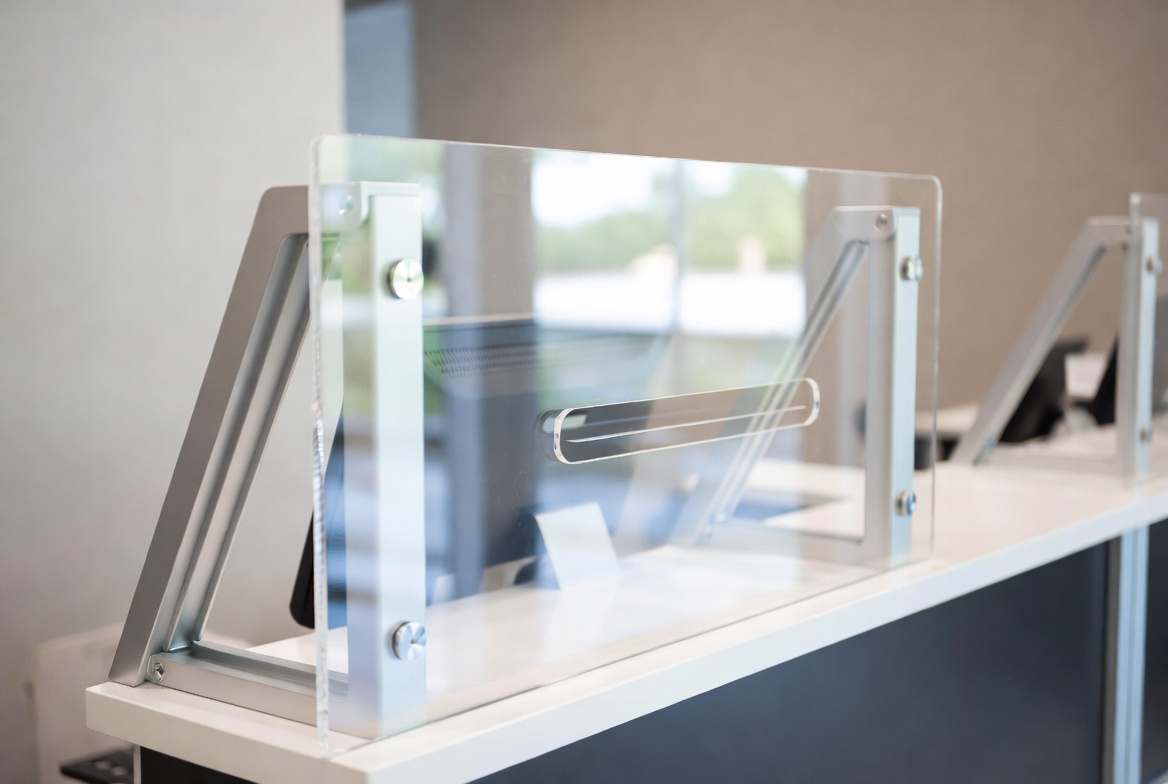
Bullet-resistant acrylic is not simply thick plexiglass. It is a specially engineered, multi-layer cast acrylic product built to meet Underwriters Laboratories (UL 752) ballistic standards.
UL Level 1 acrylic, the most common grade for commercial applications, is certified to stop three shots from a 9mm handgun without complete penetration, fragment passage, or spalling that could injure someone standing behind the barrier. Higher UL levels exist for facilities exposed to greater firearm threats, such as banks, courthouses, and correctional facilities.
Compared to bullet-resistant polycarbonate and laminated security glass, acrylic offers:
- Lower material cost for equivalent Level 1 protection
- Better optical clarity with minimal yellowing over time
- Easier fabrication, since it can be cut, drilled, sanded, and heat-formed with standard plastics tooling
- Lighter weight than laminated glass, though still 2 to 3 times heavier than tempered glass of the same thickness
Fabricating bullet-resistant acrylic generates fine dust and, when heated, potentially harmful fumes. Treating this step as an afterthought is the most common mistake first-time fabricators make.
Always work in a well-ventilated area or use a dedicated fume-extraction system. Fine acrylic dust can irritate the respiratory tract, and heating the material without adequate airflow allows fumes to accumulate to unsafe levels. For laser cutting or CNC routing, service exhaust filters regularly and avoid recirculating unfiltered air back into the workspace.
| PPE Item | Purpose |
|---|---|
| Safety goggles | Protects eyes from dust and flying fragments |
| Cut-resistant gloves | Shields hands during cutting and handling |
| Respirator or mask | Filters fine particles and fumes from heating |
| Face shield | Adds a layer of protection during high-speed cutting |
Never skip PPE, even for what seems like a quick trim or edge sand.
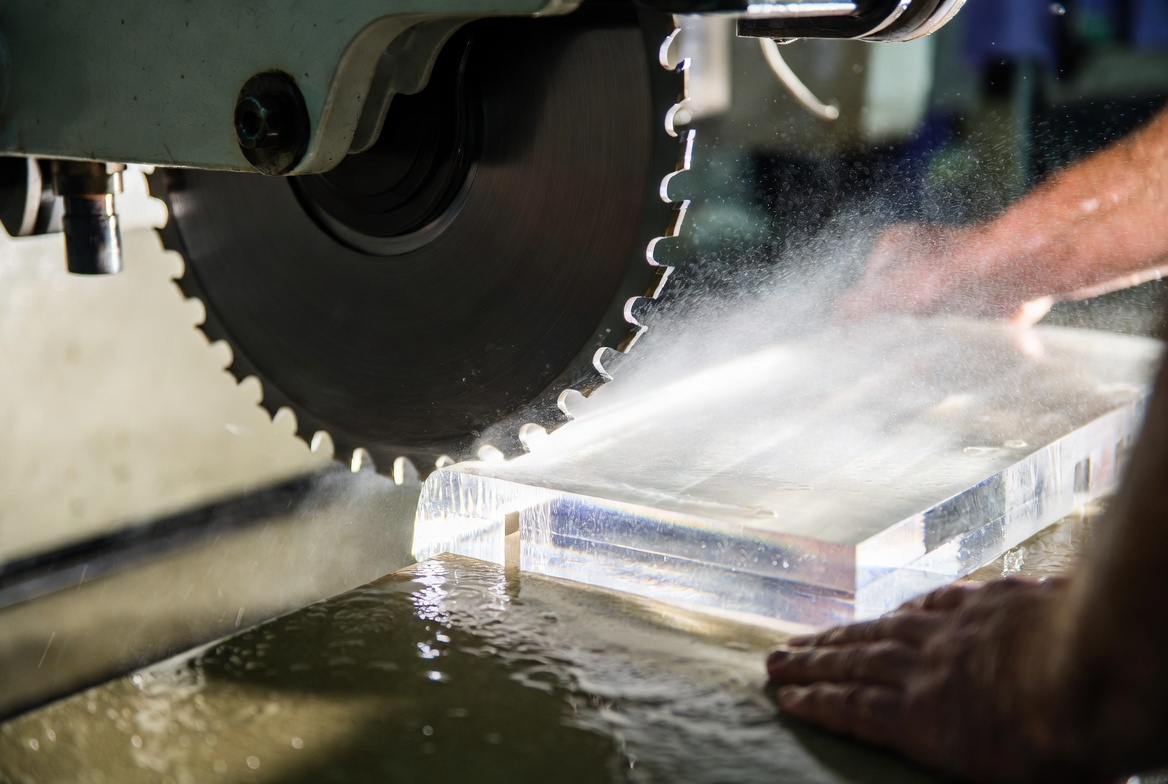
Bullet-resistant acrylic is significantly harder and thicker than standard sheet acrylic, so tooling choice matters enormously.
1. Select acrylic-rated blades. Use carbide-tipped triple-chip blades with zero-degree rake and high horsepower saws; standard wood or metal blades will chip or crack the edge.
2. Support the sheet fully. Clamp the panel to a rigid surface using a wood guide strip to prevent flexing during the cut.
3. Keep the tool cool. For material thicker than 1/8 inch, apply water or oil coolant while cutting to prevent heat buildup that dulls blades and melts the cut edge.
4. Drill with plastic-specific bits. Standard twist bits tend to grab and crack acrylic; use bits ground with a "dubbed" cutting edge designed for plastics.
5. Sand, buff, and polish edges. After cutting, work through progressively finer grit sandpaper, then buff to restore clarity along the cut edge.
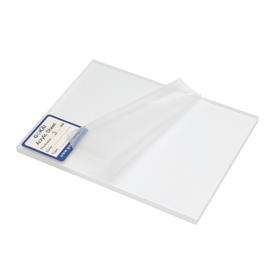
6. Leave the protective masking film on until the very last step of fabrication to prevent surface scratching.
Because bullet-resistant acrylic panels weigh 2 to 3 times more than an equivalent tempered glass sheet, handling logistics deserve real planning.
- Lift large sheets with two people to prevent flexing that can cause micro-cracks
- Carry panels vertically, ideally with suction-cup handles, rather than dragging them flat
- Store sheets upright at a slight angle with full support to avoid warping over time
- Keep panels away from direct sunlight and heat sources during storage
- Pad edges during transit with foam or cardboard to absorb impact
Despite its weight, the good news for installers is that bullet-resistant acrylic can typically be trimmed, drilled, or adjusted on-site if final dimensions need minor correction, saving a return trip to the fabrication shop.
Scratches are the real enemy of bullet-resistant acrylic. A single ammonia-based glass cleaner application can etch microscopic scratches into the surface that trap dust and dull optical clarity permanently.
Approved cleaning method:
- Use a lint-free or microfiber cloth
- Dampen with mild soapy water only
- Wipe gently in straight lines, never circular scrubbing
Never use ammonia-based glass cleaners, acetone, benzene, or abrasive powders, as these cause stress cracking and permanent clouding.
Global demand for security glazing has risen alongside heightened concerns over workplace and retail safety, pushing more architects and security integrators to specify UL-rated acrylic earlier in the design phase rather than retrofitting after an incident. This shift has created new pressure on manufacturers to offer flexible OEM programs rather than only standard catalog sizes.
For B2B buyers sourcing bullet-resistant acrylic at volume, three factors now separate reliable suppliers from the rest:
- Certified UL 752 test documentation available for every production batch, not just a sample panel
- Custom thickness and sizing to match specific frame systems without excess kerf waste
- Consistent optical quality across large production runs, since visible haze or distortion undermines both security and retail presentation
Gokai's OEM program addresses each of these by supplying documented, batch-tested acrylic sheet cut to client specifications, with technical support available for fabrication questions before shipment leaves the factory.
| UL Level | Typical Threat Stopped | Common Applications |
|---|---|---|
| Level 1 | 9mm handgun, three rounds | Retail counters, ticket booths, schools |
| Level 2 | .357 Magnum | Pawn shops, check-cashing stores |
| Level 3 | .44 Magnum | Banks, high-risk retail |
Higher levels generally require thicker, heavier panels or laminated composite constructions rather than acrylic alone.
Fabricating bullet-resistant acrylic correctly protects both the installer during the process and the end user relying on the panel for years afterward. If your business needs UL-tested, custom-sized bullet-resistant acrylic sheet with full OEM flexibility, Gokai's engineering team can review your project specifications and provide a tailored quote — reach out today to discuss thickness, size, and certification requirements for your next security glazing project.
Q1: Can bullet-resistant acrylic be cut with a standard table saw?
Yes, but only with a carbide-tipped, triple-chip blade rated for plastics, high horsepower, and proper clamping to prevent flexing during the cut.
Q2: Is bullet-resistant acrylic heavier than bullet-resistant polycarbonate?
Generally, acrylic is lighter than polycarbonate of equivalent ballistic rating in some configurations, but it remains 2 to 3 times heavier than standard tempered glass.
Q3: Can I use regular glass cleaner on bullet-resistant acrylic panels?
No. Ammonia-based cleaners cause micro-scratches and clouding over time; use only mild soapy water with a microfiber cloth.
Q4: What UL level is sufficient for a retail storefront?
Most retail applications use UL Level 1, which stops three rounds from a 9mm handgun, though higher-risk locations may require Level 2 or 3.
Q5: Does bullet-resistant acrylic yellow or degrade with sunlight exposure over time?
Quality cast acrylic resists long-term UV exposure well and maintains optical clarity longer than many polycarbonate alternatives, though extreme, prolonged direct sun exposure can still affect any plastic over many years.
Q6: Can bullet-resistant acrylic panels be trimmed on-site after installation?
Yes. Its hardness allows for on-site adjustments like minor cuts or edge sanding if dimensions need correction, though heavy fabrication is best done in a shop setting.
1. Acme Plastics, "How to Work with Bullet-Resistant Acrylic" — https://www.acmeplastics.com/content/how-to-work-with-bullet-resistant-acrylic/
2. A&C Plastics, "Bulletproof Acrylic Glass" — https://www.acplasticsinc.com/informationcenter/r/bulletproof-acrylic-glass
3. Tap Plastics, "Tips for Working with Plexiglass" — https://www.tapplastics.com/info/33
4. A&C Plastics, "Bullet Resistant Plastic & Ballistic Panels" — https://www.acplasticsinc.com/informationcenter/r/bullet-resistant-plastic-panels
5. E & T Plastics Mfg. Co., "Bullet Resistant Plastics" — https://www.etplastics.com/bullet-resistant-plastics/
6. Piedmont Plastics, "Acrylic Plastic Safety Tips: A Comprehensive, Expert Guide" — https://www.piedmontplastics.com/blog/acrylic-plastic-safety-tips
7. Shahe Shott Glass, "Bullet Resistant Glass Manufacturer" — https://www.shahegroup.com/bullet-resistant-glass/
8. Piedmont Plastics, "10 Acrylic Plastic Safety Tips To Know" — https://www.piedmontplastics.com/blog/10-acrylic-plastic-safety-tips
9. Interstate Plastics, "Best Bullet Proof Glass: A Specifier's Guide" — https://www.interstateplastics.com/blog/bullet-proof-glass-guide
10. Gokai, "Properties of Acrylic Sheet for OEM Projects: A Practical Guide for Global B2B Buyers" — https://gokaiplastics.com/acrylic-sheet-properties-oem-guide/