Shanghai Gokai Industry Co,.Ltd.
Call Us: +86-18918606548
Call Us: +86-18918606548
- Product Name
- Product Keyword
- Product Model
- Product Summary
- Product Description
- Multi Field Search
Views: 266 Author: Gokai Publish Time: 2026-09-09 Origin: Site


Content Menu
● What Is Corrugated Fluted Material?
>> How Hollow-Core Structures Create Value
● PP Hollow Sheet: The Corrugated Plastic Choice
>> Key Benefits of PP Corrugated Plastic Sheet
>> Common PP Hollow Sheet Applications
● Polycarbonate Hollow Sheet: The Multiwall Glazing Solution
>> Why Buyers Choose Multiwall Polycarbonate
>> Typical Polycarbonate Hollow Sheet Applications
● PP Hollow Sheet vs. Polycarbonate Hollow Sheet
● How to Specify the Right OEM Hollow Sheet
>> 1: Define the Application Environment
>> 2: Specify Performance, Not Just Thickness
>> 3: Validate With a Functional Sample
● Common Buying Mistakes to Avoid
● Partner With Gokai for Custom Hollow Sheet Projects
● FAQ
>> 1. Is PP hollow sheet the same as corrugated plastic?
>> 2. What thickness of PP hollow sheet is best for reusable packaging?
>> 3. Can PP corrugated sheet be printed?
>> 4. Is polycarbonate hollow sheet suitable for greenhouses?
>> 5. Can polycarbonate hollow sheet replace glass?
>> 6. Can PP hollow sheet be used outdoors?
>> 7. What information should I send for an OEM quote?
When buyers search for corrugated fluted material, they often encounter two very different product categories: PP hollow sheet and polycarbonate hollow sheet. Both use a lightweight hollow-core structure, but they solve different problems—PP corrugated plastic is typically selected for reusable packaging, protection, printing, and industrial handling, while multiwall polycarbonate is engineered primarily for daylighting, glazing, roofing, and thermal insulation.
For global OEM buyers, choosing the right hollow sheet is not simply a question of thickness or price. It requires matching material performance, expected service environment, fabrication method, compliance requirements, visual expectations, and total lifecycle cost. At Gokai, we work with customers who need custom PP hollow sheets and polycarbonate hollow sheets for applications ranging from returnable logistics packaging to greenhouse panels, protective partitions, printed signage, and industrial projects.

The term corrugated fluted material describes a sheet structure built with two outer surfaces and a patterned internal core. The core creates air channels or flutes between the two faces. This structure reduces weight while improving rigidity compared with a solid sheet of the same material thickness.
Traditional corrugated cardboard uses paper linerboards with a wavy paper flute in the middle. The flutes form small columns that help the board resist compression, while the air space can provide cushioning and limited insulation. Corrugated packaging flute profiles are commonly identified as A, B, C, E, and F flutes, with different thicknesses and printability characteristics.
However, industrial buyers should not assume that paper corrugated board and plastic hollow sheets are interchangeable. PP hollow sheet is an extruded plastic twin-wall material, while polycarbonate hollow sheet is a structured glazing material designed to transmit light and manage weather exposure.
A hollow-sheet design delivers several practical benefits:
- Lower material weight than many solid-board alternatives.
- Improved stiffness-to-weight ratio through internal ribs or flutes.
- Air channels that can provide cushioning or thermal resistance.
- Better handling efficiency for larger panels, reusable bins, partitions, and fabricated components.
- Customizable performance through thickness, grammage, color, additives, surface treatment, and internal structure.
The correct sheet is therefore not selected only by whether it has "flutes." The right decision depends on whether the priority is moisture resistance, impact resistance, light transmission, insulation, print quality, returnable-use durability, or outdoor weatherability.
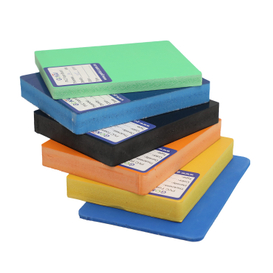
PP hollow sheet, also called polypropylene corrugated sheet, coroplast sheet, correx board, or corrugated plastic sheet, is generally produced by extrusion. It has two relatively flat PP faces separated by parallel internal ribs, creating a lightweight twin-wall panel.
This construction makes PP hollow sheet especially useful where paperboard would absorb moisture, lose strength, or fail after repeated handling. Corrugated polypropylene is widely used because it is lightweight, durable, moisture-resistant, and suitable for packaging, signage, construction protection, and industrial applications.
For packaging engineers, converters, distributors, and project buyers, PP hollow sheet offers a practical balance between cost, durability, and processability.
| Performance factor | PP hollow sheet performance | Why it matters to buyers |
|---|---|---|
| Weight | Lightweight hollow-core construction | Reduces manual handling effort and transport burden |
| Moisture resistance | Does not absorb water like paperboard | Suitable for humid, wet, cold-chain-adjacent, and outdoor temporary uses |
| Chemical resistance | PP performs well against many common oils, solvents, and water at normal temperatures | Useful for industrial separators, warehouse applications, and protective components |
| Fabrication | Can be cut, scored, creased, welded, die-cut, riveted, or assembled | Supports custom boxes, layer pads, dividers, bins, and displays |
| Printability | Smooth faces can support screen, UV, digital, or other suitable print processes | Enables branded signs, point-of-sale displays, and promotional boards |
| Reusability | Can support repeated-use packaging designs when properly specified | Helps reduce dependence on single-use protective materials |
| Recyclability | Polypropylene-based sheets can be recovered through appropriate recycling streams | Supports circular-material and waste-reduction objectives |
PP-based corrugated plastic is recognized for moisture resistance, chemical resistance, workability, and a smooth printable surface. It is also commonly used to protect fragile goods, fit irregular product shapes, and create branded packaging or display materials.
The most successful PP hollow sheet projects begin with an application-specific design rather than an off-the-shelf thickness request.
Typical uses include:
- Returnable transit packaging and reusable logistics boxes.
- Automotive parts dividers, dunnage, sleeves, and layer pads.
- Warehouse bin inserts and material-handling separators.
- Printed retail displays and temporary promotional signage.
- Real-estate, election, event, and directional signs.
- Floor-protection sheets for construction and renovation sites.
- Agricultural bins, produce protection, and reusable field packaging.
- Temporary partitions, protective barriers, pet enclosures, and lightweight fabricated products.
For example, an automotive supplier may use a 4 mm to 6 mm PP hollow sheet—not merely as a flat separator, but as a converted returnable packaging system with die-cut partitions, edge protection, identification labels, and a color-coded assembly process. In that situation, the commercial value comes from reducing part damage and simplifying warehouse handling, not simply from buying a low-cost sheet.

Polycarbonate hollow sheet, often called multiwall polycarbonate sheet or twin-wall polycarbonate sheet, is a transparent or translucent structured panel made for glazing applications. It is fundamentally different from PP corrugated plastic in both appearance and end use.
Multiwall polycarbonate is frequently used for greenhouses, skylights, patio covers, canopies, walkways, atriums, and industrial or residential glazing because it combines light weight, structural rigidity, durability, and relatively simple installation.
Polycarbonate hollow sheets are generally selected when a project requires natural light, weather resistance, impact performance, and better thermal behavior than a single thin glazing panel.
Common advantages include:
- High impact resistance for glazing and protective-building applications.
- Light transmission for greenhouses, skylights, canopies, and daylighting systems.
- Multiwall air chambers that improve thermal insulation compared with single-layer panels.
- Lower weight than glass, helping reduce installation and support-structure demands.
- UV-protected surface options to support outdoor durability and reduce weathering.
- Structural stiffness for roofing, vertical glazing, partitions, and covered walkways.
Industry guidance commonly describes twin-wall and multiwall polycarbonate as a lightweight alternative to glass for greenhouses, roofing, conservatories, skylights, and canopies. It also notes that UV-protected products can filter more than 98% of UV rays and are designed for a broad service-temperature range.
Polycarbonate hollow sheets are appropriate for projects where customers need light to pass through the panel while retaining impact resistance and insulation.
Common applications include:
- Commercial and agricultural greenhouses.
- Skylights and roof daylighting systems.
- Patio covers, pergolas, canopies, and carports.
- Walkway covers and platform shelters.
- Conservatories, sunrooms, and pool enclosures.
- Interior partitions and architectural glazing.
- Industrial sidewalls and translucent roofing.
- Agricultural barns, sheds, and protective light-transmitting panels.
A greenhouse project illustrates the difference clearly. PP hollow sheet may be useful for reusable produce crates, seedling tray supports, temporary signs, or packaging around the greenhouse operation. But the roof and sidewall glazing typically require polycarbonate hollow sheet because the panel needs light transmission, outdoor durability, and thermal performance.

Although the two products are both hollow-core plastic sheets, their buyer profiles and technical priorities are very different.
| Selection criterion | PP hollow sheet | Polycarbonate hollow sheet |
|---|---|---|
| Primary material | Polypropylene | Polycarbonate |
| Typical appearance | Opaque or colored; can also be translucent | Clear, translucent, tinted, or specialty glazing finishes |
| Core use | Packaging, signage, protection, partitions, fabricated products | Roofing, glazing, greenhouse panels, skylights, canopies |
| Moisture performance | Strong choice for wet or humid handling conditions | Suitable for outdoor glazing when correctly installed and specified |
| Print and branding | Excellent option for signage and graphic applications | Not generally the first choice for high-volume printed signage |
| Light transmission | Usually not the main design objective | A core reason for selection |
| Thermal insulation | Limited, depending on thickness and structure | Important benefit of multiwall chamber design |
| Fabrication | Cutting, creasing, welding, riveting, die cutting, folding | Cutting and installation with proper profiles, tapes, and expansion gaps |
| Reusable packaging | Highly suitable | Usually not the preferred option |
| Roofing and daylighting | Not the standard choice | Highly suitable |
The key takeaway is simple: choose PP hollow sheet when you need a durable, washable, printable, reusable plastic board; choose polycarbonate hollow sheet when you need transparent or translucent impact-resistant glazing with daylighting and insulation benefits.
A supplier quote becomes meaningful only when the technical brief is complete. Asking only for "4 mm hollow sheet" leaves too much room for variation in raw material, wall thickness, weight, stiffness, additives, surface quality, color consistency, and converting suitability.
For OEM projects, provide a specification that explains how the material will actually be used.
Start with the real operating conditions:
1. Is the sheet used indoors, outdoors, or in a mixed environment?
2. Will it contact water, cleaning agents, oil, dust, or chemicals?
3. Does it need to withstand UV exposure?
4. Is the product a one-time-use item or a returnable asset?
5. Does it need to be printed, welded, folded, or die-cut?
6. Are transparency and light transmission required?
7. Does the product need flame-retardant, antistatic, conductive, or UV-stabilized performance?
This first step often determines the material family. A reusable warehouse divider may require PP with antistatic or flame-retardant options. A greenhouse roof requires UV-protected multiwall polycarbonate with the right thickness, light transmission, and installation accessories.
A stronger RFQ includes measurable requirements such as:
- Material type: PP or polycarbonate.
- Sheet thickness and target weight per square meter.
- Sheet width, length, tolerance, and cut-to-size requirements.
- Color, transparency, opacity, and surface finish.
- Flute or rib direction.
- UV stabilization requirements.
- Flame-retardant, antistatic, conductive, or corona-treated options.
- Printing method and ink compatibility.
- Fabrication method: die cutting, scoring, welding, riveting, folding, or CNC cutting.
- Packaging format, pallet configuration, labeling, and shipping destination.
- Required documentation, inspection standards, and sample approval process.
For PP hollow sheet, thickness alone does not guarantee strength. A 4 mm sheet with different grammage, resin quality, internal rib geometry, or outer-wall thickness can perform very differently in stacking, impact, and repeated-use conditions.
The best OEM process uses samples to confirm real-world performance before volume production.
A useful sample-validation plan may include:
- Folding or creasing tests for fabricated PP packaging.
- Print adhesion tests for signs and displays.
- Drop, vibration, or compression simulations for returnable packaging.
- Exposure tests for humidity, handling, and cleaning conditions.
- Fit checks with the customer's products, pallets, racks, or installation profiles.
- Light transmission and visual inspection for polycarbonate glazing.
- Installation trials to verify expansion gaps, sealing, and fastener positioning.
This process is especially important for global buyers because a technically acceptable sheet can still fail commercially if it does not convert smoothly, print consistently, fit the intended equipment, or survive the expected logistics cycle.
Experienced purchasers typically avoid five common errors.
- Treating PP hollow sheet and polycarbonate hollow sheet as substitutes. They share a hollow structure but serve fundamentally different performance needs.
- Selecting by lowest unit price only. Lower-cost material can lead to poor printability, brittle fabrication, inconsistent weight, or early failure in reuse.
- Ignoring additives. UV, flame-retardant, antistatic, and conductive performance should be specified at the beginning, not requested after production.
- Overlooking conversion requirements. Die cutting, welding, creasing, and printing can reveal issues that are invisible in a flat-sheet inspection.
- Neglecting installation details for polycarbonate. Proper sealing, UV-side orientation, thermal expansion allowance, and compatible profiles are essential for a durable glazing system.

Gokai supplies PP hollow sheets and polycarbonate hollow sheets for global customers seeking reliable material solutions and flexible OEM service. Whether your requirement is reusable packaging, protective dunnage, printed signage, temporary construction protection, greenhouse glazing, a skylight system, or a custom fabricated component, the best result begins with a clear technical brief and a sample-based validation process.
Contact Gokai with your drawing, application photos, target thickness, required dimensions, quantity, color, additive requirements, and destination port. Our team can help translate your application into an OEM hollow-sheet specification designed for performance, conversion efficiency, and consistent supply.
In most industrial and packaging contexts, yes. PP hollow sheet, corrugated plastic sheet, corrugated polypropylene sheet, correx board, and coroplast-style sheet are commonly used terms for extruded twin-wall polypropylene board. Terminology can vary by region and supplier, so buyers should confirm the resin type, thickness, weight, and intended application in the specification.
The best thickness depends on product weight, handling frequency, container design, stacking load, and whether the sheet will be fabricated into boxes, dividers, or layer pads. Rather than choosing solely by thickness, evaluate sheet weight, rib structure, outer-wall durability, fold performance, and trial-sample results.
Yes. PP corrugated sheet has a smooth surface that can support processes such as screen printing, UV printing, and digital printing when the surface preparation and ink system are suitable. This makes it a common material for temporary signage, retail displays, and branded protective packaging.
Yes. Multiwall polycarbonate is widely used for greenhouse glazing because it can transmit light while offering low weight, impact resistance, and thermal benefits from its internal air chambers. UV-protected grades are particularly important for outdoor installations.
For many glazing applications, polycarbonate hollow sheet can be a practical alternative to glass because it is lighter and impact resistant. However, final selection should consider building-code requirements, fire performance, panel thickness, framing system, load conditions, optical requirements, and local installation standards.
Yes, but the product should be specified for the exposure conditions. Standard PP sheets may degrade under prolonged sunlight, so outdoor projects often need UV-stabilized material and an expected-service-life discussion with the supplier.
Send the application, material type, thickness, grammage or target strength, sheet size, color, quantity, additives, fabrication requirements, printing requirements, packaging method, inspection standards, and shipping destination. Product drawings and photos of the final use are especially helpful.
1. Laird Plastics. "[What Is Corrugated Fluted Material?]" Explains the role of flutes in traditional corrugated material, common flute categories, packaging performance, and printing approaches. [lairdplastics]
2. Laird Plastics. "[Unlocking the Potential of Corrugated Plastic]" Discusses polypropylene corrugated plastic sheets, their lightweight and moisture-resistant characteristics, and packaging applications. [lairdplastics]
3. Museum of Fine Arts, Boston, CAMEO. "[Coroplast]" Provides material reference information about corrugated polypropylene/polyethylene board, including moisture resistance, chemical behavior, and sensitivity to sunlight exposure. [cameo.mfa]
4. AC Plastics. "[Multiwall Polycarbonate Sheets for Roofing & Glazing]" Lists typical multiwall polycarbonate applications including greenhouses, skylights, patio covers, atriums, and commercial projects. [acplasticsinc]
5. Simply Plastics. "[A Guide to Twinwall and Multiwall Polycarbonate]" Describes multiwall polycarbonate performance, UV protection, temperature range, impact resistance, thermal insulation, and common glazing applications. [simplyplastics]
6. Piedmont Plastics. "[Benefits and Uses of Corrugated Plastic Sheets]" Covers PP corrugated plastic properties and use cases in construction, packaging, signage, and temporary shelters. [piedmontplastics]
7. Deluxe Packaging. "[Unveiling the Strength of Corrugated Plastic Sheets]" Discusses corrugated plastic structure, moisture resistance, chemical resistance, printability, and packaging use cases. [deluxepkg]