Shanghai Gokai Industry Co,.Ltd.
Call Us: +86-18918606548
Call Us: +86-18918606548
- Product Name
- Product Keyword
- Product Model
- Product Summary
- Product Description
- Multi Field Search
Views: 288 Author: Gokai Publish Time: 2026-09-17 Origin: Site


Content Menu
● Polycarbonate Solid Sheet at a Glance
● Why Choose Polycarbonate Solid Sheet?
>> High Impact Resistance for Safer Designs
>> Glass-Like Transparency With Lower Weight
>> Heat Resistance and Dimensional Stability
● Polycarbonate Solid Sheet vs. Acrylic vs. Glass
● How OEM Buyers Should Specify Polycarbonate Sheet
>> 1. Define the Application Environment
>> 2. Select Thickness Based on Function, Not Guesswork
>> 3. Choose the Right Surface and Protection Options
>> 4. Confirm Testing, Samples, and Documentation
● Fabrication and Installation Best Practices
>> Cutting and Drilling Polycarbonate Sheet
>> Allow for Thermal Expansion
>> Clean Without Damaging the Surface
● Common Applications of Polycarbonate Solid Sheet
>> Industrial and Manufacturing Applications
>> Construction and Architectural Applications
>> Retail, Display, and Commercial Applications
>> Transportation and Specialty Equipment
● Why Work With Gokai for OEM Polycarbonate Solid Sheet?
● Request a Polycarbonate Solid Sheet OEM Quote
>> 1. What is the difference between solid polycarbonate sheet and hollow polycarbonate sheet?
>> 2. Is polycarbonate solid sheet stronger than acrylic sheet?
>> 3. Can polycarbonate sheet be used outdoors?
>> 4. Does polycarbonate scratch easily?
>> 5. Can polycarbonate solid sheet be cut, drilled, and thermoformed?
>> 6. How do I choose the right polycarbonate sheet thickness?
>> 7. Does polycarbonate expand in hot weather?
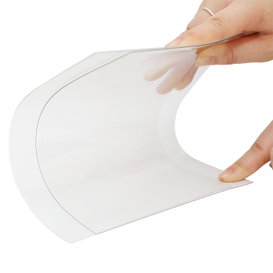
Polycarbonate solid sheet is a transparent, high-impact engineering thermoplastic sheet used when a project needs glass-like clarity, substantially better impact resistance, lower weight, and flexible fabrication options. For architects, fabricators, equipment manufacturers, distributors, and OEM buyers, the right polycarbonate sheet grade can improve safety, reduce handling risk, and support customized designs across global markets.
At Gokai, we work with buyers who need more than a standard clear plastic panel. They often need OEM polycarbonate solid sheets in specific thicknesses, colors, surface finishes, sizes, protective-film options, and application-oriented performance grades. Whether the product is intended for machine guarding, safety glazing, retail displays, construction, transportation, or industrial equipment, selecting the correct material specification is essential.

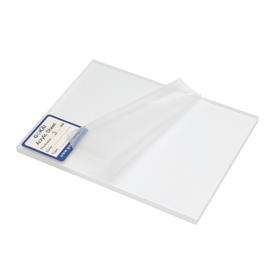
Polycarbonate, often abbreviated as PC, is a high-performance thermoplastic known for its unusual combination of transparency, toughness, thermal performance, and processability. Unlike hollow or multiwall polycarbonate panels, a solid polycarbonate sheet has a dense, flat, continuous structure similar in appearance to glass or acrylic sheet.
This structure makes solid PC sheet especially useful in applications that demand:
- High impact resistance
- Optical clarity
- Safety performance
- Lightweight construction
- Cutting, drilling, bending, or thermoforming
- Custom OEM dimensions and finishes
- Outdoor weathering performance when UV protection is specified
Typical polycarbonate sheet density is approximately 1.20 g/cm³, which helps make it significantly lighter than glass. Depending on grade and thickness, clear sheets can also offer high light transmission, often in the range of approximately 81% to 90%.
| Property | Typical Polycarbonate Solid Sheet Performance | Why It Matters |
|---|---|---|
| Density | Approximately 1.20 g/cm³ | Supports lightweight designs and easier handling |
| Light transmission | Approximately 81%–90%, thickness-dependent | Suitable for clear guards, glazing, and display applications |
| Impact resistance | Very high; some tests report “no break” under Charpy conditions | Helps reduce shattering risk in safety-critical uses |
| Heat deflection temperature | Approximately 127–140°C, grade- and test-dependent | Supports applications exposed to moderate heat |
| UV performance | Depends on UV cap layer, coating, or stabilized grade | Important for outdoor glazing and long-term clarity |
| Surface hardness | Lower than glass and acrylic | Abrasion-resistant coatings may be needed |
| Thermal expansion | Higher than glass | Installation clearance is necessary |
The exact values always depend on sheet grade, thickness, color, coating, test standard, and processing method. OEM buyers should request a current technical data sheet and, where applicable, fire-test documentation, optical data, and sample approval before mass production.
The biggest advantage of polycarbonate solid sheet is not one isolated property. It is the balance between clarity, durability, safety, and design flexibility.
For example, glass can provide excellent optical quality and scratch resistance, but it is heavy and can break into dangerous fragments. Acrylic can offer outstanding clarity and good weatherability, but it is more brittle than polycarbonate. A solid PC sheet is often selected when impact resistance is the primary design requirement.
Polycarbonate is widely recognized as an exceptionally tough transparent plastic. Technical data for commercial PC sheet grades commonly show very high impact performance. In certain Charpy impact tests, sheet products are reported as "no break," while notched Izod impact values can exceed 65 kJ/m² for specific grades.
This makes polycarbonate a practical candidate for:
- Machine safety guards
- Protective viewing windows
- Security partitions
- Equipment covers
- Face shields and protective barriers
- Transportation glazing
- Stadium and public-facility barriers
- Impact-resistant display enclosures
However, "virtually unbreakable" should not be treated as an absolute engineering guarantee. Impact performance can vary with sheet thickness, temperature, notch condition, edge quality, fastening design, and chemical exposure. A responsible supplier should evaluate the actual use environment rather than rely on generic claims.
Clear polycarbonate can provide high light transmission while weighing substantially less than comparable glass. That lower mass can simplify transport, reduce installation effort, and make large panels easier to handle in fabrication or construction environments.
For OEM applications, this benefit can affect the entire product design. A lighter transparent cover may reduce hinge load, support-frame requirements, shipping weight, and installation complexity.
Polycarbonate is used in applications that experience elevated service temperatures, such as machine enclosures, lighting covers, electrical housings, transportation components, and industrial viewing panels. Published data for commercial PC sheet products list heat deflection temperatures around 127°C at 1.8 MPa and around 139°C at lower loading conditions.
This does not mean every PC sheet is suitable for every high-temperature environment. Buyers should evaluate:
- Continuous operating temperature
- Peak temperature exposure
- Mechanical loading during heat exposure
- Thermal cycling
- Fire and smoke requirements
- Contact with heat-generating equipment
- Local building-code requirements
For demanding projects, the grade selection should be based on actual engineering criteria instead of a general "heat-resistant plastic" description.
Many buyers compare polycarbonate, acrylic, and glass because all three materials can be transparent and used for glazing or protective panels. The best choice depends on the application's safety, appearance, environmental, and cost requirements.

| Material | Main Strength | Main Limitation | Best-Fit Applications |
|---|---|---|---|
| Polycarbonate solid sheet | Exceptional impact resistance and fabrication flexibility | Easier to scratch without a hard coat | Machine guards, safety glazing, protective barriers, equipment covers |
| Acrylic sheet | Strong optical clarity and better surface hardness than standard PC | More brittle under high impact | Retail displays, signage, light boxes, decorative panels |
| Glass | Excellent scratch resistance and premium optical appearance | Heavy and breakable | Windows, interior partitions, premium architectural applications |
| Abrasion-resistant polycarbonate | PC impact performance plus improved surface durability | Higher cost and grade-specific processing considerations | Public-facing guards, transport glazing, high-touch protective panels |
A practical buying rule is simple:
- Select polycarbonate solid sheet when impact safety is the leading priority.
- Select acrylic sheet when appearance, clarity, and better scratch resistance matter more than extreme impact strength.
- Select glass when scratch resistance, rigidity, and conventional architectural appearance are more important than weight and impact performance.
For applications involving frequent cleaning, contact, abrasion, or public use, consider a hard-coated or abrasion-resistant PC grade. Certain commercial products combine UV protection with improved abrasion and chemical resistance on one surface.
A common source of procurement problems is an incomplete specification. Asking for "clear polycarbonate sheet" alone may not be enough to ensure the correct product arrives for the intended application.
An effective OEM specification should address the following points.
Start with the real operating conditions rather than sheet color or thickness alone.
Ask:
- Is the product used indoors or outdoors?
- Will it receive direct sunlight?
- Is impact resistance safety-critical?
- Will users touch or clean the surface frequently?
- Is chemical exposure expected?
- Does the panel need to be clear, tinted, frosted, embossed, or opaque?
- Must the sheet meet fire-performance or local regulatory requirements?
- Will it be cold-bent, thermoformed, CNC-machined, or printed?
For outdoor applications, UV-protected grades are important. Commercial PC sheet portfolios include products with UV-resistant cap layers on one or both sides, designed to improve outdoor weathering performance.
Thickness affects stiffness, impact behavior, light transmission, forming capability, weight, cost, and installation requirements. A thin sheet may work well as an equipment cover, while a larger unsupported safety panel may require a thicker gauge or additional framing.
There is no universal "best thickness." Instead, evaluate:
- Panel width and height
- Mounting method
- Support spacing
- Wind or impact load
- Deflection tolerance
- Required optical performance
- Transportation and installation constraints
- Applicable project standards
ISO 11963 covers requirements for solid, flat extruded polycarbonate sheets and includes thickness-related light-transmittance criteria. Its cited values decrease as sheet thickness increases, reinforcing the need to match optical expectations to the selected gauge.
Standard clear PC is often appropriate for enclosed, controlled indoor environments. More demanding uses may require value-added surface treatments.
Common OEM options include:
- UV-protected polycarbonate sheet for outdoor exposure
- Abrasion-resistant polycarbonate sheet for improved scratch performance
- Frosted or textured sheet for privacy and reduced glare
- Tinted or bronze polycarbonate sheet for solar control or appearance
- Anti-fog or specialty-coated grades for application-specific requirements
- Protective masking film for shipping and fabrication protection
- Custom cutting and CNC machining for ready-to-install components
At Gokai, the OEM discussion should focus on the final product experience. For instance, a clear machine guard may prioritize impact resistance and visibility, while a retail enclosure may need a hard-coated face to reduce scratching from daily cleaning.
Before approving a production order, ask the supplier for documentation appropriate to the project. This may include:
- Technical data sheet
- Material identification and grade information
- Thickness tolerance
- Optical performance data
- UV-protection description
- Fire-test reports where required
- REACH, RoHS, or other market-specific compliance documents when applicable
- Sample sheets or fabricated prototypes
- Packaging and protective-film details
This step supports consistency across production batches and helps procurement teams avoid unexpected differences in color, clarity, surface quality, or processing behavior.
Polycarbonate is fabrication-friendly, but it should not be treated exactly like glass or acrylic. Correct processing reduces stress cracking, edge damage, deformation, and optical defects.

Polycarbonate solid sheet can be cut using suitable saws, routers, CNC equipment, or other controlled fabrication methods. The key is minimizing heat buildup and avoiding rough, highly stressed edges.
Use these practical guidelines:
- Keep protective film in place during cutting whenever possible
- Use sharp, suitable tooling
- Support the sheet to reduce vibration
- Avoid excessive feed pressure or friction heat
- Remove chips and dust regularly
- Deburr edges carefully
- Test machining parameters before full-scale production
For drilled holes, avoid forcing fasteners tightly against the sheet. Polycarbonate moves more with temperature changes than glass, so holes and fastening systems should allow controlled movement.
One of the most important installation considerations is thermal expansion. Polycarbonate expands and contracts as temperature changes. A commonly cited design rule is to allow approximately 0.032 inch per foot for a 70°F temperature change in one direction.
If expansion is ignored, panels may bow, stress around fasteners, crack at constrained points, or develop visual distortion.
To reduce risk:
1. Provide sufficient clearance around panel edges.
2. Use oversized holes where the fastening system requires movement.
3. Avoid over-tightening screws or clamps.
4. Use compatible gaskets, seals, and washers.
5. Consider the expected temperature range during installation and service.
6. Follow the sheet manufacturer's installation guidance for the chosen grade.
Standard polycarbonate can scratch more easily than glass. Cleaning should therefore be gentle and compatible with the sheet grade.
Recommended approach:
- Rinse loose dust and particles first
- Use lukewarm water with mild soap
- Wipe with a soft microfiber cloth or non-abrasive sponge
- Avoid dry wiping dusty surfaces
- Avoid harsh solvents unless compatibility has been confirmed
- Test unfamiliar cleaners on a small hidden area first
For public-facing panels, transport glazing, frequently cleaned machine guards, or high-contact barriers, consider abrasion-resistant PC sheet rather than relying on standard sheet performance.
The versatility of polycarbonate solid sheet allows it to serve multiple sectors. The correct grade and fabrication method should always follow the actual performance requirements.
- Machine guards and equipment safety covers
- Control-panel windows
- Factory partitions
- Protective enclosures
- Robot-cell viewing panels
- Inspection windows
- CNC-machined components
- Transparent housings
- Skylights and roof glazing
- Canopies and awnings
- Interior partitions
- Sound barriers
- Security glazing
- Walkway covers
- Protective glazing for public areas
- Point-of-purchase displays
- Protective counter screens
- Product display boxes
- Light-diffusion panels
- Signage components
- Transparent shelving and dividers
- Vehicle interior partitions
- Safety shields
- Equipment windows
- Luggage and protective components
- Lighting covers
- Transparent protective panels
Global OEM buyers need a supplier that understands more than material availability. They need dependable communication, repeatable quality, practical customization, and packaging that protects sheets through international transportation.

Gokai can support polycarbonate solid sheet projects with a procurement-focused approach:
- OEM-oriented customization for dimensions, thickness, colors, surface options, and protective film
- Application-based recommendations for standard, UV-protected, tinted, frosted, or abrasion-resistant requirements
- Custom cutting and processing support to help reduce downstream fabrication work
- Sample evaluation before mass production
- Export-ready packaging designed to help protect surface quality during global shipping
- Clear specification communication for international customers and technical purchasing teams
The strongest OEM partnership begins with a clear brief. Share the intended application, drawings, annual quantity, target market, performance requirements, and preferred sheet dimensions. This enables a supplier to recommend a more appropriate material configuration and avoid over-specifying or under-specifying the product.
If you are sourcing polycarbonate solid sheet for OEM manufacturing, safety glazing, machine guarding, construction, display, or industrial equipment, Gokai can help you develop a specification that fits your project.
Send us your required thickness, size, color, application, drawings, order quantity, and destination market. Our team can help evaluate suitable options for UV protection, abrasion resistance, fabrication, protective film, packaging, and export delivery.
Contact Gokai today to request samples, technical information, or a custom OEM polycarbonate solid sheet quotation.
Solid polycarbonate sheet is dense and flat throughout its cross-section, giving it a glass-like appearance and strong impact performance. Hollow or multiwall polycarbonate sheet contains internal channels that reduce weight and improve thermal insulation, making it more common in roofing and greenhouse applications.
Yes, polycarbonate is generally selected for much higher impact resistance than acrylic. Acrylic usually offers better surface hardness and can have excellent optical clarity, but it is more likely to crack or break under severe impact.
Yes, but outdoor projects should use a UV-stabilized or UV-protected polycarbonate sheet. UV cap layers and specialized coatings help reduce weathering-related degradation and maintain appearance over time.
Standard polycarbonate is more prone to scratching than glass and acrylic. For high-contact, frequently cleaned, or public-facing applications, an abrasion-resistant or hard-coated polycarbonate grade is often the better choice.
Yes. Polycarbonate can be cut, drilled, routed, bent, and thermoformed using appropriate processing methods. Fabrication settings should be controlled to prevent overheating, residual stress, rough edges, or cracking.
Choose thickness based on panel size, support spacing, mounting method, impact exposure, deflection requirements, optical needs, and applicable standards. Request technical support and test samples for critical projects rather than selecting thickness only by visual preference.
Yes. Polycarbonate experiences thermal expansion and contraction as temperatures change. Installers should provide movement allowance around edges and fasteners to help prevent stress, bowing, or cracking.
1. Laird Plastics. "[What is Polycarbonate?]" Accessed September 2026. Source article reviewed for baseline definitions, general benefits, comparative positioning, and fabrication topics. [lairdplastics]
2. SABIC. "[LEXAN™ Sheet Portfolio]." Product portfolio reference for UV-resistant cap-layer options and abrasion-resistant polycarbonate sheet examples. [sabic]
3. SABIC. "[Polycarbonate (PC)]." Reference for polycarbonate's impact strength, transparency, thermal stability, and use in demanding industries. [sabic]
4. International Organization for Standardization. "[ISO 11963:2019 — Plastics: Polycarbonate Sheets]." Reference for requirements and light-transmittance criteria associated with flat extruded solid polycarbonate sheets. [cdn.standards.iteh]
5. Plaskolite. "[TUFFAK® Extruded Polycarbonate Sheets]." Reference for typical density, impact data, light-transmission range, UV-enhanced sheet options, and haze information. [plaskolite]
6. Exolon Group. "[Makrolon® FR Solid Flame Retardant Polycarbonate Sheet]." Reference for illustrative heat-deflection, impact, density, and light-transmission data. [exolongroup]
7. Interstate Plastics. "[Polycarbonate Fabrication Guide: Tips & Best Practices]." Reference for thermal-expansion allowance guidance during fabrication and installation. [interstateplastics]
8. KTK Kunststoff. "[LEXAN™ EXTRITE™ Sheet Processing Guide]." Reference for combined UV, abrasion, chemical-resistance, and transparency claims for specialty coated PC sheet. [ktk-kunststoffe]