Shanghai Gokai Industry Co,.Ltd.
Call Us: +86-18918606548
Call Us: +86-18918606548
- Product Name
- Product Keyword
- Product Model
- Product Summary
- Product Description
- Multi Field Search
Views: 247 Author: Gokai Publish Time: 2026-09-12 Origin: Site


Content Menu
● Why HDPE Sheet Is Popular for Marine and Outdoor Projects
● Start With the Right HDPE Sheet Specification
>> Choose thickness based on span and load
>> Confirm the service environment
● The Most Important HDPE Fabrication Issue: Thermal Expansion
>> How to design for expansion and contraction
● How to Cut HDPE Sheet Cleanly
● Drilling, Routing and Edge Finishing HDPE Board
● Why Conventional Adhesives Usually Fail on HDPE
>> Better joining methods for HDPE
● Fastening HDPE Marine Board Correctly
>> Recommended fastening practices
● HDPE Sheet Safety and Workshop Practices
● OEM HDPE Sheet Solutions From Gokai
● Request a Custom HDPE Sheet Quote
● FAQ
>> 1. Can HDPE marine board replace plywood?
>> 2. What is the best way to cut HDPE sheet?
>> 3. Can I glue HDPE sheets together?
>> 4. Do HDPE sheets expand in hot weather?
>> 5. What fasteners should I use for HDPE marine board?
>> 6. Can HDPE sheet be CNC machined?
>> 7. How do you clean HDPE marine board?
HDPE marine board—often called marine-grade polyethylene sheet—is a practical replacement for painted wood, plywood, and laminate in wet, high-use environments. For boat builders, marine fabricators, OEM brands, and DIY users, the material offers strong moisture resistance, easy cleanability, and dependable machining with common woodworking tools.
However, successful HDPE sheet fabrication depends on more than choosing the right thickness. You must account for thermal expansion, use suitable cutting tools, avoid relying on conventional adhesives, and select fastening methods that support long-term service in outdoor and marine conditions.
At Gokai, we supply HDPE sheets and customized OEM plastic-board solutions for global customers. This guide shares practical, fabrication-focused advice for cutting, routing, drilling, finishing, fastening, and specifying HDPE marine board for real projects.

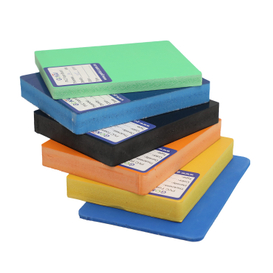
HDPE marine board is a sheet material made from high-density polyethylene. It is widely used for non-structural marine, outdoor, commercial, and industrial components because it does not absorb water in the way that wood and plywood can.
Depending on the grade and application, HDPE sheet may be used for:
- Boat cabinetry and cockpit components
- Bait boards and fish-cleaning stations
- Instrument panels and console faces
- Storage doors, hatch covers, and drawer fronts
- Dock accessories and outdoor furniture
- Wash-down areas, shower floors, and locker liners
- Food-processing work surfaces
- Chemical-resistant machine guards and fabricated parts
- OEM outdoor equipment panels
A key point for buyers and fabricators: HDPE marine board is not automatically a structural substitute for plywood, aluminum, or reinforced composites. It can flex under load, especially in larger unsupported spans. If a part must carry people, equipment, motors, or major structural loads, assess thickness, support spacing, fastener pull-through resistance, and the entire assembly design before production.
The original StarBoard-focused guidance correctly emphasizes that polyethylene sheet should be supported frequently and should not be used as a direct replacement for structural boat components such as engine stringers or unsupported decking.
HDPE sheet has become a preferred material where water, humidity, stains, and repeated cleaning make painted wood or laminated panels difficult to maintain.
| Benefit | Why it matters in fabrication and end use |
|---|---|
| Moisture resistance | HDPE does not rot, delaminate, or swell like many wood-based materials in wet environments |
| Low-maintenance surface | Users generally do not need to paint, seal, or varnish the sheet |
| Easy machining | Standard saws, routers, drills, and CNC equipment can process it effectively |
| Chemical resistance | Useful for wash-down zones, marine environments, utility applications, and certain industrial settings |
| Impact resistance | Helps parts tolerate normal knocks and repeated use |
| Color-through construction | Surface scratches are often less visually disruptive than scratches on coated panels |
| OEM flexibility | Suppliers can provide custom thicknesses, colors, dimensions, CNC-cut blanks, and fabricated components |
For OEM sourcing, these advantages can reduce the number of downstream finishing steps. A wood part may need cutting, edge sealing, sanding, coating, drying, and later refinishing. A properly specified HDPE part can often move from cutting and machining directly to assembly.
That said, "maintenance-free" should not be interpreted as "design-free." HDPE still requires smart engineering around heat, load, fastening, and tolerance control.
Before cutting the first panel, define the part's operating environment and mechanical requirements. The best HDPE sheet for a small cup holder is not necessarily the best choice for a wide outdoor cabinet door or a heavily loaded shelf.
Common sheet thicknesses include 1/4 inch, 1/2 inch, 3/4 inch, and thicker formats for specialized fabrication. In general:
- 1/4 inch HDPE sheet works well for trim, small panels, liners, lightweight covers, and low-load applications.
- 1/2 inch HDPE sheet is suitable for many cabinet faces, doors, accessory panels, and medium-duty fabricated parts.
- 3/4 inch HDPE sheet offers greater stiffness for shelves, table tops, bait boards, seat components, and larger panels.
- 1 inch and thicker HDPE sheet may be appropriate for heavy-duty fabricated components, machining blocks, cutting boards, spacers, and applications requiring deeper threading or more stiffness.
Do not select thickness based only on appearance. A 1/2-inch board may look substantial but can flex noticeably when used as a long, unsupported shelf. Design support points, brackets, ribs, or subframes into the product rather than expecting the plastic sheet alone to behave like a structural panel.
Ask these questions before finalizing an HDPE specification:
1. Will the part be installed indoors, outdoors, or in a marine environment?
2. Will it experience direct sunlight and significant temperature changes?
3. Will it carry static weight, dynamic loads, or repeated impact?
4. Does the application require food-contact, UV-stabilized, recycled-content, textured, or color-matched material?
5. Will the component be CNC machined, thermoformed, welded, or mechanically assembled?
6. Does the finished part require brand-specific colors, logos, packaging, or OEM labeling?
For global OEM projects, early specification alignment reduces avoidable problems such as color mismatch, insufficient stiffness, incorrect sheet tolerances, or a fastening layout that fails after seasonal temperature changes.
One of the biggest differences between HDPE and wood is how the material responds to temperature. HDPE expands and contracts more than many common building materials, so parts that fit tightly during fabrication can bow, bind, or distort after installation.
King StarBoard fabrication guidance indicates that the material can change by approximately 1/32 inch per linear foot for every 40°F temperature change. It recommends leaving room for movement, using oversized fastener holes where needed, and avoiding installations trapped tightly between two fixed objects.
Use these practices when fabricating HDPE sheet parts:
- Leave expansion gaps around large panels, cabinet doors, and enclosed outdoor components.
- Avoid butt-fitting two large HDPE panels with no gap between them.
- Use oversized holes or slots for fasteners when temperature movement is expected.
- Do not overtighten screws or bolts, because a tightly clamped panel may not be able to move naturally.
- Use one fixed reference point when appropriate, then allow the remaining fasteners to accommodate movement.
- Consider color and heat exposure, since darker sheets can absorb more heat in direct sun.
- Test a prototype before committing to a full OEM production run, especially for long panels or outdoor assemblies.

Imagine a 48-inch-wide black HDPE cabinet door installed on a boat deck or outdoor kitchen. If the door is tightly captured in a rigid frame and every fastener hole fits exactly around the screw shank, warm weather may cause the panel to expand with nowhere to go. The result can be bowing, edge rubbing, stress around fasteners, or difficulty opening the door.
A better design uses suitable clearance around the panel, pre-drilled fastener holes, correct hardware, and a fastening pattern that allows controlled movement.
HDPE can be cut with common woodworking equipment, including circular saws, table saws, jigsaws, band saws, and CNC routers. The goal is not simply to cut through the material—it is to create a clean edge without excessive heat buildup, melting, chipping, or blade marks.
Fabrication guidance for King StarBoard recommends standard woodworking tools, carbide router bits, and carbide saw blades. It also notes that sharp tooling and appropriate feed rates matter for achieving a clean cut.
| Tool | Best use | Practical tip |
|---|---|---|
| Table saw | Straight cuts and production-size panels | Use a sharp carbide blade and stable sheet support |
| Circular saw | On-site cutting and large sheets | Use a guide rail or straightedge for consistent cuts |
| Jigsaw | Curves, cutouts, and internal openings | Use a fine-tooth blade and avoid forcing the tool |
| CNC router | OEM parts, repeat production, detailed shapes | Secure the sheet properly and optimize feeds for the thickness |
| Band saw | Curves and shaped components | Maintain blade sharpness and a steady feed rate |
| Router | Edge profiling, trimming, roundovers, slots | Carbide bits help create smoother, repeatable edges |
- Use sharp carbide-tipped blades and router bits.
- Support the sheet close to the cut line to reduce vibration.
- Maintain a steady feed rate; do not push too slowly if it causes friction and melting.
- Avoid dull blades, which can create rough edges and heat damage.
- Make test cuts before machining a full production batch.
- Use a dust-collection system or suitable extraction where practical.
- For precision OEM parts, use CNC nesting layouts to reduce material waste and improve repeatability.
Fine-tooth blades are commonly recommended for cleaner cuts. A 60- to 80-tooth blade is often cited for circular-saw work on marine board, while aggressive ripping blades may generate more heat and leave rougher edges.

HDPE is generally forgiving to drill and route, but clean results require support, correct hole sizing, and attention to heat.
Standard twist drills, spade bits, and hole saws can work effectively on HDPE. For the best result:
1. Mark hole locations accurately before drilling.
2. Clamp or support the sheet to prevent movement.
3. Drill pilot holes before larger holes when accuracy matters.
4. Use moderate pressure rather than forcing the bit.
5. Withdraw the bit periodically on thick material to clear chips and reduce heat.
6. Back up the exit side of thin panels to improve edge quality.
7. Deburr the hole with a countersink, scraper, chamfer tool, or light sanding.
For through-holes that will receive fasteners, make the hole large enough to accommodate thermal movement where required. This is especially important for wide exterior panels and long marine components.
A router can produce polished-looking finished edges, rounded corners, grooves, recessed areas, and custom profiles. Use a sharp carbide router bit, keep the workpiece securely supported, and make multiple shallow passes when removing significant material.
Common edge options include:
- Straight trimmed edge
- Small roundover edge
- Chamfered edge
- Bullnose edge
- Routed finger pull
- Tongue-and-groove or interlocking profile
- CNC engraved logo, serial number, or part identifier
For premium OEM products, edge finishing is not merely cosmetic. Smooth edges improve handling, reduce snag points, make cleaning easier, and help the product look intentional rather than improvised.
HDPE has a low surface energy, which makes it difficult for ordinary construction adhesives, wood glue, and many general-purpose epoxies to form a dependable bond. This is one of the most common mistakes in HDPE fabrication.
The original article correctly advises that standard adhesives are not a reliable primary joining method and that mechanical fastening or welding should be used instead. King StarBoard support guidance similarly states that standard adhesives generally should not be used across its engineered-plastic product range, though specialized products may sometimes be used under controlled conditions.
- Stainless-steel screws: Suitable for many marine and outdoor assemblies.
- Bolts with washers and backing plates: Better for higher-load parts and repeated-use assemblies.
- Threaded inserts: Helpful where a part will be assembled and disassembled repeatedly.
- Plastic welding: A suitable option for compatible HDPE parts when performed using the correct process and filler material.
- Interlocking mechanical design: Tabs, slots, dovetails, tongue-and-groove features, and captured panels can reduce dependence on adhesive.
If an adhesive is absolutely necessary, consult the adhesive manufacturer, test the complete assembly, and understand that surface preparation, adhesive selection, load direction, temperature, and exposure conditions all affect performance. Do not assume a bond that holds in a workshop will survive vibration, salt spray, heat, and repeated loading in the field.
Fastening is where good fabrication becomes reliable fabrication. Even a perfectly machined HDPE part may fail in service if fasteners are undersized, over-tightened, exposed to corrosion, or installed without allowing movement.
- Use marine-grade stainless-steel hardware in saltwater or wet environments.
- Pre-drill pilot holes before driving screws.
- Countersink or counterbore holes where a flush finish is needed.
- Use washers to distribute load across the plastic surface.
- Use backing plates for heavily loaded connections.
- Avoid overtightening, which can deform the sheet or restrict expansion.
- Consider oversized holes or slots for long panels exposed to changing temperatures.
- Add threaded inserts for hinges, access doors, or components that need repeated removal.
For hinges, handles, seating hardware, and other high-cycle applications, do not rely on a small screw threaded directly into thin HDPE. Use an appropriate backing plate, insert, through-bolt, or reinforced design.
Although HDPE is easy to machine, safe fabrication still matters. Cutting, drilling, routing, sanding, and thermal welding can generate chips, dust, heat, or fumes.
A high-density polyethylene safety data sheet advises avoiding dust inhalation, using suitable personal protective equipment, maintaining ventilation or local exhaust where necessary, and preventing dust from entering drains or the environment.
- Wear safety glasses or a face shield when cutting and routing.
- Use hearing protection around saws, routers, and CNC machinery.
- Keep hands clear of blades and rotating bits.
- Use clamps, jigs, push sticks, and machine guards.
- Maintain sharp tools to reduce heat and kickback risk.
- Control dust and chips with collection equipment or regular cleanup.
- Ensure ventilation when heating or welding polyethylene.
- Follow equipment manuals and site-specific safety procedures.
Never use an open flame to "finish" an HDPE edge. It can damage the surface, create inconsistent results, and introduce unnecessary fire and fume hazards.
For OEM buyers, the value of an HDPE supplier goes beyond supplying raw plastic sheets. The right manufacturing partner should help align material properties, machining requirements, part geometry, surface finish, packaging, and production consistency.
Gokai can support global customers with HDPE sheet and customized board solutions for marine, industrial, commercial, and outdoor applications. Depending on your project, an OEM program may include:
- Custom sheet dimensions and thicknesses
- Color matching and branded color options
- Textured or smooth surface requirements
- CNC-cut blanks and finished components
- Routed edges, drilled holes, slots, and cutouts
- Custom packaging and export-ready palletization
- Sample development and pre-production validation
- Repeat-order production for distributors, brands, and fabricators
Before requesting a quotation, prepare a drawing or sample that includes dimensions, thickness, color, required quantity, tolerances, surface requirements, end-use environment, and any machining details. This helps the supplier recommend the most efficient production route and reduces revisions later.

HDPE marine board can deliver excellent long-term performance when it is designed and fabricated correctly. Choose the right sheet thickness, machine it with sharp tools, allow for thermal movement, use mechanical fastening or suitable welding methods, and test demanding assemblies before mass production.
If you are sourcing HDPE sheet, marine board, CNC-machined plastic parts, or private-label OEM products, contact Gokai with your drawings, target application, material specifications, and estimated order volume. Our team can help you select a practical HDPE solution for your market and manufacturing requirements.
HDPE marine board can replace plywood in many non-structural wet-area, cabinetry, trim, hatch, work-surface, and accessory applications. However, it should not automatically replace structural plywood, reinforced composites, or engineered framing members. HDPE has different stiffness and load-bearing behavior, so support spacing and fastening must be evaluated for each project.
A table saw, circular saw, jigsaw, band saw, or CNC router can cut HDPE effectively. Use sharp carbide-tipped tools, support the sheet well, and maintain a steady feed rate to avoid overheating or melting. Fine-tooth blades are generally preferred for a cleaner edge finish.
Ordinary adhesives usually do not bond reliably to HDPE because of its low surface energy. Mechanical fastening and plastic welding are generally more dependable options. Specialized polyethylene adhesives may be considered only after application-specific testing.
Yes. HDPE expands and contracts with temperature changes. Large panels, especially dark-colored exterior panels, should include clearance gaps and appropriately sized fastening holes to prevent bowing, binding, or stress around fasteners.
For marine environments, use corrosion-resistant stainless-steel screws, bolts, washers, and backing hardware. Pre-drill holes, avoid overtightening, and use washers or backing plates for loaded connections. For large outdoor panels, allow for thermal movement in the fastening design.
Yes. HDPE is commonly CNC routed for repeatable OEM parts such as panels, doors, covers, templates, machine guards, signage components, storage systems, and marine accessories. CNC machining can improve dimensional consistency, reduce manual labor, and support custom branding or cutout patterns.
For normal cleaning, use mild liquid soap and water with a soft synthetic or nylon brush. Avoid harsh abrasives that may alter the surface finish. Test specialty cleaners in an inconspicuous area first, especially on textured or colored sheets.
1. Acme Plastics. "[Simple Tips for Working with Starboard]." Accessed September 2026. Used for baseline guidance on non-structural use, thickness selection, woodworking tools, mechanical fastening, and routine cleaning. [acmeplastics]
2. TAP Plastics. "[Information Guide for Tools and Fabrication Techniques]." Used for thermal-expansion guidance, screw-hole clearance, fastener installation, and mechanical assembly principles for StarBoard-type HDPE sheet. [tapplastics]
3. Professional Plastics. "[Working With King StarBoard]." Used for saw and router recommendations, tool guidance, oversized-hole practices, threaded inserts, and expansion behavior. [professionalplastics]
4. Jamestown Distributors. "[What Adhesives Are Recommended for King StarBoard?]." Used for guidance on the limitations of standard adhesives and the preference for mechanical fastening. [support.jamestowndistributors]
5. Plaskolite. "[Safety Data Sheet: High Density Polyethylene]." Used for dust-control, ventilation, PPE, and housekeeping considerations during HDPE fabrication. [plaskolite]
6. Total Plastics. "[The Ultimate Guide to Marine Board: With King Starboard]." Used for practical cutting, drilling, fastening, and marine hardware recommendations. [totalplastics]