Shanghai Gokai Industry Co,.Ltd.
Call Us: +86-18918606548
Call Us: +86-18918606548
- Product Name
- Product Keyword
- Product Model
- Product Summary
- Product Description
- Multi Field Search
Views: 279 Author: Gokai Publish Time: 2026-09-14 Origin: Site


Content Menu
● Why Polycarbonate Solid Sheet Is Used in Security Applications
● Security Polycarbonate Sheet Applications
>> Protective Security Glazing
>> Machine Guards and Industrial Safety Barriers
>> Retail and Public-Space Protection
● Polycarbonate vs. Other Security Plastics
● How to Specify Security Polycarbonate Sheet Correctly
>> 1: Identify the Actual Threat
>> 2: Define Size, Thickness, and Support
>> 3: Verify Compliance Requirements Early
● OEM Considerations for Global Buyers
● Practical Installation and Care Tips
>> Do
>> Avoid
● Choose Gokai for Custom Polycarbonate Sheet Supply
>> 1. Is polycarbonate sheet stronger than glass?
>> 2. Can solid polycarbonate sheet be used for security windows?
>> 3. Is polycarbonate sheet bulletproof?
>> 4. What thickness of polycarbonate sheet is best for security applications?
>> 5. Does polycarbonate scratch easily?
>> 6. Can polycarbonate sheet be used outdoors?
>> 7. What information should I provide for an OEM polycarbonate sheet quote?
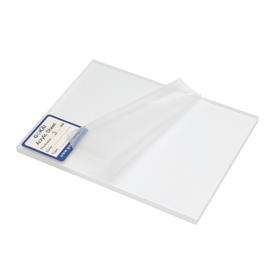
When visibility and protection must work together, a security polycarbonate sheet is often the most practical material starting point. For applications such as machine guards, retail barriers, transit glazing, protective windows, equipment enclosures, and anti-vandal panels, solid polycarbonate sheet can deliver high impact resistance, optical clarity, low weight, and flexible fabrication options.
At Gokai, we supply Polycarbonate Solid Sheet for global OEM projects where dimensions, thickness, color, surface treatment, protective film, packaging, and production consistency matter. However, choosing the right sheet is not simply a matter of selecting the thickest panel available. Security performance depends on the threat, installation method, framing system, environment, compliance requirements, and whether the panel must resist impact, forced entry, abrasion, fire exposure, UV weathering, or ballistic threats.
This guide explains how to choose polycarbonate sheet for security applications, where it performs best, what limitations buyers should understand, and how OEM customers can specify a solution that is reliable from prototype to full-scale production.

Security materials must do more than look strong. They must help protect people, equipment, inventory, and facilities while preserving clear sightlines and allowing practical fabrication.
Solid polycarbonate sheet is widely selected because it combines several useful properties:
- High impact resistance for applications exposed to thrown objects, accidental contact, debris, or attempted vandalism
- Excellent transparency for counters, windows, guards, visibility panels, and protective barriers
- Lower weight than comparable glass solutions, helping reduce handling and installation complexity
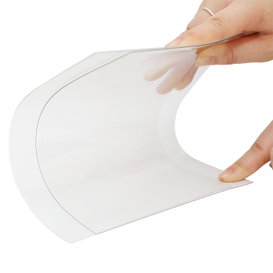
- Cold-bending capability in suitable applications, allowing curved guards and architectural designs
- Ease of fabrication, including cutting, drilling, routing, and thermoforming when correct processing methods are used
- Available UV-protected and coated grades for outdoor use or high-contact environments
- OEM flexibility for custom sizes, thicknesses, colors, masking films, and export packaging
For security glazing and protective barriers, polycarbonate is often preferred over conventional glass because it can absorb substantial impact energy and deform rather than shatter into sharp fragments. Many commercial polycarbonate products are described as having impact resistance roughly 200 to 250 times greater than ordinary glass, but buyers should treat such claims as material-level comparisons—not as a guarantee that every panel will meet a particular project's security requirement.
Polycarbonate solid sheet is not a one-size-fits-all security product. Its value comes from matching its properties to a defined application and risk level.

Clear polycarbonate panels can be used in interior or exterior protective glazing systems where visual access is essential. Typical examples include:
- Retail service counters and cashier screens
- Ticket booths and visitor reception windows
- Stadium, school, and public-venue barriers
- Transit shelters and station glazing
- Warehouse observation windows
- Equipment-room viewing panels
- Vandal-resistant interior partitions
For these applications, polycarbonate can reduce the risk associated with breakage while maintaining a clean and transparent appearance. Yet, the frame, anchors, gaskets, edge clearance, and panel support are just as important as the sheet itself. A high-performance panel can fail as a system if the edges are improperly restrained or fasteners are too close to drilled holes.

In manufacturing environments, transparent machine guards allow operators to observe processes while helping contain debris, moving components, splashes, or accidental contact.
Polycarbonate solid sheet is a common choice for:
- CNC machine viewing windows
- Robotic-cell safety guards
- Conveyor shields
- Warehouse equipment barriers
- Laboratory protective screens
- Production-line enclosures
- Electrical cabinet viewing panels
For industrial buyers, clarity alone is not enough. The panel should be specified according to the likely impact source, operating temperature, chemicals, cleaning routine, and maintenance schedule. A sheet exposed to repeated abrasion, oils, solvents, or cleaning chemicals may require a hard-coated or chemical-resistant grade.
Retail, hospitality, healthcare, and public-facing facilities often need clear barriers that maintain communication and visibility without creating a closed-off atmosphere.
Common uses include:
- Customer-service partitions
- Anti-vandal shields
- Pharmacy counters
- Museum display protection
- Food-service sneeze guards
- Queue-management barriers
- Information kiosks and self-service machines
For frequent-contact installations, a hard-coated polycarbonate sheet can be worth considering. Standard polycarbonate is highly impact resistant, but its surface can scratch more easily than glass if it is cleaned improperly or exposed to repeated abrasion. A protective coating can improve scratch and chemical resistance, although buyers should always request data for the exact grade and coating system being quoted.
Outdoor installations can place additional demands on clear plastic sheets. Sunlight, temperature swings, moisture, airborne dust, cleaning practices, and vandalism all affect long-term performance.
Potential outdoor applications include:
- Bus-stop and transit-shelter glazing
- Outdoor signs and display covers
- Stadium and sports-facility barriers
- Protective panels for public infrastructure
- Security windows in low- to medium-risk locations
- Vending-machine and kiosk windows
For these projects, specify a sheet with UV protection designed for the intended exposure conditions. UV-protected polycarbonate can help preserve appearance and performance over time, but no material should be selected for long-term exterior use without reviewing the supplier's warranty, weathering data, and installation guidance.
Polycarbonate is powerful, but it is not automatically the best choice for every security project. Acrylic mirror, specialty acrylic, and PETG can each serve useful roles depending on the project's main objective.
| Material | Key Strength | Best-Fit Security Uses | Main Consideration |
|---|---|---|---|
| Solid polycarbonate sheet | High impact resistance and toughness | Protective glazing, machine guards, anti-vandal panels, safety shields | Can scratch without a hard coat; system design matters |
| Acrylic mirror sheet | Lightweight, shatter-resistant reflective surface | Surveillance mirrors, blind-corner visibility, retail observation | Not intended for high-impact glazing |
| Specialty acrylic sheet | Optical clarity and tailored performance options | Display protection, one-way observation, scratch-resistant surfaces | Impact performance is generally lower than polycarbonate |
| PETG sheet | Good formability and useful toughness | Formed guards, packaging, covers, tamper-evident applications | Usually less impact-resistant than polycarbonate for demanding protection |
Acrylic mirror is particularly useful for improving visibility in corridors, warehouses, loading areas, retail stores, and parking facilities. It provides a safer alternative to glass mirrors in many high-traffic spaces.
PETG can be a strong option where forming, cost control, and transparent protection are priorities. However, if the application involves repeated high-energy impacts, aggressive vandalism, or industrial impact hazards, polycarbonate is usually the more appropriate starting point.
The important procurement lesson is simple: Do not specify by material name alone. Specify by performance requirement.
A clear request for quotation helps suppliers recommend the right sheet and avoid expensive redesigns later. Before contacting a polycarbonate sheet manufacturer or OEM supplier, define the application in practical terms.
Start with the risk the panel must manage:
1. Accidental impact from people, carts, tools, or falling items
2. Flying debris from industrial equipment
3. Deliberate vandalism or thrown objects
4. Repeated contact and abrasion
5. Outdoor weathering and UV exposure
6. Chemical splash or frequent cleaning
7. Forced-entry resistance
8. Ballistic protection
These risks are not interchangeable. A panel for a machine guard should not be specified in the same way as a panel for a retail transaction window or a ballistic barrier.
Security performance depends heavily on panel geometry. A thicker panel is not always enough if it has a large unsupported span or weak fastening design.
Provide the following information:
- Finished panel dimensions
- Required thickness range
- Flat or curved installation
- Frame type and support on each edge
- Fastener locations and hole requirements
- Indoor or outdoor installation
- Expected temperature range
- Required transparency, tint, color, or opacity
- Surface coating requirements
- Quantity per order and annual volume
For drilled panels, fabrication details matter. Polycarbonate expands and contracts with temperature changes, so installation must allow appropriate movement. Holes, edge distances, washers, gaskets, and frame clearances should follow engineered installation recommendations for the specific project.
Projects in construction, transportation, public infrastructure, or high-risk facilities may require testing or documentation beyond standard material data sheets.
For example, ASTM E84 is commonly used to evaluate the surface-burning characteristics of building materials. The test measures flame spread and smoke developed indices under defined conditions; it does not mean that a material is universally "fireproof."
For ballistic applications, buyers should distinguish between a material claim and a tested system. UL 752 is a test standard for bullet-resisting equipment, covering materials, devices, assemblies, and fixtures used in barriers designed to protect against armed attack.
That distinction is critical:
- A standard polycarbonate sheet is not automatically bullet-resistant
- A thick panel is not automatically UL 752 rated
- A completed glazing assembly must be tested or validated for the intended threat level
- Frames, joints, edge retention, fasteners, and installation details may affect overall performance
If a project requires ballistic protection, communicate the specified threat level and request documentation for the full tested or engineered assembly. Avoid marketing terms such as "bulletproof" unless they are supported by the relevant test standard and system scope.
For OEM customers, purchasing polycarbonate sheet is not only a materials decision. It is also a supply-chain, quality-control, and conversion-efficiency decision.

At Gokai, a productive OEM discussion should include the details that influence manufacturing consistency and delivery readiness:
- Sheet thickness tolerance required for downstream fabrication
- Width and length options that reduce cutting waste
- Clear, tinted, colored, embossed, or frosted appearance
- UV-protected, hard-coated, or flame-retardant grade requirements
- Single-side or double-side protective film
- Custom branding, labels, barcodes, and packaging
- Pallet configuration and container-loading requirements
- Sample approval process before mass production
- Quality inspection criteria and batch traceability
A useful OEM workflow looks like this:
1. Define the application and performance target.
2. Select the appropriate polycarbonate grade and thickness range.
3. Confirm dimensions, tolerance, color, and surface-protection requirements.
4. Approve samples or trial sheets for forming, machining, printing, or installation.
5. Finalize packaging specifications for export handling.
6. Establish quality checks for appearance, thickness, masking, and shipment condition.
7. Move into repeat production with documented specifications.
This process helps minimize common problems such as unsuitable protective film, inconsistent tint, transit damage, excess fabrication scrap, or a sheet grade that does not perform as expected after thermoforming or outdoor exposure.
Correct handling helps preserve the value of a high-quality security polycarbonate panel.
- Keep protective film on during cutting, drilling, routing, and handling
- Use clean tools and proper cutting methods to reduce edge damage
- Allow for thermal expansion in frames and drilled-hole assemblies
- Use compatible gaskets, sealants, and washers
- Clean with mild soap, water, and a soft cloth
- Test cleaners and adhesives on a sample before full use
- Inspect high-contact panels regularly for scratches, cracks, or loose hardware
- Using abrasive pads, dry wiping, or aggressive solvents
- Installing panels with no allowance for expansion
- Over-tightening fasteners
- Assuming all coatings, sealants, or cleaners are compatible
- Describing a standard sheet as ballistic-rated without verified testing
- Selecting material only by price rather than total installed performance
The best security solution begins with a clear understanding of the application, threat level, environment, and fabrication process. For many projects, Gokai Polycarbonate Solid Sheet can provide the transparency, impact resistance, processing flexibility, and OEM customization needed to build safer products and spaces.
Whether you are sourcing sheets for industrial guards, retail barriers, transit glazing, protective windows, equipment enclosures, or custom fabricated security products, our team can help you evaluate thickness, dimensions, surface options, UV protection, protective film, and export packaging requirements.
Contact Gokai today to discuss your OEM polycarbonate sheet project, request samples, or receive a customized quotation for your target market.
Polycarbonate sheet is widely valued for its exceptionally high impact resistance compared with ordinary glass. It can flex and absorb energy instead of breaking into sharp fragments. However, "stronger" should be defined by the application because scratch resistance, stiffness, fire performance, optical requirements, and installed-system design can differ.
Yes. Solid polycarbonate sheet can be used for many protective window and security-glazing applications, including retail counters, industrial viewing panels, public-space barriers, and anti-vandal installations. The correct thickness, framing system, UV protection, and fastening design should be selected according to the actual risk and environment.
Standard polycarbonate sheet should not be called bulletproof. Ballistic protection requires a specifically engineered and tested glazing assembly. UL 752 addresses bullet-resisting equipment, including the materials, assemblies, and fixtures used to form protective barriers.
The right thickness depends on panel size, impact risk, frame support, installation environment, and required standard. Thin sheets may be suitable for light protective covers, while larger or higher-impact applications may require thicker sheet and engineered support. Always evaluate the entire installed system rather than thickness alone.
Uncoated polycarbonate can scratch more easily than glass, especially in high-contact or abrasive environments. For public-facing counters, machine windows, kiosks, and frequently cleaned surfaces, buyers may consider a hard-coated polycarbonate grade and should use non-abrasive cleaning methods.
Yes, provided the sheet grade is designed for outdoor exposure and includes appropriate UV protection. Buyers should confirm the supplier's weathering data, warranty scope, temperature limitations, cleaning guidance, and installation recommendations before specifying it for exterior projects.
Provide the intended application, thickness, sheet dimensions, color or transparency, UV or hard-coat requirements, protective-film preference, quantity, packaging requirements, destination market, and any test or certification requirements. This helps the supplier recommend a sheet that is suitable for both performance and production.
1. Piedmont Plastics. "[Top Plastic Materials Used for Security Applications]." Discusses acrylic mirror, polycarbonate, specialty acrylic, and PETG for surveillance, protective glazing, impact resistance, and tamper-evident uses. [piedmontplastics]
2. UL Solutions. "[What Does It Take to Stop a Speeding Bullet?]." Explains that UL 752 is a test standard for bullet-resisting equipment, including materials, devices, assemblies, and fixtures used in protective barriers. [ul]
3. Intertek. "[ASTM E84: Standard Test Method for Surface Burning Characteristics of Building Materials]." Explains the ASTM E84 test method and its measurement of flame spread and smoke developed indices. [intertek]
4. LEXAN™ Film & Sheet Products. "[Impact-Resistant Plastics: Polycarbonate]." Provides information on impact-resistant polycarbonate sheet, optical quality, protective glazing use, and performance across a broad temperature range. [film-sheet-products]
5. DefenseLite. "[Polycarbonate Unbreakable Glass: Complete Guide to Security Glazing]." Provides context on polycarbonate impact performance, security-glazing applications, and the difference between impact-resistant material and defined ballistic protection. [defenselite]
6. Capital Testing. "[ASTM E84—Surface Burning Characteristics]." Provides additional context on ASTM E84 comparative measurements for flame spread and smoke density. [capitaltesting]