Shanghai Gokai Industry Co,.Ltd.
Call Us: +86-18918606548
Call Us: +86-18918606548
- Product Name
- Product Keyword
- Product Model
- Product Summary
- Product Description
- Multi Field Search
Views: 233 Author: Gokai Publish Time: 2026-09-07 Origin: Site


Content Menu
>> Supplier Evaluation Criteria
● Why Source ABS Sheet From Spain?
● Top ABS Sheet Manufacturers and Suppliers
>> 1. Shanghai Gokai Industry Co., Ltd. — Flexible OEM Partner for Global Buyers
>>> Core Strengths
>> 2. PLASNOR, S.L. — Specialist in ABS, ABS/PMMA, ABS/ASA, and Technical Co-Extrusion
>>> Core Strengths
>>> OEM/ODM Scope
>> 3. CANDEA Industrias Plásticas, S.A.U. — ESD and Custom Co-Extruded ABS Sheets
>>> Core Strengths
>>> Publicly Stated Quality and Compliance Capabilities
>>> OEM/ODM Scope
>> 4. Parnoplast, S.L.U. — Custom ABS Sheet for Automotive, Electronics, and Flame-Retardant Uses
>>> Core Strengths
>>> OEM/ODM Scope
>> 5. ELIX Polymers — Upstream ABS Resin Partner for Advanced Formulations
>>> Core Strengths
>>> Why It Matters to Sheet Buyers
>> 6. Glas Form — ABS/PS Converting, Thermoforming, and Prototype Support
>>> Core Strengths
>>> OEM/ODM Scope
>> 7. Plastic Express — Made-to-Measure ABS Supply for Professional Buyers
>>> Core Strengths
>>> OEM/ODM Scope
● ABS Sheet Technical Buying Guide
>> Understand the Grade Before Comparing Prices
>> Internal Procurement Tip: The "Regrind Ratio" Trap
● Common ABS Sheet Sourcing Risks
>> 1. "Virgin ABS" That Is Actually a Mixed Formulation
>> 2. Certification That Does Not Apply to Your Thickness
>> 3. Confusing CE With Material Compliance
>> 4. Moisture-Related Thermoforming Defects
>> 5. Color Matching Based on a Screen Image
● How to Verify a Supplier Before Ordering
>> 2: Request Material Documentation
>> 3: Validate ISO Certification
>> 4: Approve Samples Correctly
>> 5: Use a Pre-Shipment Inspection Plan
● FAQ
>> 1. How can I confirm that a supplier's ISO 9001 certificate is still valid?
>> 2. Is CE certification required for ABS sheet sold in Europe?
>> 3. What is the minimum order quantity for custom ABS sheet?
>> 4. How do I determine whether ABS/PMMA is better than standard ABS?
>> 5. Why do ABS sheets develop bubbles during thermoforming?
Spain is a credible sourcing base for technically specified ABS sheet, especially for buyers needing co-extruded structures, ESD performance, flame-retardant grades, transport-oriented compliance, or local European converting support. However, the Spanish market is relatively specialized: several companies are true sheet extruders, while others operate as material distributors, converters, or upstream ABS-resin specialists.
For procurement teams, the strongest supplier is not automatically the closest one. The right partner depends on whether your priority is certified engineering performance, small-batch OEM flexibility, large-volume co-extrusion, local stock availability, or landed-cost competitiveness. This guide assesses leading Spanish ABS sheet suppliers and relevant international OEM options using criteria that matter in actual sourcing projects. Spain exported approximately US$1.45 billion in plastic articles in 2025, indicating a substantial industrial plastics supply base, although this figure covers plastic articles broadly rather than ABS sheet alone.
This is not a generic name list. The companies below were screened based on publicly verifiable manufacturing, material, technical, and customer-service capabilities.

| Evaluation area | What professional buyers should verify | Why it matters for ABS sheet |
|---|---|---|
| Manufacturing capability | Extrusion/co-extrusion lines, factory scale, production scope, in-house processing | Determines supply continuity, dimensional consistency, and ability to handle repeat orders |
| Material expertise | ABS, ABS/PMMA, ABS/PC, flame-retardant, conductive/ESD, recycled-content options | Different end uses require different formulations—not merely “ABS plastic” |
| Quality systems | ISO 9001, ISO 14001, batch traceability, incoming-resin control, final inspection | Reduces the risk of mixed grades, uncontrolled recycled content, or unstable lot quality |
| Compliance support | REACH, RoHS, UL 94, ECE R118, food-contact declarations where applicable | Essential for automotive, electronics, public transport, and EU-bound products |
| OEM and customization | Custom color, texture, gloss, thickness, width, protective film, roll/sheet formats | Important for branded housings, thermoformed components, signage, and appliance parts |
| Commercial flexibility | MOQ, sampling, communication speed, payment terms, export packaging | Often decisive for smaller brands and new-project validation |
| Logistics readiness | Pallet protection, moisture protection, Incoterms support, export documentation | ABS can absorb moisture; poor packing can create thermoforming defects |
A supplier should ideally provide a product-specific Technical Data Sheet (TDS), Material Safety Data Sheet (SDS), Declaration of Conformity where relevant, batch or lot number, and test reports tied to the ordered grade—not merely a generic company certificate.
Spain has a mature plastics-conversion ecosystem, with industrial activity spread across Catalonia, the Basque Country, the Madrid/Toledo area, Valencia, and Tarragona. Buyers can find companies focused on sheet extrusion, co-extrusion, thermoforming, plastics machining, automotive applications, electronics, and advanced polymer formulation.
The country's competitive advantage is particularly visible in applications requiring engineering support rather than commodity sheet alone:
- Automotive interior and exterior trim components.
- Refrigerator liners, appliance housings, and industrial enclosures.
- Thermoformed trays and technical packaging.
- ABS/PMMA sanitaryware and appearance-critical formed products.
- ESD-safe electronics production fixtures and transport trays.
- Flame-retardant transport, public-space, and electrical applications.
For example, PLASNOR in the Basque Country specializes in styrenic sheet materials including ABS, ABS/PMMA, ABS/ASA, ABS/PC, flame-retardant materials, and blends. Its ABS is positioned for impact-resistant machine housings and vehicle interior trim, while its ABS/PMMA range supports co-extruded surface-performance applications.
Spain also has access to upstream polymer expertise. ELIX Polymers, headquartered in Tarragona, is a major European ABS-resin producer and offers technical material support across sectors including automotive, healthcare, home appliances, electronics, construction, and toys.
That said, Spanish sourcing is often best for EU-region delivery, technical consultation, certification-heavy projects, and responsive regional service. Buyers prioritizing very low MOQ, highly customized packaging, or price-sensitive export projects should compare Spanish options with qualified Asian OEM manufacturers.
Location: Shanghai, China
Business role: Global plastic-sheet supplier and OEM-oriented manufacturer
Best fit: Small and mid-sized brands, distributors, project buyers, importers, signage companies, fabricators, and buyers requiring custom commercial support
Shanghai Gokai Industry Co., Ltd. is included first not as a Spanish producer, but as a practical international sourcing alternative for buyers comparing Spanish ABS sheet suppliers with export-focused OEM factories. For procurement teams whose projects require flexibility, communication efficiency, custom specifications, and competitive landed costs, Gokai can be relevant alongside European manufacturers.
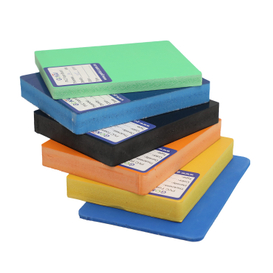
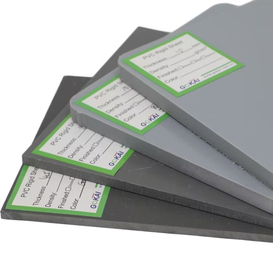
Gokai's broader product range includes ABS sheet, PVC foam board, WPC foam board, acrylic sheet, PVC sheet, polystyrene sheet, PET, PETG, aluminum composite panel, polycarbonate sheet, paper foam board, and PP hollow sheet. This multi-material capability can be useful for distributors or project buyers consolidating several plastic-sheet categories under one supply relationship. The company also presents ABS sheet for applications such as light boxes within its product portfolio.
- Flexible support for OEM and customer-specific projects.
- Broad portfolio that helps buyers consolidate multiple plastic-sheet purchases.
- Suitable for customers needing ABS sheet alongside acrylic, PVC, PETG, PC, or other board materials.
- Communication structure designed for international export buyers.
- Potentially more accessible for lower-volume launch projects than a large European technical extruder.
- Useful for customers that require customized dimensions, color matching, surface options, protective-film requirements, branding support, or export packing specifications.
Before placing an order, buyers should confirm the exact availability of:
- Virgin ABS versus recycled-content ABS.
- Standard ABS, textured ABS, smooth ABS, gloss ABS, matte ABS, or embossed surfaces.
- ABS/PMMA, UV-stabilized ABS, flame-retardant ABS, and other specialty grades.
- Thickness tolerance and sheet flatness requirements.
- Custom colors based on RAL, Pantone, or a physical color master.
- Sheet, roll, cut-to-size, or thermoforming-grade supply.
- PE protective film, pallet construction, corner protection, and moisture barrier packing.
- Third-party testing or shipment-specific inspection requirements.
Procurement perspective: Gokai is most suitable when buyers need a commercially agile supplier that can support OEM development, manage international communication efficiently, and serve smaller or medium-sized branded projects without forcing the buyer into a large industrial purchasing structure.

Location: Legazpi and Urretxu, Gipuzkoa, Spain
Founded: 1974
Business role: Manufacturer of multilayer thermoplastic sheets and rolls
Best fit: Automotive, mobility, machinery, appliance, sanitaryware, and thermoforming applications
PLASNOR is one of the most relevant Spanish manufacturers for buyers needing actual technical sheet-extrusion expertise rather than distribution-only service. The company has more than 50 years of experience and operates production facilities in Legazpi and Urretxu in northern Spain.
Its material portfolio includes HIPS, ABS, ABS/PMMA, ASA, ABS/ASA, flame-retardant materials, ABS/PC, and other specialized blends. This range makes PLASNOR especially relevant when a buyer's application needs more than general-purpose black or white ABS sheet.
- Strong focus on styrenic thermoplastic sheet systems.
- Experience with multilayer co-extrusion.
- Technical ABS/PMMA capability for appearance-critical surfaces.
- ABS/ASA and ASA options for outdoor exposure applications.
- Flame-retardant material options for applications subject to safety requirements.
- ABS/PC blends for applications requiring improved impact and temperature performance.
- In-house recycling approach for production offcuts and regenerated materials.
- Processing compatibility with thermoforming, machining, laser cutting, waterjet cutting, printing, bending, welding, and die cutting.
- Automotive interior components.
- Bus, caravan, and motorhome trim.
- Machine housings and technical casings.
- Refrigerator and appliance components.
- Outdoor equipment housings.
- Advertising bases and support components.
- Thermoformed technical parts.
PLASNOR is a strong candidate for buyers requiring:
- Multi-layer ABS sheet structures.
- Customized material formulations.
- Technical thermoforming-grade sheet.
- Flame-retardant material selection.
- Recycled-content or circular-material discussions.
- ABS/PMMA surface performance for sanitaryware and formed surface applications.
- Industrial conversion support in addition to sheet supply.
Procurement perspective: PLASNOR should be shortlisted when performance specification, co-extrusion know-how, and application engineering are more important than minimum price.
Location: Villaseca de la Sagra, Toledo, Spain
Founded: 1965
Business role: Technical thermoplastic sheet and coil extruder
Best fit: Electronics, ESD applications, automotive, energy storage, technical thermoforming, and sustainability-led procurement
CANDEA is a long-established Spanish technical plastics manufacturer with more than 60 years of experience. Its published capabilities include five co-extrusion lines, a 15,000 m² facility, custom material development, and technical thermoplastic sheets and coils for industrial applications.
The company is particularly notable for conductive ABS and ESD-oriented materials, which are relevant to electronics manufacturing, assembly areas, testing environments, battery-related applications, and static-sensitive component handling.
- Since 1965, with a stated focus on extrusion and co-extrusion.
- Five multilayer co-extrusion lines.
- Conductive ABS and high-performance ESD materials.
- Custom formulation and technical advisory support.
- Manufacturing for thermoforming, machining, milling, and other industrial conversion processes.
- Material options with up to 95% AENOR-certified recycled content, subject to product grade and application requirements.
CANDEA publicly lists:
- ISO 9001:2015 quality management.
- ISO 14001:2015 environmental management.
- ANSI/ESD S20.20.
- IEC 61340-5-1.
- UL 94 V-0 for relevant materials.
- REACH compliance.
- RoHS compliance.
- AENOR UNE-EN 15343 recycled-content certification.
- Batch traceability and a stated four-stage quality-control process.
- Custom thermoplastic formulations.
- Conductive and ESD ABS.
- Multi-layer co-extruded materials.
- Technical color and surface requirements.
- Recycled-content formulations.
- Sheet and coil supply for thermoforming.
- Application-specific compliance documentation.
Procurement perspective: CANDEA is one of the strongest Spanish options for buyers sourcing ESD, conductive, recycled-content, or compliance-sensitive ABS sheet. It is especially relevant when material traceability and certification documentation are non-negotiable.
Location: Viladecavalls, Barcelona area, Spain
Founded: 2008
Business role: Extruded plastic-sheet manufacturer
Best fit: Automotive, electronics, heavy equipment, toys, industrial housings, and projects requiring specific fire or transport compliance
Parnoplast is a Spanish sheet-extrusion company offering technical ABS grades for industrial applications. Its ABS sheets are positioned for heavy equipment, electronic devices, automotive components, toy-sector products, technical parts, and thermoformed applications.
A major differentiator is the company's published range of customization and compliance options. Parnoplast states that it can supply ABS in custom colors, including RAL, Pantone, or physical-sample matching; in thicknesses from 0.2 mm to 5.8 mm; in rolls or sheets; and with smooth, embossed, gloss, or matte finishes.
- Custom colors based on RAL, Pantone, or physical reference samples.
- Thickness range stated from 0.2 mm to 5.8 mm.
- Roll and sheet formats.
- Smooth, embossed, gloss, and matte finish options.
- UV-resistant technical grades.
- Flame-resistance certifications based on UL 94 classifications.
- Transport-use compliance support, including ECE R118.02 for applicable materials.
- Post-industrial recycled ABS sheet programs.
Parnoplast notes that generic ABS can discolor and become more brittle after prolonged UV exposure. It identifies black ABS as offering better protection against fading than many other colors. This is a useful reminder that "UV-resistant ABS" should never be assumed based on base resin alone; buyers should request a grade-specific weathering statement and test method.
- Custom color and texture.
- Thermoforming-grade ABS sheet.
- UV-resistant grades.
- Fire-retardant grades.
- Transport-related compliance.
- Recycled ABS sheet from post-industrial streams.
- Custom formats, finishes, and visual marking bands.
Procurement perspective: Parnoplast is a practical choice for buyers with defined aesthetic, flame-resistance, transport, or color-control requirements.
Location: La Canonja, Tarragona, Spain
Business role: ABS resin and ABS-blend manufacturer
Best fit: Large converters, compounders, sheet extruders, automotive programs, and buyers developing proprietary formulations
ELIX Polymers is not primarily a merchant ABS sheet supplier. It is an upstream material producer and one of Europe's recognized ABS-resin and derivative manufacturers. For buyers that manufacture their own ABS sheets, work with a contract extruder, or need resin-level formulation support, ELIX is a strategically important Spanish supplier.
The company offers application-oriented support across automotive, healthcare, household appliances, electronics, construction, and toy markets. Its stated approach includes technical support from material selection through processing and regulatory support.
- European ABS and ABS-blend expertise.
- Technical support for product development and processing.
- Relevant to automotive, medical, electronics, construction, and appliance sectors.
- Circular and bio-circular material direction through its E-LOOP portfolio.
- Tarragona production site reported as ISCC PLUS certified, enabling supply-chain traceability under a mass-balance approach for circular and bio-circular feedstocks.
If a buyer is developing a proprietary ABS/PMMA, ABS/PC, recycled ABS, or specialty color/impact/flame-retardant sheet program, the material producer can influence the final sheet's performance more than the sheet converter alone.
For high-volume programs, consider building a three-party technical discussion involving:
1. The ABS resin producer.
2. The sheet extruder.
3. The thermoformer or finished-part manufacturer.
This structure can accelerate root-cause analysis when problems occur with sag behavior, surface defects, color variation, shrinkage, odor, impact performance, or flame-test repeatability.
Procurement perspective: ELIX is most relevant for strategic materials development, not as the default source for cut-to-size commodity ABS sheet.
Location: Barcelona/Cabrera de Mar area, Spain
Business role: Plastic-sheet converter and fabricator
Best fit: Prototypes, fabricated components, short-to-medium production projects, and buyers seeking conversion services
Glas Form offers PS/ABS materials in sheets and rolls, with custom prototype design as well as downstream processing options. The company describes capabilities including machining, die cutting, thermoforming, handling, and bonding.
Its offer is particularly relevant when the buyer does not simply need raw ABS sheet but needs a partner to help turn sheet material into a component or prototype.
- PS/ABS sheets and rolls.
- Custom prototype support.
- Thermoforming and fabrication capability.
- Machining, die cutting, handling, and bonding.
- Application support for appliances, refrigeration components, vehicle parts, office products, and other plastic components.
- Prototype development.
- Fabricated PS/ABS components.
- Short-run design validation.
- Thermoformed and machined parts.
- Material and process advice for converting projects.
Procurement perspective: Glas Form is best evaluated as a conversion partner rather than a large-scale commodity ABS sheet mill. It can be valuable for buyers wanting prototype-to-part support in Spain.
Location: Spain
Business role: Plastic materials distributor and custom-size supplier
Best fit: Small orders, local professional buyers, maintenance needs, prototype projects, and cut-to-size requirements
Plastic Express provides made-to-measure ABS sheet for professional buyers, based on available stock and project requirements. It promotes customized dimensions and quotation support for more specific projects.
The company positions ABS as an impact-resistant engineering plastic suitable for automotive uses, machine covers, short-run prototypes, food-related applications where appropriate documentation is available, appliance housings, refrigerator doors, and luggage.
- Made-to-measure ABS supply.
- Accessible solution for local professional users.
- Useful for prototypes, replacement parts, and project-based purchases.
- Custom quotation process.
- Practical option where buying a full production quantity is unnecessary.
- Cut-to-size ABS.
- Stock-based customized dimensions.
- Small project quotations.
- Professional-buyer support.
Procurement perspective: Plastic Express should be considered for local, smaller-volume, and custom-cut sourcing. It is less likely to be the first choice for major OEM programs requiring dedicated formulation, high-volume extrusion capacity, or extensive compliance engineering.
The following comparison distinguishes between published capabilities and items that should be confirmed during RFQ. Where production capacity or MOQ is not publicly disclosed, procurement teams should treat it as an RFQ question—not an assumption.
| Supplier | Country | Core ABS focus | Published production indicators | MOQ approach | Certifications/compliance publicly stated | Best for |
|---|---|---|---|---|---|---|
| Shanghai Gokai Industry Co., Ltd. | China | ABS sheet plus multi-material plastic-sheet supply | Not publicly specified on the referenced page | Confirm by thickness, color, sheet size, and customization | Request product-specific reports and declarations during RFQ | OEM flexibility, export projects, small and mid-sized brands, mixed-sheet purchasing |
| PLASNOR | Spain | ABS, ABS/PMMA, ABS/ASA, ABS/PC, flame-retardant grades | Two Spain production plants; more than 50 years of experience | RFQ required | Grade-specific compliance should be confirmed | Co-extrusion, technical thermoforming, automotive and machinery |
| CANDEA Plastics | Spain | Conductive ABS, ESD, co-extruded technical materials | Five co-extrusion lines; 15,000 m² facility; 60+ years | RFQ required | ISO 9001, ISO 14001, ANSI/ESD S20.20, IEC 61340-5-1, UL 94 V-0, REACH, RoHS, AENOR recycled certification | Electronics, ESD, sustainable-content and compliance-critical projects |
| Parnoplast | Spain | Custom ABS, UV-resistant and flame-retardant grades | Extruded-sheet supplier; capacity not publicly stated | RFQ required | UL 94 classifications, ECE R118.02, specific UNE-EN certifications upon request | Automotive, electronics, heavy equipment, custom colors and finishes |
| ELIX Polymers | Spain | ABS resin and specialty ABS blends | Upstream resin producer; sheet capacity not applicable | Usually strategic/project-based; confirm | ISCC PLUS for Tarragona plant; product-specific approvals vary | Resin sourcing, formulation development, large converter programs |
| Glas Form | Spain | PS/ABS sheet and conversion | Conversion capabilities; capacity not publicly stated | Quote-based | Confirm by project | Prototypes, thermoforming, machining, fabricated components |
| Plastic Express | Spain | Stock and made-to-measure ABS | Distribution/custom cutting; capacity not applicable | Suitable for custom-size project quotes | Confirm by specific product | Local professional supply, cut-to-size orders, prototypes |
ABS sheet is made from acrylonitrile, butadiene, and styrene. Each contributes different performance characteristics:
- Acrylonitrile contributes chemical resistance, rigidity, heat resistance, and surface hardness.
- Butadiene contributes impact resistance and low-temperature toughness.
- Styrene contributes processability, rigidity, and surface appearance.
A basic ABS grade may be suitable for indoor machine covers or formed trays, but it can be unsuitable for long-term UV exposure, fire-regulated transport equipment, static-sensitive electronics applications, or glossy sanitaryware surfaces.
| Grade | Typical purpose | Questions to ask |
|---|---|---|
| General-purpose ABS | Housings, prototypes, indoor components | Is it virgin, recycled, or blended? What is the actual thickness tolerance? |
| Thermoforming ABS | Trays, housings, equipment covers, vehicle trim | What is the recommended forming window and drying procedure? |
| ABS/PMMA | Sanitaryware, glossy housings, premium visible surfaces | What is the PMMA cap-layer thickness and UV-performance data? |
| UV-stabilized ABS | Outdoor enclosures, equipment covers | What accelerated-weathering method and exposure duration were used? |
| Flame-retardant ABS | Electrical, transport, public-space applications | Which UL 94 classification applies at the actual ordered thickness? |
| ABS/PC | High-impact and elevated-temperature applications | What impact and Vicat/heat-deflection values are guaranteed? |
| Conductive/ESD ABS | Electronics production and static-control environments | What surface resistivity range is guaranteed, and under what test conditions? |
| Recycled ABS | Non-cosmetic industrial and circular procurement | What recycled-content percentage, source, traceability, odor, and lot consistency are controlled? |
PLASNOR states that ABS is dimensionally stable and suitable for painting, milling, and thermoforming, while noting that its ABS pallets receive reinforced protection because ABS is hygroscopic. This is important: moisture management affects material handling and thermoforming outcomes.
One industry issue that is often under-discussed online is the difference between recycled content, in-house production regrind, post-industrial recycled material, and uncontrolled mixed recycled feedstock.
These materials should not be treated as equivalent.
A supplier may describe a sheet as "recyclable" or "eco ABS," but that does not prove it has consistent properties or that it is appropriate for a visible, impact-critical, flame-rated, or food-contact-related application.
Before accepting a recycled or cost-reduced ABS quote, ask:
- Is the material 100% virgin, virgin plus in-house regrind, post-industrial recycled, or post-consumer recycled?
- What percentage of recycled content is included?
- Is the recycled content certified, for example through AENOR UNE-EN 15343 or another traceability scheme?
- Is recycled content used in the core only, in the entire sheet, or behind a virgin cap layer?
- Is there a maximum melt-flow-index range for each batch?
- How are odor, black specks, gels, contamination, and color drift controlled?
- Is the grade still covered by the claimed UL 94, ESD, food-contact, UV, or transport documentation?
CANDEA publicly identifies AENOR-certified recycled-content materials and batch traceability, while Parnoplast notes post-industrial recycling options for specific applications. Buyers should still request the evidence for the exact grade and formulation they will purchase.
The lowest quotation may include high levels of regrind, mixed recyclate, or a lower-cost polymer blend. This can cause poor impact resistance, inconsistent forming behavior, odor issues, surface defects, and color instability.
How to avoid it: Specify virgin-content requirements, allowable regrind percentage, recycled-content source, and inspection criteria in the purchase order.
A supplier may provide a UL 94 V-0 report for a 3 mm sheet while you purchase 1 mm material. Flame classification can differ by thickness.
How to avoid it: Request the full test report and verify the exact material grade, thickness, color, production site, standard version, and certificate validity.
A CE logo on a raw ABS sheet document does not automatically prove regulatory suitability.
How to avoid it: Identify the actual compliance requirement first. For example, request RoHS and REACH documentation for electronics-related applications, UL 94 for fire behavior, ECE R118 for transport, or an appropriate food-contact declaration for food-related use.
ABS can absorb moisture. If sheets are stored improperly or formed without suitable conditioning, surface bubbles, silver streaks, or visual defects may occur.
How to avoid it: Require moisture-protective packaging, inspect pallets upon receipt, record warehouse conditions, and ask the supplier for drying and forming guidance. PLASNOR specifically highlights reinforced packing for ABS because of its hygroscopic nature.
Digital color displays are not reliable color standards. A "white," "black," "grey," or brand color can vary substantially across batches, finishes, and lighting conditions.
How to avoid it: Approve a physical signed master sample under agreed lighting conditions. Specify RAL/Pantone plus gloss level, texture, batch tolerance, and acceptable color-difference limits where necessary.
ABS sheets can scratch, warp, absorb moisture, or suffer edge damage during international transport. A low product price can become expensive if pallets arrive damaged.
How to avoid it: Define protective film side, pallet type, edge board, corner protectors, interleaf materials, maximum stack height, container-loading method, and moisture-control requirements.
Your request for quotation should include:
- Application and end-use environment.
- Required polymer structure: ABS, ABS/PMMA, ABS/PC, ESD ABS, FR ABS, or recycled ABS.
- Thickness, width, length, density if relevant, and tolerance.
- Surface: smooth, matte, gloss, haircell, embossed, textured, or film-protected.
- Color requirement and matching standard.
- Form: roll, sheet, cut-to-size, or thermoforming blank.
- Required certifications and declarations.
- Annual volume, trial quantity, and forecast.
- Target Incoterm: EXW, FCA, FOB, CIF, DAP, or DDP.
- Required delivery date and destination port or warehouse.
Ask for:
- TDS for the exact grade.
- SDS.
- Certificate of Analysis or batch test report.
- ISO certificate with certification body, certificate number, scope, and expiration date.
- RoHS and REACH declarations where applicable.
- UL 94 report for the exact thickness and grade if flame performance is required.
- ECE R118 or applicable transport documentation where relevant.
- Recycled-content certification if sustainability claims are part of the procurement decision.
- Food-contact declaration only where the use case and legal framework actually require it.
To check whether an ISO certificate is current:
1. Request a complete copy, not only a logo or cropped certificate.
2. Confirm the company's legal name and factory address match the supplier you are contracting with.
3. Check that the certification scope includes the relevant activity, such as plastic-sheet extrusion or thermoplastic co-extrusion.
4. Check the expiration date and surveillance status.
5. Verify the issuing certification body is accredited.
6. Contact the certification body directly if the order value or compliance risk is high.
7. Ensure the certificate covers the production site—not merely a sales office or parent company.
Do not approve samples only by appearance.
Test the sample for:
- Actual thickness at multiple points.
- Sheet flatness and warpage.
- Surface defects, gels, black specks, scratches, and pinholes.
- Color consistency.
- Impact performance where needed.
- Forming behavior on the actual tool or process.
- Odor and volatile emissions if used in enclosed products.
- Flame behavior, ESD performance, or UV resistance where required.
- Adhesion of paint, printing ink, film, foam, or other secondary materials.
For repeat or high-value orders, define an agreed inspection plan:
- Sampling method and acceptable quality level.
- Thickness measurement positions.
- Visual defect definitions.
- Sheet count and pallet count.
- Color and gloss confirmation.
- Packaging verification.
- Labeling and batch traceability checks.
- Photo and video records before container loading.
- Retained reference sample from each production lot.

Spain offers several strong ABS sheet sourcing options for buyers who value technical support, co-extrusion, ESD protection, flame-retardant materials, recycled-content traceability, and proximity to European manufacturing operations. PLASNOR, CANDEA, and Parnoplast stand out for specialized sheet-extrusion and customization capabilities, while ELIX Polymers is especially relevant for resin-level ABS formulation and large-scale material-development projects. Glas Form and Plastic Express are useful for converting, prototypes, made-to-measure supply, and project-based orders.
For buyers seeking a flexible international OEM route—particularly small and mid-sized brands, distributors, and buyers requiring custom specifications with efficient export communication—Shanghai Gokai Industry Co., Ltd. is a practical supplier to include in the comparison process. Its multi-material product range can also reduce sourcing complexity for projects requiring ABS sheet together with acrylic, PVC, PETG, polycarbonate, or other plastic boards.
Before committing to a long-term supplier, request an application-specific TDS, compliance documents, physical samples, a verified ISO certificate, and a written quality agreement. The goal is not to find the lowest quoted ABS sheet; it is to find a material-and-service partner that can reproduce the required performance consistently across every shipment.
If you are sourcing custom ABS sheet for thermoforming, signage, industrial housings, automotive parts, appliance components, or OEM-branded products, prepare a detailed RFQ with thickness, size, surface, color, certification, quantity, and destination requirements. A well-defined RFQ is the fastest way to receive comparable quotes and avoid costly material mismatches.
Request the full certificate, including the legal company name, factory address, certificate number, scope, issuing certification body, accreditation mark, issue date, and expiry date. Then check the certification body's public directory or contact it directly. A valid ISO 9001 certificate should also cover the actual activity you are buying, such as plastic-sheet extrusion, co-extrusion, or polymer processing—not an unrelated administrative activity.
Usually, raw ABS sheet does not require CE marking simply because it is ABS sheet. CE applies to finished products within specific EU regulatory categories. Instead, identify the end-use requirement and request relevant material evidence, such as REACH and RoHS declarations, UL 94 test reports, ECE R118 documentation for transport applications, or food-contact declarations if legally applicable.
MOQ depends on thickness, width, color, surface texture, resin type, whether the material is standard or custom-formulated, and whether the supplier must change production lines. Many manufacturers do not publish a fixed MOQ because it varies per project. For a custom color or specialty grade, ask separately for sample MOQ, trial-run MOQ, first-order MOQ, and repeat-order MOQ.
Choose ABS/PMMA when the visible surface needs higher gloss, improved scratch resistance, better chemical resistance, stronger outdoor appearance retention, or a premium finish after thermoforming. Standard ABS is generally more cost-effective for indoor housings, hidden components, prototypes, and less demanding industrial applications. Ask the supplier for cap-layer thickness, weathering data, forming recommendations, and scratch-resistance information before deciding.
Bubbles or surface blisters often result from absorbed moisture, inadequate drying, poor storage, excessive heating, contamination, or an unsuitable forming window. ABS is hygroscopic, so storage and pre-drying procedures matter. Use moisture-protective packaging, store sheets in a dry covered environment, and request the supplier's drying and thermoforming recommendations for the specific grade. PLASNOR specifically notes the need for reinforced protection of ABS pallets because the material absorbs moisture.
1- [Shanghai Gokai Industry Co., Ltd. — About Us] [gokai.com]
2- [PLASNOR — Sheet Extrusion and ABS Materials] [plasnor]
3- [CANDEA Plastics — Technical Thermoplastics Extrusion] [candeaplastics]
4- [CANDEA Plastics — Quality and Certifications] [candeaplastics]
5- [Parnoplast — ABS Extruded Sheets] [parnoplast]
6- [ELIX Polymers — Corporate Website] [elix-polymers]
7- [ELIX Polymers — ISCC PLUS Certified Circular ABS] [elix-polymers]
8- [Glas Form — PS/ABS Plastic Materials] [glasform]
9- [Plastic Express — Custom ABS Sheets] [plasticexpress]
10- [Plastics Europe — Plastics the Fast Facts 2025] [plasticseurope]
11- [Spain Plastic Article Export Overview] [worldstopexports]