Shanghai Gokai Industry Co,.Ltd.
Call Us: +86-18918606548
Call Us: +86-18918606548
- Product Name
- Product Keyword
- Product Model
- Product Summary
- Product Description
- Multi Field Search
Views: 255 Author: Gokai Publish Time: 2026-11-22 Origin: Site


Content Menu
● Paper Foam Board Thicknesses: Choosing Between 3mm, 5mm, and 10mm
>> 3mm Paper Foam Board for Small or Supported Projects
>> 5mm Paper Foam Board for General Display Work
>> 10mm Paper Foam Board for Larger Displays
● Foam Board Sizes: Separate Finished Formats From Master Sheets
>> Common Finished Graphic Sizes
>> Gokai Paper Foam Board Sheet Sizes
● Metric and Imperial Foam Board Thicknesses Are Not Identical
● How to Choose Paper Foam Board for Your Application
>> 1. Define the Exposure Conditions
>> 2. Define the Finished Size and Supports
>> 3. Match the Surface to the Process
● Improve Material Yield Before Ordering Larger Sheets
● Printing, Cutting, and Mounting: Prevent Avoidable Problems
>> Confirm Print Compatibility
>> Use Suitable Cutting Methods
>> Test Adhesives and Coatings
● An OEM Specification Checklist for Global Buyers
● Inspect Samples and Plan Protective Packaging
● Specify Your Next Paper Foam Board Order With Gokai
>> What Is the Best Paper Foam Board Thickness for Signs?
>> Is Paper Foam Board Waterproof?
>> Is 3/16-Inch Foam Board the Same as 5mm?
>> Can Paper Foam Board Be Printed on Both Sides?
>> Can I Order Custom Foam Board Sizes From Gokai?
>> Is Standard Foam Board Suitable for Archival Photographs?
Choosing the right paper foam board thickness and size affects more than appearance. It influences print quality, display stability, cutting efficiency, packaging volume, and the cost of delivering finished panels. For distributors, print shops, and retail display buyers, a clear specification helps prevent expensive surprises.
At Gokai, we supply paper foam board and offer OEM services for global customers. Our approach to selection starts with the finished application: where the board will go, how it will be processed, and what condition it must arrive in.
This guide explains common foam board thicknesses and sizes, their practical limitations, and the details worth confirming before placing a bulk order.
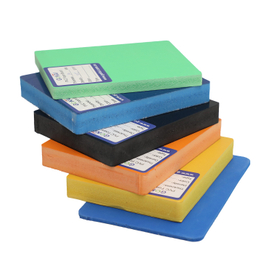
Paper foam board consists of a lightweight foam core between paper-facing layers. It is commonly called foam core board or paper-faced foam board.
The construction combines low weight with a relatively rigid, printable surface. Typical applications include:
- Indoor promotional signs and retail graphics.
- Mounted photographs and presentation boards.
- Exhibition panels and event displays.
- Architectural models and educational projects.
- Lightweight decorative panels.
Paper foam board should not be confused with PVC foam board. Their surfaces, fabrication requirements, and exposure limitations differ.
For procurement, the product name alone is insufficient. Confirm the core material, paper specification, surface treatment, thickness, and adhesive options before comparing quotations.
Gokai lists 3mm, 5mm, and 10mm paper foam board options. These provide useful starting points, but thickness alone does not establish performance.
Paper facers, core construction, panel dimensions, and mounting method all influence the finished result.

| Thickness | Practical starting applications | Main consideration |
|---|---|---|
| 3mm | Small signs, models, supported graphics | Assess rigidity at the finished size |
| 5mm | Presentation boards, mounted graphics, retail signs | Balance handling, appearance, and packing |
| 10mm | Larger display panels and dimensional projects | Check bulk, supports, and finishing equipment |
A 3mm sheet is worth evaluating when the graphic is small, fully supported, or primarily decorative.
For example, a small counter graphic attached to a rigid backing has different demands from an unsupported hanging panel.
Do not assume that selecting a thinner board automatically produces the lowest delivered cost. If it requires additional support, extra packaging, or more careful handling, those costs belong in the comparison.
A 5mm paper foam board is a practical starting point for many indoor graphic applications.
It offers more thickness than a 3mm sheet without the same packing volume as a 10mm version. However, suitability still depends on panel size and installation.
Before approving a large order, evaluate a sample at the intended finished dimensions. A small swatch cannot reveal how a full panel will behave.
A 10mm board deserves consideration when greater thickness and panel body are useful.
It may suit larger graphics, dimensional lettering, or displays where exposed edges contribute to the design. Nevertheless, thicker material does not eliminate the need for suitable supports.
Confirm that the printer, cutter, mounting hardware, and packaging design can accommodate the specified thickness.
Finished graphic dimensions and supplied sheet dimensions serve different purposes.
A 24 × 36-inch poster is a finished format. A larger master sheet may be purchased so several graphics can be printed or cut from one board.
Confusing these measurements can create unnecessary material waste or unexpected processing costs.
The following sizes are frequently encountered in graphics and display work. They are examples, not a universal stock list.
| Finished format | Metric equivalent | Typical use |
|---|---|---|
| 8 × 10 inches | 203.2 × 254mm | Small photographs and graphics |
| 16 × 20 inches | 406.4 × 508mm | Medium promotional displays |
| 18 × 24 inches | 457.2 × 609.6mm | Retail notices and posters |
| 24 × 36 inches | 609.6 × 914.4mm | Larger indoor promotional graphics |
| A3 | 297 × 420mm | Presentations and smaller signs |
| A2 | 420 × 594mm | Posters and display panels |
Specify whether these are the artwork dimensions, finished cut dimensions, or dimensions before trimming.
Gokai's published range includes:
- 500 × 500mm.
- 500 × 700mm.
- 700 × 700mm.
- 700 × 1000mm.
- 1000 × 1400mm.
- 1220 × 2440mm.
- 1520 × 3050mm.
Customized dimensions can also be discussed.
Treat this list as a starting point for an inquiry. Confirm the available thickness, paper facing, color, minimum order quantity, and packaging for each requested size.
A listed dimension should not be interpreted as immediate stock availability in every configuration.
One purchasing detail deserves particular attention: 5mm and 3/16 inch are close, but they are not equal.
A 3/16-inch sheet is 4.7625mm thick. Similarly, 1/8 inch equals 3.175mm, while 1/2 inch equals 12.7mm.
These differences can matter when boards must fit:
- Frame channels.
- Display holders.
- Cutting fixtures.
- Edge trims.
- Existing mounting systems.
Avoid writing "5mm / 3/16 inch" as though the dimensions are interchangeable without qualification.
Instead, specify one nominal thickness and agree on an acceptable tolerance. If compatibility with a holder is critical, send the supplier its internal dimensions and test an actual assembly.
My recommendation is to evaluate the complete display system rather than choosing thickness in isolation.
A useful decision sequence has four steps.
Start with the location and expected service life.
Conventional paper-faced foam board is generally associated with interior display applications. Do not assume that the foam core makes the complete board waterproof.
For humid, splash-prone, or outdoor locations, request grade-specific evidence and evaluate alternatives where appropriate.
A panel attached across its back behaves differently from one suspended at two points.
Record the finished dimensions, installation orientation, attachment method, and unsupported areas. Larger panels should be assessed as complete assemblies.
Confirm whether the project involves direct printing, adhesive mounting, painting, or lamination.
Different paper facers and surface treatments can affect results. Approval should be based on the actual ink, adhesive, and processing settings.
Produce a finished sample, not just a printed swatch.
Include cutting, mounting, packing, and installation. This exposes practical problems before they become repeat defects across a production run.
The largest sheet is not automatically the most economical choice.
Consider an illustrative project requiring 600 × 900mm finished panels from a 1220 × 2440mm master sheet.
A simple layout places two panels across the 1220mm width and two along the 2440mm length. That produces four panels before allowances.
Their combined area is 2.16 square meters. The master sheet measures 2.9768 square meters, giving approximately 72.6% utilization for this particular layout.
This is a planning example, not a production guarantee. Bleed, cutting gaps, edge trimming, defects, and artwork orientation can reduce the usable yield.
Before confirming a sheet size:
1. Prepare the finished cutting layout.
2. Add the printer's bleed and spacing requirements.
3. Confirm the usable sheet area.
4. Compare alternative master sizes.
5. Calculate cost per accepted finished panel.
Include labor, scrap, packaging, and freight in that final calculation.

A printable surface still requires process testing.
For direct printing, check adhesion, color consistency, surface marking, and board flatness. Confirm that the machine can safely handle the material's thickness and dimensions.
If an adhesive-backed board is requested, identify whether it is intended for mounting graphics or another purpose. Adhesive type and application conditions should be agreed separately.
Knife cutting is a recognized fabrication method for paper-faced foam board. A clean result depends on blade condition, support, and technique.
For hand cutting, support the sheet on a suitable mat and use controlled passes rather than excessive pressure.
For production quantities, evaluate the intended digital cutting or die-cutting process on the selected board.
Do not assume all adhesives or paints are compatible with the core and facers.
Some solvent-based products can damage polystyrene foam. Check the material guidance and test the complete combination before production.
Also inspect mounted samples for surface changes, edge lifting, and visible distortion after processing.
A clear purchase specification makes quotations more comparable and reduces interpretation.
| Specification | What to confirm |
|---|---|
| Construction | Core material and paper-facing arrangement |
| Thickness | Nominal value and agreed tolerance |
| Dimensions | Sheet size, finished size, and cutting tolerance |
| Paper facers | Paper weight, coating, color, and surface finish |
| Adhesive | Required or not; intended mounting process |
| Appearance | Flatness, edge condition, cleanliness, and visual criteria |
| Packaging | Sheet count, protection, pallet format, and labels |
| Documentation | Approved sample, inspection requirements, and order details |
Gokai's published paper foam board specifications include several paper-weight options, colors, and adhesive configurations.
These should be selected deliberately rather than treated as interchangeable. Ask which combinations are available for the requested quantity and destination.
Sample approval should evaluate more than whether the board "looks good."
For printing, inspect ink adhesion and surface appearance. For fabrication, check edge quality and fit. For installation, examine the completed panel with its actual supports.
Record the acceptance criteria in writing. "No visible damage" becomes more useful when viewing conditions, inspection timing, and allowable defects are defined.

For export orders, also review:
- Corner and edge protection.
- Carton strength and internal movement.
- Pallet support and stacking.
- Protection from moisture during transport.
- Handling instructions and shipment labels.
A thicker board increases product volume, but it does not automatically prevent transit damage. Request the packed dimensions and gross weight before comparing freight quotations.
Start with the finished application—not simply a request for "standard foam board."
Send Gokai your required thickness, sheet or finished dimensions, quantity, printing method, installation conditions, and destination. Include artwork dimensions and packaging requirements where available.
Request a proposed specification, representative samples, and a quotation based on the same agreed details. This creates a clearer path from initial selection to repeatable OEM supply.
There is no universal best thickness. A 5mm board is a useful starting point for many indoor signs, while smaller supported graphics may suit 3mm. Larger panels may justify evaluating 10mm alongside suitable supports.
Do not assume so. Paper facers, exposed edges, adhesives, and processing all influence moisture performance. For demanding environments, request evidence for the exact grade rather than relying on a general product description.
No. A 3/16-inch board is 4.7625mm thick. The difference may be acceptable for some displays but important for frames, channels, or precision fixtures. Agree on nominal dimensions and tolerances before ordering.
Suitable grades can support double-sided printing. Confirm the selected facers, print process, ink compatibility, and handling requirements. Test the completed panel before committing to a bulk order.
Gokai offers OEM services, and customized dimensions can be discussed. Provide the required thickness, dimensions, quantity, surface requirements, and delivery destination so the proposed configuration can be reviewed.
Not automatically. Paper chemistry, adhesives, and the complete mounting arrangement matter. For valuable or irreplaceable works, obtain conservation-specific guidance and documented material specifications.
1. Aibo. "Thicknesses And Sizes of Foam Board." Published December 2, 2021. Original article used to identify the topic, application coverage, and opportunities for deeper practical guidance. Its size and thickness statements are not treated as universal industry standards. [aibofoamboard]
2. Shanghai Gokai Industry Co., Ltd. "Paper Foam Board." Manufacturer's published information covering construction, thicknesses, sheet dimensions, paper weights, colors, printing options, and adhesive configurations. Exposure-related claims require confirmation for the specific grade and application. [gokai.com]
3. Gokai Plastic. "Gokai Wholesale 3mm 5mm 10mm Paper Foam Board." Additional manufacturer listing supporting the stated thickness range, selected sheet sizes, and customization options. [gokaiplastic]
4. 3A Composites USA. "FOME-COR®." Technical product information supporting paper-faced polystyrene construction, short-term interior display applications, printing and cutting methods, solvent-related precautions, and examples of imperial thicknesses and master-sheet dimensions. These specifications describe that manufacturer's products, not Gokai products. [3acompositesusa]
5. 3A Composites USA. "FOME-COR® SINGLESTEP." Product information illustrating why adhesive-backed mounting boards require process-specific selection. This product uses a heat-activated adhesive and is not presented as equivalent to Gokai's adhesive options. [3acompositesusa]
6. Preparation, Art Handling, Collections Care Information Network. "Foam Board, Fomecor." Published May 7, 2010. Background on archival versus non-archival grades and the importance of selecting materials for the intended conservation application. [paccin]