Shanghai Gokai Industry Co,.Ltd.
Call Us: +86-18918606548
Call Us: +86-18918606548
- Product Name
- Product Keyword
- Product Model
- Product Summary
- Product Description
- Multi Field Search
Views: 266 Author: Gokai Publish Time: 2026-08-27 Origin: Site


Content Menu
● What Is Rigid PVC and Why Is It Used in Piping?
>> Key Advantages of PVC for Pipe Systems
>> Common PVC Piping Applications
● When HDPE Is the Better Piping Material
>> Key Advantages of HDPE Pipe
>> Common HDPE Piping Applications
● PVC vs. HDPE: The Engineering Differences That Matter
>> Joining Method and Leak-Control Strategy
>> Pressure Rating Is Not a Material Shortcut
>> Chemical Resistance Requires a Media-Specific Review
● A Practical Selection Process for PVC vs. HDPE
● OEM Rigid PVC Sheet for Pipe and Industrial Fabrication
>> What to Specify in an OEM PVC Rigid Sheet Inquiry
● PVC vs. HDPE: Which One Should You Choose?
● Request Custom PVC Rigid Sheet from Gokai
>> 1. Is PVC or HDPE better for underground pipe?
>> 2. Is PVC stronger than HDPE?
>> 3. Can PVC and HDPE handle chemicals?
>> 4. Is PVC suitable for drinking-water systems?
>> 5. Can rigid PVC sheet be used to make pipe-related equipment?
>> 6. What information should I provide when requesting an OEM PVC sheet quote?
When selecting plastic materials for piping systems, PVC vs. HDPE is one of the most important comparisons engineers, distributors, fabricators, and project buyers must make. Both materials are widely used because they resist corrosion, weigh less than metal, and can lower installation and lifecycle costs. However, PVC and HDPE perform differently when pressure, temperature, flexibility, joining methods, chemicals, and installation conditions change.
For projects that require a rigid, dimensionally stable, and cost-conscious piping material, rigid PVC—also known as PVC-U or unplasticized PVC—is often the preferred option. For installations involving bending, trenchless installation, impact loading, or fused leak-resistant joints, HDPE may be a stronger fit. The right answer is not simply "PVC or HDPE"; it is the material that matches your operating conditions, governing standards, fabrication route, and total project requirements.

PVC and HDPE are both thermoplastics, meaning they can be shaped using heat during manufacturing. Yet their physical behavior is fundamentally different.
Rigid PVC is naturally stiff and holds its shape well. It is commonly selected for pressure piping, drainage, irrigation, chemical-process systems, fabricated tanks, ducting, and structural industrial components. HDPE is more flexible and impact-resistant, making it especially useful for long runs, uneven ground, underground infrastructure, and applications where heat-fused joints are specified.
| Selection Factor | Rigid PVC / PVC-U | HDPE |
|---|---|---|
| Material behavior | Rigid and dimensionally stable | Flexible and tough |
| Typical jointing | Solvent cement, flanges, threaded or mechanical fittings | Butt fusion, electrofusion, mechanical fittings |
| Straight-run installation | Excellent | Good, but often supplied in coils or long lengths |
| Bends and ground movement | Requires planned fittings and support | Better tolerance for bending and movement |
| Impact resistance | Good, but decreases in colder impact conditions | Generally high |
| Chemical resistance | Strong for many acids, alkalis, and salt solutions | Strong for many chemicals; verify media and temperature |
| Pressure systems | Commonly used when designed to applicable pressure standards | Commonly used in water, gas, industrial, and buried systems |
| Fabrication potential | Excellent for machining, welding, routing, and rigid fabricated parts | Better suited to fusion-based pipe systems |
| Material cost | Often a cost-effective rigid option | Can be higher depending on resin grade, SDR, and joining requirements |
Important: Material choice should never be based on one property alone. A pipe system must be evaluated as a complete system: pipe or fabricated component, wall thickness, pressure rating, fitting design, joint method, fluid chemistry, operating temperature, installation method, and local code requirements.
Rigid PVC, often referred to as PVC-U, is PVC produced without plasticizers that would make it flexible. Its stiffness, dimensional consistency, smooth surface, corrosion resistance, and fabrication versatility make it a common choice in industrial and building-related fluid-handling systems.
For pressure applications in the United States, ASTM D1785 covers PVC pipe in Schedule 40, Schedule 80, and Schedule 120 dimensions for the distribution of pressurized liquids. The standard addresses material classification, dimensions, workmanship, sustained-pressure and burst-pressure requirements, marking, and other performance criteria.
- Rigid and stable: PVC-U maintains a straight profile well, which supports clean alignment in exposed installations, skids, process lines, and equipment rooms.
- Corrosion-resistant: Unlike steel or copper, PVC does not rust. It can be appropriate for many water, wastewater, acid, alkali, and salt-solution applications when compatibility is confirmed.
- Smooth internal surface: A smooth bore can support efficient flow and help reduce deposits associated with rougher internal surfaces.
- Simple installation options: Depending on system design, PVC components can be joined with solvent cement, flanges, threads, mechanical couplings, or other approved methods.
- Efficient fabrication: Rigid PVC sheet can be machined, routed, welded, bent under controlled heat, and fabricated into tanks, ducts, guards, trays, pipe supports, and custom process equipment.
- Cost-focused solution: PVC is frequently selected where long straight runs, standard fittings, and practical installation costs are important.
Rigid PVC is commonly used in:
- Residential and commercial water distribution systems where approved by local codes
- Drain, waste, and vent systems
- Irrigation and agricultural water systems
- Wastewater and effluent handling
- Chemical-process piping and fabricated tanks
- Pool, aquaculture, and water-treatment equipment
- Ventilation ducts, fume-extraction systems, and corrosion-resistant process equipment
HDPE, or high-density polyethylene, is a tougher and more flexible material than rigid PVC. It is frequently selected for buried utility lines, municipal systems, mining operations, water and gas distribution, and applications where a continuous fused pipe route is valuable.
The Plastics Pipe Institute publishes technical resources and installation guidance for plastic-pipe systems, including materials and procedures relevant to PE/HDPE pipe installation, trenchless methods, hydrostatic testing, and water-service applications.
- Flexible under installation stresses: HDPE can accommodate gentle directional changes and is well suited to terrain with curves or minor ground movement.
- Strong impact performance: HDPE is generally more resistant to impact than rigid PVC, particularly in demanding handling or buried environments.
- Heat-fused joints: Properly made butt-fusion or electrofusion joints can create restrained, continuous pipe systems.
- Useful for trenchless construction: Its flexibility and fusion capability make HDPE a common choice for horizontal directional drilling and other trenchless installation methods.
- Suitable for long continuous runs: Coiled or long-length HDPE may reduce the number of field joints in some designs.
HDPE is frequently used for:
- Municipal and rural water distribution
- Gas distribution, subject to applicable specifications and regulatory requirements
- Underground utility systems
- Mining slurry and industrial fluid systems
- Geothermal loops
- Agricultural irrigation
- Trenchless and horizontal directional drilling projects
- Drainage and wastewater applications
The largest functional difference between PVC and HDPE is stiffness.
PVC is rigid, which helps it retain line alignment and makes it highly practical for visible process piping, equipment rooms, fixed plumbing routes, fabricated industrial components, and systems with regular support spacing.
HDPE is flexible, which can be beneficial where pipe must follow terrain, tolerate settlement, or be installed by pulling methods. However, flexibility also means that support design, expansion behavior, and installation practice require careful engineering.
For many buyers, the choice comes down to joints.
PVC systems often use solvent-cemented socket joints, flanged connections, or mechanical connections. These can be efficient and familiar for contractors, but success depends on correct surface preparation, primer/cement selection where required, insertion depth, cure time, alignment, and pressure testing.
HDPE systems rely heavily on heat fusion. Fusion can provide highly reliable joints, but it requires qualified operators, compatible materials, calibrated equipment, clean surfaces, and documented procedures.
Practical rule: Choose PVC when your project benefits from standardized rigid fittings and straightforward field assembly. Choose HDPE when your system design specifically benefits from fused, restrained, long-run pipe.
It is misleading to say that one material "always handles higher pressure" than the other. Actual pressure capability depends on the product's dimensions, wall thickness, diameter, temperature, material grade, design factor, joint type, and the applicable standard.
For example, ASTM D1785 covers pressure-rated PVC pipe in Schedules 40, 80, and 120 for pressurized-liquid distribution. In municipal pressure-pipe applications, AWWA C900-2022 establishes manufacturing, verification, and marking guidelines for PVC pressure pipe and fabricated fittings from 4 to 60 inches.
Always request the manufacturer's current technical data sheet, pressure table, and compliance documentation for the exact size and wall design you plan to purchase.
PVC and HDPE both offer valuable resistance to corrosion, but "chemical-resistant" does not mean "compatible with every chemical."
PVC-U is generally resistant to many acids, bases, and salt solutions, but some solvents and aggressive chemical environments can be unsuitable. Compatibility may also change when temperature, concentration, pressure, mechanical stress, or exposure time increases.
Before specifying either material, confirm:
1. The exact chemical name and concentration
2. Normal and maximum operating temperature
3. System pressure and vacuum conditions
4. Continuous, intermittent, or immersion exposure
5. Joint, gasket, adhesive, and valve-material compatibility
6. Cleaning chemicals and potential process upsets
Use the following workflow before selecting a pipe material or ordering custom rigid PVC fabrication materials.

1. Define the fluid and operating conditions. Identify the medium, concentration, pH, temperature range, design pressure, surge pressure, and whether the system may operate under vacuum.
2. Confirm the installation environment. Determine whether the line is above ground, buried, exposed to sunlight, installed indoors, routed around bends, or subject to ground movement.
3. Choose the jointing strategy early. Specify whether the project requires solvent cement, flanges, mechanical couplings, butt fusion, or electrofusion. This decision affects labor, equipment, inspection, and maintenance planning.
4. Match the material to the required standard. Verify the target market's applicable ASTM, AWWA, ISO, EN, NSF, or local regulatory requirements. Do not assume a material name alone proves compliance.
5. Evaluate the entire system—not only pipe. Fittings, valves, seals, adhesives, supports, expansion provisions, and installation quality can determine real-world performance.
6. Request samples and documentation before volume purchasing. For OEM and custom fabrication projects, review sheet thickness tolerance, color, surface finish, density, impact behavior, welding suitability, packaging, and lot traceability.

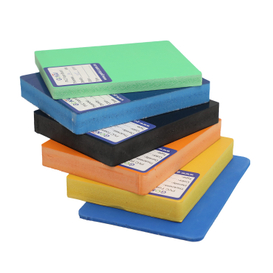
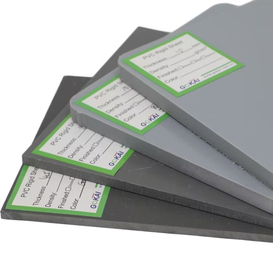
Not every project requires finished PVC pipe. Many OEMs, equipment manufacturers, and industrial fabricators need rigid PVC sheet as the starting material for custom components around a piping or fluid-handling system.
Gokai supplies PVC rigid sheet for OEM requirements, helping customers develop fabricated products such as:
- Chemical tanks and tank linings
- Pipe supports, saddles, brackets, and protective covers
- Valve-box panels and equipment housings
- Corrosion-resistant ducts and fume-handling components
- Water-treatment equipment panels
- CNC-machined industrial parts
- Custom fabricated process-system components
A high-quality RFQ should include more than length, width, and thickness. Provide:
- Application and end-use environment
- Required sheet grade and rigidity
- Thickness, width, length, and tolerances
- Color, surface finish, and protective-film requirements
- Chemical and temperature exposure
- Machining, thermoforming, welding, or bonding requirements
- Target technical standards or customer drawings
- Packaging, pallet requirements, labeling, and destination market
- Prototype quantity, annual forecast, and target lead time
For potable-water applications, product and system components must meet the relevant approval requirements. NSF/ANSI/CAN 61 establishes health-effects requirements for chemicals and impurities that may be imparted to drinking water from products and materials in contact with drinking water. A raw PVC sheet should not be presented as approved for drinking-water contact unless the specific product, formulation, and certification scope support that claim.
Choose rigid PVC when your project needs a stable, straight, cost-effective, corrosion-resistant material that can be fabricated or assembled with conventional rigid-piping methods. It is particularly compelling for fixed installations, process equipment, water treatment, drainage, irrigation, and fabricated industrial systems.
Choose HDPE when the installation needs flexibility, high impact tolerance, trenchless installation, terrain adaptability, or heat-fused joints across long underground runs.
The best procurement decision is based on verified system requirements—not assumptions about which plastic is "stronger." Compare the intended application, technical data, applicable standard, installation method, and total cost of ownership before finalizing your design.
Need rigid PVC sheet for pipe-related equipment, chemical-process fabrication, water-treatment systems, or custom OEM components?
Gokai can support global customers with custom PVC rigid sheet specifications, including thickness, dimensions, colors, surface options, protective film, packaging, and OEM-oriented production requirements. Send us your drawing, material specification, application details, and target quantity to discuss a suitable PVC rigid sheet solution for your project.

HDPE is often preferred for underground projects that involve long continuous runs, trenchless installation, bends, impact exposure, or ground movement. Rigid PVC can also be used underground when the pipe class, bedding, backfill, joint system, and applicable standards are correctly specified.
"Stronger" depends on the property being measured. Rigid PVC is stiffer and holds its shape better, while HDPE is generally more flexible and impact-resistant. Compare the required pressure rating, wall thickness, temperature, and installation conditions rather than relying on a general strength claim.
Both can resist many chemicals, but compatibility depends on the chemical, concentration, temperature, pressure, duration of exposure, and joint materials. Always consult a current compatibility chart and obtain manufacturer confirmation for critical applications.
PVC can be used in drinking-water systems when the specific pipe or component meets the applicable local code and certification requirements. In North America, NSF/ANSI/CAN 61 addresses health effects for drinking-water system components and materials.
Yes. Rigid PVC sheet is widely used to fabricate tanks, ductwork, housings, guards, pipe supports, valve panels, protective covers, and corrosion-resistant industrial equipment components. Final performance depends on sheet grade, thickness, fabrication method, and service environment.
Include sheet dimensions, thickness tolerance, color, surface finish, application, fabrication method, chemical and temperature exposure, standards, quantity, packaging requirements, destination port, and desired delivery schedule. Drawings or physical samples can reduce development risk.
1. Acme Plastics. "PVC vs. HDPE: Which Plastic Is Best for Piping?" [Read the original article]. [acmeplastics]
2. ASTM International. "ASTM D1785-21: Standard Specification for Poly(Vinyl Chloride) (PVC) Plastic Pipe, Schedules 40, 80, and 120." [View standard overview]. This standard covers PVC pipe for pressurized-liquid distribution, including dimensions, workmanship, sustained-pressure and burst-pressure requirements. [store.astm]
3. Plastics Pipe Institute. "PPI Publications." [Explore PPI technical resources]. Includes technical notes, installation manuals, and technical recommendations for plastic piping systems. [plasticpipe]
4. Plastics Pipe Institute. "Technical Reports." [View PPI technical reports]. Includes information related to plastic-pipe testing, installation, and hydrostatic testing procedures. [plasticpipe]
5. NSF. "NSF/ANSI 61: Drinking Water System Components—Health Effects." [Read the NSF overview]. Describes health-effects requirements for products and materials that contact drinking water. [nsf]
6. American Water Works Association / ANSI Blog. "AWWA C900-2022: PVC Pressure Pipe and Fabricated Fittings." [Read the standard summary]. Covers minimum manufacturing, verification, and marking guidelines for certain PVC pressure pipes and fittings. [blog.ansi]
7. Atlas Fibre. "Guide to PVC Chemical Compatibility & Application Safety." [Read the chemical compatibility guide]. Used as general context only; final chemical suitability must be confirmed for the exact process conditions. [atlasfibre]