Shanghai Gokai Industry Co,.Ltd.
Call Us: +86-18918606548
Call Us: +86-18918606548
- Product Name
- Product Keyword
- Product Model
- Product Summary
- Product Description
- Multi Field Search
Views: 267 Author: Gokai Publish Time: 2026-08-28 Origin: Site


Content Menu
>> Common Names Used by Buyers
● Why PP Hollow Sheet Is Used Across Industries
● PP Hollow Sheet vs. Corrugated Cardboard
● How to Specify a Custom PP Hollow Sheet
>> 1. Define the Working Environment
>> 2. Select Thickness and Grammage Together
>> 3. Add Functional Properties Only When Needed
● From Sheet to Finished Solution
● Industrial Applications for PP Corrugated Sheet
>> Returnable Packaging and Logistics
>> Signage, Display, and Printing
>> Construction and Surface Protection
>> Agriculture and Food-Related Handling
>> Practical Steps for a More Recyclable Design
● Why Work With Gokai for PP Hollow Sheet OEM Projects?
● FAQ
>> 1. What is the difference between PP hollow sheet and corrugated cardboard?
>> 2. Can PP hollow sheet be used outdoors?
>> 3. What thickness of PP hollow sheet should I choose?
>> 4. Is PP corrugated sheet recyclable?
>> 5. Can PP hollow sheets be printed?
>> 6. Can Gokai provide custom PP hollow sheet OEM services?
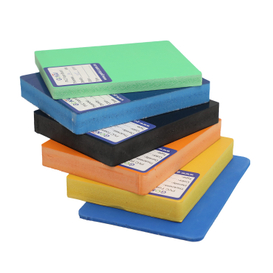
PP hollow sheet—also called corrugated polypropylene sheet, fluted PP board, or Coroplast-style plastic sheet—is a lightweight, moisture-resistant material engineered for reusable packaging, protective panels, signage, and industrial separation. For global buyers, the real purchasing decision is not simply "which thickness should I buy?" It is how to specify the correct PP hollow sheet structure, additives, conversion method, and quality-control requirements for the intended working environment.
At Gokai, we support OEM PP hollow sheet programs for importers, converters, packaging suppliers, and industrial users. This guide explains how experienced procurement teams evaluate corrugated plastic sheets, where conventional specifications often fail, and how to build a more reliable custom solution.

A PP hollow sheet is an extruded twin-wall polypropylene board with internal vertical flutes. The fluted structure creates air channels between two flat skins, helping the board maintain rigidity while using less material than a solid plastic sheet.
Because it is based on polypropylene, PP hollow sheet is generally known for being lightweight, water-resistant, chemically resistant, easy to fabricate, and reusable. It is widely used in logistics, printing, construction protection, agriculture, and automotive component handling. Polypropylene is commonly identified as plastic resin code #5 (PP), although local recycling acceptance always depends on collection and recycling infrastructure.
Unlike paper corrugated board, PP corrugated sheet does not absorb water in normal use. Unlike metal panels, it does not corrode. Unlike foam materials, it can offer a more structured, printable, and reusable panel format.
Different markets and industries may use different product terms. Including these terms naturally on a product page can help buyers find the correct material:
- PP hollow sheet
- Corrugated polypropylene sheet
- Fluted polypropylene board
- Corrugated plastic sheet
- Twin-wall PP sheet
- Coroplast sheet
- PP corrugated board
- Plastic corrugated sheet
- Polypropylene hollow board
The performance of corrugated polypropylene comes from the balance between its material chemistry and hollow-flute structure. A well-designed sheet can reduce material weight while remaining sufficiently rigid for handling, protection, printing, or repeated-use packaging.
| Performance factor | Practical benefit | Typical application |
|---|---|---|
| Lightweight structure | Easier manual handling and potentially lower freight weight | Sign boards, dividers, packaging |
| Moisture resistance | Suitable for humid, wet, or wash-down environments | Produce packaging, floor protection |
| Impact resistance | Helps protect parts from scratches and minor impacts | Automotive dunnage, layer pads |
| Chemical resistance | Useful where mild chemicals or oils may be present | Industrial workshops, process areas |
| Easy conversion | Can be die-cut, welded, folded, riveted, and printed | Boxes, bins, signs, partitions |
| Reusable design | Can support returnable packaging systems | Closed-loop logistics |
| Customizable additives | Can be adapted for UV, antistatic, conductive, or flame-retardant needs | Outdoor, ESD, specialized projects |
Industry suppliers commonly position PP corrugated sheets for packaging, automotive, agriculture, construction, and signage because the material combines low weight with moisture resistance and durability.
Corrugated cardboard remains an effective option for low-cost, one-way shipping. However, it is not automatically the best material for every supply chain. When packaging faces moisture, repeated handling, dirt, oils, or return logistics, PP hollow sheet may offer a stronger lifecycle solution.
| Criteria | PP hollow sheet | Corrugated cardboard |
|---|---|---|
| Water exposure | Does not readily absorb moisture | Can soften or lose strength when wet |
| Reuse potential | Suitable for repeated-use designs | Usually intended for limited reuse |
| Cleanability | Can often be wiped or washed, depending on application | Difficult to clean after contamination |
| Printability | Supports screen, UV, and digital printing methods with suitable preparation | Highly compatible with conventional printing |
| Initial material cost | Usually higher | Usually lower |
| Long-term cost | Can be favorable in closed-loop systems | May increase with repeated replacement |
| Recycling pathway | PP #5 where local systems accept it | Widely collected paper stream in many areas |
The best choice depends on the total cost of ownership, not only unit price. A reusable PP packaging insert may cost more initially but reduce replacement frequency, part damage, cleaning downtime, and packaging waste in a controlled return loop.
A common sourcing mistake is requesting only thickness and color. Those details are important, but they do not fully define the product's required performance.
For an OEM project, we recommend building a specification around the actual use case.
Start with the conditions the sheet will face:
- Indoor or outdoor use
- Direct sunlight and estimated exposure duration
- High humidity, rain, water contact, or wash-down
- Contact with oils, chemicals, dust, or food-related environments
- Low or high temperature conditions
- Frequency of handling, stacking, folding, or impact
- Requirement for printing, welding, die-cutting, or lamination
For outdoor applications, standard PP should not be treated as permanently weatherproof without qualification. UV-stabilized grades are designed to better resist sunlight-related fading, brittleness, and degradation over extended exposure.
Thickness alone does not determine stiffness. Two 4 mm sheets can perform differently if they use different wall thicknesses, resin formulations, flute geometry, or grammage.
For more reliable purchasing, specify both:
- Thickness: such as 2 mm, 3 mm, 4 mm, 5 mm, 6 mm, 8 mm, or customized
- Grammage: weight per square meter, usually expressed in GSM
- Flute orientation: important for bending direction and load support
- Flatness tolerance: especially important for printing and die-cutting
- Color and opacity: relevant to appearance, light blocking, and branding
Practical example: A temporary indoor sign may prioritize low weight and printable surfaces. An automotive separator may need higher grammage, tighter dimensional tolerances, rounded edges, and an antistatic or conductive formulation.
The right additive package can make a project more reliable—but unnecessary additives can increase cost. Match the formulation to the job.
| Additive or treatment | When to request it | Typical benefit |
|---|---|---|
| UV stabilization | Outdoor signage, agricultural use, site protection | Better resistance to sunlight aging |
| Corona treatment | Screen printing, UV printing, lamination | Improved ink or adhesive adhesion |
| Antistatic treatment | Electronics, dust-sensitive goods | Reduces static buildup |
| Conductive formulation | ESD-sensitive electronic components | Helps dissipate electrostatic charge |
| Flame-retardant formulation | Projects with defined fire-performance requirements | Supports compliance with specified standards |
| Recycled-content option | Projects with documented sustainability goals | Can reduce virgin resin use, subject to performance needs |
Always request relevant test documentation where performance claims are critical. For example, an outdoor project may require agreed UV-aging criteria, while an ESD project may require a defined surface-resistance range.

A strong PP hollow sheet supplier should support more than raw-board production. The goal is to convert the material into a solution that fits a customer's workflow.
At Gokai, an OEM project can be developed around sheet dimensions, color, thickness, surface treatment, and downstream conversion requirements.
- Custom width, length, thickness, and GSM
- Custom colors, including brand-matched colors
- White, black, transparent, translucent, and colored sheets
- Corona-treated printable surfaces
- UV-resistant formulations for outdoor applications
- Antistatic or conductive PP hollow sheet
- Die-cut parts and folded packaging components
- Welded boxes, sleeves, dividers, and layer pads
- Printed logos, product instructions, QR codes, and handling marks
- Custom packaging for export transport
1. Share the application. Explain the product being protected, the environmental conditions, and the expected number of reuse cycles.
2. Confirm the technical specification. Agree on dimensions, thickness, GSM, color, additives, surface treatment, and processing requirements.
3. Produce and approve samples. Test samples in the real handling, printing, packing, or assembly environment before mass production.
4. Set inspection standards. Define acceptable tolerances for thickness, size, weight, color, flatness, and visual appearance.
5. Control export packaging. Confirm pallet format, carton protection, container loading, labeling, and document requirements.
PP hollow sheet should be selected according to function—not simply because it is "plastic board." Below are common applications and the design features that matter most.

Reusable logistics systems use PP hollow sheet for layer pads, box sleeves, divider sets, pallet protection, tote inserts, and custom dunnage.
Key priorities include:
- Load-bearing capacity
- Edge protection
- Folding or assembly design
- Part separation
- Cleanability
- Label attachment
- Return-cycle durability
Corrugated PP packaging is commonly used in returnable and industrial logistics because it is lightweight, water-resistant, customizable, and recyclable at end of life where appropriate collection systems exist.
For real-estate signs, election boards, temporary directional signs, exhibition panels, and promotion displays, focus on:
- Surface treatment for ink adhesion
- Sheet flatness
- Opacity
- UV stabilization for outdoor use
- Wind-load and mounting design
- Color consistency across production batches
A PP hollow sheet may be easy to print, but printing durability depends on surface energy, ink system, curing method, and exposure conditions. Buyers should test the complete printing process—not only the blank sheet.
PP hollow sheet can be used to protect floors, walls, windows, elevators, doors, and finished surfaces during renovation or construction.
For this application, buyers should evaluate:
- Sheet thickness and puncture resistance
- Temporary fixing method
- Slip risk and site-safety requirements
- Paint, adhesive, and debris contact
- Reuse after removal
- Required flame-performance standards, if applicable
In agricultural settings, PP corrugated sheet may be converted into produce bins, box liners, greenhouse panels, plant trays, or protective partitions.
However, do not assume that any PP sheet is suitable for food contact. If the end use requires food-contact compliance, traceability, virgin-material requirements, migration documentation, or country-specific certification, state this at the quotation stage.
Automotive suppliers use PP hollow sheet for reusable component packaging, separators, protective dividers, and custom-fit dunnage. Electronics applications may require antistatic or conductive sheets to reduce electrostatic risks.
In both sectors, consistency matters. A low-cost sheet that varies in GSM, flute integrity, or dimensions can cause downstream failures in automated packing, return containers, or sensitive-component handling.
PP hollow sheet can contribute to a more circular packaging model when it is reused, collected, sorted, and recycled through an available recycling pathway. The material itself is polypropylene, generally categorized as resin identification code #5.
But sustainability claims should be specific. "Recyclable" does not necessarily mean that an item will be recycled in every country or municipality. Collection capability, contamination, adhesives, printing inks, mixed materials, and logistics all influence actual recycling outcomes.

- Use mono-material PP designs where possible
- Minimize mixed-material attachments
- Use removable labels or compatible marking systems
- Keep sheets clean and separated by color or grade when recycling
- Design reusable packaging for practical return cycles
- Ask recycling partners what formats, colors, and contamination levels they accept
One industry recycling guide notes that clean, single-resin corrugated-plastic streams are easier to process, while tape, labels, metal fasteners, and dirt can reduce recycling value.
Gokai focuses on helping global customers source PP hollow sheet solutions that match real operating conditions—not generic catalog specifications. Whether you need printable sign board, UV-resistant outdoor panels, reusable industrial packaging, ESD-safe separators, or custom die-cut components, the most effective project begins with a detailed application brief.
Send Gokai your required size, thickness, grammage, color, application, annual quantity, destination market, and any functional requirements. Our team can help convert that information into a clearer PP hollow sheet specification, sample plan, and OEM quotation.
PP hollow sheet is made from polypropylene and has a fluted plastic structure. It is generally more resistant to moisture and repeated handling than corrugated cardboard, while cardboard often has a lower initial cost and strong paper-recycling infrastructure.
Yes, but outdoor performance depends on the formulation and exposure conditions. For extended direct sunlight, request a UV-stabilized PP hollow sheet and confirm the expected service environment with the supplier.
The correct thickness depends on the application, load, span, handling frequency, and required stiffness. Thickness should be evaluated together with GSM, flute structure, and conversion design. Sampling and real-use testing are recommended.
PP corrugated sheet is generally made from polypropylene, classified as plastic resin code #5. Actual recyclability depends on whether local or commercial recycling systems accept the specific material, color, and contamination level.
Yes. PP hollow sheets can be printed using appropriate processes such as screen printing, UV printing, or digital printing. Corona treatment and production testing are important for obtaining reliable ink adhesion.
Yes. Gokai can support custom dimensions, thickness, GSM, color, surface treatment, functional additives, die-cutting, welding, printing, and export-oriented packaging based on your project requirements.
1. Laird Plastics. "[Unlocking the Potential of Corrugated Plastic]." Accessed August 2026.
2. Recycle Now. "[Recycling Symbols: What Do They Mean?]." Explains plastic resin identification codes, including PP #5. [recyclenow]
3. Earth911. "[Can You Recycle Number 5 Plastics?]." Explains that code #5 indicates polypropylene. [earth911]
4. Kiva Container. "[Guide to Corrugated Plastic: Materials, Gauges, Uses]." Discusses recyclability and the role of UV stabilization in outdoor use. [kivacontainer]
5. Polyflute. "[Corrugated PP Sheets: All You Need to Know]." Discusses UV stabilization, applications, and selection factors. [polyflute]
6. Future Market Insights. "[Plastic Corrugated Sheets Market Outlook from 2025 to 2035]." Reviews adoption in packaging, automotive, construction, and agriculture. [futuremarketinsights]
7. Carlin Waste Recycling. "[Corrugated Plastic 101: Uses, Recycling, and Market Value]." Covers sorting, contamination removal, and recycling preparation for corrugated plastic. [carlinwasterecycling]
8. Polyflute. "[PP Corrugated Boxes: Sizes, Features & Global Uses]." Discusses reusable PP corrugated packaging in logistics and industrial applications. [polyflute]