Shanghai Gokai Industry Co,.Ltd.
Call Us: +86-18918606548
Call Us: +86-18918606548
- Product Name
- Product Keyword
- Product Model
- Product Summary
- Product Description
- Multi Field Search
Views: 278 Author: Shanghai Gokai Industry Co,. Ltd. Publish Time: 2026-08-25 Origin: Site


Content Menu
● Why Outdoor Plastic Sheet Selection Matters
● Acrylic Sheet for Outdoor Use
>> Best Applications for Acrylic Sheet
● Solid Polycarbonate Sheet for High-Impact Outdoor Protection
>> Best Applications for Solid Polycarbonate Sheet
>> Why UV Protection Is Essential
>> Solid Polycarbonate vs. Acrylic
● Hollow Polycarbonate Sheet for Roofing and Greenhouses
>> Best Applications for Hollow Polycarbonate Sheet
>> Key Benefits of Hollow Polycarbonate
>> Installation Detail That Buyers Often Miss
● How to Choose the Best Outdoor Plastic Sheet
● Common Outdoor Plastic Sheet Mistakes
● OEM Outdoor Plastic Sheet Solutions from Gokai
● FAQ
>> 1. Is acrylic sheet good for outdoor use?
>> 2. Which is better outdoors: acrylic or polycarbonate?
>> 3. Does solid polycarbonate need UV protection?
>> 4. What is hollow polycarbonate sheet used for?
>> 5. Can acrylic and polycarbonate sheets be customized for OEM orders?
>> 6. How can I prevent outdoor plastic sheets from cracking or warping?
Choosing the best outdoor plastic sheet is not simply a question of transparency or price. For exterior signage, roofing, skylights, protective glazing, greenhouses, canopies, and industrial enclosures, the material must withstand UV exposure, impact, moisture, wind load, thermal movement, and long-term visual aging.
For most outdoor projects, acrylic sheet is the preferred option when optical clarity, color retention, and surface appearance matter most. Solid polycarbonate sheet is the stronger choice where impact resistance and safety are critical. Polycarbonate hollow sheet provides a lightweight, insulated solution for roofing, greenhouse, and daylighting projects.
At Gokai, we supply acrylic sheets, solid polycarbonate sheets, and hollow polycarbonate sheets for global B2B customers, with OEM options for dimensions, thicknesses, colors, surface finishes, packaging, and branding. The right outdoor plastic sheet should be selected based on the real operating environment—not a generic "weather-resistant" claim.

Outdoor materials face more than rain and sunlight. A plastic sheet installed in a hot, humid, coastal, high-altitude, or industrial environment may experience constant UV radiation, temperature swings, wind-driven debris, airborne pollutants, and repeated expansion and contraction.
A sheet that looks good on installation day may haze, yellow, crack, warp, or lose mechanical performance if the wrong grade is chosen.
The key performance factors are:
- UV resistance: Ability to maintain color, clarity, and mechanical properties after sunlight exposure.
- Impact resistance: Ability to withstand hail, accidental contact, vandalism, or flying debris.
- Weatherability: Resistance to heat, cold, moisture, oxidation, and environmental aging.
- Optical performance: Light transmission, clarity, gloss, and haze control.
- Thermal movement: Ability to expand and contract without buckling or cracking.
- Surface durability: Resistance to scratches, chemicals, cleaning, and abrasion.
- Application fit: The material must match the structural, aesthetic, and installation requirements.
Accelerated weathering is commonly assessed through xenon-arc exposure methods. ASTM D2565 specifically addresses xenon-arc exposure of plastics intended for outdoor use, while ASTM G155 provides the operating framework for xenon-arc exposure of non-metallic materials. These tests help manufacturers compare changes in color, gloss, strength, and surface appearance under controlled light, heat, and moisture conditions.
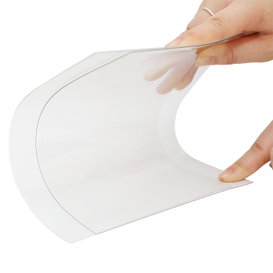
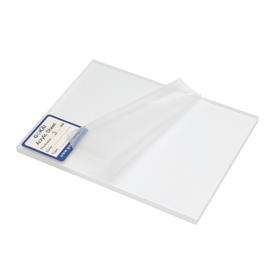
Acrylic sheet, also called PMMA sheet or plexiglass sheet, is one of the most widely used outdoor plastic materials for visual applications. It is valued for its high clarity, glossy surface, excellent color options, and strong natural UV performance.
For brands, fabricators, and sign makers, acrylic often delivers the polished appearance that outdoor projects require.
Acrylic sheets are especially suitable for:
- Outdoor illuminated signs and channel letters
- Retail signage and display panels
- Architectural decorative panels
- Protective glazing in lower-impact locations
- Outdoor advertising boards
- Light boxes and lighting diffusers
- Point-of-sale structures exposed to indirect weather
- Decorative fencing, partitions, and landscape features

Excellent visual quality. Clear acrylic offers a glass-like appearance, while colored acrylic can create vivid, long-lasting brand displays.
Strong UV and weather resistance. Outdoor-grade acrylic is generally well suited to long-term sunlight exposure and can retain color and appearance effectively when the appropriate grade is specified.
Easy fabrication. Acrylic can be cut, laser engraved, CNC machined, thermoformed, polished, and bonded. This gives OEM customers flexibility in signage and display production.
Lower weight than glass. Acrylic reduces handling and installation weight compared with traditional glass solutions.
Acrylic is not the best choice for every exterior project. Its impact resistance is lower than that of solid polycarbonate. Where falling objects, hail, public contact, security concerns, or high mechanical loads are expected, polycarbonate may be the safer material choice.
Acrylic can also crack if drilled or fastened incorrectly. Fabricators should use correctly sized holes, smooth edges, compatible fasteners, and sufficient allowance for thermal movement.
Solid polycarbonate sheet is a transparent engineering plastic known for its exceptional impact resistance. It is widely selected when outdoor glazing must combine visibility with safety.
Compared with acrylic, solid polycarbonate is better suited to demanding environments where mechanical abuse, wind-blown debris, hail, or accidental impact may occur. However, the product must include a suitable UV-protective layer for exterior installation.
- Safety glazing and machine guards
- Outdoor protective barriers
- Canopies and awnings
- Skylights and rooflights
- Bus shelters and public facilities
- Security screens
- Sports venue protection
- Industrial enclosures
- Outdoor equipment covers
- Glazing in impact-prone areas
Unprotected polycarbonate can degrade under prolonged UV exposure. Outdoor-grade products normally use UV-stabilized formulations or a co-extruded UV-protection layer to reduce yellowing, haze, and performance loss.
When evaluating suppliers, buyers should not rely only on phrases such as "UV resistant." Ask for the UV-protection method, outdoor-use warranty terms, test conditions, and relevant performance documentation. Industry guidance consistently emphasizes specifying co-extruded UV protection for polycarbonate used outdoors.

| Performance Factor | Acrylic Sheet | Solid Polycarbonate Sheet |
|---|---|---|
| Optical appearance | Excellent clarity and gloss | High clarity, but may scratch more easily |
| UV performance | Strong natural outdoor suitability | Requires outdoor-grade UV protection |
| Impact resistance | Moderate | Excellent |
| Surface hardness | Better scratch resistance | More prone to scratching without coating |
| Fabrication | Easy machining and polishing | Easy cutting and forming, with care |
| Best for | Signs, displays, decorative glazing | Safety glazing, canopies, protective barriers |
| Typical priority | Appearance and color retention | Strength and impact safety |
Selection rule: Choose acrylic when appearance leads the decision. Choose solid polycarbonate when impact resistance leads the decision.
Polycarbonate hollow sheet, also called multiwall polycarbonate sheet, is designed with internal chambers. This structure reduces weight while improving thermal insulation compared with a solid transparent sheet of similar overall thickness.
It is a practical material for projects that need daylight transmission without the weight and heat-loss profile of conventional glass.
- Greenhouse roofs and walls
- Carports and patio covers
- Warehouse skylights
- Walkway covers
- Agricultural structures
- Residential conservatories
- Commercial roofing systems
- Interior and exterior daylighting partitions
Lightweight structure. The hollow internal design makes handling and installation easier, especially on large roofing projects.
Thermal insulation. Multiwall construction helps reduce heat transfer, making it useful in greenhouses, covered walkways, and energy-conscious building envelopes.
High impact performance. Polycarbonate provides strong resistance to impact compared with many conventional transparent materials.
Flexible design options. Gokai can provide OEM solutions involving thickness, sheet structure, colors, UV layers, dimensions, and customized packaging for distributors and project buyers.

The internal channels must be installed in the correct direction—typically vertical or aligned with the roof slope—so condensation can drain effectively. Open ends should be protected with compatible tapes and end profiles to reduce dust, insects, and moisture entering the chambers.
This small installation detail can significantly affect long-term clarity and appearance.
Use this five-step selection process before ordering material.
1. Define the outdoor exposure level.
Consider sun intensity, rainfall, coastal salt spray, industrial pollution, wind, hail risk, and temperature range. A rooftop in a high-UV climate needs a different grade from a sheltered storefront sign.
2. Identify the project's primary performance requirement.
Is the priority visual appearance, impact safety, insulation, light transmission, or cost efficiency? Start with the performance requirement rather than the material name.
3. Confirm UV protection and weathering evidence.
Request technical data sheets, test methods, warranty details, and outdoor-use recommendations. ASTM D2565 and ASTM G155 are relevant benchmarks for xenon-arc weathering evaluation.
4. Check thickness, support spacing, and thermal expansion.
Material thickness should be engineered around panel size, framing method, wind load, and intended use. Do not use a thickness recommendation from a small sign application for a large canopy.
5. Specify fabrication and packaging requirements early.
For OEM orders, define color, embossing, masking film, cut-to-size service, protective film, carton design, pallet configuration, and export labeling before production begins.
The most expensive failures often result from specification gaps, not from the sheet itself.
- Choosing standard indoor polycarbonate for direct outdoor exposure.
- Installing the UV-protected side in the wrong direction.
- Using rigid fasteners without expansion clearance.
- Removing protective film too early during fabrication.
- Selecting acrylic for a high-impact safety application.
- Ignoring sheet thickness and support spacing.
- Using unsuitable cleaning chemicals or abrasive tools.
- Failing to seal the open channels of hollow polycarbonate sheets.
For outdoor installations, use neutral cleaners, soft cloths, and compatible installation accessories. Avoid aggressive solvents unless the material supplier confirms compatibility.
For distributors, project contractors, sign manufacturers, greenhouse builders, and industrial fabricators, a reliable supplier should support more than standard sheet inventory. The supplier should help translate the application into a repeatable material specification.
Gokai provides OEM-oriented outdoor plastic sheet solutions, including:
- Acrylic sheet in custom colors, thicknesses, and dimensions
- Solid polycarbonate sheet with outdoor UV-protection options
- Hollow polycarbonate sheet for roofing and greenhouse applications
- Customized masking film, packaging, labels, and branding
- Export-ready packing for international transportation
- Application-based material recommendations for B2B buyers
Need an outdoor sheet that balances appearance, safety, and cost? Contact Gokai with your application, dimensions, climate conditions, target thickness, and expected annual volume. Our team can help you identify an OEM-ready acrylic or polycarbonate sheet solution for your market.
Yes. Outdoor-grade acrylic sheet is a strong choice for signage, decorative panels, light boxes, and other applications where clarity, color stability, and surface appearance matter. For high-impact areas, solid polycarbonate may be more appropriate.
Neither is universally better. Acrylic is generally better for high-end visual appearance, color retention, and scratch resistance. Solid polycarbonate is better for impact resistance, safety glazing, and demanding exterior conditions.
Yes. Polycarbonate intended for direct outdoor use should have UV stabilization or a co-extruded UV-protection layer. Buyers should request technical documentation and confirm which side faces outward during installation.
Hollow polycarbonate sheet is commonly used for greenhouses, skylights, carports, patio covers, walkways, and insulated daylighting structures. Its multiwall design provides lower weight and improved thermal insulation.
Yes. OEM options may include sheet size, thickness, color, surface finish, UV treatment, protective film, cut-to-size processing, custom packaging, labels, and branding. Final customization options should be confirmed according to the material type, order volume, and destination market.
Allow for thermal expansion during installation, use appropriate fasteners and hole sizes, follow recommended support spacing, avoid overtightening screws, and use the correct sheet orientation. For hollow polycarbonate, install channels in the drainage direction and seal the sheet ends properly.
1. Piedmont Plastics. "[Best Weather-Resistant Plastic Materials]." Overview of weather-resistant plastic categories, including polycarbonate, acrylic, HDPE, PVC, and FRP. [piedmontplastics]
2. ASTM International / iTeh Standards. "[ASTM D2565-23: Xenon-Arc Exposure of Plastics Intended for Outdoor Applications]." Standard practice for accelerated weathering evaluation of outdoor plastics. [standards.iteh]
3. Atlas Material Testing Technology. "[Top 10 Xenon Weathering Standards You Should Know]." Discussion of ASTM G155 and xenon-arc weathering practices. [atlas-mts]
4. Custom Made Better. "[Is Acrylic Good for Outdoor Use & Extreme Temperatures?]." Practical overview of acrylic UV resistance and outdoor performance. [custommadebetter]
5. FIDAR System. "[Polycarbonate Sheets Canada: Complete Guide 2026]." Guidance on co-extruded UV protection for outdoor polycarbonate sheets. [fidarsystem]
6. Just Polycarbonate. "[The Ultimate Guide to Solid Polycarbonate: Choose the Right Type]." Overview of UV-protected solid polycarbonate applications and selection considerations. [justpolycarbonate]