Shanghai Gokai Industry Co,.Ltd.
Call Us: +86-18918606548
Call Us: +86-18918606548
- Product Name
- Product Keyword
- Product Model
- Product Summary
- Product Description
- Multi Field Search
Views: 277 Author: Gokai Publish Time: 2026-08-17 Origin: Site


Content Menu
● What Is a Polycarbonate Solid Sheet?
>> Key Benefits of Solid Polycarbonate Sheet
● What Is a Polycarbonate Hollow Sheet?
>> Why Hollow Polycarbonate Sheets Perform Differently
● Polycarbonate Solid Sheet vs. Hollow Sheet
● How to Choose the Right Polycarbonate Sheet
>> 1. Define the Application Risk
>> 2. Select the Correct Thickness and Structure
>> 3. Specify UV Protection for Outdoor Use
>> 4. Design for Thermal Expansion
>> 5. Verify Fire and Compliance Requirements Early
● OEM Polycarbonate Sheet Capabilities That Matter
>> Common OEM Customization Options
● Installation and Maintenance Checklist
>> Cleaning and Long-Term Care
● Request an OEM Polycarbonate Sheet Proposal
>> 1. Is polycarbonate solid sheet stronger than glass?
>> 2. Is hollow polycarbonate sheet good for greenhouse roofing?
>> 3. Which is better for a skylight: solid or hollow polycarbonate sheet?
>> 4. Does polycarbonate sheet need UV protection?
>> 5. Can polycarbonate sheets be cut and drilled?
>> 6. How long does polycarbonate sheet last outdoors?
>> 7. Can you provide OEM polycarbonate sheets for international markets?
Polycarbonate sheet is widely specified where projects need high impact resistance, low weight, daylight transmission, and design flexibility. For architects, distributors, fabricators, greenhouse builders, and industrial buyers, the first decision is usually not whether to use polycarbonate—it is whether a polycarbonate solid sheet or polycarbonate hollow sheet is the better fit.
Both materials are made from polycarbonate resin, but their internal structures lead to very different performance profiles. A solid polycarbonate sheet provides a dense, glass-like panel for safety glazing, machine guards, protective barriers, and formed components. A polycarbonate hollow sheet—also called multiwall, twin-wall, or cellular polycarbonate sheet—uses internal ribs and air chambers to reduce weight and improve thermal insulation.
As an OEM-focused polycarbonate sheet manufacturer, we help global customers match sheet structure, thickness, UV protection, color, surface treatment, packaging, and branding requirements to real installation conditions. The right material choice should consider more than price: it should reflect the project's safety requirement, climate, span, insulation target, fire requirement, fabrication method, and expected service life.

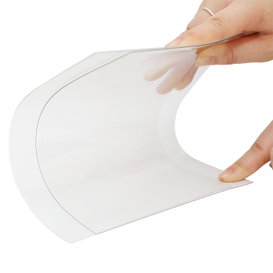
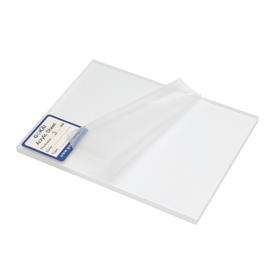
A polycarbonate solid sheet is a transparent or translucent thermoplastic panel with a continuous, dense structure. Its appearance is similar to glass, but it is substantially lighter and significantly more resistant to impact.
High-quality solid sheets are frequently used where visibility and safety must work together. Typical examples include safety glazing, riot shields, machine enclosures, protective partitions, bus shelters, signage, skylights, canopies, and architectural glazing.
A major reason buyers select solid polycarbonate is its impact performance. Laird Plastics states that polycarbonate can provide up to 250 times the impact strength of glass of equivalent thickness, while offering high optical clarity and roughly half the weight of standard glass.
- High impact resistance for safety glazing, shields, guards, and public-facing installations
- Glass-like transparency for applications requiring visual clarity
- Good thermoforming performance for curved covers, domes, machine housings, and custom components
- Lower handling weight compared with glass panels
- Optional UV-protected surfaces for exterior applications
- OEM customization options for thickness, color, embossing, masking film, dimensions, and packaging
Solid sheets are often the right choice when the project prioritizes visibility, surface continuity, and resistance to accidental or deliberate impact.
A polycarbonate hollow sheet has internal walls or ribs that form air chambers. Common structures include twin-wall, triple-wall, four-wall, X-structure, and honeycomb designs. The air spaces reduce material consumption and weight while helping reduce heat transfer.
This structure makes hollow polycarbonate sheets especially suitable for roofing, greenhouses, pergolas, carports, skylights, covered walkways, partitions, and agricultural structures.
The internal chambers create an insulating layer. This can make a hollow sheet a more practical glazing choice than solid sheet when a project needs daylight but also seeks better thermal performance.
However, hollow sheet selection is not only about thickness. Buyers should evaluate:
- Number and shape of internal walls
- Sheet thickness and panel width
- Light transmission and diffusion level
- UV coating configuration
- Required span and support spacing
- Wind, snow, hail, and temperature conditions
- End-cap and sealing system
- Fire-performance documentation required by the destination market

The best option depends on the intended application. Use the following comparison as a starting point, then confirm the final specification based on engineering requirements and local building regulations.
| Selection Factor | Polycarbonate Solid Sheet | Polycarbonate Hollow Sheet |
|---|---|---|
| Structure | Dense, continuous panel | Multiwall panel with internal air chambers |
| Visual clarity | High, close to glass | Clear, opal, bronze, or diffused; ribs remain visible |
| Impact protection | Excellent for guards and safety glazing | High, but depends on wall structure and thickness |
| Thermal insulation | Lower than multiwall panels | Better due to trapped air chambers |
| Weight | Lighter than glass, heavier than hollow sheet | Very lightweight |
| Curving and forming | Suitable for thermoforming and cold bending within limits | Commonly cold-bent along rib direction within limits |
| Typical applications | Machine guards, barriers, signage, safety windows, solid skylights | Greenhouses, roofing, canopies, pergolas, daylighting systems |
| Surface durability | Can require hard coating for scratch-sensitive uses | Usually selected for roofing and glazing rather than high-contact surfaces |
| OEM flexibility | Thickness, color, embossed texture, hard coat, custom cutting | Thickness, wall structure, color, UV layer, sheet length, accessories |
Practical recommendation: Choose a solid sheet where safety glazing, optical transparency, or fabrication precision is critical. Choose a hollow sheet where low weight, insulation, daylight diffusion, and large roofing coverage are more important.
A reliable specification begins with the application, not with a generic request for "polycarbonate panel." The following five-step method reduces costly mismatches between a sheet and its final environment.
Ask what the sheet must withstand:
- Human impact or vandalism
- Hail and windborne debris
- Snow and wind load
- Outdoor UV exposure
- Heat buildup beneath roofing
- Chemical exposure in industrial settings
- Repeated cleaning or physical contact
- Local fire and building-code requirements
For example, a warehouse machine guard and a greenhouse roof may both use polycarbonate, but they need very different sheet structures, coatings, fixing methods, and compliance documents.
Thickness should be selected using span, support spacing, design load, local weather, and panel geometry—not just appearance. A thicker sheet is not automatically the correct solution if the support structure, fixing system, or thermal-expansion allowance is poorly designed.
For hollow sheets, larger spans and more demanding climates may require thicker panels or higher-performance multiwall structures. For solid sheets, thickness is usually chosen according to safety, impact level, stiffness, and fabrication requirements.
A manufacturer should provide technical guidance, such as loading tables, recommended support distances, and installation parameters, before a buyer finalizes the order.
For exterior installations, UV protection is essential. Many polycarbonate roofing systems use a co-extruded UV-protective layer on the weather-facing surface. Co-extrusion bonds the protective layer into the sheet during production rather than applying it as a separate after-treatment.
This matters because the UV-coated surface must face outward during installation. If the panel is installed in the wrong direction, the weather-resistant surface may not protect the sheet as intended.
Some polycarbonate products provide protection on one side, while others provide UV protection on both sides. The correct option depends on whether both surfaces may be exposed, such as in freestanding partitions or certain glazing configurations.
One of the most common causes of premature leakage, buckling, cracking, or fixing failure is insufficient room for thermal movement. Polycarbonate expands and contracts more than glass and steel as temperatures change.
Industry installation guidance recommends allowing for this movement with expansion gaps and oversized pre-drilled holes where mechanical fixing is used. Polycarbonate multiwall sheets tend to move most along the rib direction, while profiled sheets move along their corrugation direction.
A commonly cited coefficient of linear thermal expansion for polycarbonate is approximately \(7 \times 10^{-5}\) per °C. One installation guide illustrates that a 3,500 mm panel can change by about 3.675 mm across a 15°C temperature difference.
Installation rule: Never force a polycarbonate panel tightly into a frame. The glazing system must allow controlled movement while maintaining weather sealing.
"Fire-resistant" is not a universal product claim. Polycarbonate grades can carry different performance ratings depending on formulation, thickness, product design, and testing standard.
For example, UL 94 measures small-scale material flammability. Under the standard, V-0 is more demanding than V-1 or V-2 because the specimen must extinguish quickly and must not produce flaming drips. HB is a lower horizontal-burning classification.
For construction projects, buyers may also need documentation under standards such as EN 13501-1, ASTM E84, local building codes, or country-specific requirements. Do not assume that a fire classification from one thickness, resin grade, or market automatically applies to another.
For distributors, project contractors, and branded building-material companies, OEM service should go beyond printing a logo on protective film. A useful OEM program helps turn a standard sheet into a product that fits a defined market.
- Custom sheet thickness, width, length, and wall structure
- Clear, opal, bronze, blue, green, or customized color options
- One-side or two-side UV protection
- Diffused-light, embossed, frosted, anti-fog, anti-static, or hard-coated surfaces
- Custom protective-film printing and private-label packaging
- Branded cartons, labels, barcodes, manuals, and installation instructions
- Matching aluminum profiles, sealing tapes, end caps, fasteners, and accessories
- Export-oriented packing designed for container loading and long-distance transport
- Pre-shipment inspection and product documentation based on project requirements
For buyers serving multiple climates, it is often more efficient to develop a small, market-specific product range rather than sell one generic sheet everywhere. For example, a high-diffusion greenhouse panel may suit agricultural customers, while a hard-coated solid sheet may be more relevant for equipment protection or public infrastructure.

Correct installation protects product performance and helps reduce avoidable warranty disputes.

1. Confirm the UV-protected side and place it toward the outdoor exposure side.
2. Check the sheet orientation, especially for hollow sheets; ribs should generally run in the drainage direction.
3. Keep the protective film in place during cutting and installation where practical.
4. Use compatible gaskets, tapes, sealants, and cleaning agents.
5. Allow for thermal expansion at edges, joints, and mechanical fasteners.
6. Use the manufacturer's span and fixing recommendations for the specific sheet type.
Use lukewarm water, mild soap, and a soft cloth or sponge. Avoid abrasive pads, strong alkaline cleaners, acetone, benzene, and other solvents that may damage polycarbonate surfaces.
For hollow sheets, maintain sealed ends and proper drainage. Dust, insects, moisture, or algae entering open channels can reduce appearance and light transmission over time.
Whether you need clear solid polycarbonate sheets for safety glazing, multiwall polycarbonate sheets for greenhouse roofing, or a private-label polycarbonate product line for your market, our team can help define the right specification.
Send us your target application, sheet thickness, dimensions, color, UV requirement, annual volume, destination country, and branding needs. We will help you develop an OEM solution built for your project—not just supply a standard panel.
Polycarbonate solid sheet is widely selected for impact protection because it is far more resistant to impact than ordinary glass. The actual performance depends on thickness, grade, support condition, and the type of impact involved. Laird Plastics reports polycarbonate can offer up to 250 times the impact strength of equivalent-thickness glass.
Yes. Hollow polycarbonate sheet is commonly used for greenhouse roofs because it combines light transmission, low weight, impact resistance, and better insulation than a solid panel. Diffused grades can also help distribute light more evenly across plants.
Use solid sheet when high visual clarity, compact panel design, or safety glazing is the priority. Use hollow sheet when thermal insulation, low weight, and daylight coverage over a larger area are the main requirements.
Outdoor polycarbonate should normally include UV protection. A co-extruded UV layer helps protect the exposed surface from weathering and yellowing. Always install the UV-protected side in the specified outward direction.
Yes. Polycarbonate sheets can be cut with suitable fine-tooth blades and drilled with sharp drill bits. Avoid overheating, support the sheet properly, and drill oversized holes where necessary to accommodate thermal movement.
Service life depends on material grade, UV protection, climate, installation quality, cleaning practice, and exposure conditions. Outdoor applications should use a UV-protected grade and follow the manufacturer's installation guidance to achieve stable long-term performance.
Yes. We provide OEM support for polycarbonate solid sheets and polycarbonate hollow sheets, including customized dimensions, colors, UV configurations, surface options, protective film, branding, export packaging, and supporting accessories. Contact us with your application, target market, required specification, and estimated order volume for a tailored proposal.
1. Laird Plastics. "[The Complete Guide to Polycarbonate Sheets]." Accessed August 15, 2026.
2. Palram. "[Thermal Expansion and Polycarbonate Roofing Sheets]." July 23, 2023.
3. Sun Asia. "[Polycarbonate Sheet Installation Instructions]." Accessed August 15, 2026.
4. Tekra. "[UL Flame Ratings for Polycarbonate Films]." Accessed August 15, 2026.
5. Total Plastics. "[Understanding Flame Retardant Polycarbonate]." June 22, 2023.
6. Colorado Polycarbonate. "[Polycarbonate Panel Features]." September 30, 2021.