Shanghai Gokai Industry Co,.Ltd.
Call Us: +86-18918606548
Call Us: +86-18918606548
- Product Name
- Product Keyword
- Product Model
- Product Summary
- Product Description
- Multi Field Search
Views: 222 Author: Gokai Publish Time: 2026-05-19 Origin: Site


Acrylic sheet is usually a better choice than glass for modern OEM and fabrication projects that demand light weight, high impact resistance, design flexibility, and competitive cost—especially when you work with an experienced acrylic sheet supplier like Gokai that can customize thickness, colors, and performance for your application. Glass still wins on surface hardness and extreme heat resistance, but for most architectural, retail, transportation, and marine uses, high‑quality acrylic delivers superior overall value and user safety. [americanacrylics]
In this guide, I'll walk you through acrylic versus glass from the perspective of a plastics industry OEM partner (Gokai) and as someone who has helped hundreds of engineers, fabricators, and brand owners choose the right material for their projects. You'll see real numbers, practical scenarios, and a checklist you can reuse for your own specifications. [tilarapolyplast]
When you compare acrylic sheet (PMMA) with traditional glass, you are really comparing two completely different material systems with distinct manufacturing, performance, and lifecycle profiles. Choosing the right one comes down to three big questions: Where will it be used? How will it be loaded? What experience do you want end‑users to have? [hydrosight]
Key decision drivers (at a glance):
- Weight and handling: Acrylic is less than half the density of glass, making it much easier and more economical to transport and install. [hydrosight]
- Impact and safety: Acrylic has much higher impact strength than conventional glass and does not shatter into sharp fragments. [americanacrylics]
- Optical performance: Quality cast acrylic transmits up to 92% of visible light, slightly higher than many glass options, even at substantial thickness. [americanacrylics]
- Thermal performance: Acrylic's lower thermal conductivity means better insulation in windows, skylights, and enclosures. [hydrosight]
- Surface hardness: Glass is more scratch‑resistant, though modern hard‑coated acrylic is closing this gap. [americanacrylics]
Glass is an inorganic, transparent material produced by melting silica sand, soda ash, and limestone at very high temperatures, then forming and cooling the melt into a rigid solid. It is chemically inert, has excellent heat resistance, and can be processed into float glass, tempered glass, laminated glass, and specialty coated products for optics and safety. [hydrosight]
Typical uses of glass: windows, architectural façades, drinkware, picture frames, scientific glassware, and automotive windshields. Its long history and familiarity make it a "default" choice in many designs, even when plastics could perform better. [americanacrylics]
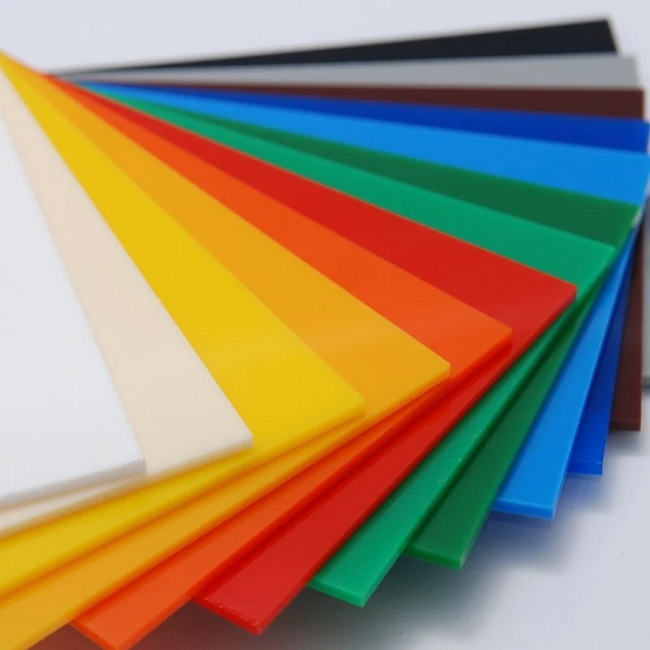
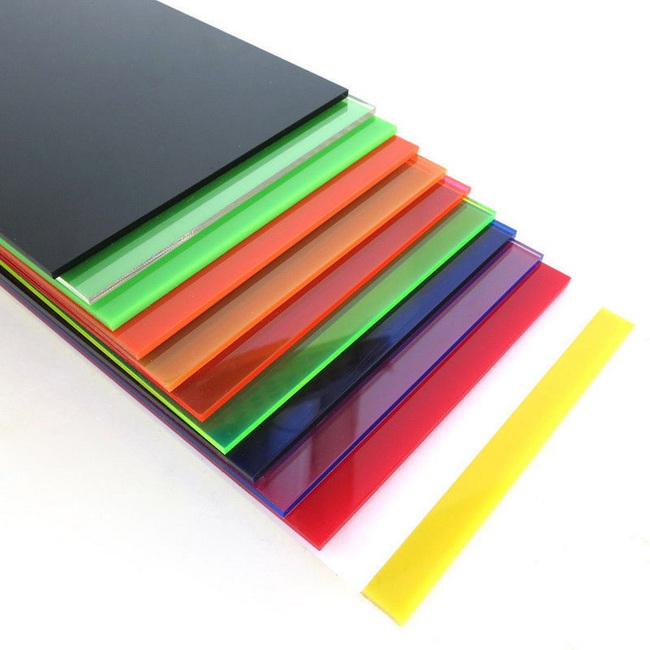
Acrylic (PMMA) is a transparent thermoplastic, often known by trade names like plexiglass, first commercialized in the early 20th century and widely used during World War II for aircraft canopies and observation domes. It can be manufactured as cast or extruded sheet, and is available in clear, opal, colored, mirrored, frosted, and textured variants. [americanacrylics]
From a fabrication and OEM perspective, acrylic combines high optical clarity, excellent weatherability, low weight, and easy formability, making it ideal for retail displays, machine guards, aquariums, greenhouses, transportation glazing, and protective barriers. Gokai focuses on supplying custom acrylic sheets with OEM options for size, thickness, color, surface finish, and protective masking to global customers. [hydrosight]
| Property | Acrylic Sheet (PMMA) | Glass |
|---|---|---|
| Light transmission | Up to ~92% visible light for quality clear acrylic americanacrylics | Typically 80–90% for many heat‑treated glass types americanacrylics |
| Density / weight | ~1150–1190 kg/m³ (less than half of glass) hydrosight | ~2400–2800 kg/m³ hydrosight |
| Impact resistance | Much higher than standard glass; does not shatter americanacrylics | Brittle; can shatter into sharp fragments americanacrylics |
| Thermal conductivity | ~0.19 W/mK (better insulation) hydrosight | ~0.79 W/mK for laminated glass (poorer insulation) hydrosight |
| UV resistance | UV‑stable grades offer long‑term clarity hydrosight | Good, but interlayers or coatings can degrade over time hydrosight |
| Scratch resistance | Softer surface; benefits from hard coatings americanacrylics | Naturally more scratch‑resistant americanacrylics |
| Forming and shaping | Easily thermoformed into complex geometries americanacrylics | Curving possible but more limited and costly americanacrylics |
| Chemical resistance | Moderate; sensitive to some solvents americanacrylics | Highly inert to many chemicals americanacrylics |
| Heat resistance | Softens above ~160°C americanacrylics | Withstands very high temperatures americanacrylics |
From a project‑engineering perspective, this means acrylic wins where weight, impact resistance, optical clarity, and design flexibility matter most, while glass remains preferable in applications dominated by extreme heat or where maximum surface hardness is critical. [hydrosight]
Because acrylic is less than half the density of glass, it drastically reduces dead load in façades, skylights, machine guards, and transportation glazing. This simplifies sub‑structure design, reduces lifting and installation costs, and can even lower overall project timelines. [royaletouche]
For OEMs shipping finished products worldwide, lighter acrylic glazing and panels also mean lower freight costs and reduced risk of breakage in transit. Gokai's export customers in Europe and North America often see a meaningful difference in crate design and logistics budgets when switching from glass to acrylic sheet. [royaletouche]
Standard soda‑lime glass is brittle and can fail suddenly, producing sharp shards that pose a serious safety risk. Acrylic, by contrast, has much higher impact strength and typically cracks without shattering into dangerous fragments. [americanacrylics]
This makes acrylic especially attractive in:
- Retail environments where customer safety is paramount.
- Sports and public venues where crowd impacts are possible.
- Machinery guards and barriers around moving equipment.
- Aquariums and pools where underwater viewing windows must withstand hydrostatic pressure. [hydrosight]
For safety‑critical applications, many designers now treat acrylic sheet as a default starting point and consider glass only if specific regulatory or environmental constraints demand it. [hydrosight]
High‑quality cast acrylic maintains excellent light transmission even at greater thicknesses, with visible light transmission above 88–90% in thick sections, outperforming many multi‑layer laminated glass assemblies. Combined with its ability to be polished, bent, and thermoformed without significant optical distortion, this makes acrylic a favorite for premium retail displays, museum cases, and architectural glazing. [americanacrylics]
From a user‑experience standpoint, this translates into brighter, clearer, and more inviting spaces, whether you are illuminating a brand wall, designing a frameless display, or building a panoramic viewing window. [americanacrylics]
Despite acrylic's advantages, there are scenarios where glass remains the better material choice. [hydrosight]
Glass is preferable when:
- Extreme heat is involved (cookware, furnace windows, high‑temperature lab use). [americanacrylics]
- High scratch resistance without coatings is essential and maintenance polishing is not an option. [americanacrylics]
- Long‑term chemical exposure to aggressive solvents or reagents is expected. [americanacrylics]
In these cases, glass's natural hardness, heat resistance, and inertness may still justify its higher weight and more complex installation requirements. [hydrosight]
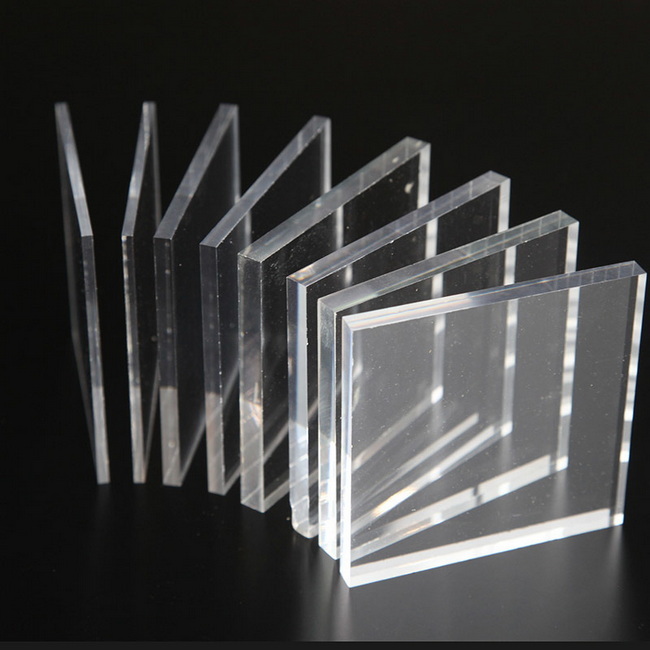
In skylights, canopies, and façade elements, acrylic's combination of high light transmission and lower thermal conductivity can improve daylighting and energy performance at the same time. Acrylic panels are easier to handle at height, reduce structural loads, and can be supplied in custom colors and tints to control glare and aesthetics. [hydrosight]
Boat builders and vehicle OEMs increasingly specify acrylic for windows, hatches, and windshields because it withstands impact, vibration, and harsh weather better than standard glass. Marine‑grade acrylic also offers strong UV resistance and consistent optical clarity above the waterline, while underwater windows benefit from acrylic's better structural performance and insulation. [hydrosight]
For point‑of‑sale displays, illuminated signage, machine guards, and equipment housings, acrylic offers a compelling balance of appearance, safety, and fabrication flexibility. It can be CNC‑cut, laser‑cut, routed, and thermoformed into detailed shapes, then printed or laminated to support branding and product communication. [polymershapes]
When advising clients, I use a simple five‑step checklist to decide between acrylic and glass for a new design. [tilarapolyplast]
1. Environment and loading
- Indoor vs outdoor, marine vs dry, static vs impact loads. [americanacrylics]
2. Safety and compliance
- Risk of breakage, presence of crowds, equipment exposure, and applicable safety standards. [hydrosight]
3. Optical and aesthetic targets
- Required light transmission, color, gloss level, and tolerance for distortion or reflection. [americanacrylics]
4. Lifecycle cost, not just unit price
- Include logistics, installation, maintenance, and replacement in your analysis. [royaletouche]
5. Supply chain and OEM capability
- Confirm that your material partner can provide stable quality, consistent thickness, and the exact fabrication services you need at scale. [polymershapes]
In most non‑high‑temperature scenarios, this process leads design teams toward acrylic sheet as the more efficient and user‑friendly option.
Choosing acrylic over glass is only half the decision; the other half is picking the right acrylic sheet supplier. Based on current industry best practices and feedback from fabricators, here is what a strong supplier should provide. [tilarapolyplast]
1. Transparent manufacturing standards
A reliable acrylic sheet manufacturer should clearly explain where and how the sheets are made, what raw materials are used, and which certifications apply (e.g., ISO quality systems, fire ratings, food‑contact approvals). [tilarapolyplast]
2. Consistency across batches
For OEMs, batch‑to‑batch consistency in thickness, color, and optical quality is critical to avoid rework and warranty issues. Serious suppliers can provide thickness tolerance data, inspection reports, and pre‑production samples before you commit to volume orders. [polymershapes]
3. UV stability and weatherability
For outdoor, marine, and façade applications, UV‑stable acrylic with documented performance is non‑negotiable. Leading brands now offer guarantees of up to decades of clarity retention in demanding environments. [tilarapolyplast]
4. Value‑added processing and OEM services
Industrial customers benefit from suppliers who can cut‑to‑size, polish, thermoform, bond, and print in‑house, delivering parts that are closer to final shape. As a global OEM partner, Gokai supports custom sizes, machining, edge finishing, color matching, and private‑label packaging for acrylic sheet and related materials. [polymershapes]
5. Technical guidance and support
The best acrylic suppliers act as technical partners, advising on sheet selection, thickness calculation, installation methods, and maintenance regimes rather than just quoting prices. This is especially valuable when switching from glass to acrylic in an existing design. [athenaswc]
To maximize performance and lifespan when replacing glass with acrylic, follow some practical best practices that we routinely recommend to OEM customers.
Installation tips:
- Use proper clearance and gasket design to allow for thermal expansion, which is higher for acrylic than glass. [hydrosight]
- Avoid excessive point loads, and distribute clamping pressure along edges with suitable profiles or frames. [hydrosight]
- Keep protective masking on as long as possible during fabrication and installation to prevent surface damage. [royaletouche]
Cleaning and care:
- Use soft, non‑abrasive cloths and cleaners specifically formulated for plastics.
- Avoid solvents like acetone or gasoline that can cause crazing or surface damage. [americanacrylics]
- For high‑traffic areas, consider hard‑coated acrylic grades to improve scratch resistance and reduce cleaning frequency. [americanacrylics]
With the right specification and handling, high‑quality acrylic sheet can deliver long, stable service life and an excellent visual appearance, even in demanding applications. [royaletouche]
If you are currently designing with glass—or simply comparing material options—the next step is to talk through your project with an acrylic sheet specialist. Gokai supports global customers with OEM acrylic sheet solutions, from standard sizes to fully customized colors, thicknesses, and fabricated parts.
- Need to replace glass in an existing design?
- Looking for lighter, safer glazing options for export markets?
- Want a single partner to handle sheet supply and OEM processing?
Contact Gokai's acrylic sheet team today to discuss your drawings, performance targets, and annual volume requirements. Together, we can help you select the right acrylic grade, optimize thickness, and streamline your supply chain from prototype to mass production. [polymershapes]
1. Is acrylic really clearer than glass?
High‑quality cast acrylic typically transmits up to about 92% of visible light, which is comparable to or slightly higher than many glass options, especially at greater thicknesses. [americanacrylics]
2. Does acrylic turn yellow in sunlight?
Modern UV‑stabilized acrylic grades are highly resistant to yellowing, with manufacturers often offering multi‑decade warranty periods for outdoor use in demanding environments. [hydrosight]
3. Can acrylic replace glass in existing window frames?
In many cases, yes, but the design must account for acrylic's different thermal expansion and thickness requirements; consulting with your acrylic supplier before retrofit is essential. [americanacrylics]
4. How scratch‑resistant is acrylic compared with glass?
Standard acrylic is softer than glass and can scratch more easily, but hard‑coated acrylic significantly improves surface resistance and can be polished or refinished if required. [americanacrylics]
5. Is acrylic sheet more expensive than glass?
Flat, basic glass can be cheaper per square meter, but when you factor in tempering, laminating, shaping, shipping, and installation, acrylic is often more cost‑effective over the full project lifecycle. [royaletouche]
1. Piedmont Plastics – *Acrylic Versus Glass*
<https://www.piedmontplastics.com/blog/acrylic-versus-glass> [americanacrylics]
2. Hydrosight – *Acrylic Windows vs Glass Windows*
<https://www.hydrosight.com/glass-vs-acrylic-a-comparison> [hydrosight]
3. American Acrylics – *Acrylic vs Glass – 3 Important Comparisons*
<https://americanacrylics.com/plastic-industry-resources/acrylic-vs-glass/> [americanacrylics]
4. TILARA Polyplast – *Choosing the Right Acrylic Sheet Supplier: What Every Buyer Must Know*
<https://www.tilarapolyplast.com/blog/choosing-the-right-acrylic-sheet-supplier-what-every-buyer-must-know/> [tilarapolyplast]
5. Polymershapes – *Your Acrylic Supplier Should Get These Things Right*
<https://polymershapes.com/your-acrylic-supplier-should-get-these-things-right/> [polymershapes]
6. Hydrosight – Thermal and optical data table
<https://www.hydrosight.com/glass-vs-acrylic-a-comparison> [hydrosight]
7. Royale Touche – *How Acrylic Sheets Are Made: Step-by-Step Manufacturing*
<https://royaletouche.com/acrylic/blog/how-acrylic-sheets-are-made/> [royaletouche]
8. Manufacturing SEO – *SEO For Plastic Product Manufacturers*
<https://manufacturing-seo.com/plastic-product-manufacturing-seo/> [manufacturing-seo]
9. Athena SWC – *SEO for Plastics Manufacturing: Keys to Success*
<https://www.athenaswc.com/resources/blog/seo-for-plastics-manufacturing-keys-to-success/> [athenaswc]