Shanghai Gokai Industry Co,.Ltd.
Call Us: +86-18918606548
Call Us: +86-18918606548
- Product Name
- Product Keyword
- Product Model
- Product Summary
- Product Description
- Multi Field Search
Views: 222 Author: Gokai Publish Time: 2026-05-09 Origin: Site


If you are planning a new greenhouse or upgrading from traditional glass, twinwall polycarbonate hollow sheets offer a powerful combination of durability, thermal efficiency, and long-term value that most growers only appreciate after their first full growing season. Drawing on hands‑on experience from commercial clients and years of OEM manufacturing at Gokai, this guide explains why twinwall polycarbonate has become the smart default for modern greenhouses—and how to choose and use it correctly from day one. [polycarbonategreenhouse.co]
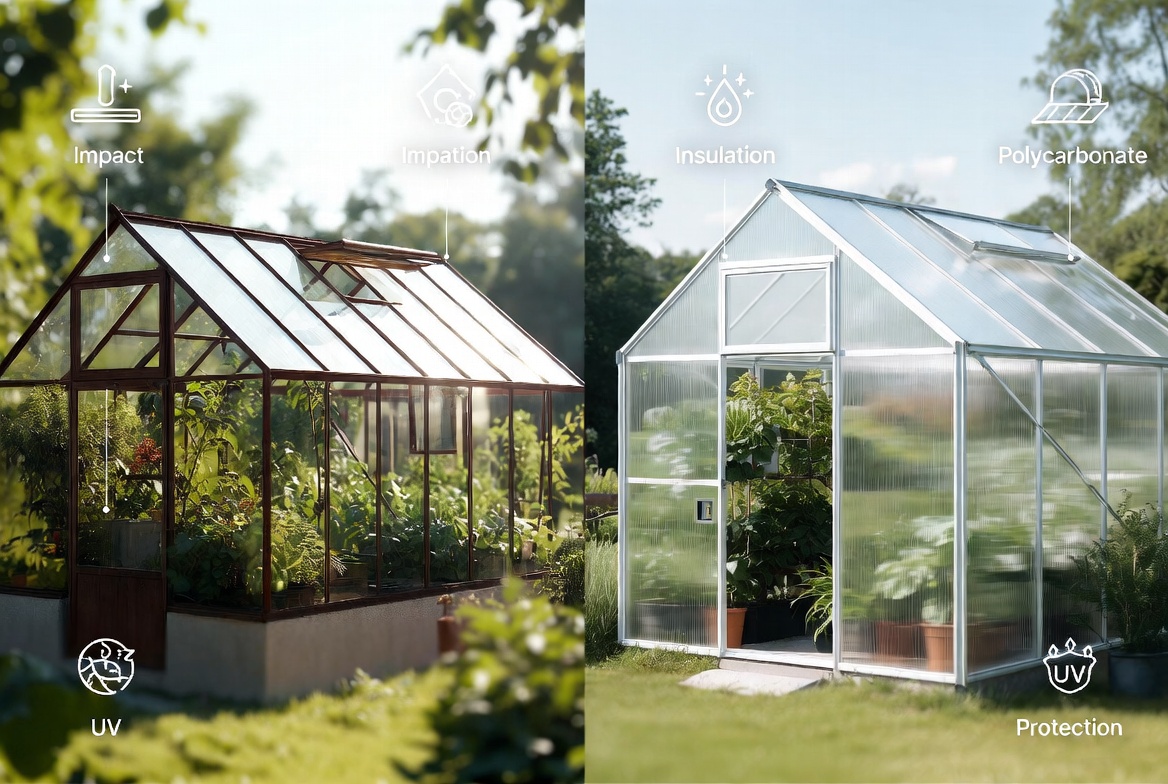
Twinwall polycarbonate hollow sheets (often called polycarbonate hollow sheet or polycarbonate greenhouse panels) are lightweight plastic panels formed with two parallel layers separated by internal ribs to create air channels. This "honeycomb" or "fluted" structure traps air, improving insulation while maintaining the high impact resistance and light transmission that polycarbonate is known for. [polycarbonategreenhouse.co]
From a manufacturer's standpoint, the internal cell structure, resin grade, UV coating, and extrusion process all directly affect clarity, stiffness, and lifespan, which is why serious greenhouse builders typically work with an OEM supplier instead of commodity sheet vendors. At Gokai, we customize thickness, color, UV protection, and sheet size so distributors and greenhouse brands can match specific climate and crop requirements rather than relying on "one spec fits all." [shgokai.en.made-in-china]

One of the first things growers notice after switching from single‑layer glass or film to twinwall polycarbonate is how stable the internal temperature becomes throughout the day and across seasons. The air gap between the two polycarbonate layers acts as a thermal buffer, reducing heat loss in cold weather and softening temperature swings when the sun is intense. [alibaba]
From field feedback, small commercial growers report lower heating energy consumption in winter and fewer cold‑shock incidents for sensitive seedlings once twinwall panels are installed. In warm climates, correctly vented twinwall structures help maintain a more even root and leaf temperature profile, which translates into more consistent growth and fewer physiological disorders like leaf scorch or blossom drop. [polycarbonategreenhouse.co]
Practical tip from the factory floor: For most hobby and light commercial greenhouses, 6–8 mm twinwall sheets offer an excellent balance between insulation, light transmission, and cost, while 10 mm and above are preferred in cold regions or for year‑round professional production. [alibaba]
Glass has a classic look, but in real‑world use it can be fragile, dangerous when broken, and costly to replace after hail or strong winds. Twinwall polycarbonate hollow sheets, by contrast, are high‑impact materials engineered to withstand hailstorms, falling branches, and frequent handling without cracking. [polycarbonategreenhouse.co]
In our OEM production, we routinely supply panels to regions with frequent hail, where customers specifically moved away from glass after multiple replacements in just a few seasons. Polycarbonate's inherent toughness (often advertised as dozens of times stronger than glass) reduces the risk of sudden failure and the safety issues associated with shattered glass panels above workers and crops. [gokai123.en.made-in-china]
From a safety and maintenance perspective, this means fewer emergency repairs, fewer interruptions to your growing schedule, and greater peace of mind during storms. For greenhouse brands and distributors, using robust polycarbonate hollow sheets also reduces warranty claims and improves long‑term customer satisfaction. [serpsgrowth]
Light quality inside the greenhouse directly affects photosynthesis, internode length, and overall plant morphology. Twinwall polycarbonate greenhouse panels transmit plenty of usable light while scattering it more evenly across the canopy, unlike bare glass which can create hot spots and harsh shadows. [alibaba]
Growers often describe this as "softer" light: plants receive high PAR (photosynthetically active radiation) but with reduced risk of leaf burn because direct beams are broken up by the sheet structure. This is particularly valuable for leafy greens, ornamentals, and young seedlings that are sensitive to intense, direct sun. [polycarbonategreenhouse.co]
Depending on resin formulation and surface treatment, polycarbonate sheets can be tuned for different light diffusion levels and UV filtration. As an OEM, Gokai works with partners to specify clear, diffuse, or tinted options to match regional sun intensity and target crops, helping them build a differentiated greenhouse product line rather than a single generic solution. [shgokai.en.made-in-china]
Twinwall polycarbonate hollow sheets are significantly lighter than glass at similar coverage areas, which has several practical advantages for both DIY builders and professional greenhouse manufacturers. Lighter panels reduce the load on the greenhouse frame, allowing more economical aluminum or steel structures while still maintaining structural integrity. [alibaba]
From an installation perspective, the lower weight means panels are easier to lift, position, and fasten, especially for rooftop or large-span projects where manual handling is unavoidable. Distributors serving the DIY market often highlight that two people can install most panels without heavy equipment, which makes polycarbonate a more accessible choice for hobbyists and small farms. [alibaba]
In OEM projects, this translates into savings on shipping, faster assembly times, and fewer installation‑related damage claims, all of which directly improve project profitability. The combination of lightweight design and high impact resistance is one of the core reasons the market continues to shift from glass to polycarbonate for new greenhouse builds. [serpsgrowth]
A well‑made twinwall polycarbonate sheet is designed for multi‑year outdoor exposure under strong sun, rain, and temperature cycles when properly installed. The key is a high‑quality UV‑resistant layer co‑extruded on the outer surface, which protects the base resin from yellowing, embrittlement, and loss of light transmission. [polycarbonategreenhouse.co]
At the manufacturing level, consistent extrusion, controlled thickness, and verified UV coating are non‑negotiable if you expect a 10‑year or longer service life. Gokai supplies polycarbonate hollow sheets with defined warranty periods (e.g., 3–10 years depending on specification) to global customers, giving greenhouse brands a clear value story to present to growers. [gokai123.en.made-in-china]
For end users, this means the panels maintain clarity and mechanical strength over many seasons, so you are not forced into premature replacement due to clouding or cracking. From an E‑E‑A‑T perspective, clearly publishing warranty terms, care guidelines, and expected lifespan on your product pages is an effective way to build trust and reduce buyer hesitation. [singhaitechnologies]
One common gap in many greenhouse articles is practical guidance on choosing panel thickness for different climates and applications. In practice, the "best" thickness depends on temperature range, wind and snow loads, and whether the greenhouse is for hobby, research, or commercial production. [bigbangcopy]
Here is a concise thickness guide you can adapt to your own market pages:
| Typical thickness | Recommended use case | Key benefits |
|---|---|---|
| 4 mm | Small hobby greenhouses and cold frames in mild climates | Lower cost, easy handling, adequate light, modest insulation |
| 6–8 mm | Standard backyard greenhouses, light commercial tunnels | Balanced insulation and light, better rigidity and lifespan |
| 10–12 mm | Colder climates, high‑value crops, research facilities | Improved thermal performance, stronger against wind and snow |
| 16 mm and above (multiwall) | Professional year‑round production, harsh winter regions | Superior insulation, energy savings, premium structures |
[alibaba]
As an OEM supplier, Gokai can extrude customized thicknesses and multiwall configurations (e.g., triple‑wall) to help partners build tiered product lines—from entry‑level kits to high‑end commercial greenhouses—under a single, consistent quality system. [shgokai.en.made-in-china]

Many performance issues blamed on "material quality" actually come from installation mistakes or missing maintenance. Over the years, we have seen predictable patterns, and most are easy to avoid with a clear checklist. [bigbangcopy]
Key installation best practices:
1. Orient the UV‑protected side correctly
Most sheets have a marked UV side that must face outward to ensure full protection and warranty validity. [polycarbonategreenhouse.co]
2. Seal open channels properly
Use appropriate anti‑dust tapes and U‑profiles at the sheet ends to prevent condensation, algae, and dust from entering the hollow channels. [polycarbonategreenhouse.co]
3. Allow for thermal expansion
Polycarbonate expands and contracts with temperature, so drill slightly oversized holes and follow recommended spacing for fasteners to avoid stress cracking. [alibaba]
4. Use compatible sealants and gaskets
Some chemicals attack polycarbonate. Follow manufacturer recommendations for sealants, rubber profiles, and cleaning agents. [alibaba]
Basic maintenance tips:
- Clean panels periodically with mild soap and soft sponges to maintain light transmission
- Inspect joints, tapes, and profiles seasonally, especially after storms
- Remove heavy snow build‑up where applicable to reduce structural load [polycarbonategreenhouse.co]
By integrating these guidelines into your product manuals and content, you not only reduce claims but also demonstrate real‑world expertise to both search engines and customers. [gitnexa]
Beyond material properties, the long‑term success of a greenhouse line often depends on the reliability and flexibility of its OEM polycarbonate supplier. As a dedicated manufacturer of polycarbonate hollow sheets for greenhouse applications, Gokai supports brands and distributors worldwide with consistent quality and tailored specifications. [uxdesign]
Key OEM advantages you can highlight in your marketing content:
- Customized specifications: Thickness, color, light diffusion, and sheet sizes tuned to local climates and brand positioning. [gokai123.en.made-in-china]
- Stable quality and certification support: Production under controlled extrusion parameters with documentation to support local compliance and product registration. [alibaba]
- Long-term warranties and technical support: Clear warranty terms backed by practical guidance on installation and maintenance to help your customers succeed. [shgokai.en.made-in-china]
- Global shipping experience: Packaging, palletizing, and container loading optimized for international transport to minimize damage and logistics cost. [serpsgrowth]
Positioning your brand as "powered by a specialized OEM like Gokai" is a subtle but effective way to strengthen trust, especially for B2B buyers comparing multiple greenhouse suppliers. [singhaitechnologies]

If you are a greenhouse brand, distributor, or project contractor looking for a reliable polycarbonate hollow sheet OEM partner, Gokai can help you configure exactly the panel performance your market needs—backed by manufacturing experience, consistent quality, and clear technical support. Share your climate conditions, target crops, and structural design, and our team will recommend suitable thickness, cell structure, and UV protection options, then produce and ship at scale to your region. [gokai123.en.made-in-china]
Reach out to Gokai's team with your greenhouse specifications or current bill of materials to discuss a tailored OEM solution for your polycarbonate greenhouse panels.
For most modern greenhouse projects, twinwall polycarbonate panels are preferred over glass because they provide better thermal insulation, higher impact resistance, and easier handling while still delivering excellent light for plant growth. Glass may still be chosen for historical or aesthetic reasons, but for performance and total cost of ownership, polycarbonate usually offers greater value. [alibaba]
With proper UV protection and installation, quality polycarbonate hollow sheets typically provide many years of service in outdoor greenhouse conditions, often backed by warranty periods of 3–10 years depending on specifications. Regular cleaning and correct sheet orientation help maintain light transmission and mechanical strength over time. [gokai123.en.made-in-china]
Twinwall polycarbonate panels transmit slightly less total visible light than clear glass, but they diffuse that light more effectively, which often benefits plant growth by reducing hot spots and sunburn risk. In practice, many growers find that the trade‑off leads to more uniform light distribution and healthier canopies. [polycarbonategreenhouse.co]
Thinner panels (around 4 mm) can work for small hobby structures in mild climates, while 6–8 mm is a common standard for backyard and light commercial greenhouses. In colder or more demanding environments, 10–16 mm or multiwall configurations provide better insulation and structural performance; your OEM supplier can help you select the right grade. [alibaba]
Yes, many users successfully cut twinwall polycarbonate sheets with common tools and install them on DIY greenhouse frames, provided they follow basic guidelines for sheet orientation, sealing, and thermal expansion. For larger commercial projects, working with experienced installers and following the manufacturer's technical manual is recommended to ensure structural integrity and warranty compliance. [polycarbonategreenhouse.co]
1. Google Search Central – Creating Helpful, Reliable, People‑First Content
<https://developers.google.com/search/docs/fundamentals/creating-helpful-content> [developers.google]
2. E‑E‑A‑T Optimization Guide for SEO in 2026 – Singh AI Technologies
<https://singhaitechnologies.com/blog/eeat-optimization-guide> [singhaitechnologies]
3. EEAT Content Strategy Guide for 2026 – GitNexa
<https://www.gitnexa.com/blogs/eeat-content-strategy> [gitnexa]
4. Polycarbonate Greenhouses – Cost‑Effective Solution for All‑Season Gardening
<https://polycarbonategreenhouse.co.uk/polycarbonate-greenhouses-cost-effective-solution-for-all-season-gardening/> [polycarbonategreenhouse.co]
5. Tips for Successful Polycarbonate Greenhouse Gardening
<https://polycarbonategreenhouse.co.uk/tips-for-successful-polycarbonate-greenhouse-gardening/> [polycarbonategreenhouse.co]
6. An In‑Depth Guide to DIY Polycarbonate Sheets Greenhouse – Alibaba Product Insights
<https://www.alibaba.com/product-insights/diy-polycarbonate-sheets-greenhouse.html> [alibaba]
7. Manufacture Polycarbonate Greenhouse: Technical Specifications, Production Process, and Applications – Alibaba Product Insights
<https://www.alibaba.com/product-insights/manufacture-polycarbonate-greenhouse.html> [alibaba]
8. Gokai – Polygreen Polycarbonate Greenhouse Hollow Roof Panel
<https://shgokai.en.made-in-china.com/product/itnRglqyqmkz/China-Polygreen-Polycarbonate-Greenhouse-Hollow-Roof-Panel.html> [shgokai.en.made-in-china]
9. Gokai – Greenhouse Polycarbonate Hollow/Sun Sheet Sunroof
<https://gokai123.en.made-in-china.com/product/hdqGnEgwHWcf/China-Greenhouse-Polycarbonate-Hollow-Sun-Sheet-Sunroof.html> [gokai123.en.made-in-china]
10. SEO Strategies for Greenhouse Suppliers: Boost Your Business – SERPs Growth
<https://serpsgrowth.com/blog/seo-strategies-for-greenhouse-suppliers/> [serpsgrowth]
11. SEO for Greenhouses – Auto Page Rank
<https://autopagerank.com/seo-for-greenhouses/> [autopagerank]
12. How to Analyze Your Competitors' Content Strategy – UX Collective
<https://uxdesign.cc/how-to-analyze-your-competitors-content-strategy-94a8aac521be> [uxdesign]
13. 5 Ways to Improve on Your Competitor's Content – Big Bang Copy
<https://www.bigbangcopy.com/blog/5-ways-improve-your-competitors-content> [bigbangcopy]