Shanghai Gokai Industry Co,.Ltd.
Call Us: +86-18918606548
Call Us: +86-18918606548
- Product Name
- Product Keyword
- Product Model
- Product Summary
- Product Description
- Multi Field Search
Views: 222 Author: Gokai Publish Time: 2026-05-06 Origin: Site


Russia has developed a complete polystyrene value chain, from ethylbenzene and styrene to EPS, HIPS, GPPS, films and sheets, integrated inside large petrochemical complexes. This vertical integration gives local PS sheet producers cost advantages, energy security, and stable raw material supply compared with many import‑dependent regions. [zuroplast]
Market studies show that Russia's polystyrene market is expected to grow at more than 4.7% CAGR from 2025 to 2030, driven by construction insulation, food packaging, consumer goods, and electronics. Within this, foams, films, and sheets are key form factors serving building and packaging applications under harsh climate conditions. For global procurement managers, this means a mature cluster of PS and GPPS/ HIPS sheet converters able to supply large, recurring volumes. [zuroplast]
At the same time, many international brands still prefer to dual‑source with Chinese PS sheet specialists such as Shanghai Gokai Industry Co., Ltd. to balance cost, MOQ flexibility, and export‑market familiarity. Combining Russian sheet producers for regional deliveries and Chinese OEM partners for diversified applications helps buyers reduce geopolitical, logistics, and currency risks. [tppolymer]

Before listing any manufacturer, we apply a transparent, procurement‑grade selection framework that aligns with Google's E‑E‑A‑T principles and real‑world buying practice.
1. Factory certifications and compliance
- ISO 9001 or equivalent quality management system, ideally visible in public sources or customer documentation. [plastmass-group]
- GOST and Eurasian Conformity (EAC) where required for products sold in Russia and the Eurasian Customs Union. [zuroplast]
- Food‑contact or electrical safety certificates for PS applications in packaging and electronics housings.
2. Process capability and product scope
- Experience with GPPS and HIPS sheets, including co‑extrusion, corona treatment, embossing, and color masterbatching. [zuroplast]
- Ability to supply standard thickness ranges (typically 0.5–10 mm) and widths up to 2,200 mm for display and thermoforming markets. [zuroplast]
- Documented expertise in thermoforming, printing, bonding, and secondary processing recommendations. [zuroplast]
3. R&D and application engineering
- Internal laboratory or collaboration with research institutes, especially for impact‑modified PS, anti‑static grades, or high‑gloss co‑extruded sheets. [kingscope]
- Experience tailoring PS sheet formulations for refrigeration liners, medical equipment, POP displays, or specific climate conditions. [zuroplast]
4. QC system and traceability
- Incoming resin checks, in‑process thickness and surface inspection, and final mechanical/thermal testing (Charpy impact, Vicat, etc.). [zuroplast]
- Batch traceability back to resin lot, with COA and test reports available on request. [zuroplast]
5. Delivery stability and capacity utilization
- Integration with upstream styrene producers or long‑term resin contracts to avoid shortages and sudden price spikes. [creon-group]
- Evidence of serving recurring orders for major OEMs, and maintaining deliveries even during high‑demand periods.
6. Export experience and OEM/ODM service depth
- Proven track record of OEM/ODM for branding, color matching, protective film variants, and custom packaging.
- For export‑oriented suppliers such as Shanghai Gokai Industry Co., Ltd., familiarity with CE, RoHS, and destination‑market regulations is a critical plus. [tppolymer]
Russian PS sheet producers benefit from being embedded in a large polystyrene ecosystem that historically served construction and military needs and now serves automotive, packaging, and electronics. Modern producers leverage domestic energy and feedstocks, making PS sheets competitive on price while maintaining stable quality. [zuroplast]
Key technical features of Russian PS sheets
- Use of HIPS and GPPS in mono‑ and co‑extruded structures for glossy or matte decorated surfaces. [zuroplast]
- Thickness range commonly from 1–10 mm, widths up to 2,200 mm, and smooth or embossed textures such as "leather" and "sand." [zuroplast]
- High chemical resistance to dilute acids and alkalis, oils, fats, alcohols, and aliphatic hydrocarbons, making PS sheets suitable for refrigeration, display, and many industrial applications. [zuroplast]
Impact‑modified PS sheets produced in Russia can handle service temperatures down to about minus 30 to minus 40 °C, which is important for both outdoor displays and refrigerator liners in Russia's climate. Mechanical tests such as Charpy impact strength and Vicat softening point (around 84 °C) are typically used to validate performance. For global buyers, this indicates that Russian sheets are engineered for demanding thermal and mechanical cycles. [zuroplast]
LADA‑LIST produces high impact polystyrene (HIPS) and GPPS sheets under the ZUROPLAST brand and markets them as thermoformable PS sheets for complex shapes. Their ZUROSLIM series covers thin PS sheets (0.48–1 mm) with silky‑matte surfaces designed for card, printing, and POS applications. [zuroplast]
Key technical and service highlights:
- Thickness: typically 1–10 mm for general PS sheets; thinner grades for card and printing. [zuroplast]
- Width: up to 2,200 mm, with smooth or embossed ("leather," "sand") surfaces for décor and advertising. [zuroplast]
- Both sides corona‑treated for high surface tension and even print quality; also offers black anti‑static grades for electronics packaging. [zuroplast]
- Operating temperature: long‑term 75–80 °C, with special PS grades used down to minus 30 °C and, for some impact‑resistant variants, even lower. [zuroplast]
From a buyer's perspective, LADA‑LIST stands out for its membership in European and international associations of plastic distributors, own production from design to packaging, and adherence to Russian and European regulatory requirements. They maintain warehouses in Togliatti, Moscow, and Rostov‑on‑Don, enabling regional stock supply and reduced lead time within Russia and CIS. [zuroplast]
Main markets and OEM profile:
- Serves refrigeration, advertising, furniture, medical and plumbing equipment, and card/printing industries. [zuroplast]
- Offers OEM color, embossing, and surface activation for large converters and card manufacturers.
SafPlast is known as one of the largest factories in Russia for multiwall and solid polycarbonate sheets and profiles and also produces PET and GPPS sheets. While their portfolio is broader than PS alone, the presence of GPPS sheet lines makes them relevant for buyers seeking transparent PS‑family sheet for signage or glazing‑like uses where rigidity and clarity matter. [safplast]
Key strengths:
- Strong R&D profile as a research and technology center in polymer products, including innovations like bio‑layer technologies in other sheet families. [safplast]
- Use of Italian extrusion equipment and close collaboration with research organizations, supporting consistent optical and mechanical quality. [safplast]
- Central Russia location and optimized logistics, contributing to shorter domestic transit times. [safplast]
SafPlast is best positioned for buyers needing polycarbonate and PET alongside GPPS sheets from a single supplier, for example large building materials distributors or advertising fabricators consolidating purchase volume. [safplast]
Within the LADA‑LIST portfolio, ZUROPLAST PS sheets form a recognizable brand used across Russia and the CIS. ZUROPLAST emphasizes compliance with Russian and European regulatory acts and supplies more than 30 regular large customers, an indicator of stable B2B relationships. [zuroplast]
Highlights for procurement:
- Co‑extruded HIPS/GPPS structures with glossy or matte finish for shower cabin panels, furniture, and display components. [zuroplast]
- Good thermoforming behavior and high impact strength, allowing deep‑draw parts without cracking. [zuroplast]
- Multiple color options and finishing patterns targeted at the advertising and interior design markets. [zuroplast]
For overseas buyers, ZUROPLAST branded PS sheet is often used via local distributors, so it is important to clarify whether you are dealing directly with LADA‑LIST or with secondary traders when negotiating OEM conditions.
Plastmass Group is a leading manufacturer of engineering plastics in Russia, focusing on PEEK, PTFE, PET, PEI, PPS, polyurethane, and ultra‑high molecular weight polyethylene, and operates under an ISO 9001:2015 certified system. Although their core catalog is high‑performance materials, they also supply sheet products and can be a strategic partner when PS sheets are part of a broader engineering plastics sourcing program. [plastmass-group]
Why it matters to PS sheet buyers:
- ISO 9001 quality system and experience machining and fabricating precise plastic parts. [plastmass-group]
- Ability to supply complementary materials (e.g., PET or PE) alongside PS or GPPS sheet sourced from partners, simplifying vendor management.
Plastmass Group suits buyers who need an engineering‑grade plastics ecosystem in Russia, rather than commodity PS sheet alone—such as OEMs in machinery, power, and rail sectors.
TP Polymer Private Limited is an India‑based producer that positions itself as a manufacturer and exporter of PS sheets, with Russia listed among its served markets. The PS sheets are manufactured at their own facility and shipped into Russia through distributors or end‑customers, providing an alternative to local Russian production. [tppolymer]
Key points for Russian‑bound buyers:
- Suitable if you require specific grades or colors not widely available from Russian plants.
- Useful for buyers seeking to benchmark Russian PS sheet pricing against imported alternatives from India.
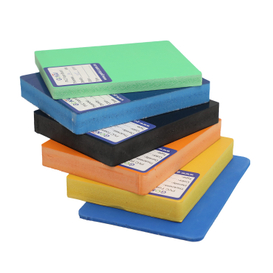
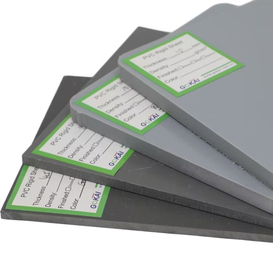
Although not a Russian manufacturer, Shanghai Gokai Industry Co., Ltd. is an established Chinese sheet producer whose portfolio includes polystyrene sheet alongside PVC foam board, acrylic sheet, PET/PETG sheet, ABS sheet, polycarbonate sheet, and aluminum composite panel. Gokai regularly exhibits at SGIA Expo, FESPA, SGI Dubai and other international fairs, indicating strong engagement with the global printing, signage, and display ecosystem. [tppolymer]
From a procurement standpoint, Gokai is particularly valuable as:
- A high‑cost‑performance OEM source for PS sheet and companion sheet materials used in signage, light boxes, POP displays, and cabinets. [tppolymer]
- A partner experienced in serving small and medium‑sized brands that need lower MOQs, rapid sample iterations, and mixed‑container loading across several sheet types.
- A supplier comfortable with custom colors, surface finishes, and co‑branding requirements for export markets, with clear navigation of CE/RoHS and destination packaging standards where applicable.
For buyers building a Russia‑plus‑China supply strategy, one pragmatic model is:
- Use Russian manufacturers (e.g., LADA‑LIST/ ZUROPLAST) for PS sheet serving local production facilities in Russia/CIS, benefiting from localized logistics and compliance. [zuroplast]
- Use Shanghai Gokai for export‑oriented PS sheet projects, tight‑tolerance printing sheets, or projects that also require PVC, acrylic, PET, and PC sheets in the same supply chain. [tppolymer]
This combination gives purchasing managers both geographical and material diversification while preserving OEM customization depth.

| Supplier / Region | Main PS‑Related Products | Typical Thickness & Width | Approx. MOQ (Guidance) | Key Certifications / Compliance | Core OEM/ODM Strengths | Typical Markets |
|---|---|---|---|---|---|---|
| LADA‑LIST LLC (ZUROPLAST), Russia | HIPS & GPPS PS sheets, ZUROSLIM thin PS | 0.48–10 mm, width up to 2,200 mm zuroplast | Pallet‑level; thin PS often from 500–1,000 kg | Member of European & International Associations of Plastic Distributors; complies with Russian and European regulations zuroplast | Color and surface customization, corona treatment, anti‑static black grades | Refrigeration liners, advertising, cards, POS, furniture zuroplast |
| SafPlast, Russia | Multiwall & solid PC, PET, GPPS sheets safplast | Sheet formats for construction and glazing (thickness varies by product) | Usually full truck or container for sheet products | Internal lab; collaboration with research organizations; Russian building standards safplast | Co‑development of glazing and façade systems, multi‑material portfolios | Construction, roofing, glazing, industrial and architectural applications safplast |
| ZUROPLAST PS Sheets (Brand), Russia | Branded HIPS/GPPS PS sheets under ZUROPLAST | Similar to LADA‑LIST portfolio, 1–10 mm sheets zuroplast | Brand‑level OEM volumes via LADA‑LIST | Conforms to Russian and European legal requirements zuroplast | Branded supply to distributors and large converters | Russia & CIS advertising, refrigeration, interior applications zuroplast |
| Plastmass Group, Russia | Engineering plastic sheets and rods (PEEK, PTFE, PET, UHMWPE, etc.) plastmass-group | Engineering thicknesses (varies by polymer) | Project‑based; often from several hundred kg | ISO 9001:2015 certified plastmass-group | Machining, custom parts, engineering support | Machinery, power, automotive, high‑performance components plastmass-group |
| TP Polymer Pvt. Ltd., India (serving Russia) | PS sheets in GPPS/HIPS, plus other polymers tppolymer | Typical commercial PS sheet ranges | Container‑scale exports | Internal QMS; adheres to export standards tppolymer | Export‑oriented OEM, customized PS sheet for packaging & display | Importers and converters in Russia, packaging and display tppolymer |
| Shanghai Gokai Industry Co., Ltd., China | PS sheet plus PVC foam, acrylic, PET/PETG, ABS, PC sheet, ACP, etc. tppolymer | Full sheet range for signage and cabinet uses | Flexible; supports smaller MOQs and mixed containers for SMEs | Export‑oriented compliance mindset; supports market‑specific documentation tppolymer | High flexibility in OEM/ODM, multi‑material integration, fast communication for SM brands | Global signage, display, cabinet, advertising and construction applications tppolymer |
- Ask for scanned copies of ISO 9001 certificates and check them against the issuing body's online database, paying attention to the expiry date and scope (e.g., "production and sale of plastic sheets"). [plastmass-group]
- For Russian producers, verify GOST and EAC marks through official Eurasian Economic Union channels and ensure the product code (TN VED or HS) matches PS sheet rather than a generic plastic category. [zuroplast]
- For food‑contact PS sheet, request declaration of conformity and migration test reports consistent with your target market's regulations.
- Start with a structured sampling plan: at least 3 thicknesses and multiple color samples, each labeled with batch numbers and production dates.
- Conduct basic in‑house tests: thickness uniformity across sheet width, surface quality under backlight, and simple impact and bending checks aligned with the intended forming depth.
- For thermoforming applications, run a small batch trial replicating your production cycle to observe sag behavior, wall‑thickness distribution, and whitening or cracking.
- When dealing with Russian suppliers, assess inland transit from the factory to your chosen port or border point, especially winter reliability and lead time buffers.
- For Chinese partners like Gokai, compare FOB Shanghai/Ningbo versus CIF to your port, factoring in container consolidation if you buy multiple sheet families. [tppolymer]
- Keep safety stock equivalent to at least one full production cycle plus transit time, given that PS resin markets can experience short‑term shortages and price spikes. [creon-group]
Pain point 1: Material downgrading and undocumented recycled content
Some PS sheet producers mix high levels of recycled or off‑grade resin without clear disclosure, which can reduce impact strength, cause color drift, or increase brittleness over time.
Mitigation:
- Specify maximum recycled content in your technical agreement and require batch‑wise COA.
- Perform periodic DSC (differential scanning calorimetry) or density checks via third‑party labs to detect suspicious variations.
Pain point 2: Under‑thickness and inconsistent gauge
Because PS sheet is sold by square meter, under‑gauge production can reduce weight and cost but cause forming issues and part failures.
Mitigation:
- Define a tight gauge tolerance (e.g., ±5% or better) in purchasing contracts and measure thickness across the width and length on incoming shipments.
- Tie payment or future orders to compliance with agreed tolerances.
Pain point 3: Corona treatment decay for printing
Corona‑treated PS sheet loses surface activation over time, causing ink adhesion problems if stock sits in the warehouse too long.
Mitigation:
- Ask suppliers like LADA‑LIST or Gokai to indicate corona treatment date and recommended shelf life for printing quality. [tppolymer]
- Rotate stock on a first‑in, first‑out basis and run quick wettability checks (dyne pens) before long print runs.
In the PS sheet trade, a common but seldom openly discussed practice is "specification mirroring": some traders will send you a technical data sheet copied from a top producer's literature, then source from multiple lower‑tier converters whose actual properties do not match the document.
To avoid this:
- Always insist on factory‑stamped test reports showing the producer's legal name and address, not only a generic TDS.
- Where possible, perform an on‑site audit or video audit and verify that the extrusion lines and laboratory actually exist at the named facility.
- For dual‑sourcing (e.g., one Russian producer plus one Chinese OEM like Gokai), benchmark both against reference mechanical and thermal tests conducted by an independent lab.
Russia's PS sheet industry sits inside a robust polystyrene value chain, offering competitive HIPS and GPPS sheet for refrigeration, construction, packaging, and advertising applications, supported by integrated feedstock and evolving regulatory frameworks. Leading players such as LADA‑LIST (ZUROPLAST), SafPlast, and engineering plastics manufacturers like Plastmass Group provide a solid foundation for regional sourcing, while export‑oriented partners such as Shanghai Gokai Industry Co., Ltd. give buyers high‑flexibility OEM options, especially for small and medium brands. [plastmass-group]
If you are planning or revising your PS sheet sourcing strategy for 2026–2030, now is the time to:
1. Shortlist 2–3 Russian PS sheet producers and at least one flexible OEM partner such as Gokai.
2. Run parallel sampling and thermoforming/printing trials to validate performance and stability.
3. Structure contracts with clear recycled‑content, thickness‑tolerance, and certification‑validation clauses.

1. How can I verify whether a supplier's ISO 9001 certificate is genuine and not expired?
Ask for a high‑resolution copy and note the certificate number, issue date, expiry date, and certification body. Then visit the certification body's official website or the IAF (International Accreditation Forum) member registry and search for the company name and certificate number. If the record is missing, expired, or the scope does not mention plastic sheet production, treat it as a red flag. [plastmass-group]
2. What is the best way to control the percentage of recycled material in PS sheets?
Define acceptable recycled content (e.g., ≤15% internal regrind) in your technical specification and purchasing contract. Request resin purchase records and in‑house blending procedures during audits, and periodically send samples for independent analysis (e.g., DSC, MFI, or spectroscopic methods) to detect unusual variations indicative of uncontrolled recycled input.
3. How do I choose between Russian and Chinese PS sheet suppliers for a new project?
Use total landed cost and risk as your main criteria: Russian suppliers offer localized supply for CIS/European markets with integrated resin chains, whereas Chinese suppliers like Gokai provide broader material portfolios and higher OEM flexibility. For global brands, a dual‑source model—Russia for regional plants, China for export‑heavy or mixed‑material programs—often delivers the best balance of cost, security, and customization. [zuroplast]
4. What technical parameters should be mandatory on a PS sheet datasheet for thermoforming?
At minimum, request Vicat softening temperature, heat deflection temperature, Charpy or Izod impact strength (at ambient and low temperature), tensile strength and elongation at break, density, and recommended forming temperature window. You should also ask for notes on pre‑drying (if required), maximum allowable regrind content, and recommendations regarding plug‑assist forming. [zuroplast]
5. How can I ensure consistent printability on corona‑treated PS sheets across multiple batches?
Agree on a minimum surface tension (e.g., ≥38 dyn/cm) post‑treatment and require the supplier to test and record dyne levels for each batch. Conduct incoming QC with dyne pens and store sheets in dry, clean conditions away from dust and oil; if material has been in storage beyond the supplier's recommended window, perform a pilot print test before running full‑scale jobs. [zuroplast]