Shanghai Gokai Industry Co,.Ltd.
Call Us: +86-18918606548
Call Us: +86-18918606548
- Product Name
- Product Keyword
- Product Model
- Product Summary
- Product Description
- Multi Field Search
Views: 222 Author: Gokai Publish Time: 2026-05-04 Origin: Site


Over the past 10 years working with print shops, sign makers, and brand owners, I have watched PVC foam board and polycarbonate solid sheet quietly become the backbone materials of the graphics and printing industry. From fast‑changing retail campaigns to long‑term outdoor signage, the right plastic substrate now directly determines print quality, durability, and total cost of ownership for brands worldwide. [ricoh.com]
In this guide, I will walk you through how leading printers, fabricators, and OEM brands are using PVC foam board and polycarbonate solid sheet today, what has changed in 2025–2026, and how a specialized supplier like Gokai can support you with OEM and custom solutions for global markets. The goal is simple: help you choose the right substrate for each application so your graphics look better, last longer, and install faster. [gokai.com]
In wide‑format graphics and display work, plastics have largely replaced traditional materials like wood and metal because they offer an exceptional combination of lightweight structure, durability, and printability. From banners and window graphics to illuminated signs and exhibition systems, plastic substrates give designers and printers far more freedom to experiment with size, shape, and effect. [onprintshop]
Across the industry, three plastic families stand out: polypropylene, PVC, and polycarbonate. Polypropylene is a cost‑effective option for bags, boxes, posters, and promotional prints; PVC has become the workhorse for large‑format flexible graphics and foam boards; and polycarbonate is now a premium choice for demanding applications like impact‑resistant signage, architectural glazing, and backlit displays. [plasticsheets]

Polypropylene is widely used for items like boxes, plastic bags, posters, and banners where low weight and low cost matter most. It prints cleanly with vivid colors and sharp lines and is often selected for high‑volume promotional campaigns where price‑per‑piece must be tightly controlled.
In practice, printers choose polypropylene when:
- Campaign duration is short to medium.
- Weight limits are strict (e.g., mailed pieces, hanging POS).
- Volume is high and budget is constrained.
For more demanding structural or outdoor projects, however, PVC foam board and polycarbonate solid sheet typically offer a better balance of rigidity, longevity, and perceived quality. [printdrill]
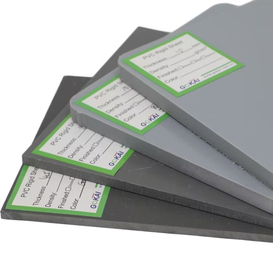
PVC has become one of the most common materials for large‑format printing, especially banners, flexible graphics, and foam board signage. It can be used in opaque, translucent, or mesh formats, and can be illuminated from the front or back, which is why you see PVC in everything from store openings to building wraps. [boardwaybuilding]
Key reasons printers favor PVC:
- Excellent printability with screen, UV, and solvent inkjet. [lairdplastics]
- Weather resistance for outdoor exposure. [boardwaybuilding]
- Wide thickness range, from thin films to rigid foam boards. [lairdplastics]
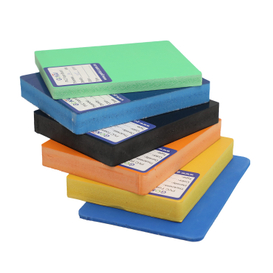
PVC foam board, in particular, has become a go‑to substrate for sign shops needing a lightweight but rigid panel that cuts, routes, and prints easily. [boardwaybuilding]
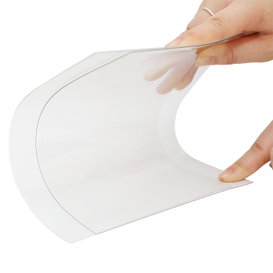
Polycarbonate is a high‑performance transparent plastic known for its exceptional impact resistance, optical clarity, and dimensional stability. In graphics and printing, polycarbonate solid sheets are used in applications where safety, durability, and premium appearance are non‑negotiable. [sabinengg]
Typical use cases include:
- Backlit and edge‑lit signs in transportation hubs and airports. [kapoorplastics]
- High‑traffic wayfinding and safety signs. [sabinengg]
- Architectural glazing that doubles as branding space. [plasticsheets]
Because polycarbonate can be thermoformed and machined into complex shapes, designers use it for 3D logos, curved lightboxes, and integrated façade elements that simply would not be practical in glass. [plasticsheets]
PVC foam board is a lightweight, rigid sheet made from expanded polyvinyl chloride, offering a smooth surface and stable structure ideal for direct printing. It comes in a range of densities and thicknesses, allowing sign makers to balance stiffness, weight, and cost. [lairdplastics]
Technically, PVC foam board provides:
- Low water absorption and good moisture resistance. [boardwaybuilding]
- Excellent dimensional stability across typical indoor environments. [lairdplastics]
- Good compatibility with UV, solvent, and latex inks. [lairdplastics]
These properties make it one of the most versatile substrates in the modern sign shop. [printdrill]
From an operator's perspective, the value of PVC foam board lies in how it behaves on the printer and in the workshop:
- Easy fabrication: It cuts, routes, drills, and engraves cleanly with standard woodworking tools or CNC routers. [boardwaybuilding]
- Smooth, uniform surface: This ensures high‑resolution printing with consistent color and sharp text. [boardwaybuilding]
- Cost‑effective: It is cheaper than many rigid alternatives like aluminum composite or acrylic for similar thicknesses. [printdrill]
Sign makers often remark that PVC foam board gives them a "forgiving" substrate—one that hides minor handling marks and still delivers a professional finish once printed. [lairdplastics]
PVC foam board excels across a broad range of indoor and short‑to‑medium‑term outdoor applications. [boardwaybuilding]
Common uses include:
- Retail signage: Point‑of‑purchase displays, end‑cap graphics, promotional signage, and aisle markers. [lairdplastics]
- Wayfinding systems: Directional signs, room identifiers, building directories in offices, hospitals, and campuses. [boardwaybuilding]
- Corporate graphics: Lobby logos, mission statement panels, and branded wall décor. [lairdplastics]
- Trade show exhibits: Lightweight panels, backdrops, and product display boards that need to ship easily. [printdrill]
- Real estate and construction: Temporary site signs, marketing panels, and safety boards. [printdrill]
Because PVC foam board balances strength and low weight, it is particularly attractive where installers must frequently handle and reconfigure graphics, such as seasonal retail and traveling exhibits. [printdrill]
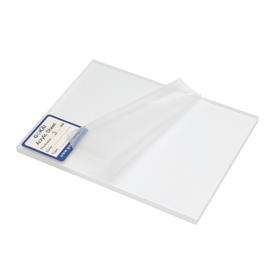
Polycarbonate solid sheet is a dense, transparent or translucent plastic panel known for being up to 200 times stronger than glass and about 30 times stronger than acrylic. It is lightweight—roughly half the weight of glass—yet highly impact‑resistant and weatherable. [kapoorplastics]
For the graphics and printing industry, this translates into:
- Outstanding resistance to breakage and vandalism. [kapoorplastics]
- Excellent clarity for both front‑lit and backlit graphics. [plasticsheets]
- Compatibility with forming, bending, and machining processes. [plasticsheets]
With the right UV‑protected grades, polycarbonate sheets maintain appearance and mechanical performance even under prolonged sunlight. [kapoorplastics]
Designers and brand owners select polycarbonate solid sheet when the visual and functional stakes are high:
- Safety‑critical environments: Transit stations, schools, stadiums, and public spaces where breakage risk is unacceptable. [kapoorplastics]
- Premium backlit displays: Lightboxes and menu boards where optical clarity and diffusion control are essential. [kapoorplastics]
- Architectural branding: Building façades and canopy elements that integrate signage, lighting, and protective glazing. [plasticsheets]
Unlike many plastics, polycarbonate can be cold‑bent and thermoformed without losing strength, which enables curved façades, domed lightboxes, and unique 3D display structures. [plasticsheets]
In the sign and display sector, typical uses of polycarbonate solid sheet include: [sabinengg]
- Outdoor monolith and totem signs.
- Transit and street furniture displays.
- Backlit menu boards and drive‑thru signs.
- Protective covers for digital displays and LED walls.
- POS stands and premium POP display boards.
Because it combines clarity, toughness, and long‑term weather resistance, polycarbonate is often the material that keeps a brand's most visible assets looking sharp year after year. [kapoorplastics]

From a sign‑shop perspective, the choice between PVC foam board and polycarbonate solid sheet usually comes down to application requirements, budget, and expected lifetime. [printdrill]
Substrate Decision Snapshot For Graphics And Printing
| Factor / Need | PVC Foam Board | Polycarbonate Solid Sheet |
|---|---|---|
| Rigidity at low weight | Good lairdplastics | Very good plasticsheets |
| Impact resistance | Moderate lairdplastics | Extremely high plasticsheets |
| Outdoor durability (long term) | Moderate lairdplastics | Excellent plasticsheets |
| Printability | Excellent for direct printing lairdplastics | Excellent as protective/structural layer plasticsheets |
| Optical clarity | Opaque or semi‑opaque lairdplastics | Clear or translucent plasticsheets |
| Typical use | POS, indoor signs, short‑term outdoor lairdplastics | Premium outdoor & backlit signage plasticsheets |
| Relative material cost | Lower lairdplastics | Higher plasticsheets |
A common real‑world pattern is to use PVC foam board for indoor and mid‑term promotions, while reserving polycarbonate for high‑value, long‑term, or safety‑critical signage where failure is not an option. [printdrill]

The graphics and printing industry is evolving quickly, driven by digital printing, automation, and sustainability pressures. According to recent industry reports, digital printing is now the fastest‑growing segment, and large‑format printing alone is on track to reach over USD 10 billion in market value by 2030. [parkcom.co]
Several trends directly impact substrate choices:
- Sustainable printing as a baseline: Brands increasingly ask for lighter materials and longer‑lasting signage to reduce environmental footprint. [parkcom.co]
- Personalization and shorter runs: Digital workflows make frequent graphic updates possible, favoring substrates like PVC foam board that are easy to print and replace. [onprintshop]
- Automation and web‑to‑print: AI‑driven design and automated finishing require dimensionally stable, consistent sheets to avoid misregistration and fit issues. [ricoh.com]
Substrates like PVC foam board and polycarbonate solid sheet are well‑positioned in this landscape because they combine consistent quality with process‑friendly handling and long service life. [onprintshop]
As a boards‑and‑sheets specialist, Gokai focuses on PVC foam board, polycarbonate sheet, and related substrates for signage, advertising, printing, and construction applications. For OEM customers and international brand owners, the material itself is only half of the story; the other half is consistent supply, customization, and engineering support. [gokai.com]
From the OEM side, the most valued capabilities include:
- Product–application matching: Advising whether dense rigid PVC, PVC foam board, or polycarbonate solid sheet is better for a given project. [gokai.com]
- Customization: Tailoring color, gloss level, surface texture, and packaging to the customer's brand requirements. [gokai.com]
- Export experience: Ensuring smooth documentation, compliance with regional standards, and reliable global delivery. [gokai.com]
By combining material expertise with OEM‑friendly production, a supplier like Gokai helps printers, fabricators, and brand owners roll out unified signage and display programs across multiple countries and formats. [gokai.com]

To streamline material selection, experienced print buyers and sign makers often use a simple checklist before specifying a substrate. [plasticsheets]
Ask these questions for each project:
1. Where will the graphic be installed? (Indoor, semi‑outdoor, fully outdoor.)
2. How long must it last? (Days, months, or multiple years.)
3. Will it be backlit or front‑lit?
4. How often will the graphic change? (Disposable campaign vs permanent branding.)
5. Are there safety or impact‑resistance requirements?
6. What are the weight and handling constraints? (Shipping, installation height, reusability.)
In practice:
- Choose PVC foam board for indoor retail, exhibitions, and short‑term outdoor signs where cost and fast turnaround are critical. [printdrill]
- Choose polycarbonate solid sheet for premium backlit signage, transportation projects, and public‑space branding where safety and long‑term durability dominate. [kapoorplastics]
Involving your substrate supplier early in the design process can prevent costly redesigns and ensure the chosen material aligns with the print method, mounting system, and local environmental conditions. [gokai.com]
If you are planning a new signage program, retail rollout, or OEM graphics application, the choice of substrate will determine how your visuals perform in the real world. By partnering with a specialized supplier like Gokai, you can align PVC foam board and polycarbonate solid sheet specifications with your print workflow, installation conditions, and brand standards from day one. [onprintshop]
Reach out to Gokai's technical and sales team to:
- Review your current signage and display bill of materials.
- Receive tailored recommendations on thickness, density, and surface finish.
- Explore OEM options for color‑matched boards and co‑branded packaging.
Taking this step early will help you deliver graphics that are not only visually impressive but also more durable, more sustainable, and more cost‑effective over their lifetime. [parkcom.co]
1. Is PVC foam board suitable for long‑term outdoor signage?
PVC foam board can handle short‑to‑medium‑term outdoor exposure, but for long‑term installations in harsh environments, more robust materials like polycarbonate or aluminum composite are usually recommended. [plasticsheets]
2. Can I print directly on polycarbonate solid sheet?
Yes, many printers successfully print directly onto treated polycarbonate surfaces using UV flatbed systems, especially for backlit and protective graphics; pre‑treatment and compatible inks are essential. [kapoorplastics]
3. How do PVC foam board and polycarbonate compare on environmental impact?
Both materials are durable and can reduce replacement frequency; some manufacturers offer recyclable grades or take‑back programs, so working with an experienced supplier is key to improving overall sustainability. [parkcom.co]
4. When should I choose PVC foam board over polypropylene?
Use PVC foam board when you need greater rigidity, thicker panels, and a more premium appearance than polypropylene can provide, especially for structural signage and 3D displays. [lairdplastics]
5. What information should I share with Gokai or my substrate supplier before ordering?
Provide details on installation location, expected service life, print method, graphic size, mounting system, and any safety or impact requirements; this enables accurate recommendations on material, thickness, and surface finish. [gokai.com]
1. Laird Plastics – "Graphics & Printing Industry" (Plastics in graphics, core applications)
2. Laird Plastics – "PVC Foam Board Guide: Properties, Uses & Types [2025 Update]" (PVC foam board applications and advantages) [lairdplastics]
3. Boardway – "Why Is PVC Foam Board Suitable For Sign Board?" (Durability, printability, and cost effectiveness of PVC foam board) [boardwaybuilding]
4. Plasticsheets.com – "Solid Polycarbonate Sheet | Cut To Size and Shape" (Polycarbonate strength, clarity, and outdoor suitability) [plasticsheets]
5. Kapoor Plastics – "Lexan Polycarbonate Sheets & Films For Sign & Display" (Polycarbonate signage applications and weather resistance) [kapoorplastics]
6. Sabin Engineering – "Polycarbonate Solid Sheets" (Signage and advertising uses of polycarbonate sheets) [sabinengg]
7. PrintDrill – "PVC Vs. Foam Board Signage: A Comprehensive Comparison" (Best applications for PVC board in signage) [printdrill]
8. OnPrintShop – "Emerging Trends Shaping Large‑Format Printing In 2026" (Market growth and personalization trends in large‑format printing) [onprintshop]
9. Park Communications – "7 Print Trends For 2026" (Sustainable printing and automation trends) [parkcom.co]
10. Ricoh Vietnam – "Discover 9 Global Printing Trends For 2026" (Digital printing growth and automation) [ricoh.com]
11. Gokai – "Top 10 PVC Rigid Sheet Manufacturers In China" (OEM selection criteria and customization priorities) [gokai.com]
12. Gokai – "Wholesale Polycarbonate Sheet From China, OEM Polycarbonate Sheet" (Gokai positioning as a leading boards & sheets supplier) [gokai.com]