Shanghai Gokai Industry Co,.Ltd.
Call Us: +86-18918606548
- Product Name
- Product Keyword
- Product Model
- Product Summary
- Product Description
- Multi Field Search
Views: 224 Author: Jason Publish Time: 2026-11-24 Origin: Gokai


When you receive acrylic samples, visual check alone is not enough. Many overseas buyers encounter a common issue: samples look good, but bulk goods fail to meet expectations. It is also easy to mix up cast acrylic and extruded acrylic, resulting in problems such as poor light transmission, color difference, cracking after fabrication and fast yellowing outdoors. A standardized sample evaluation process helps you lock quality standards and avoid risks for repeat orders. This guide covers 6 core testing links and explains in detail the differences between cast and extruded acrylic.
This is the most overlooked step.
· Cast Acrylic Sheet: Mostly made of 100% virgin PMMA. It features stable molecular structure, low internal stress, high light transmittance and excellent polishing effect. It works well for thermoforming, gluing and long-term outdoor applications. It is widely used for high-end signage, aquariums and outdoor projects. Its thickness tolerance is relatively wider, and the cost is higher. The edge is clear and transparent without greenish tint when held against light.
· Extruded Acrylic Sheet: Continuous extrusion production with tighter thickness tolerance and competitive price. It is suitable for UV printing, indoor display boards and temporary exhibition structures. It has higher internal stress. It tends to crack or turn yellow during heavy polishing or hot bending. Sheets mixed with recycled materials usually show dull, grey or brownish-green edges.
Checklist: Confirm whether it is virgin PMMA or mixed with regrind material. Request supporting documents including SGS, REACH, UL94 flame retardant certificates for your target market. Each sample must be labelled with product type, thickness, color, batch number.
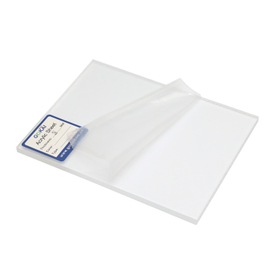
The inspection should be carried out under uniform natural light or standard light source. The observation angle is 45° sideways and 50 cm away from the plate. Be sure to remove the protective film before inspection, and be careful not to mistake scratches or residual glue on the protective film for defects in the board itself.
Items to check:
· Bubbles, pinholes, black spots, impurities and fiber particles inside the sheet
· Silver streaks, water ripples, roller marks, haze and cloudy surface
· Scratches, indentations, whitish areas and leftover adhesive marks
· For colored or translucent sheets: consistent color across the whole panel, no color gradient or patchy shade. Compare multiple samples side by side for color difference.
· For mirror acrylic: uniform reflection, no distortion, no black spots or peeling back paint.
Quality transparent cast acrylic reaches over 92% light transmittance. Extruded acrylic is slightly lower. Simple test: look at straight grid lines through the acrylic. Premium acrylic will not distort the lines obviously.

These quantified indicators should be written into your sample confirmation sheet.
1. Thickness: Use a digital micrometer. Take 5 measuring points: four corners plus the center. Record maximum and minimum values to verify tolerance. Cast acrylic and extruded acrylic follow different tolerance standards. Extruded sheets have better thickness consistency.
2. Length, Width & Diagonal: Measure both diagonals to confirm the sheet is square and not cut skew.
3. Flatness: Place the sheet on a flat glass or marble table. Check for warping, arching or lifted corners. Warped acrylic will deform after UV printing or framing.
4. Cut Edges: Check for chipping, notches and burrs. For polished edges, check for transparency, whitening and melt marks. Sheets with high internal stress may have hidden microcracks, which crack easily after thermal processing.
Many buyers only check the nominal thickness without 5-point measurement. Uneven thickness in bulk goods will cause assembly and framing problems.
Acrylic quality is ultimately judged by how it performs during fabrication. Run these 4 practical tests if the acrylic will be processed:
1. UV Printing Test: Print with your usual ink. Check ink adhesion, ink shrinkage, fogging and stress cracking after curing. Extruded acrylic has higher internal stress, and solvent-based ink may trigger fine cracks.
2. Laser Cutting & Engraving Test: Check whether cutting edges turn yellow, carbonize or leave sticky residue. Cast acrylic delivers crystal clear cut edges which are ideal for polishing. Extruded acrylic is more likely to yellow after laser cutting.
3. Bonding Test: Glue sample pieces with professional acrylic adhesive. Inspect bonded joints for fogging, bubbles and cracking. This is a frequent pain point for signage and display stands.
4. Thermoforming Test: If you need hot bending, simulate your processing temperature. Watch for whitening, bubbling and cracking to judge internal stress level.
Visual inspection indoors is not enough for outdoor signage and exterior decoration.
1. Anti-UV & Anti-Yellowing: Virgin high-grade acrylic resists yellowing for years outdoors. Recycled acrylic turns yellow rapidly within months. You can ask suppliers for accelerated aging test reports.
2. Surface Hardness: Acrylic is relatively soft. Compare scratch resistance among different samples to evaluate risks during transport and installation.
3. Chemical & Flame Resistance: Check if cleaning agents or solvents cause cracking or surface corrosion. For EU shipments, confirm compliance with EN fire classification standards.
This is the final step to guarantee bulk consistency.
1. Mark the approved sample with approval date, material spec, color and revision number.
2. Both supplier and buyer keep one identical sealed sample, and save photos for archive.
3. Clearly define acceptable defects, rejection criteria, tolerance range and inspection light source in writing.
4. Put it on record: this sealed sample serves as the benchmark for future bulk production. Verbal agreement is not acceptable.
Do not approve samples only by appearance. Match your test items with your actual end use. Indoor display projects focus on printing and cutting performance; outdoor orders must prioritize anti-yellowing and weather resistance. Always test before placing large orders.