Shanghai Gokai Industry Co,.Ltd.
Call Us: +86-18918606548
- Product Name
- Product Keyword
- Product Model
- Product Summary
- Product Description
- Multi Field Search
Views: 234 Author: Jason Publish Time: 2026-11-23 Origin: Gokai


Take a closer look at our PVC foam board manufacturing process, including raw material preparation, extrusion, product finishing, quality inspection and customized production options for signage, furniture, exhibition and interior decoration applications.
At Gokai, PVC foam board production involves several key stages, from material preparation and extrusion to surface inspection and final packaging. Each stage plays an important role in determining the board's thickness, density, surface appearance and overall consistency.
The production process begins with the preparation of PVC resin, foaming agents, stabilizers and other processing additives. These materials are selected and proportioned according to the requirements of different board specifications. Proper material preparation helps maintain stable processing conditions and achieve consistent product characteristics across production batches.
 |  |
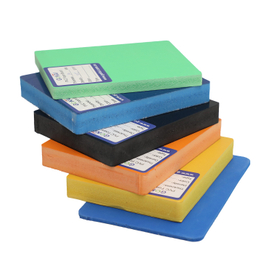
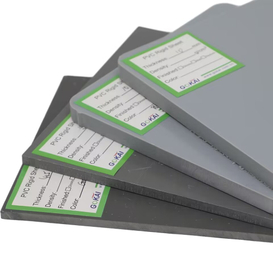
Our production range includes three main types of PVC foam boards: Celuka board, Free Foam board and Co-extruded board. Each type has a different structural design and is suitable for different processing requirements and end applications.
1. PVC Celuka Board (Crust Foam Board)
Celuka PVC foam board features a relatively dense and smooth outer skin with a foamed inner core. Its surface structure provides good rigidity and a solid finish, making it suitable for UV printing, CNC routing, cutting and other fabrication processes.
It is commonly used for advertising signs, display panels, furniture components, cabinet applications and interior decorative panels where surface quality and structural rigidity are important.
2. PVC Free Foam Board
Free foam PVC board has a more uniform foamed structure throughout its cross-section. It is lightweight and easy to cut, shape and fabricate using commonly available processing equipment.
Typical applications include indoor signage, exhibition displays, advertising boards, decorative panels and general-purpose fabrication projects where lightweight materials are preferred.
3. PVC Co-Extruded Board
Co-extruded PVC foam board is manufactured using a multi-layer extrusion process, combining a foamed core with specially formulated outer layers. This structure allows manufacturers to adjust surface characteristics and overall board performance according to specific application requirements.
It can be considered for signage, display systems, decorative panels and other projects requiring particular surface finishes or additional surface protection.
During production, our team monitors key processing conditions to help maintain consistent board quality. These include extrusion conditions, board thickness, cooling, surface appearance and dimensional stability.
After production, finished boards undergo quality inspections based on their specifications and intended applications. Typical inspection items include:
Thickness and dimensional accuracy: Checking board thickness and overall dimensions against order specifications.
Density and weight: Monitoring material consistency and verifying the specified product range.
Surface appearance: Checking for visible marks, pits, uneven surfaces and other appearance defects.
Foaming structure: Examining the cross-section for noticeable variations in the internal structure.
Flatness and deformation: Checking whether boards maintain an acceptable shape after cooling.
Fabrication suitability: Evaluating relevant processing characteristics according to product requirements.
Boards that do not meet the applicable inspection requirements are separated for further evaluation rather than being mixed with qualified products.
Different customers have different requirements for their production and fabrication projects. Gokai supports customized PVC foam board specifications according to order requirements and production capabilities.
Available customization options include:
Thickness and dimensions: Different thicknesses and sheet sizes for various applications.
Colors: White, black and selected solid colors, subject to production arrangements.
Surface appearance: Matte and other available surface finishes.
Cut-to-size service: Customized sheet dimensions for specific fabrication requirements.
Product structure: Celuka, Free Foam and Co-extruded options depending on the intended application.
Before confirming an order, customers can discuss their material specifications, processing requirements and application conditions with our sales team to identify a suitable product option.
 |  |
Packaging is another important part of our production and delivery process, particularly for international orders involving long-distance transportation.
Before shipment, PVC foam boards are stacked and protected according to their dimensions and order requirements. Suitable protective materials, corner protection and stable pallet arrangements help reduce the risk of edge damage, surface scratches and deformation during handling and transportation.
For export orders, packaging methods can be adjusted according to container loading arrangements, destination requirements and customer preferences.
As a PVC foam board manufacturer with 17 years of industry experience, Gokai focuses on providing consistent product specifications, practical customization options and reliable manufacturing support.
We work with wholesalers, distributors, sign makers, furniture manufacturers and fabrication companies serving different markets. Whether you need Celuka PVC foam board for advertising signs, Free Foam board for exhibition displays or customized co-extruded boards for specific projects, our team can help you evaluate suitable specifications.
Looking for a PVC foam board manufacturer for your next project? Contact Gokai with your required thickness, dimensions, product type and application details. We welcome specification inquiries and sample requests.