Shanghai Gokai Industry Co,.Ltd.
Call Us: +86-18918606548
Call Us: +86-18918606548
- Product Name
- Product Keyword
- Product Model
- Product Summary
- Product Description
- Multi Field Search
Views: 293 Author: Gokai Publish Time: 2026-07-27 Origin: Site


Content Menu
● What Plastic Welding Is and When It Works Best
● Choose the Right Method First
● Prepare the Material Correctly
● Understand the Main Welding Techniques
>> Solvent Welding for Acrylic
● Acrylic Sheet Welding Step by Step
>> 3. Clamp or fixture the pieces
>> 4. Apply the cement carefully
>> 5. Leave the joint undisturbed
>> 6. Finish only after curing
● Quality Checks That Prevent Failure
● Industry Use Cases for OEM Projects
● Expert Tips for Better Results
● Why This Matters for Acrylic Sheet Buyers
● FAQ
>> 1. Is plastic welding stronger than glue?
>> 3. What is the best method for thick plastic parts?
>> 4. Why do welded plastic joints fail?
>> 5. Can the same process be used for every plastic?
>> 6. How long should acrylic solvent welds cure?
Plastic welding is one of the most practical ways to join thermoplastics when you need a durable bond, a clean finish, and consistent performance. For projects involving acrylic sheet, tanks, fittings, industrial parts, and custom OEM fabrication, the right method can make the difference between a short-lived joint and a long-lasting product.
Plastic welding joins two compatible thermoplastics by applying heat, pressure, or both until the surfaces fuse together. Unlike simple fastening or surface bonding, the goal is to create one continuous material at the joint. That is why it is widely used in manufacturing, construction, automotive components, plumbing assemblies, chemical tanks, and custom plastic fabrication.
For acrylic sheet and other transparent parts, the process often takes the form of solvent welding, where a water-thin cement softens the surfaces and allows them to merge at the molecular level. This approach is especially valuable when appearance, clarity, and seam quality matter.
Not every plastic should be welded the same way. The best method depends on the material, part geometry, thickness, production volume, and the final performance requirement.
| Welding method | Best for | Main advantage |
|---|---|---|
| Hot gas welding | General thermoplastic fabrication | Flexible and widely used |
| Hot plate welding | Larger parts and structural joints | Strong, consistent bonds |
| Extrusion welding | Thick sections and larger assemblies | Good for heavy fabrication |
| Ultrasonic welding | Small precision parts | Fast and repeatable |
| Laser welding | Clean joints and precision production | High accuracy |
| Solvent welding | Acrylic and similar sheet materials | Clear, neat seams |
This choice matters because a manufacturer should guide the process based on geometry, volume, and budget rather than forcing one method onto every project.
Strong joints start before heat is applied. The bonding area should be clean, dry, and free from dust, grease, or residue that can weaken the joint. Smooth and even edges are especially important for acrylic because rough or uneven surfaces can prevent proper bonding and reduce clarity.
Follow these preparation steps:
1. Inspect the sheet or part for damage, warping, or contamination.
2. Clean the joint area with an appropriate solvent or cleaner.
3. Dry the surface with a lint-free cloth.
4. Make sure the parts fit tightly with minimal gap.
5. Clamp or fixture the components so they stay aligned during bonding.
For acrylic sheet, tight fitting edges are essential because solvent cement does not fill large gaps well. When the joint is properly prepared, the liquid can wick into the seam and create a much stronger bond.
A proper work environment improves both quality and safety. Plastic welding should be carried out in a well-ventilated area with the correct protective gear. That includes long sleeves, heat-resistant gloves, and goggles.
Keep these safety basics in mind:
- Remove flammable materials from the work area.
- Use local ventilation when possible.
- Keep tools organized before starting.
- Avoid touching heated parts until they cool.
- Follow the manufacturer's temperature guidance for the specific material.
For fabrication teams handling OEM orders, this kind of process control also improves consistency across repeated batches, especially when multiple operators are working on the same product line.
Different materials and products call for different welding approaches. Here is a practical breakdown.
Hot gas welding uses heated air or gas to soften the joint area while pressure fuses the pieces together. It is commonly used in thermoplastic fabrication and is useful for a wide range of industrial applications.
Hot plate welding places the plastic parts against a heated plate until the surfaces reach the proper melt state. The plate is then removed and the pieces are pressed together to form the bond. This method is often chosen for larger or more structural parts.
Extrusion welding uses a heated extruder to melt welding rod material and deposit it into the joint. It is commonly used for large structures and heavy-duty fabrication.
Ultrasonic welding uses high-frequency vibrations to generate frictional heat at the contact area. It is effective for small, repeatable, precision parts.
Laser welding uses concentrated energy to heat the interface and create a controlled bond. It is best suited to precision production where appearance and accuracy matter.
For acrylic sheet, solvent welding is often the preferred method because it creates clear, seamless joints. The cement does not act like household glue. Instead, it softens the edge so the acrylic pieces merge together as the solvent evaporates.
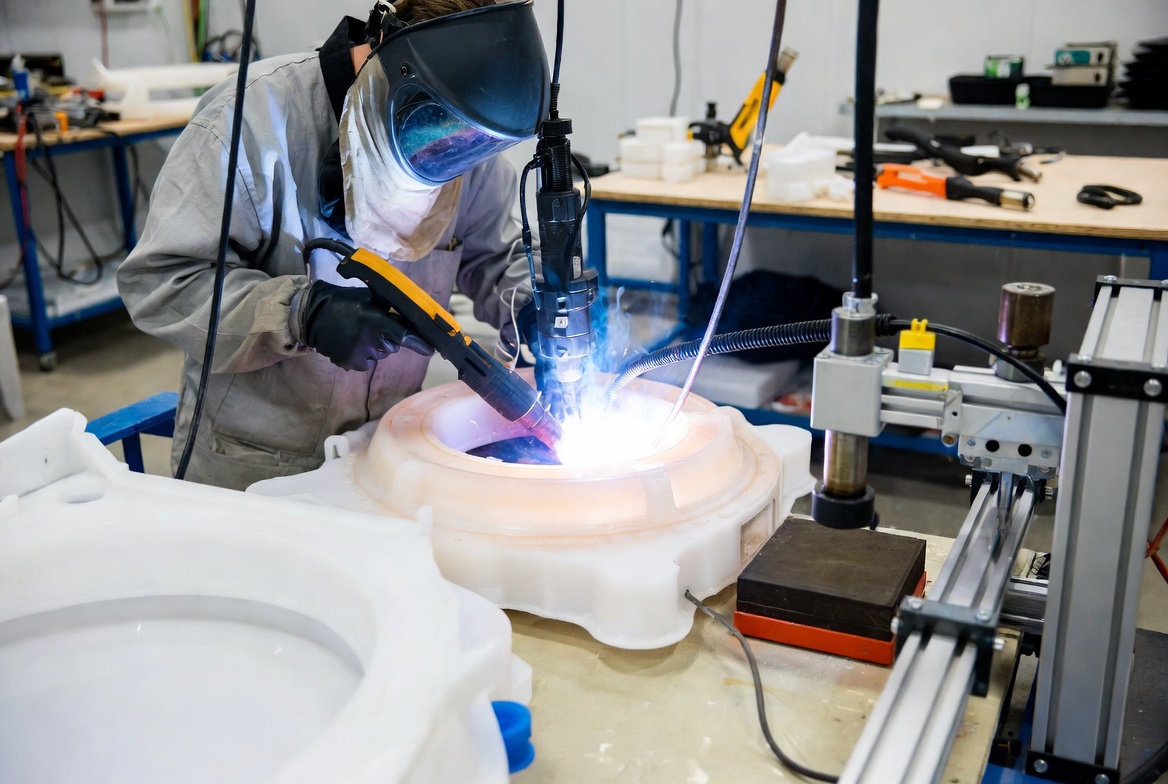
If your project involves acrylic sheet, use this workflow for reliable results.
The edges should be straight, smooth, and square. Router-finished edges are usually better than rough saw cuts because they support cleaner bonding and better clarity.
Check alignment before applying cement. A square, level setup helps prevent stress and uneven seams.
Hold the parts firmly in the final position. The tighter the fit, the stronger and cleaner the joint will be.
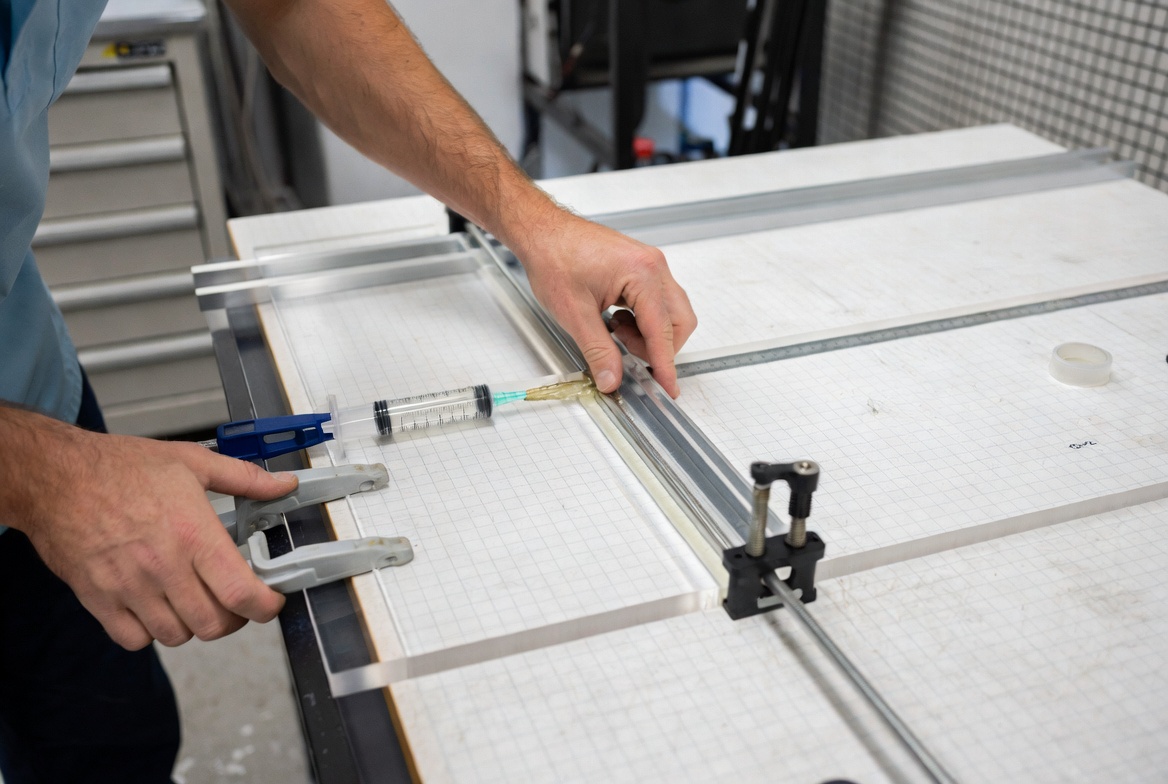
Use a syringe or applicator bottle and let the liquid flow into the seam by capillary action. Do not force it into gaps. A steady, controlled application gives a more uniform bond.
The bond may hold in minutes, but full strength takes longer. In practice, allow enough curing time before handling, stressing, or finishing the part.
If needed, trim or polish the edges after the bond has fully set. Heat finishing should be done only after the joint has properly cured.

Many joint failures come from avoidable mistakes, not from the material itself. A simple inspection process can prevent rework and returns.
Look for the following:
- Visible gaps along the joint.
- Misalignment between mating parts.
- Surface contamination before bonding.
- Overheating, discoloration, or distortion.
- Weak areas caused by poor edge preparation.
For industrial products such as tanks, fittings, and fabricated assemblies, joint quality is especially important because performance, sealing, and durability all depend on consistent execution.
Plastic welding is not limited to repair work. It is a major process in custom manufacturing, especially when a project requires repeatable assembly and a clean final appearance.
Typical OEM use cases include:
- Acrylic display parts.
- Chemical tanks and containers.
- Water and fluid-handling components.
- Industrial housings.
- Custom panels and enclosures.
- Lightweight structural assemblies.
For export-focused manufacturers, the ability to recommend the right welding method based on part design, tolerance, and use environment is a strong value-add. It also helps reduce production risk and improves customer confidence.
A few practical habits make a big difference in the final outcome.
- Use the method that matches the material, not the method that is most familiar.
- Keep the joint area clean from the start.
- Maintain consistent pressure during bonding.
- Avoid oversized gaps.
- Allow full curing time before load testing.
- Document the process for repeat orders and quality control.
These habits are especially useful for teams producing custom acrylic sheet products or other OEM plastic assemblies because they support consistency from one batch to the next.
If you are sourcing acrylic sheet or custom fabricated plastic parts, welding quality affects more than appearance. It influences durability, clarity, leakage resistance, and customer satisfaction. A well-bonded acrylic part looks better, lasts longer, and reduces after-sales issues. For OEM buyers, that means fewer defects and better brand confidence.
At Gokai, we support global clients with acrylic sheet supply and OEM services, so part design, fabrication method, and final use environment can all be considered together.
In many thermoplastic applications, yes. A properly executed weld can create a strong fused joint rather than a surface bond.
Yes. Acrylic is commonly joined by solvent welding, which softens the edges and creates a clear bond suitable for display and fabrication work.
Hot plate welding and extrusion welding are often used for larger or thicker parts because they provide stronger and more controlled heat input.
Common causes include contamination, poor fit, wrong process selection, overheating, and insufficient curing time.
No. Different thermoplastics require different methods, temperatures, and joint preparation. Material identification should come first.
Initial handling strength can come quickly, but full strength takes longer. A cautious cure window should always be followed before stress or finishing.
1. [How to Weld Plastics: A Complete Guide - Acme Plastics]
2. [How To Glue Acrylic - TAP Plastics]
3. [How to Weld Plastics - The Ultimate Guide - Alpha Weld]
4. [Plastic Manufacturing: Common Processes and Materials - Protolabs]
5. [Tank and container construction - Leister]
6. [Welding Acrylic - Tulane Makerspace]
7. [Standards Available for the Plastics Welding and Fabrication Industry - BPF]