Shanghai Gokai Industry Co,.Ltd.
Call Us: +86-18918606548
Call Us: +86-18918606548
- Product Name
- Product Keyword
- Product Model
- Product Summary
- Product Description
- Multi Field Search
Views: 288 Author: Gokai Publish Time: 2026-09-20 Origin: Site


Content Menu
● What Is a Polycarbonate Solid Sheet?
● Why Buyers Choose Polycarbonate Solid Panels
>> High Impact Resistance for Safety-Critical Uses
>> Glass-Like Clarity With Easier Handling
>> Fabrication Flexibility for OEM Programs
● Polycarbonate Solid Sheet Applications by Industry
>> Construction, Roofing, and Architectural Glazing
>> Machine Guards and Industrial Safety Screens
>> Retail, Signage, and Commercial Display
● How to Choose the Right Thickness and Grade
● Installation Insight: Thermal Expansion Is Not Optional
>> A Simple Thermal-Movement Example
● Common Purchasing Mistakes and How to Avoid Them
>> Treating All Polycarbonate Sheets as Equivalent
>> Ignoring Chemical Compatibility
>> Forgetting Shipping and Protective Film Details
● Why Work With Gokai for OEM Polycarbonate Solid Sheet?
>> 1. Is polycarbonate solid sheet stronger than acrylic?
>> 2. Can polycarbonate solid sheet be used outdoors?
>> 3. Does polycarbonate sheet yellow over time?
>> 4. Can polycarbonate solid sheet be cut and drilled?
>> 5. Why does polycarbonate sheet need oversized fixing holes?
>> 6. What information should I send for an OEM polycarbonate sheet quotation?
>> 7. Can Gokai provide private-label polycarbonate sheets?
Choosing the right polycarbonate solid sheet is not simply a question of thickness or price. For glazing, machine guards, safety barriers, retail displays, protective screens, and fabricated components, buyers must balance impact performance, optical clarity, UV protection, installation conditions, and long-term service requirements.
At Gokai, we supply polycarbonate solid sheet solutions for global customers and support OEM projects that require customized dimensions, colors, surface treatments, protective films, packaging, and private-label specifications. This guide explains how to evaluate solid polycarbonate panels from an application and procurement perspective—before production, not after a material failure or installation problem occurs.

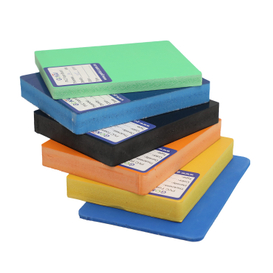
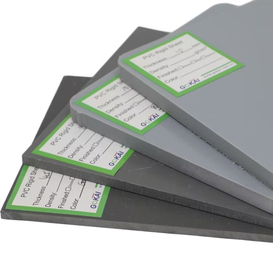
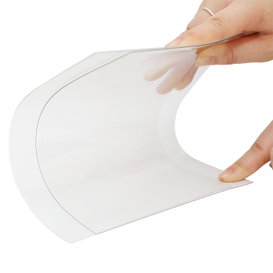
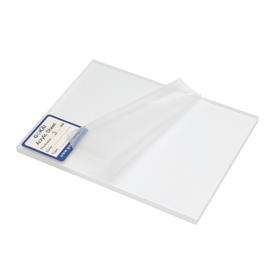
A polycarbonate solid sheet is a flat, dense thermoplastic panel made from polycarbonate resin. Unlike multiwall polycarbonate sheets, which contain internal chambers for insulation, a solid sheet has a continuous structure throughout its thickness. This gives it a glass-like appearance while delivering substantially greater resistance to impact and breakage.
For many commercial and industrial projects, the most valuable advantage is not merely strength—it is failure behavior. Standard glass may crack or shatter under a severe impact. Polycarbonate is designed to absorb energy and resist breakage, which makes it a common material choice where people, equipment, or valuable inventory need protection.
Industry technical sources consistently identify polycarbonate as a high-impact, optically clear, dimensionally stable thermoplastic with a broad operating-temperature range. Depending on the formulation, thickness, and test method, material data sheets may report tensile strength around 65 MPa and notched Izod impact values around 65–70 kJ/m². Actual performance must always be confirmed against the specification for the selected sheet grade and thickness.
For buyers, "polycarbonate sheet" is still too broad a description. A reliable purchase specification should identify:
- Sheet type: solid, embossed, corrugated, or multiwall
- Thickness and tolerance
- Width, length, and cut-to-size requirements
- Transparency, light transmission, or color
- UV-protection requirement
- Surface type: standard, hard-coated, matte, anti-fog, textured, or abrasion-resistant
- Fire-performance requirement, where applicable
- Protective film and packaging requirement
- Intended application and installation environment
- OEM branding, labeling, or export documentation needs
Polycarbonate solid panels are used when a project needs a balance of visibility, strength, formability, and lighter handling weight than glass. They are especially useful in applications where breakage creates a safety risk, downtime, replacement cost, or liability concern.
Polycarbonate is widely recognized for exceptional impact resistance among transparent thermoplastics. It is frequently selected for machine guards, protective shields, safety glazing, security partitions, riot shields, equipment covers, and high-traffic public barriers.
The practical value is straightforward: a sheet that resists impact more effectively can reduce the risk of sudden breakage and sharp fragments. However, buyers should avoid generic "unbreakable" claims. No material is indestructible under every impact condition, thickness, temperature, edge condition, mounting method, or chemical exposure.
A more accurate procurement question is:
Clear solid polycarbonate can provide high optical clarity for applications such as indoor partitions, windows, display covers, protective machine enclosures, signs, skylights, and transparent equipment components.
Compared with glass, polycarbonate is significantly lighter, which can simplify transport, manual handling, mounting, and fabrication. This is valuable for export buyers managing shipping costs, installers working at height, and manufacturers producing large-format protective panels.
However, optical needs vary. A retail display cover, greenhouse partition, safety shield, and exterior canopy may all require different combinations of clarity, diffusion, tint, glare control, UV stability, and surface hardness. The right material is therefore not always the clearest one—it is the one that best fits the final environment.

A major advantage of polycarbonate solid sheet is its flexibility in secondary processing. Depending on the grade and production requirements, sheets may be cut, drilled, routed, bent, thermoformed, CNC-machined, printed, or laminated into finished components.
For OEM buyers, this creates opportunities to reduce downstream processing time and receive material in a format closer to final assembly. Typical customization options can include:
| OEM Requirement | Example Specification | Buyer Benefit |
|---|---|---|
| Custom dimensions | Cut-to-size panels or rolls | Less on-site waste and cutting |
| Thickness selection | 1 mm to thicker industrial grades | Better fit for load and support conditions |
| Color matching | Clear, opal, bronze, gray, custom color | Matches architectural or brand requirements |
| Protective film | Printed film, easy-peel film, UV-side marking | Reduces handling damage and installation errors |
| Surface finish | Matte, embossed, hard-coated, anti-fog | Supports application-specific performance |
| Private labeling | Carton artwork, labels, pallet marks | Supports distributor and OEM branding |
| Export packaging | Edge protection, pallets, moisture protection | Helps reduce transit damage |
Before placing a production order, buyers should ask for a written agreement covering dimensional tolerances, acceptable cosmetic criteria, protective-film orientation, packaging method, inspection standards, and required certificates.
A polycarbonate solid sheet is not a one-purpose product. Its specification should change according to the risk, environment, appearance, and fabrication demands of the finished project.
Solid polycarbonate panels can be used in canopies, skylights, covered walkways, pergolas, bus shelters, façade elements, interior partitions, and protective glazing systems. For exterior use, a UV-protected sheet is generally essential because prolonged weather exposure can affect appearance and long-term durability.
Some UV-protected solid-sheet products are offered with protection on both sides, and manufacturers may provide weathering guarantees for certain grades and conditions. Buyers should request the supplier's current warranty terms and verify whether the selected thickness, color, installation orientation, climate exposure, cleaning method, and application are covered.
For outdoor glazing, material selection is only one part of success. Frame design, drainage, expansion allowance, fasteners, gaskets, sealants, and support spacing can determine whether the installation stays clear, flat, and leak-resistant over time.
Factories often use clear polycarbonate sheets for viewing windows, guard enclosures, process shields, and operator protection panels. These applications may require high impact resistance, chemical compatibility, specific thicknesses, edge finishing, or compliance with machine-safety requirements.
A common mistake is selecting a sheet by thickness alone. A machine guard's real performance also depends on:
- The type and speed of the hazard
- The size of the unsupported opening
- Mounting method and edge retention
- Exposure to oils, solvents, heat, vibration, and cleaning chemicals
- Required visibility and scratch resistance
- Applicable local regulations or equipment standards
Where an application is safety-critical, obtain project-specific engineering review and test documentation rather than relying only on general product descriptions.
For display cases, point-of-sale units, protective covers, menu boards, transparent partitions, and illuminated signage, buyers may prioritize clarity, printability, bendability, and surface appearance.
In these settings, scratch resistance can be more important than impact resistance alone. A standard polycarbonate sheet may be suitable for protected indoor applications, while a hard-coated grade may be a stronger choice for frequently cleaned surfaces, public-facing screens, or areas exposed to repeated contact.
The correct thickness depends on application loading, frame spacing, impact risk, sheet dimensions, support design, wind or snow exposure, visual requirements, and required compliance. There is no universal "best thickness."
For example, a thin clear panel might be acceptable for a small indoor sign cover, while a large outdoor canopy or industrial guard could require a significantly different design approach. A higher thickness can improve stiffness and impact performance, but it also changes cost, weight, forming behavior, and installation requirements.
Use this buyer-oriented decision framework before requesting a quotation:
| Selection Factor | Questions to Ask | Why It Matters |
|---|---|---|
| Application | Is it glazing, guarding, roofing, display, or fabrication? | Determines required grade and risk level |
| Environment | Indoor, outdoor, humid, coastal, hot, cold, or chemical exposure? | Influences UV, coating, and compatibility needs |
| Impact risk | What may strike the panel, and at what energy level? | Supports safety-focused thickness selection |
| Panel size | What are the final width, length, and unsupported spans? | Larger panels may need more stiffness and support |
| Optical requirement | Clear, tinted, frosted, diffused, or privacy finish? | Determines appearance and light-management needs |
| Processing | Will the sheet be drilled, bent, thermoformed, or printed? | Affects material and protective-film selection |
| Installation | What frame, fasteners, sealant, and expansion gaps are planned? | Reduces cracking, bowing, and leak risks |
| Standards | Are there fire, safety, building, or regional requirements? | Helps avoid unsuitable material selection |
A professional supplier should be willing to discuss these questions early. If a supplier recommends a thickness without knowing the panel dimensions, support spacing, installation environment, and intended use, the recommendation may not be sufficiently application-specific.
One of the most overlooked issues in polycarbonate sheet projects is thermal movement. Polycarbonate expands and contracts as temperatures change. If the sheet is fixed too tightly, trapped in an undersized frame, or installed with unsuitable fasteners, stress can build up around holes and edges.
This can lead to bowing, distortion, cracking, leakage, or premature failure.

Manufacturer installation guidance emphasizes several best practices:
1. Allow adequate clearance around the sheet perimeter so it can move during temperature changes.
2. Pre-drill oversized fixing holes where a direct mechanical fixing system is used.
3. Avoid overtightening fasteners, which can create local stress around the fixing point.
4. Use compatible gaskets, such as flexible EPDM systems where appropriate.
5. Use polycarbonate-compatible sealants, preferably neutral-cure products approved for use with polycarbonate.
6. Confirm support spacing and sheet thickness based on the application, load requirements, and local conditions.
Palram notes that insufficient allowance for thermal expansion can contribute to bowing, warping, cracking, leaks, and reduced long-term durability in polycarbonate roofing applications. A separate installation guide reports a linear thermal expansion coefficient of approximately \(7.0 \times 10^{-5}\) cm/cm/°C and advises allowances for expansion through clearance and oversized holes.
Suppose an installer uses a 3,500 mm polycarbonate panel in an environment with a 15°C temperature change. Using a thermal-expansion coefficient of \(0.00007/°C\), the approximate linear movement is:
3,500 mm×0.00007×15°C=3.675 mm
That may appear small, but a few millimeters of restrained movement can be enough to create visible stress in a rigid installation. The actual allowance must be based on the full expected temperature range, installation system, sheet dimensions, and manufacturer guidance.
The lowest initial sheet price can become expensive when it leads to damaged panels, inconsistent dimensions, insufficient UV protection, poor packaging, scratches, installation failures, or a high reject rate.
A better comparison includes delivered quality, usable yield, production consistency, documentation, lead time, shipping protection, and supplier responsiveness.
Different polycarbonate sheet grades can vary in UV protection, fire performance, surface coating, optical quality, thickness tolerance, color consistency, chemical resistance, and forming performance.
Always compare like-for-like specifications. A "clear 3 mm polycarbonate sheet" quotation is incomplete unless it states the sheet grade, dimensions, tolerance, protection, finish, and packaging.
Some cleaning agents, solvents, adhesives, sealants, and construction materials can damage polycarbonate or cause stress cracking. Never assume a chemical is compatible because it works with acrylic, glass, or another plastic.
Request chemical-compatibility guidance before using cleaners, paints, adhesives, sealants, tapes, lubricants, or protective coatings. Palram specifically advises using polycarbonate-compatible, neutral-cure sealants rather than materials that may damage the sheet.
For international OEM orders, surface damage during transit can erase the value of a high-quality sheet. Confirm:
- Protective film on one or both sides
- Film marking to identify the UV-protected surface
- Scratch and cosmetic acceptance standards
- Pallet design and edge protection
- Carton, crate, or export-grade packing requirements
- Loading orientation and container plan
- Batch traceability and inspection records
Gokai supports buyers who need more than standard sheet supply. Our OEM approach is designed for distributors, fabricators, project contractors, brand owners, and manufacturers that require stable material specifications and export-ready service.
We can work with your team to define a sheet solution around your actual application, including custom sizes, thicknesses, colors, protective films, packaging, branding, and other production details.

When requesting an OEM quotation, provide the following information:
- Product application and installation environment
- Required material type and sheet thickness
- Standard or custom sheet dimensions
- Color, light-transmission, and surface-finish requirements
- UV, coating, fire, or certification requirements
- Quantity per order and forecast demand
- Processing requirement: cutting, drilling, bending, thermoforming, or printing
- Packaging and labeling requirements
- Delivery destination and target lead time
The more complete the inquiry, the more accurate the recommended specification and quotation can be.
Need a dependable polycarbonate solid sheet supplier for your next project? Contact Gokai with your drawings, target specification, or sample requirements. Our team can help you evaluate the right sheet grade, thickness, OEM packaging, and export solution before production begins.
Polycarbonate is generally preferred where high impact resistance is required. Acrylic can offer excellent clarity and stronger inherent surface hardness in some applications, but it is typically more brittle under impact. The right choice depends on the application, appearance needs, scratch exposure, fabrication method, and safety requirement.
Yes, but outdoor projects should generally use a grade designed for weather exposure and UV protection. Confirm whether the UV-protected side must face outward, whether the product has UV protection on one or both sides, and whether the supplier's warranty applies to the planned use.
Unprotected or unsuitable polycarbonate may discolor or lose optical quality under prolonged UV exposure. A UV-protected sheet grade is important for exterior use. Long-term performance still depends on climate, installation, cleaning chemicals, mechanical stress, and product formulation.
Yes. It can commonly be cut, drilled, routed, and CNC-machined. Use suitable tools, avoid excessive heat buildup, support the sheet properly, and allow for thermal movement during installation. Protective film should usually remain in place during fabrication to reduce scratching.
Polycarbonate expands and contracts with temperature changes. Oversized holes help accommodate movement around fasteners and reduce the risk of stress, distortion, or cracking. The required allowance should follow the sheet manufacturer's guidance and the project's expected temperature range.
Send the required thickness, dimensions, color, surface treatment, UV requirement, quantity, intended application, packaging preferences, target country, and any drawings or quality standards. If the sheet will be used in a safety or construction application, also provide the relevant compliance requirements.
Yes. For qualified OEM projects, Gokai can discuss customized labeling, protective-film printing, carton artwork, packaging, sheet dimensions, colors, and other project-specific requirements. Contact us with your brand and technical specifications for evaluation.
1. [Acme Plastics — Polycarbonate Panels Archives]. This competitor page identifies polycarbonate panels and sheets as a strong, lightweight option for multiple applications; its accessible page snippet was used as the starting point for topic coverage. [acmeplastics]
2. [Palram — Thermal Expansion and Polycarbonate Roofing Sheets]. Used for installation principles covering thermal movement, clearance, oversized holes, compatible sealants, EPDM gaskets, and avoiding overtightened fixings. [palram]
3. [Exolon Group — Exolon UV Solid Polycarbonate Sheet Product Data Sheet]. Used to support the discussion of UV-protected solid polycarbonate sheet and weathering-focused product selection. [exolongroup]
4. [PolySynthesis — Polycarbonate Technical Data Sheet]. Used for representative material-property context, including density, tensile strength, and impact-data examples. Specifications vary by product grade and must be verified before purchase. [polysynthesis]
5. [Storm Building Products — Solid Polycarbonate Product Data Sheet]. Used for representative solid-polycarbonate data and for the explanation that product properties depend on grade, thickness, test method, and product design. [stormbuildingproducts]
6. [Twin Wall Polycarbonate — Complete Installation Guide]. Used for the cited thermal-expansion coefficient and general installation guidance regarding clearance and oversized fixing holes. [twpolycarbonate]