Shanghai Gokai Industry Co,.Ltd.
Call Us: +86-18918606548
Call Us: +86-18918606548
- Product Name
- Product Keyword
- Product Model
- Product Summary
- Product Description
- Multi Field Search
Views: 288 Author: Gokai Publish Time: 2026-10-18 Origin: Site


Content Menu
>> PVC Foam Board: Expanded Plastic for Signs and Fabrication
>> WPC Foam Board: A PVC-Based Wood-Plastic Composite
>> Paper-Faced Foam Board: A Different Product Category
● PVC Foam Board vs. WPC Foam Board: Which Should You Choose?
● How to Specify PVC and WPC Foam Boards Beyond Thickness
>> Evaluate Thickness, Density, and Surface Together
>> Calculate Sheet Weight Before Comparing Freight
>> Ask What "Water Resistant" Actually Means
● Choosing Foam Sheet Boards for Common Applications
>> PVC Foam Board for Signs and Printed Displays
>> PVC and WPC Foam Board for Cabinets
>> Foam Boards for Outdoor Signs
● A Five-Step Sample Approval Process for OEM Orders
>> 1. Define the Service Environment
>> 2. Approve a Written Specification
>> 3. Run Production-Relevant Trials
>> 4. Test the Finished Assembly
>> 5. Connect Approval to Bulk Inspection
● Fire Performance and Environmental Claims: What Buyers Should Verify
>> Flame Retardant Does Not Mean Fireproof
>> Wood Content Does Not Prove Sustainability
● How to Prepare an OEM Foam Board Inquiry for Gokai
>> Is PVC Foam Board the Same as Paper-Faced Foam Board?
>> Is WPC Foam Board Always Stronger Than PVC Foam Board?
>> Can PVC Foam Board Be Printed Directly?
>> What Thickness Should I Choose for Cabinets?
>> Can PVC or WPC Foam Board Be Used Outdoors?
>> What Should I Request Before Placing an OEM Order?
Foam sheet boards serve very different purposes, from printed retail signs to furniture components. Choosing between PVC foam board, WPC foam board, and paper-faced foam board starts with understanding how each material behaves—not simply comparing thickness or price.
At Gokai, we supply PVC foam board and WPC foam board to global customers and support OEM requirements. Our approach to material selection begins with the finished application: how the board will be printed, machined, assembled, transported, and used.
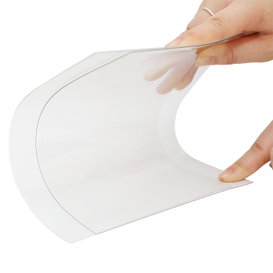
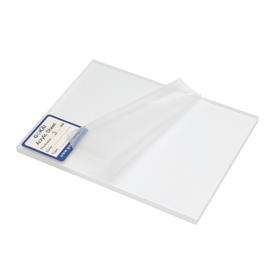
Foam sheet boards are rigid panels containing a cellular core or cellular structure. That structure reduces weight compared with a comparable solid material, while providing useful stiffness for selected applications.
However, "foam board" is a broad commercial term. A paper-faced presentation board is not interchangeable with an expanded PVC sheet. Likewise, a WPC furniture panel should not be selected using the same criteria as a temporary printed display.
The most useful starting point is to identify the board's composition, surface construction, and intended service conditions.

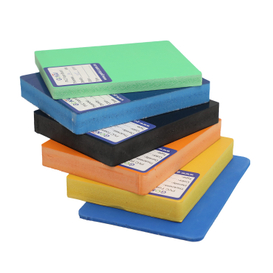
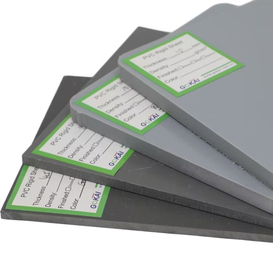
PVC foam board, also called expanded PVC sheet, is a rigid cellular material based on polyvinyl chloride. It is widely used for signs, displays, exhibition components, and fabricated panels.
Suitable grades can be digitally printed, screen printed, painted, or covered with adhesive graphics. Sheets can also be cut, drilled, and routed using appropriate equipment.
Surface quality, density, thickness, and formulation influence performance. A lightweight printing grade and a furniture-oriented board may look similar but behave differently during machining and assembly.
Gokai's WPC foam board combines PVC resin, wood powder, and additives in a foamed, extruded sheet.
It is an option for furniture panels, cabinetry components, partitions, and decorative applications where buyers want an alternative to conventional wood-based boards.
Nevertheless, adding wood powder does not automatically make a board stronger, more sustainable, or suitable for outdoor service. Those claims require evidence for the specific formulation and finished product.
Paper-faced foam board typically combines a foam core with paper facings. It is commonly selected for photographic mounting, presentations, artwork, and lightweight indoor displays.
Its paper surface makes it a different proposition from an all-plastic PVC sheet. Where moisture exposure or repeated handling matters, buyers should evaluate the complete board construction rather than treating all foam boards as equivalent.
Choose according to the application and verified grade, not the material name alone.
| Selection factor | PVC foam board | WPC foam board | Paper-faced foam board |
|---|---|---|---|
| Material construction | Cellular PVC sheet | Foamed PVC-based wood-plastic composite | Foam core with paper facings |
| Common uses | Signs, displays, fabricated panels | Furniture, cabinetry components, decorative panels | Mounting, presentations, indoor graphics |
| Printing priority | Surface consistency and ink compatibility | Surface finish and decoration compatibility | Facing quality and mounting compatibility |
| Assembly priority | Grade-specific stiffness and fastening performance | Grade-specific stiffness, machining, and joint performance | Lightweight mounting and support |
| Moisture assessment | Check grade data and assembled details | Check formulation, exposed edges, and joints | Protect paper facings from unsuitable exposure |
| Outdoor selection | Requires an appropriate exterior grade | Requires specific exterior-use evidence | Generally better suited to protected indoor use |
For printed promotional panels, begin by evaluating PVC foam sheet grades developed for graphics. For cabinet components, compare furniture-oriented PVC and WPC grades using machining and assembly trials.
For indoor photographic mounting, paper-faced foam board may be sufficient without specifying a heavier plastic panel.
Thickness is easy to compare. Performance is more complicated.
Two boards with identical dimensions can differ in weight, surface hardness, flatness, and fastening behavior. A useful specification describes the properties that matter to the finished component.
Thickness affects panel geometry and bending behavior. Density describes mass per unit volume, but it is not a complete measure of quality.
A higher-density board may add unnecessary shipping weight to a temporary display. A lower-density board may be unsuitable where a component needs reliable screw holding.
Ask for:
- Nominal thickness and agreed tolerance.
- Density range and measurement method.
- Surface finish and acceptable visual defects.
- Flatness requirements.
- Relevant mechanical test data.
- Compatibility with the intended fabrication process.
The practical rule is application-first selection: specify the performance you need, then evaluate the board that delivers it.
For a uniform sheet, estimated weight equals length multiplied by width, thickness, and density, using consistent units.
For illustration, a 1.22 m × 2.44 m × 0.010 m sheet at an assumed density of 600 kg/m³ weighs approximately 17.9 kg.
This is a calculation example, not a Gokai product specification. Packaging and actual production tolerances will affect shipment weight.
The calculation helps explain why a lower sheet price may not produce a lower delivered cost. Density, usable yield, and freight all influence the purchasing decision.
Water resistance should be supported by defined test conditions.
ASTM D570 measures water absorption under specified conditions. Results depend on factors including material composition, exposure time, and temperature.
A single percentage does not prove that an assembled cabinet will tolerate every wet environment. Fastener holes, cut edges, adhesives, and neighboring materials still need evaluation.
Request the test method, conditioning procedure, exposure duration, and tested grade—not just a "waterproof" label.

For printed graphics, prioritize a clean, consistent surface and compatibility with the intended ink system.
Before approving production, print a test containing:
- Solid dark areas.
- Fine text.
- Color gradients.
- Brand-critical colors.
- Graphics extending close to cut edges.
Check adhesion, curing, appearance, and handling durability. A visually white sheet is not automatically a suitable printing substrate for every machine and ink combination.
If the design uses adhesive vinyl, test that system separately. Direct printing and vinyl application create different compatibility requirements.
For furniture components, examine the whole assembly.
A board may machine cleanly yet perform poorly around hinges or repeatedly loaded screws. Unsupported shelves also need evaluation under their expected load and span.
Build a representative corner joint or cabinet section. Use the intended screws, hinges, adhesives, and edge treatment.
Where fastening performance is uncertain, evaluate inserts, reinforcement, or alternative joint details rather than assuming a thicker sheet will solve the problem.
Outdoor suitability is grade-specific.
Sunlight, temperature changes, wind, and installation details all affect service performance. An indoor printing grade should not be presented as an exterior product without supporting evidence.
Expanded PVC can change dimensions with temperature. Mounting arrangements must accommodate movement according to the selected product's guidance.
Avoid transferring an exterior thickness recommendation from one brand or grade to another. Ask for guidance covering the actual sheet, panel size, support arrangement, and exposure conditions.
A structured sample process connects the supplier's specification with the buyer's real production conditions.

Record whether the board will be used indoors or outdoors, the likely moisture exposure, temperature conditions, expected loading, and intended service duration.
Also identify any destination-market requirements before selecting a grade.
Confirm dimensions, tolerances, density, color, finish, protective film, and packaging.
Where the appearance matters, retain an agreed reference sample. Photographs alone may not communicate surface texture or color accurately.
Use the same machinery, tooling, inks, adhesives, and hardware planned for production.
A small hand-cut sample cannot establish how a full-size sheet will perform during routing, printing, or installation.
Evaluate the product in its intended configuration.
For a printed panel, check mounting and graphic durability. For a cabinet component, check joints, hardware, and expected loading.
Where compliance is required, arrange the relevant testing rather than substituting an informal workshop check.
Record the approved grade and acceptance criteria in the purchase documentation.
Incoming inspection should check the same characteristics approved during sampling. Otherwise, sample approval and bulk acceptance become separate, inconsistent decisions.
A fire-related claim must identify the test standard, classification, tested thickness, and applicable product.
UL 94 concerns the flammability of plastic materials for parts in devices and appliances. It is not a substitute for the fire-performance requirements applicable to building products.
For interior construction or regulated installations, confirm the required classification with the project team and relevant authority. Request documentation that matches the intended use.
WPC foam board contains wood material, but that fact alone does not establish a lower environmental impact.
A meaningful assessment may consider formulation, verified recycled content, service life, manufacturing, transport, and available end-of-life routes.
Similarly, a material being technically recyclable does not guarantee that a local collection system accepts it. Buyers should seek specific evidence before making environmental claims in their own marketing.
A detailed inquiry makes quotations easier to compare and reduces avoidable revisions.
Send Gokai the following information:
1. Application and installation environment.
2. Preferred material, or a request for grade selection.
3. Sheet dimensions, thickness, and tolerances.
4. Target density or required performance.
5. Color, surface finish, and protective-film requirements.
6. Printing, machining, lamination, or assembly process.
7. Quantity and expected repeat-order volume.
8. Destination and required documentation.
9. Private-label and packaging preferences.
10. Sample approval and inspection requirements.
Treat customization items as requirements to confirm, not assumptions about standard availability.
Share your drawings, intended use, and destination with Gokai to discuss an OEM PVC foam board or WPC foam board specification. Request suitable samples and quotation details, then approve the material against your actual production process before placing a bulk order.
No. PVC foam board is a cellular plastic sheet. Paper-faced foam board has a foam core covered with paper facings. Their surfaces, fabrication requirements, and suitable exposure conditions differ.
No. Performance depends on formulation, density, thickness, manufacturing, and the property being measured. Compare relevant test results and finished assemblies rather than assuming wood content guarantees greater strength.
Suitable grades support direct digital or screen printing. Confirm compatibility with the intended ink and equipment, then run an adhesion and appearance trial before approving production.
There is no universal thickness for every cabinet component. Panel dimensions, unsupported span, loading, hardware, and board properties all matter. Test a representative assembly using the proposed material and joint design.
Some grades are intended for exterior applications. Confirm weathering suitability, temperature-related movement, installation guidance, and any exposure limitations for the specific product. Do not assume every foam board is suitable.
Request an agreed specification, representative samples, relevant test documentation, packaging details, and inspection criteria. Confirm that the quotation identifies the same material grade and requirements approved during sampling.
1. [Piedmont Plastics — "Foam Boards Now Available at Piedmont Plastics"]. Original article used to identify the topic's baseline coverage: PVC foam sheets for graphics and paper-faced foam boards for mounting and artwork. [piedmontplastics]
2. [Gokai — WPC Foam Board]. Manufacturer information supporting the description of Gokai's PVC-resin-and-wood-powder WPC composition and listed application categories. Product claims remain subject to grade-specific verification. [gokaiplastic]
3. [Gokai — PVC Celuka Foam Board]. Manufacturer descriptions of cellular PVC boards, fabrication uses, and furniture, display, and decorative applications. [gokaiplastic]
4. [Palram Americas — PALIGHT Foamed PVC Sheets]. Technical product-family information distinguishing printing, fabrication, and exterior-oriented grades. Used for general material-selection context, not as evidence of Gokai product performance. [palram]
5. [3A Composites USA — SINTRA Expanded PVC Board]. Manufacturer information on expanded PVC construction, graphics compatibility, machining, and product-specific exterior recommendations. Its recommendations should not be transferred automatically to another supplier's grade. [3acompositesusa]
6. [3A Composites — SINTRA Fabrication Guide, hosted by Curbell Plastics]. Fabrication guidance explaining thermal movement and the importance of accommodating dimensional changes during installation. [curbellplastics]
7. [Intertek — Water Absorption: ASTM D570]. Explanation of water-absorption testing, conditioning, exposure conditions, and reporting as a percentage increase in specimen mass. [intertek]
8. [UL Solutions — Understanding UL 94 Rating Certifications and Limitations]. Clarifies the scope of UL 94 and why its small-scale classifications do not replace building-code fire-performance requirements. [code-authorities.ul]