Shanghai Gokai Industry Co,.Ltd.
Call Us: +86-18918606548
Call Us: +86-18918606548
- Product Name
- Product Keyword
- Product Model
- Product Summary
- Product Description
- Multi Field Search
Views: 277 Author: Gokai Publish Time: 2026-10-23 Origin: Site


Content Menu
● What Does "Flexible Plastic Sheet" Actually Mean?
● Flexible Plastic Sheet Comparison
● 1. Polycarbonate Sheet for Clear, Impact-Resistant Curves
>> Where Polycarbonate Works Well
● 2. ABS Sheet for Thermoformed Housings and Covers
>> Why ABS Is Useful for OEM Projects
>> Do Not Treat Standard ABS as Universally Weatherproof
● 3. Acrylic Sheet for Clear Displays and Visual Applications
>> Match the Forming Method to the Shape
>> Ask What "Specialty Acrylic" Means
● 4. HDPE Sheet for Moisture-Exposed Industrial Components
>> Check Fabrication Before Committing
● 5. LDPE Sheet When Softness Matters More Than Rigidity
>> Recognize the Structural Trade-Off
● 6. KYDEX® Sheet for Grade-Specific Formed Applications
>> Specify the Product, Not Just the Brand
● How Thickness and Bend Radius Change Your Design
>> A Practical Bend-Radius Example
● How to Select a Flexible Plastic Sheet for Your Application
>> For a Transparent Protective Panel
>> For an Opaque Formed Housing
● A Five-Step Validation Process Before Bulk Ordering
● Compare Finished-Part Cost, Not Only Sheet Price
● Discuss Your OEM Sheet Requirements With Gokai
>> What Is the Most Flexible Plastic Sheet?
>> Can Acrylic Sheet Bend Without Heating?
>> Is Polycarbonate Better Than ABS?
>> Is ABS Sheet Suitable for Outdoor Use?
>> What Information Does Gokai Need for an OEM Quotation?
Choosing a flexible plastic sheet means more than finding a panel that bends. For equipment covers, curved displays, formed housings, and protective liners, the right material must balance flexibility with impact resistance, appearance, processing requirements, and service conditions.
At Gokai, we supply polycarbonate sheet, ABS sheet, and acrylic sheet, with OEM services for global customers. Our starting recommendation is simple: define how the finished component must perform before choosing the plastic.

"Flexible" can describe three different behaviors. Confusing them can lead to cracked panels, unsuitable materials, or unnecessary manufacturing costs.
Some plastics remain relatively soft and bend readily during handling. LDPE is a good example. It suits applications requiring compliance rather than structural stiffness.
However, easy bending does not automatically mean good load-bearing performance or resistance to repeated folding.
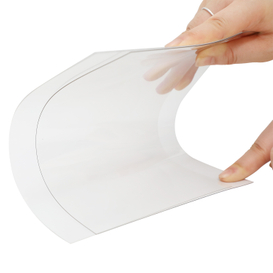
Cold curving means bending an unheated sheet into a broad radius. A frame or fastening system normally holds the curve in place.
Polycarbonate and certain acrylic products can accommodate this approach within manufacturer-specified limits. A gentle arch is very different from a sharp fold.
Thermoforming uses heat to soften a sheet before shaping it over or into tooling.
ABS, acrylic, and suitable polycarbonate grades can produce formed components. Their ability to form when heated does not mean the finished parts will remain soft.
The key distinction is formability: a material can be rigid in service yet practical to shape during manufacturing.

Use this table to build a shortlist. Final selection still depends on the exact grade, thickness, geometry, and operating environment.
| Material | Primary selection advantage | Typical applications | Important limitation |
|---|---|---|---|
| Polycarbonate | Transparency with high impact resistance | Protective glazing, equipment viewing panels | Check bend radius, coatings, and chemical compatibility |
| ABS | Toughness and thermoforming suitability | Housings, equipment covers, interior trim | Outdoor exposure requires suitable protection or grade |
| Acrylic | Optical clarity and visual finish | Displays, signs, curved presentation panels | Tight cold curves can cause cracking or crazing |
| HDPE | Toughness and moisture resistance | Liners, utility panels, industrial components | Conventional adhesive bonding can be difficult |
| LDPE | Softness and easy flexing | Flexible liners, compliant interfaces | Limited stiffness and structural capability |
| KYDEX® | Grade-specific forming and performance options | Equipment housings, interior components | Verify the exact fire and smoke documentation |
Polycarbonate is a strong candidate when visibility and resistance to accidental impact matter together.
Potential applications include curved equipment windows, protective covers, and transparent industrial panels. Whether a particular product is suitable for a safety-critical installation requires application-specific evaluation.
Consider polycarbonate when the component needs:
- Transparency for observation.
- Greater resistance to impact than standard acrylic.
- A broad curve without heat forming.
- Toughness during handling and assembly.
Cold-curved designs must follow the selected product's minimum bending radius. Surface coatings may also restrict which forming methods are appropriate.
Ask about UV protection, chemical compatibility, scratch resistance, and forming limitations.
Do not assume every polycarbonate sheet has the same fire classification or outdoor durability. For regulated uses, request documentation covering the specified product and thickness.
A general material description is not a substitute for a documented finished-part requirement.
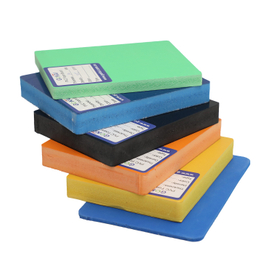
ABS sheet is worth considering when an opaque component needs toughness, a consistent appearance, and practical forming characteristics.
Common applications include appliance components, equipment housings, interior trim, and formed covers.
ABS can provide different colors and surface textures. A textured finish may also help reduce the visibility of everyday handling marks.
For OEM purchasing, specify:
- Sheet thickness and tolerance.
- Color reference and acceptable variation.
- Surface texture and visible side.
- Formed geometry and mounting locations.
- Indoor or outdoor service conditions.
Gokai offers ABS sheet options and OEM customization. Confirm the available grade and dimensions against the project specification before ordering.
General-purpose ABS and UV-resistant ABS are not interchangeable.
If the part will face sunlight, discuss a suitable weather-resistant grade or protective construction. Any proposed outdoor solution should be evaluated under the expected exposure conditions.
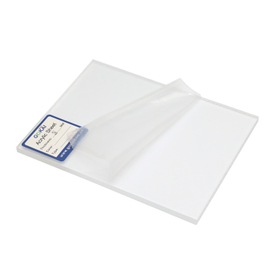
Acrylic sheet is often selected when optical appearance is central to the product.
It can suit retail displays, signage, exhibition components, and curved presentation panels. However, standard acrylic should not be described as a soft, freely bendable material.
A broad curve may be possible through cold forming, subject to product guidance. Tighter shapes generally require a suitable heat-forming process.
Cast, extruded, impact-modified, and coated acrylic products can have different processing limits.
For example, some abrasion-resistant acrylic products are not recommended for line bending or thermoforming because heating can affect the coating.
The phrase alone is not a usable specification.
Request the product designation, impact modification, forming guidance, and surface treatment. A specialty grade may improve a particular property without eliminating other limitations.
For impact-exposed transparent components, compare acrylic and polycarbonate using the actual service requirements rather than appearance alone.
HDPE is a useful candidate when toughness, moisture resistance, and chemical compatibility matter more than transparency.
Applications may include liners, utility panels, fabricated components, and industrial equipment parts.
A sheet that performs well in service may still create assembly challenges.
Polyethylene can be difficult to bond with conventional adhesives. Depending on the design, mechanical fastening or an appropriate welding process may be more practical.
Confirm the proposed joining method during prototyping, not after the sheet order arrives.
For food-contact or other controlled applications, obtain documentation for the specific grade and intended conditions of use.
LDPE is generally more flexible than HDPE. It is useful where the sheet needs to conform rather than hold a stiff, self-supporting shape.
Potential applications include flexible liners and compliant interfaces.
LDPE is not an automatic substitute for ABS or polycarbonate in a rigid cover.
Its softness can become a disadvantage when a component must maintain a precise shape, resist deflection, or support a load.
Before choosing LDPE, ask whether the application needs occasional bending, continuous flexibility, or repeated movement. These requirements should be validated separately.
KYDEX® is a branded thermoplastic sheet family used in applications requiring combinations of forming performance, appearance, toughness, and documented fire behavior.
It is a comparison option, not a generic name for flexible plastic.
Different products have different properties and certifications.
If an interior component requires a particular fire or smoke classification, check the named product, test method, applicable thickness, and relevant report.
A statement such as "fire-rated plastic" is incomplete unless it connects to the actual requirement.
KYDEX® is included here for material comparison; availability should be checked with the appropriate supplier.
Thickness strongly affects how easily a sheet bends. A material that feels flexible as a thin sample may become much harder to curve at production thickness.
Published cold-forming limits also differ between products.
Palram publishes a minimum radius of 200 times sheet thickness for specified polycarbonate products. ACRYLITE® lists 330 times thickness for several acrylic products.
Using those particular guidelines:
| Illustrative product guidance | Sheet thickness | Minimum cold-bending radius |
|---|---|---|
| Polycarbonate at 200 × thickness | 3 mm | 600 mm |
| Acrylic at 330 × thickness | 3 mm | 990 mm |
These are product-specific examples, not universal design rules or Gokai product guarantees.
If the required curve is tighter, discuss heat forming or another material. Do not force a panel into place simply because it survives installation; excessive sustained stress can cause delayed cracking.
A practical shortlist starts with the component's main job.
Begin by comparing suitable polycarbonate grades. Review impact requirements, cleaning chemicals, mounting details, and any applicable safety standards.
Choose the thickness through engineering assessment rather than a generic recommendation.
Compare acrylic and polycarbonate.
Acrylic may suit a visually focused display, while polycarbonate may be preferable where accidental impacts are more likely. The curve, finish, and fabrication route can change the decision.
Start with ABS. Check the forming geometry, surface expectations, operating conditions, and any special performance requirements.
If fire behavior is critical, compare documented grades rather than broad material categories.
Consider LDPE when compliance is the priority and HDPE when greater stiffness is useful.
Chemical exposure, abrasion, support conditions, and attachment methods still need evaluation.

Material samples reduce risk only when they represent the production specification.
1. Define service conditions. Record temperature, sunlight, moisture, chemicals, impact exposure, and expected movement.
2. Confirm geometry. Provide drawings showing dimensions, thickness, curves, holes, and mounting points.
3. Test the manufacturing route. Evaluate cutting, drilling, forming, printing, or joining as applicable.
4. Inspect the assembled prototype. Check fit, appearance, stress marks, deformation, and cleaning compatibility.
5. Approve a written specification. Record the accepted material, finish, tolerances, inspection criteria, and packaging.
A flat sample cannot fully validate a deeply formed housing. Likewise, a thinner sample cannot establish the bending behavior of the final thickness.
The cheapest sheet does not necessarily produce the lowest-cost component.
Compare quotations using the same specification and consider:
- Usable yield from each sheet.
- Forming and fabrication time.
- Scrap and rejected parts.
- Secondary finishing.
- Protective packaging.
- Freight and handling.
- Replacement or rework risk.
A slightly higher sheet price may be justified if the material reduces processing problems. Treat that as a project-specific calculation, not a guaranteed saving.
Send Gokai your drawing, target quantity, dimensions, forming requirements, and service conditions.
We can discuss polycarbonate, ABS, and acrylic sheet options for your project. Before placing a production order, confirm the proposed specification and evaluate representative samples against your acceptance criteria.
Among the materials discussed, LDPE is generally the strongest starting point when softness and easy flexing are the main requirements. Thickness and grade still matter, and greater flexibility usually means less stiffness.
Yes, certain acrylic products can be cold-curved within specified limits. They normally need a supporting frame. Tight curves may require heat forming, and excessive cold bending can cause delayed cracking or crazing.
Neither is universally better. Polycarbonate is useful for transparent, impact-resistant components. ABS is a practical candidate for opaque thermoformed housings. Compare the exact grades against the application.
Suitable weather-resistant or UV-protected options may be available. Do not assume general-purpose ABS provides the outdoor performance required. Confirm the grade, exposure conditions, and supporting documentation.
Provide the application, preferred material, dimensions, thickness, quantity, color, finish, drawings, delivery destination, and special requirements. If the material is undecided, describe the component's function and operating environment.
1. [Piedmont Plastics — "6 Types Of Flexible Plastic Sheet"]. Original comparison framework covering polycarbonate, HDPE, LDPE, KYDEX®, ABS, and specialty acrylic. The rewritten article adds specification limits and purchasing guidance rather than reproducing its wording. [piedmontplastics]
2. [ACRYLITE® — "What Is Cold Bending Compared to Thermoforming?"]. Technical explanation distinguishing unheated curving from heat forming, including the need to restrain cold-curved sheet. [acrylite]
3. [ACRYLITE® — "What Is the Minimum Radius ACRYLITE® Acrylic Sheet Can Be Cold Bent?"]. Product-specific bending factors and warnings about immediate or delayed cracking and crazing. Source for the 330-times-thickness acrylic example. [acrylite]
4. [Palram — "PALGARD® Abrasion-Resistant Polycarbonate Sheet"]. Manufacturer guidance on abrasion-resistant polycarbonate and product-dependent cold-bending limits. Source for the illustrative 200-times-thickness calculation. [palram]
5. [ACRYLITE® — "What Are the Thermoforming Temperatures for ACRYLITE® Sheet Products?"]. Product-specific forming guidance, including restrictions for certain mar-resistant acrylic sheets. [acrylite]
6. [Curbell Plastics — "LDPE Plastic Uses & Properties"]. Material reference supporting LDPE's flexibility, relative softness, and limitations where structural stiffness is required. [curbellplastics]
7. [Curbell Plastics — "ABS Data Sheet"]. Reference identifying distinct ABS grades, including general-purpose, UV-resistant, fire-rated, and other specialized options. [curbellplastics]
8. [SEKISUI KYDEX — "KYDEX® and ALLEN® for General Thermoforming"]. Manufacturer information about sheet thermoforming, appearance options, and specialized performance development. [kydex]
9. [SEKISUI KYDEX — "ASTM E-84 Classification for KYDEX® Thermoplastic Sheet, TB 111E"]. Product- and thickness-specific classification information supporting the need to verify fire and smoke documentation. [kydex]
10. [Shanghai Gokai Industry Co., Ltd. — "ABS Sheet"]. Company-published information supporting ABS product options, customizable dimensions, and OEM/ODM services. Company descriptions are supplier claims, not independent product certification. [gokai.com]