Shanghai Gokai Industry Co,.Ltd.
Call Us: +86-18918606548
Call Us: +86-18918606548
- Product Name
- Product Keyword
- Product Model
- Product Summary
- Product Description
- Multi Field Search
Views: 258 Author: Gokai Publish Time: 2026-10-01 Origin: Site


Content Menu
>> Key properties of expanded PVC sheet
● PVC Foam Board vs. Traditional Foam Board: What Is the Difference?
● Top Commercial Applications of PVC Foam Board
>> 1. Printing, Signage, and Wayfinding Systems
>> 2. Retail Displays and Visual Merchandising
>> 3. Exhibition Booths and Event Fabrication
>> 4. Interior Decoration and Wall Panel Systems
>> 5. Industrial Fabrication and OEM Components
● How to Choose the Right PVC Foam Board for Your Project
>> Use this PVC foam board buying checklist
>> test the complete process, not just the sheet
● Fabrication Tips for PVC Foam Sheet
● Environmental and Safety Considerations
● Partner With Gokai for Custom PVC Foam Board Solutions
>> 1. Is PVC foam board waterproof?
>> 2. Can PVC foam board be used outdoors?
>> 3. What is the best PVC foam board thickness for signs?
>> 4. Can PVC foam board be printed directly?
>> 5. Is PVC foam board fireproof?
>> 6. Can PVC foam board be recycled?
PVC foam board is one of the most versatile rigid sheet materials for commercial signage, retail displays, interior cladding, fabrication, and OEM projects. For buyers who need a lightweight, printable, moisture-resistant, and easy-to-machine substrate, expanded PVC foam board can provide a strong balance between performance, design flexibility, and cost control.
At Gokai, we work with global customers who use PVC foam board for applications ranging from digital printing and exhibition displays to cabinets, wall panels, transportation interiors, and custom fabricated parts. The right PVC foam sheet is not simply a "sign board." Its density, thickness, surface finish, color, fire-performance requirements, and fabrication method should all be selected around the end-use environment.
This guide explains what PVC foam board is, where it performs best, how it differs from ordinary foam board, and how professional buyers can specify the right material for OEM or bulk projects.

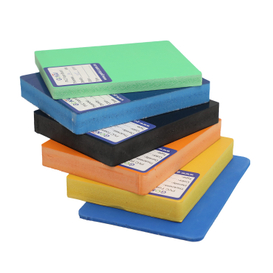
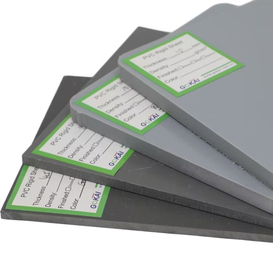
PVC foam board, also called expanded PVC sheet, foam PVC sheet, or rigid PVC foam board, is a lightweight but rigid sheet material manufactured from polyvinyl chloride resin and additives. During production, a foaming process creates a cellular internal structure. This reduces weight while preserving useful stiffness, machinability, and surface quality.
Most commercial PVC foam boards have a smooth matte surface that can be printed, painted, laminated, routed, drilled, cut, or bonded. Depending on the grade, suppliers can offer different colors, densities, thicknesses, sheet sizes, and surface finishes for specific projects.
Unlike flexible PVC, expanded PVC is designed to remain dimensionally stable as a rigid panel. Unlike paper-faced foamcore, it has a durable plastic structure that is better suited to repeated handling, moisture-prone environments, and many outdoor or semi-outdoor applications.
Professional buyers often choose PVC foam board because it combines several commercially useful properties:
- Low weight compared with many wood, metal, glass, and solid-plastic alternatives
- Smooth printable surface for UV printing, screen printing, vinyl graphics, painting, and laminating
- Moisture resistance that supports many damp-area and exterior display uses
- Easy fabrication using cutting, routing, drilling, engraving, thermoforming, and bonding methods
- Chemical resistance against many common cleaning agents and mild industrial exposures
- Corrosion resistance because the board does not rust like metal substrates
- Insulating cellular structure compared with solid PVC sheet
- Customizable OEM options including colors, thicknesses, dimensions, protective films, and packaging
Technical performance varies by formulation, density, thickness, and manufacturer. For example, published expanded PVC data sheets show low 24-hour water absorption values and flame-performance ratings for particular grades, but buyers should always request the specific technical data sheet and test documentation for the exact board they plan to purchase.
The terms "PVC foam board" and "foam board" are often used interchangeably, but they refer to different products. This confusion can cause costly purchasing mistakes, especially for signage, exhibition, and industrial projects.
Traditional foam board, often called foamcore, usually contains a polystyrene foam center covered with paper, clay-coated paper, or another facing material. It is commonly used for short-term indoor presentations, mounting, photography backdrops, school projects, and lightweight displays.
PVC foam board is an expanded plastic sheet. It has a more durable structure and is generally more suitable for fabrication, graphics production, commercial display systems, and applications where exposure to humidity, handling, or cleaning is expected.
| Feature | PVC Foam Board | Traditional Foam Board / Foamcore |
|---|---|---|
| Core material | Expanded polyvinyl chloride | Usually polystyrene foam |
| Surface | Smooth plastic surface | Usually paper-faced surface |
| Moisture resistance | Generally strong, depending on grade | Usually limited |
| Printing options | UV print, screen print, vinyl, paint, laminate | Often suitable for indoor graphics only |
| Fabrication | Cut, drill, route, engrave, bond, bend | More vulnerable to crushing and delamination |
| Typical use | Signage, displays, panels, OEM parts | Indoor presentation boards and short-term mounting |
| Durability | Better for frequent handling and commercial use | Better for light-duty indoor use |
For a restaurant menu board, retail POP display, exhibition sign, or fabricated equipment cover, PVC foam board is often the more practical choice. For a single-day indoor presentation, low-cost foamcore may still be sufficient.

Signage remains one of the most common applications for PVC foam sheet. Its smooth surface accepts many printing and graphic methods, while its rigidity helps the finished sign remain flat and professional-looking.
Common signage uses include:
- Retail point-of-purchase displays
- Directional signs
- Safety signs
- Menu boards
- Real-estate signs
- Promotional panels
- Event graphics
- Wall-mounted brand displays
- Trade-show graphics
- Indoor wayfinding systems
PVC foam board is especially useful when a project requires a panel that is easier to handle than acrylic, aluminum composite panel, glass, or solid plastic sheet. For example, a chain retailer can use digitally printed PVC foam panels for seasonal promotional displays, then replace only the graphics panels between campaigns.
However, outdoor use should be evaluated carefully. Weather exposure, UV intensity, wind load, mounting design, local fire codes, expected service life, ink system, and board thickness all affect performance. Avoid promising long-term outdoor durability without validating the application with material samples and real installation conditions.
Retail environments need materials that look clean, support branding, and can be fabricated quickly. PVC foam board is widely used for promotional headers, shelf talkers, display backdrops, cosmetics displays, hanging signs, product stands, and window graphics.
For retailers and display manufacturers, its major advantage is flexibility. The board can be printed directly, covered with vinyl, laminated with decorative films, cut into custom shapes, or combined with acrylic, LED lighting, aluminum profiles, and wood components.
A practical example is a cosmetics display launch. The supplier may use white PVC foam board for the structural backing, printed graphic panels for brand storytelling, and CNC-routed logo elements for visual depth. This approach can reduce shipping weight compared with heavier wood or metal display structures.
Trade-show contractors often need materials that are easy to transport, quick to process, and visually adaptable. PVC foam boards can be used for:
- Booth walls
- Display panels
- Product information boards
- Reception desk skins
- Hanging visual elements
- Decorative partitions
- Sample-mounting boards
- Temporary branded environments
For short-cycle event production, buyers should prioritize flatness, print consistency, edge quality, and packaging protection. Damaged corners or surface scratches can create avoidable waste when a board is intended for high-visibility graphics.
When sourcing for exhibitions, specify the finished use clearly: direct printing, mounted graphics, CNC-cut letters, or structural display parts. Each use may require a different thickness or density.
PVC foam board can also serve as an interior material for decorative panels, lightweight partitions, wall cladding, cabinetry components, and furniture-related elements. It is used in commercial interiors where moisture resistance and easy cleaning are important, such as retail stores, offices, kitchens, laboratories, medical settings, and washroom-adjacent areas.
Potential interior applications include:
- Decorative wall panels
- Office partitions
- Cabinet backing panels
- Drawer dividers
- Ceiling features
- Bathroom cabinet components
- Reception-desk facings
- Store fixtures
- Lightweight furniture elements
For interior architectural applications, do not select material based only on appearance. Buyers should verify flame rating, smoke development, emissions requirements, cleaning chemical compatibility, installation method, and local building-code obligations before approval.
Some expanded PVC products are tested to standards such as UL 94, ASTM E84, or EN 13501-1, but a test result applies only to the specific material construction and conditions tested. It must not be generalized to all PVC foam boards.
PVC foam board is not limited to graphics. Manufacturers also use it in custom fabricated components where low weight, corrosion resistance, electrical insulation, and machinability are beneficial.
Potential OEM applications include:
- Equipment covers
- Protective panels
- Machine guards for low-impact uses
- Electrical enclosure components
- Interior vehicle panels
- RV and marine interior elements
- Refrigeration and insulation-related panels
- Packaging inserts
- Prototype components
- Lightweight partitions
For OEM buyers, the most important question is not "Can PVC foam board be used?" It is "Can this particular grade meet the operating environment?" Temperature range, load-bearing demands, impact exposure, chemical contact, fire compliance, electrical requirements, and dimensional tolerances should be defined before mass production.
Selecting the wrong PVC foam board can lead to warping, print defects, poor machining, unnecessary cost, or compliance problems. A professional specification should include more than board thickness.

1. Define the installation environment
Is the board for indoor, semi-outdoor, or outdoor use? Will it be exposed to sunlight, humidity, water, chemicals, wind, or temperature changes?
2. Identify the finished application
Printing, display fabrication, wall cladding, furniture, transport interiors, or industrial OEM parts all create different performance requirements.
3. Choose the appropriate thickness and density
Thicker or denser boards may improve rigidity, but can increase cost and weight. The best option depends on span, mounting method, fabrication process, and required impact resistance.
4. Confirm surface requirements
Specify whether you need a matte finish, gloss finish, co-extruded surface, protective film, white surface for printing, colored board, or a surface suitable for lamination.
5. Check fabrication compatibility
Confirm whether the board will be UV printed, screen printed, vinyl wrapped, CNC routed, drilled, thermoformed, glued, or mechanically fastened.
6. Request compliance documents early
If your market requires fire, RoHS, REACH, VOC, or other compliance documentation, confirm availability before placing an order.
7. Evaluate packaging and logistics
For international shipments, corner protection, pallet design, moisture protection, container loading, and surface film can affect the delivered quality as much as the board itself.
A sample board may look perfect before processing but perform differently during printing, routing, bonding, shipping, or installation. For this reason, experienced buyers should conduct a small trial using the real production workflow.
For example, if the final product is a printed retail sign, test:
- Ink adhesion and color consistency
- Flatness after printing
- CNC edge quality
- Adhesive compatibility
- Scratch resistance during handling
- Packaging protection during transport
- Mounting strength under realistic conditions
This full-process trial reduces risk before a large OEM purchase order.
PVC foam board is valued because it can be processed with many familiar tools. Still, clean results depend on appropriate tooling, feeds, speeds, and heat management.
Use sharp blades or appropriate CNC router bits. Excessive friction can generate heat and leave rough edges, melted surfaces, or chips. Test parameters on offcuts before producing finished panels.
Pre-drill where appropriate, particularly near edges. Avoid overtightening screws because the cellular structure can compress. For large panels, use a fastening pattern that supports the board evenly and allows for material movement where necessary.
Depending on the project, PVC foam board can be joined with compatible solvent cements, adhesives, double-sided tapes, mechanical fasteners, or engineered assembly systems. Always test adhesive compatibility because some solvents, cleaners, and coatings can affect the material surface.
For graphics projects, clean the surface and confirm ink, paint, lamination film, and adhesive compatibility. A print test should check adhesion, color, curing, scratch resistance, and visual appearance under intended lighting conditions.

PVC foam board can deliver long service life in appropriate applications, but responsible sourcing requires an honest view of material lifecycle issues. PVC production, additives, waste handling, and end-of-life treatment are subjects of ongoing environmental and health discussion. Research and environmental organizations identify challenges related to vinyl chloride, additives, emissions, and the difficulty of managing mixed or contaminated PVC waste streams.
At the same time, PVC is a thermoplastic material that can be mechanically or chemically recycled when collection, sorting, formulation control, and processing infrastructure are available. Post-industrial scrap is generally easier to manage than mixed post-consumer material.
For procurement teams, the practical approach is to:
- Use the correct board grade to extend product life
- Minimize unnecessary offcuts through optimized cutting layouts
- Separate clean production scrap where local recycling is available
- Request information on additives and compliance documentation
- Avoid unsupported "eco-friendly" or "fully recyclable everywhere" claims
- Plan end-of-life handling before project completion
This approach is more credible than broad sustainability statements and better aligns with E-E-A-T principles: demonstrate expertise, acknowledge limitations, and provide actionable guidance.
Gokai supplies PVC foam board for customers who need more than a standard sheet. We support global OEM requirements through customized specifications, including thickness, color, density, surface treatment, dimensions, protective film, packaging, and application-focused recommendations.
Whether you are producing printed signs, retail fixtures, exhibition displays, wall panels, or fabricated industrial parts, the right material specification can improve quality, reduce waste, and simplify production.
Request a PVC foam board sample or OEM quotation from Gokai today. Share your target application, thickness, dimensions, quantity, destination market, printing or fabrication method, and any required compliance documents. Our team can help you evaluate the best sheet solution before mass production.
PVC foam board is generally moisture resistant and has low water absorption compared with paper-faced foam board. However, "waterproof" should not be treated as a universal claim. Performance depends on board grade, edge treatment, installation design, adhesive selection, and the duration and intensity of water exposure. Request product-specific test data for demanding wet-area projects.
Yes, PVC foam board is commonly used for outdoor signage and display applications. However, the expected outdoor lifespan depends on UV exposure, wind load, mounting design, thickness, printed graphics, climate, and maintenance. Test samples in the intended environment before committing to large projects.
There is no single best thickness. Small indoor signs may require less rigidity than large wall panels or free-standing displays. Choose thickness based on sign dimensions, mounting method, wind exposure, handling demands, and the desired visual effect. A supplier should recommend a grade after reviewing the actual application.
Yes. PVC foam board is commonly used for direct UV printing, screen printing, vinyl lettering, and laminated graphics. Always perform print trials because inks, curing conditions, surface treatments, and board formulations can influence adhesion and color quality.
No material should be described as "fireproof" unless its exact product construction has been certified to the required standard. Some expanded PVC grades have flame-retardant or low-flammability test ratings, such as UL 94 or ASTM E84-related performance, but these ratings vary by product and test method. Obtain the relevant test report for the specific sheet you purchase.
PVC is thermoplastic and can be recycled through mechanical or chemical methods in suitable systems. In practice, recycling availability varies significantly by region, product formulation, collection method, and contamination level. Clean factory offcuts are generally more practical to recycle than mixed post-consumer materials.
1. Acme Plastics. "[The Commercial Applications of PVC Foam Board]." Accessed September 2026.
2. Interstate Plastics. "[Expanded PVC Spec Sheet]." Technical properties including water absorption, printability, fabrication suitability, and UL 94 information.
3. Vycom / CELTEC. "[Expanded Rigid Foam PVC Board Datasheet]." Product information on low flammability, ASTM E84 flame spread, water resistance, and printable surface.
4. European Commission. "[Life Cycle Assessment of PVC and Principal Competing Materials]." Overview of PVC lifecycle considerations and end-of-life pathways.
5. Green Building Council of Australia. "[Literature Review and Best Practice Guidelines for the Life Cycle of PVC Building Products]." Guidance on PVC lifecycle issues and recycling practices.
6. National Library of Medicine / PubMed Central. "[Risks Associated with the Presence of Polyvinyl Chloride in Various Sectors of the Environment]." Review of PVC environmental and waste-management considerations.
7. Baker Institute for Public Policy. "[Why Classifying PVC as Hazardous Waste Undermines America's Zero-Waste and Energy Transition]." Discussion of PVC lifecycle, recycling, and health-policy considerations.
8. Nordic Swan Ecolabel. "[PVC: Handling Restrictions and Environmental Risks]." Overview of PVC-related environmental risks and additive considerations.