Shanghai Gokai Industry Co,.Ltd.
Call Us: +86-18918606548
Call Us: +86-18918606548
- Product Name
- Product Keyword
- Product Model
- Product Summary
- Product Description
- Multi Field Search
Views: 288 Author: Gokai Publish Time: 2026-08-09 Origin: Site


Content Menu
● Lucite vs. Acrylic: The Key Difference
>> Why Brand Name Alone Is Not Enough
● Cast Acrylic vs. Extruded Acrylic: The Decision That Matters More
● How to Compare Acrylic Sheets for an OEM Project
>> 1. Define the End-Use Environment
>> 2. Confirm Processing Compatibility
>> 3. Request a Technical Data Package
>> 4. Approve a Production Sample
● Common Uses for Lucite and Acrylic Sheets
>> Signage and Point-of-Purchase Displays
>> Retail, Furniture, and Interior Design
>> Protective Barriers and Industrial Components
>> Aquariums, Glazing, and Architectural Features
● Acrylic Sheet Care: Protect Clarity and Surface Finish
● Why Work With Gokai for OEM Acrylic Sheets?
>> 1. Is Lucite the same as acrylic?
>> 2. Is Lucite better than acrylic?
>> 3. What is the difference between cast acrylic and extruded acrylic?
>> 4. Which acrylic sheet is best for laser cutting?
>> 5. Can acrylic sheets be used outdoors?
>> 6. How do I prevent acrylic from cracking during fabrication?
>> 7. Can Gokai produce custom OEM acrylic sheets?
Lucite vs. acrylic is a common question among buyers of signage panels, retail displays, furniture components, protective barriers, and OEM plastic parts. The short answer is simple: Lucite is a brand name associated with PMMA, while acrylic is the broader material category.
For global buyers, however, the more useful question is not "Is Lucite better than acrylic?" It is: Which acrylic sheet specification will deliver the clarity, fabrication performance, weatherability, and cost your project requires? At Gokai, we help OEM customers make that decision based on application requirements—not branding alone.

Lucite® is a trademarked name for certain PMMA-based acrylic materials. PMMA stands for polymethyl methacrylate, a clear engineering plastic also widely known as acrylic, acrylic glass, or plexiglass in everyday commercial language.
The Lucite name became well known because of its use in transparent molded products, decorative objects, displays, and technical applications. Today, Lucite materials are associated with the Mitsubishi Chemical Group. Its product information emphasizes PMMA resins with clear optics, surface hardness, UV stability, and resistance to water and dilute acids.
For a purchaser, the key point is this:
- Lucite is a specific branded PMMA material
- Acrylic is a broad market term
- PMMA is the polymer family behind both terms
- Actual performance depends on the grade, sheet process, additives, thickness, and quality-control standard
Therefore, it is not technically accurate to assume that every "Lucite-like" or "premium acrylic" sheet will perform identically. The supplier's technical data sheet and quality controls matter more than a general material label.
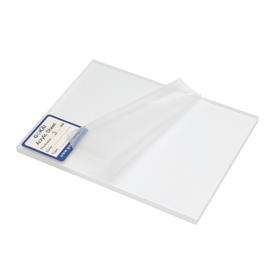
Acrylic sheet is a flat sheet product made primarily from PMMA. It is valued for its high transparency, relatively low weight, weather resistance, machinability, and design flexibility.
Clear PMMA can transmit approximately 92% of visible light under standard optical testing conditions, which helps explain why it is widely used when a glass-like appearance is required. Depending on the formulation and production method, acrylic sheets can also be supplied in:
- Clear, frosted, matte, mirrored, fluorescent, translucent, and opaque finishes
- Solid colors, custom colors, and printed or coated surfaces
- UV-stabilized, impact-modified, flame-retardant, or abrasion-resistant grades
- Standard and custom thicknesses, widths, lengths, and protective films
- Cast acrylic and extruded acrylic constructions
For OEM procurement, "acrylic" should never be the final specification. A complete requirement should identify the production type, thickness tolerance, color, optical requirement, fabrication method, protective masking, and end-use environment.
The essential difference is branding versus material category, rather than two entirely different plastics.
| Factor | Lucite | Generic Acrylic Sheet |
|---|---|---|
| Meaning | A branded PMMA material name | Broad term for PMMA-based acrylic products |
| Base polymer | PMMA | Usually PMMA |
| Performance | Depends on the specific Lucite grade | Depends on the supplier, formulation, and sheet type |
| Consistency | Often associated with controlled branded specifications | Can range from commodity to premium-grade quality |
| Buying approach | Review the branded grade data sheet | Review the acrylic supplier’s data sheet and samples |
| Best use | Projects requiring a named material specification | OEM projects requiring customized size, color, process, or price |
Many online comparisons describe Lucite as clearer, more UV-stable, or more chemical-resistant than "standard acrylic." Those statements can be directionally useful, but buyers should treat them carefully. The actual comparison must be grade-to-grade, not simply brand-to-category. Acme Plastics similarly identifies Lucite as a PMMA brand and notes that both materials share many core characteristics.
A clear sheet may look excellent in a showroom but still fail during laser cutting, thermoforming, outdoor installation, or chemical cleaning. From an OEM acrylic-sheet perspective, the most important questions are:
1. Is the sheet cast or extruded?
2. What thickness and thickness tolerance are acceptable?
3. Will it be CNC-machined, laser-cut, bent, bonded, or thermoformed?
4. Will it be exposed to sunlight, humidity, cleaners, or elevated heat?
5. Does the application require optical clarity, impact modification, or a specific surface finish?
6. What inspection standards must each production batch meet?
This specification-led approach reduces disputes, protects product consistency, and gives buyers a more reliable basis for comparing supplier quotations.
For most project teams, the more practical comparison is not Lucite versus acrylic—it is cast acrylic versus extruded acrylic.
Cast acrylic is produced by polymerizing material in a mold or cell. It is generally selected for applications requiring stronger optical performance, broader thickness options, high-quality machining, detailed engraving, and demanding fabrication.
Typical advantages of cast acrylic include:
- High optical clarity and visual depth
- Better suitability for CNC routing and detailed fabrication
- Stronger resistance to many fabrication chemicals than standard extruded sheet
- Wider thickness range and more custom possibilities
- Cleaner engraved appearance and polished edges in many applications
- Strong performance in premium displays, aquariums, signage, and architectural elements
One technical explanation for this preference is that cast PMMA can have lower internal stress and reduced optical distortion compared with certain extruded sheets. However, the final result still depends on material grade and processing quality.
Extruded acrylic is manufactured in a continuous production process. It is frequently chosen where customers need consistent sheet dimensions, high-volume availability, efficient pricing, and easier thermoforming.
Typical advantages of extruded acrylic include:
- More cost-efficient for many large-volume projects
- Consistent thickness control in standard formats
- Easier heat bending and thermoforming in many applications
- Good choice for straightforward signage, glazing, partitions, and general fabrication
- Efficient option for repeat OEM components with stable specifications
Extruded sheets may be more sensitive to certain solvents and fabrication stresses than cast sheets. For this reason, buyers should request samples and conduct process testing before confirming a large order—especially for laser engraving, solvent bonding, or complex forming projects.
Choose cast acrylic when your project prioritizes:
- Premium displays or optical components
- Deep engraving and precision CNC machining
- Thick panels or custom thicknesses
- High-end furniture and decorative products
- Complex fabrication with strict visual standards
Choose extruded acrylic when your project prioritizes:
- Cost control at volume
- Standard-size panels
- Straightforward thermoforming
- Repeatable general-purpose components
- Commercial signage and protective glazing

Acrylic sheet sourcing should be treated as an engineering and quality-control process, not only a price comparison. A lower unit price can become expensive if the material creates cracking, warping, color inconsistency, high scrap rates, or missed delivery schedules.
Start with where and how the finished product will be used.
For example:
- Outdoor signage: Prioritize UV stability, weather resistance, color retention, and expansion allowance.
- Retail display: Prioritize clarity, scratch resistance, cut quality, and protective film performance.
- Lighting diffuser: Prioritize light transmission, haze, color consistency, and flame-retardant requirements if applicable.
- Machine guard or partition: Prioritize thickness, impact requirements, mounting design, and cleaning compatibility.
- Furniture or décor: Prioritize optical quality, edge polish, thickness tolerance, and surface appearance.
Acrylic can be cut, routed, drilled, laser-engraved, heat-formed, bonded, and printed—but each process has material-specific limits.
Before mass production, test the selected sheet for:
- Laser-cut edge quality and stress cracking
- CNC routing behavior and chip removal
- Thermoforming temperature window
- Solvent or adhesive compatibility
- Screen printing or UV printing adhesion
- Protective-film removal after storage or transport
Expert tip: If a part will be laser-cut and then solvent-bonded, do not skip a stress-crack test. A visually acceptable sheet can still develop crazing around joints after assembly.
A reliable OEM acrylic-sheet supplier should provide more than a quotation. Request documentation covering:
- Material type: cast or extruded PMMA
- Thickness and tolerance
- Density, light transmission, haze, and gloss where relevant
- UV and weathering information
- Surface-protection film specification
- Color reference or approved color sample
- Manufacturing batch traceability
- Packing method and shipping protection
- Compliance documents required for your target market
This is especially important for brand owners, importers, fabricators, and distributors that need repeatable quality across multiple purchase orders.
Do not approve bulk production based only on a digital image or a generic catalog swatch. Use a signed or otherwise documented golden sample that confirms:
- Color and transparency
- Thickness and dimensions
- Surface quality
- Film type
- Cut-edge expectations
- Acceptable defect level
- Packaging standard
At Gokai, this sample-first approach can help OEM buyers align product expectations before full-scale production begins.

Since Lucite and generic acrylic sheets are both PMMA-based materials, their use cases frequently overlap.
Clear, colored, and frosted acrylic sheets are popular for store signs, menu holders, display stands, brand logos, shelf talkers, and illuminated letters. Cast acrylic is often preferred for premium engraved signage, while extruded acrylic can be efficient for standardized display components.
Acrylic can create a modern "floating" visual effect in chairs, tables, shelving, partitions, frames, and decorative panels. For these products, surface quality, scratch resistance, edge finishing, and thickness tolerance are usually more important than whether a buyer uses a specific brand name.
Transparent PMMA sheets are used in machine covers, observation windows, sneeze guards, instrument panels, and equipment housings. The design should consider mounting holes, thermal expansion, cleaning procedures, and whether a different engineering plastic is needed for high-impact applications.
Thicker acrylic panels are used in aquariums, skylight structures, windows, and architectural glazing. These demanding projects require engineering review of thickness, load, fastening design, expansion, fabrication method, and long-term environmental exposure.
Even high-quality acrylic can scratch if cleaned incorrectly. Good maintenance protects the sheet's appearance and extends its useful service life.
1. Remove loose dust first with clean water or air; wiping a dusty surface dry can cause fine scratches.
2. Use a soft microfiber cloth and mild soap solution for routine cleaning.
3. Avoid abrasive pads, paper towels, and aggressive cleaners unless the material supplier specifically approves them.
4. Test unfamiliar cleaners on an offcut before using them on the finished product.
5. Store sheets flat and protected from heat, direct contamination, and surface abrasion before fabrication.
For OEM buyers, the right supplier should help translate an application into a repeatable material specification. Gokai supplies acrylic sheet solutions for global customers and can support customized requirements for dimensions, thickness, colors, finishes, protective films, and packaging.
Our OEM-focused process can include:
- Requirement review based on your end application
- Cast or extruded acrylic-sheet recommendations
- Custom sizes, thicknesses, colors, and finishes
- Sample confirmation before bulk production
- Export-oriented packing support
- Consistent communication for repeat orders and long-term supply programs
Need a custom acrylic sheet solution? Send Gokai your drawing, target dimensions, thickness, color reference, intended fabrication method, annual quantity, and destination market. Our team can help you select a practical PMMA sheet specification for your project.

Lucite is a branded type of PMMA acrylic material, while acrylic is the broader term for PMMA-based products. In practice, both may be used for similar applications, but exact performance depends on the specific grade and sheet construction.
Not automatically. Lucite is associated with branded PMMA materials, but a high-quality cast acrylic sheet from a reliable manufacturer may meet or exceed the needs of a particular project. Compare technical data, samples, and fabrication results rather than relying on the name alone.
Cast acrylic is often preferred for premium clarity, machining, engraving, and custom thicknesses. Extruded acrylic is typically more economical, has consistent standard thicknesses, and is often easier to thermoform.
Cast acrylic is commonly preferred for high-quality laser engraving and polished-looking cut edges. However, settings, thickness, color, and the specific sheet grade all affect results, so production testing is recommended.
Yes, many acrylic sheets are suitable for outdoor use because PMMA has good weatherability and UV stability. Confirm the supplier's UV-performance information, thickness recommendation, mounting method, and warranty conditions for your exact application.
Use the appropriate sheet type, avoid excessive drilling or fastening stress, allow for thermal expansion, use compatible adhesives, and test the full fabrication sequence before volume production. Stress cracking can also result from incompatible solvents or cleaners.
Yes. Gokai can support OEM acrylic-sheet requirements such as custom dimensions, thicknesses, colors, surface finishes, protective films, and export packaging. Contact the team with your technical drawing or product requirements for an evaluation.
1. Acme Plastics. "[Lucite vs Acrylic: Understanding the Key Differences]." Accessed August 2026.
2. Mitsubishi Chemical America. "[Lucite® PMMA]." Accessed August 2026.
3. Plaskolite. "[OPTIX Cell Cast Acrylic Sheets: Product Data Sheet]." Accessed August 2026.
4. Plastic Service Company. "[Cast vs. Extruded PMMA: What Is the Difference?]." Accessed August 2026.
5. Plastic Solutions. "[Difference Between Cast and Extruded Acrylic]." Accessed August 2026.
6. Museum of Fine Arts, Boston—CAMEO. "[Lucite]." Accessed August 2026.