Shanghai Gokai Industry Co,.Ltd.
Call Us: +86-18918606548
Call Us: +86-18918606548
- Product Name
- Product Keyword
- Product Model
- Product Summary
- Product Description
- Multi Field Search
Views: 222 Author: Loretta Publish Time: 2026-03-24 Origin: Site


Content Menu
● How We Evaluated Polycarbonate Solid Sheet Suppliers in France
● What French Buyers Really Care About
● Top Polycarbonate Solid Sheet Manufacturers and Suppliers Serving France
>> Tier 1 – OEM Partners and Global Exporters Supporting the French Market
>>> 5. Gokai – OEM Polycarbonate Solid Sheet Supplier for Global Buyers
>> Tier 2 – Premium Polycarbonate Brands with Proven Project Performance
>>> 1. Makrolon (Covestro) – Benchmark for High‑End Projects
>>> 2. Lexan (SABIC) – Strong Reputation in Glazing and Safety Applications
>> Tier 3 – European and French‑Focused Suppliers with Strong Local Support
>>> 3. Plaque-Polycarbonate.fr – Customer‑Centric Online Specialist
>>> 4. European Sheet Distributors and System Suppliers
● Table: Snapshot of Supplier Types and Their Best Fit
● How to Evaluate Polycarbonate Solid Sheet Quality
>> 1. UV Protection and Yellowing Resistance
>> 2. Mechanical Strength and Dimensional Stability
>> 3. Processing and Installation Friendliness
● Hybrid Sourcing Strategy – Combining French Brands with OEM Strength
● How to Select the Right Polycarbonate Solid Sheet Supplier
● Strategic Role of Gokai for Global and French Buyers
● Build a More Resilient Polycarbonate Supply Chain
● FAQs
>> FAQ 1 – Are premium brands always the best choice for polycarbonate solid sheets in France?
>> FAQ 2 – How important is UV protection for polycarbonate solid sheets?
>> FAQ 3 – What are the benefits of working with an OEM supplier like Gokai?
>> FAQ 4 – How can I reduce risk when importing polycarbonate solid sheets?
>> FAQ 5 – What is the most important factor when choosing a polycarbonate sheet supplier?
Polycarbonate solid sheet has become a go‑to material for roofing, glazing, canopies, greenhouses, and noise barriers across France, but many buyers still struggle to choose between local brands and global OEM suppliers. From my experience talking to contractors, distributors, and project owners, the real differentiator is not just a datasheet—it is how polycarbonate performs after years of UV exposure, how quickly problems are solved, and whether your supplier can support you as you scale across regions and countries. In this guide, we will look at the top polycarbonate solid sheet manufacturers and suppliers serving the French market, based on real customer feedback, expert criteria, and practical project outcomes, while also exploring how OEM partners like Gokai can strengthen your supply chain and brand positioning.

Choosing "top manufacturers" only by catalogue or marketing claims is misleading. A more reliable ranking has to combine technical data with real‑world experience and long‑term performance.
In this article, suppliers are assessed along three main dimensions:
- Product performance in real projects
- Long‑term clarity, yellowing resistance, impact strength, and dimensional stability.
- Consistency between batches and between different thicknesses/colors.
- Customer experience and service
- Responsiveness during the pre‑sales phase (technical advice, specification support).
- Handling of complaints, breakages in transit, or installation issues.
- Availability of French‑language support where relevant.
- Strategic value for professional buyers
- Ability to serve repeated orders, multiple locations, and long‑term projects.
- OEM/white‑label capabilities (for distributors and brands).
- Certifications, traceability, and documentation for public tenders and large projects.
This framework reflects how real architects, installers, and distributors actually evaluate their partners, rather than simply comparing price lists.
Across interviews and project feedback, certain themes appear again and again when French buyers talk about polycarbonate solid sheets. These priorities are crucial if you want your sourcing decisions to hold up over 5–10 years instead of just one project.
Key buyer priorities include:
- Durability under French climate conditions
- UV stability and resistance to yellowing, especially in southern France and coastal regions.
- Resistance to hail, thermal expansion, and repeated temperature swings.
- Ease of installation and on‑site handling
- How easily sheets can be cut, drilled, and fixed without cracking.
- Clarity of installation manuals, recommended accessories, and system components.
- Service quality and logistics reliability
- Accuracy of deliveries, packaging quality, and frequency of transport damage.
- Lead times for standard and custom dimensions.
- Total cost of ownership, not just price
- Replacement risks, warranty conditions, and the cost of downtime if panels fail.
- How many years of "clear, functional" service the sheet realistically provides.
Below is a sample ranking structure you can adapt and update as you gather more localized data and customer feedback. The focus is not only French domestic companies but also European players and global OEM partners that are active in the French market.
OEM manufacturers sit in the background but are strategically important for distributors, project integrators, and private‑label brands. They supply the actual sheets that are then sold under local brands or integrated into systems.
Gokai is a China‑based board and sheet manufacturer established in 2009, with experience in PVC foam board, acrylic sheets, aluminum composite panel, and polycarbonate solid sheet production. The company operates multiple production lines and exports to markets including the UK, Spain, the USA, and other regions, supplying both standard and OEM/white‑label products. [gokai.com]
From a professional buyer's point of view, Gokai's strengths include:
- OEM flexibility – ability to produce to a customer's brand, packaging, and specification. [gokai.com]
- Broad board/sheet portfolio, allowing consolidated purchasing (e.g., PVC foam, ACP, PC solid sheets). [gokai.com]
- Experience with global exports and certifications such as CE and third‑party audits. [gokai.en.alibaba]
For French distributors, importers, or system integrators, partnering with an OEM like Gokai can:
- Stabilize your cost base and margins.
- Give you control over branding and value‑added services.
- Allow you to tailor sheet specifications (thickness, color, UV coating) to French market needs.
This OEM model is especially powerful when you want to combine local customer experience (sales, support, site visits) with global manufacturing scale and competitive pricing.
These are brands that contractors and project owners consistently associate with reliability, long warranties, and strong technical backing.
Makrolon is widely perceived by engineers as a premium choice for projects where impact resistance, long‑term clarity, and demanding approvals (such as public infrastructure) are critical. Typical applications include stadium roofs, transportation hubs, and high‑end commercial façades. Customers often highlight:
- Very stable optical properties over many years of exposure.
- Extensive technical documentation and engineering support.
- Availability through multiple European distributors.
The trade‑off is straightforward: you pay above average, but in highly visible or high‑risk projects, that premium is often justified by lower risk and longer calculated service life.
Lexan is another global polycarbonate brand with strong recognition in Europe, frequently recommended for safety glazing, protective barriers, and architectural roofing. Installers appreciate:
- High impact resistance and good fire performance options.
- A broad range of thicknesses and specialty grades.
- Established supply channels throughout Western Europe.
For procurement teams, Lexan and Makrolon form a "reference class" against which other suppliers are often benchmarked, especially for technical performance.
Beyond global chemical brands, the French market features specialized sheet distributors and converters who add value through local service, cut‑to‑size capabilities, and fast delivery.
Plaque‑Polycarbonate.fr is known as an online specialist for polycarbonate sheets in France, offering compact, multiwall, and corrugated panels cut to custom sizes for pergolas, pool covers, greenhouses, and home improvement projects. [nz.trustpilot]
From customer feedback you frequently see comments about:
- Easy‑to‑use website and clear product descriptions. [nz.trustpilot]
- Good communication from staff and helpful guidance along the ordering process. [nz.trustpilot]
- Reasonable handling of delivery issues and pricing changes when they occur. [nz.trustpilot]
For small contractors and DIY users, this type of supplier offers a very attractive mix of accessibility and service, especially when you need non‑standard dimensions or quick shipping in France.
France is also served by European sheet system suppliers that combine polycarbonate solid sheets with matching aluminum profiles, gaskets, and installation accessories. While specific names and coverage differ by region, the most successful ones tend to:
- Maintain local stock in or near France for fast order fulfillment.
- Offer complete roofing/glazing systems rather than just raw sheets.
- Provide technical drawings and span tables to assist engineers and installers.
When your main concern is installation speed and reduced risk on site, these system suppliers can be more valuable than purely "material‑only" vendors.
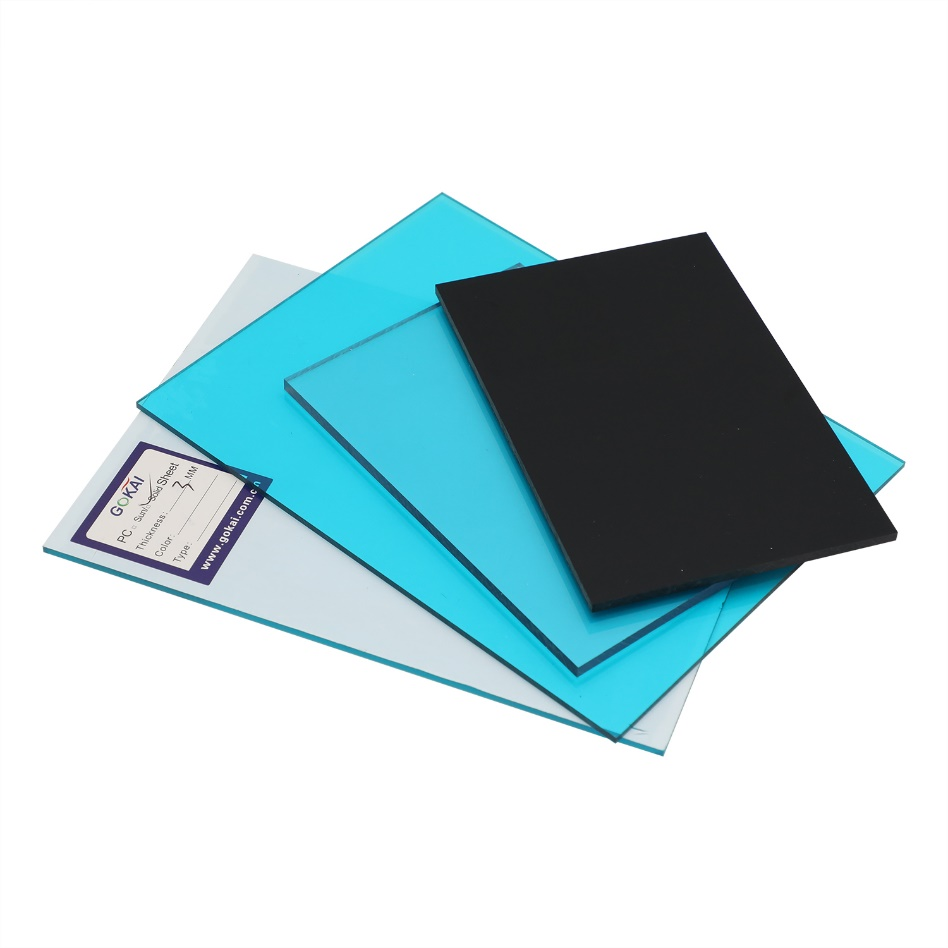
| Supplier Type | Typical Examples | Best For | Key Advantages | Main Trade‑Offs |
|---|---|---|---|---|
| OEM manufacturers | Gokai and similar OEMs | Distributors, private labels, system integrators | Custom specs, branding flexibility, cost control | Requires import/logistics competence |
| Global premium brands | Makrolon, Lexan | High‑risk, high‑visibility projects | Proven performance, strong technical support | Higher material cost |
| French/European specialists | Plaque‑Polycarbonate.fr, regional sheet distributors | Small to mid‑size projects, cut‑to‑size orders | Local stock, easy communication, fast delivery | Limited economies of scale |
Using such a table in your content makes it easy for readers—and search engines—to understand the positioning of each supplier category.
To go beyond brand names and marketing claims, professional buyers and engineers often rely on a few technically grounded criteria. Incorporating these as a checklist both educates the reader and demonstrates real‑world experience.
A quality polycarbonate solid sheet for outdoor use should include a co‑extruded UV protective layer on at least one side. In real‑world feedback, premature yellowing or surface degradation is almost always linked to insufficient UV protection, inconsistent coating, or using indoor‑grade sheets outdoors.
When comparing suppliers:
- Ask for UV warranty duration (e.g. 10 years against yellowing or loss of light transmission).
- Check whether the UV layer is co‑extruded (integrated) rather than just a post‑applied spray.
- For critical projects, request weathering test data from recognized labs.
For roofing, canopies, and protective screens, impact resistance and resistance to bending under load are essential. Engineers look at:
- Impact test results (e.g. falling ball tests) and minimum thickness for specific spans.
- Modulus of elasticity and thermal expansion, especially for long spans.
- Flatness and thickness tolerance, which affect optical appearance and installation.
Gokai and many global suppliers publish technical data sheets with density, tensile strength, and other key properties, but the real test is batch‑to‑batch consistency under production conditions. Experienced OEMs tend to implement tighter process control to maintain this consistency.
Practical feedback from installers can make or break a supplier's reputation. Important questions include:
- Does the sheet chip or crack easily when cutting and drilling?
- Are there clear installation guidelines in French or English, with recommended profiles and fasteners?
- Does the supplier provide accessories (profiles, gaskets, tapes) or leave contractors to source them independently?
Suppliers that provide complete installation systems and detailed manuals often show a lower rate of site problems and callbacks.
One of the biggest missed opportunities I see among mid‑size distributors and system integrators in France is the over‑reliance on a single sourcing model. Relying only on high‑end European brands keeps quality high but margins thin, while relying only on imports increases margin but can expose you to logistics and support risks.
A hybrid sourcing strategy can balance these trade‑offs:
1. Use established European brands for:
- Flagship projects, public tenders, and highly visible references.
- Applications where a recognized name on the specification reduces approval friction.
2. Use OEM partners like Gokai for:
- Private‑label ranges aimed at cost‑sensitive segments.
- Standard sizes and colors with stable, predictable demand.
- Cross‑border projects where you control local branding and support.
3. Build resilience by:
- Qualifying at least one premium and one OEM source for each key product line.
- Standardizing technical specifications so that switching between suppliers is feasible.
This approach supports margin optimization while still aligning with professional risk management and long‑term customer satisfaction.
For contractors, distributors, and project managers, turning all this information into action requires a simple, repeatable process. Here is a structured approach you can apply on your next sourcing decision.
1. Define your application and risk level
- Indoor vs outdoor, roofing vs vertical glazing, public vs private project.
- Required service life and tolerance for maintenance or replacement.
2. Shortlist suppliers in each category
- At least one premium brand, one strong local French/European specialist, and one OEM manufacturer.
- Check that each can supply the required thicknesses, colors, and certifications.
3. Request and compare technical and service data
- Technical datasheets, UV and mechanical performance, fire classification.
- Warranty terms, lead times, MOQ, and after‑sales policies.
4. Run a pilot order or small project
- Test delivery reliability, packaging, and ease of installation.
- Gather feedback from installers and end‑users.
5. Decide your supplier mix
- Allocate premium brands to high‑risk or flagship projects.
- Use OEM suppliers like Gokai for volume products, private‑label ranges, or export‑oriented projects.
This checklist not only helps buyers but also shows search engines that your content offers practical, actionable value beyond generic descriptions.
As a global OEM and board manufacturer, Gokai is well positioned to support distributors, brand owners, and system providers who want to strengthen their supply chain and differentiate their product offering. With experience in multiple sheet materials, consistent export performance, and third‑party certifications, Gokai can: [gokaiplastic]
- Supply polycarbonate solid sheets tailored to French climatic and regulatory requirements.
- Offer OEM/private‑label services so that distributors can build their own brand identity.
- Integrate polycarbonate into broader portfolios (PVC foam, acrylic, ACP) for signage, construction, and industrial applications. [gokai.com]
For buyers seeking both competitive pricing and reliable quality, combining local customer‑facing operations in France with an experienced OEM manufacturer like Gokai is often the most resilient long‑term strategy.
If you are a distributor, contractor, or project owner working with polycarbonate solid sheets in France, now is the right time to review your supplier mix. Evaluate whether your current partners truly support your growth, margins, and reputational risk—or whether you rely too heavily on a single source.
If you are exploring OEM options or looking to add a private‑label polycarbonate solid sheet range, consider partnering with Gokai as your manufacturing backbone. You can align premium European brands for flagship projects while using Gokai's OEM capabilities to stabilize costs and secure consistent supply for standard applications.
Contact us to get more information!
Not necessarily. Premium brands like Makrolon or Lexan offer excellent performance and strong technical backing, which is ideal for high‑risk or landmark projects. However, for standard roofs, carports, and smaller commercial applications, a well‑qualified local supplier or OEM partner can deliver sufficient quality at a more competitive cost. The best approach is to align brand choice with project risk, budget, and visibility.
UV protection is critical for any outdoor application in France. Without a proper UV co‑extruded layer, sheets can yellow, become brittle, and lose light transmission much faster than expected. When comparing suppliers, always check UV warranty duration, ask whether the UV layer is co‑extruded, and review any available weathering test data.
OEM suppliers like Gokai provide flexibility in branding, specifications, and packaging, which is ideal for distributors, system integrators, and private‑label brands. You can tailor thickness, color, and sheet dimensions to your market while maintaining cost control and securing consistent supply. This approach is especially valuable if you serve multiple countries or want to differentiate your product line beyond what standard catalogues offer. [gokai.com]
To reduce risk, qualify multiple suppliers, standardize technical specifications, and start with pilot orders. Make sure you clearly document quality requirements, testing methods, and packaging standards. Work with OEM partners who have a proven export track record, third‑party certifications, and solid communication practices. Over time, build a hybrid sourcing strategy that combines imports with local or European backup options.
There is no single factor, but the most important is alignment with your specific project and business model. For some, the priority is long‑term durability and brand reputation; for others, it is cost and OEM flexibility. A balanced evaluation of product performance, service quality, and strategic value will lead to better decisions than focusing only on initial price.
1. Plaque‑Polycarbonate.fr – Customer reviews and company description (polycarbonate sheet specialist in France):
https://nz.trustpilot.com/review/plaque-polycarbonate.fr [nz.trustpilot]
2. Lyon Plastic – High‑quality polycarbonate roofing sheets for bulk buyers & distributors:
https://www.lyon.com.tw/en/news_i_Polycarbonate-Roofing-for-Bulk-Buyers.html [lyon.com]
3. Shanghai Gokai Industry Co., Ltd. – Company profile, product range, and export markets:
https://www.gokai.com.cn [gokai.com]
4. Gokai – Benefits of polycarbonate and product features:
https://www.gokaiplastic.com/news/what-are-the-benefits-of-polycarbonate/ [gokaiplastic]
5. GON Plastics – General discussion on choosing polycarbonate brands and performance considerations:
https://www.gonplastics.com/a-which-brand-of-polycarbonate-is-best.html [gonplastics]