Shanghai Gokai Industry Co,.Ltd.
Call Us: +86-18918606548
Call Us: +86-18918606548
- Product Name
- Product Keyword
- Product Model
- Product Summary
- Product Description
- Multi Field Search
Views: 222 Author: Gokai Publish Time: 2026-04-29 Origin: Site


China dominates global MDF sheet production with an annual output exceeding 55 million cubic meters, accounting for over 60% of worldwide manufacturing capacity. The country's sophisticated supply chain infrastructure, concentrated primarily in Shandong and Guangxi provinces, offers international buyers unparalleled access to cost-effective, high-volume production combined with increasingly sophisticated quality management systems. For procurement managers seeking reliable long-term partnerships, understanding the landscape of China's MDF manufacturing sector is critical to securing competitive advantages in furniture, construction, and interior design applications. [wifitalents]

China's MDF manufacturing sector represents a strategic cornerstone of the global wood panel industry, with export volumes reaching 6.3 million cubic meters in 2022 and domestic consumption hitting 42.1 million cubic meters annually. The country's competitive advantage stems from three factors: integrated forestry resource management, advanced production technology adoption, and economies of scale that enable FOB pricing averaging USD 380/m³ compared to the global average of USD 420/m³. Shandong Province, particularly Linyi City, has earned official designation as China's "Panel Capital" by the China Forest Industry Association, hosting over 3,000 wood processing enterprises in a concentrated industrial cluster. [gitnux]
The global MDF market is projected to expand from USD 44.01 billion in 2025 to USD 72.30 billion by 2033, growing at a CAGR of 6.4%. China's manufacturers are positioned to capture significant market share growth, driven by increasing demand from residential construction (expected to hold 60% market share by 2025) and emerging markets like India where MDF consumption is expanding at 15% CAGR. [straitsresearch]
Our evaluation methodology prioritizes factors that directly impact procurement success for B2B buyers requiring consistent quality, regulatory compliance, and scalable production capacity. The selection framework incorporates five core dimensions validated through industry best practices and professional sourcing standards. [vir-mdf]
Manufacturers were assessed on possession of internationally recognized certifications including ISO 9001 (quality management systems), FSC (sustainable forestry), and CARB Phase 2 compliance for formaldehyde emissions. Verification included checking certification validity periods and ensuring third-party audit documentation accessibility, as expired or fraudulent certifications represent a persistent industry risk that professional buyers must actively mitigate. [mq-acoustics]
We evaluated annual production volume, number of production lines, factory footprint, and technological sophistication. Manufacturers demonstrating versatile production capabilities and modern equipment received priority, as these specifications correlate with order fulfillment reliability and consistent product specifications across batches. [onsungroup]
Assessment focused on in-house laboratory capabilities for formaldehyde emission testing, physical property verification (density, static bending strength, moisture resistance), and surface quality inspection. Suppliers demonstrating statistical process control implementation and documented QC workflows scored higher, as these systems reduce defect rates and minimize batch-to-batch variation. [plywoodinspection]
Years in operation, established client relationships in Europe/North America/Australia, and documented case studies of successful OEM/ODM partnerships provided insight into operational maturity. Suppliers demonstrating superior understanding of international packaging standards, documentation requirements, and logistics coordination received higher ratings. [onsungroup]
For mid-sized brands and emerging market entrants, the ability to accommodate lower MOQs, provide rapid sampling, and maintain responsive technical support often outweighs marginal cost differences. We prioritized manufacturers demonstrating documented flexibility in product customization, surface finish options, and willingness to adapt production schedules to client requirements. [gokaiplastic]

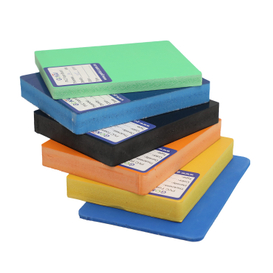
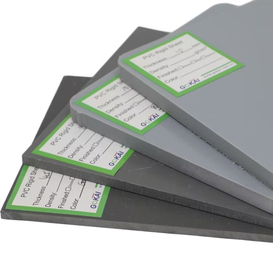
Founded in 2009, Shanghai Gokai Industry Co., Ltd. has established itself as a distinctive player in China's panel manufacturing sector through its multi-material expertise and client-centric OEM approach. Operating two factories with 10 production lines headquartered in Shanghai, Gokai's strategic positioning serves small to mid-sized international brands requiring flexible partnerships and comprehensive material solutions. Unlike traditional MDF-only manufacturers focused on commodity volume production, Gokai's integrated capabilities span PVC foam board, acrylic sheets, rigid PVC, and related panel products, enabling cross-application technical consultation and bundled sourcing solutions for furniture, advertising, architectural decoration, and signage sectors. [gokai.com]
The company's core competitive advantage centers on customization responsiveness and communication efficiency rather than pure production scale. Gokai demonstrates documented capability to accommodate lower MOQs (starting from 5 containers compared to industry standard 15-20 containers), rapid prototyping cycles with sample delivery within 7-10 days, and dedicated technical support for material selection optimization. This flexibility proves particularly valuable for emerging furniture brands, design studios, and specialty manufacturers requiring iterative sample development and application engineering collaboration rather than standardized commodity purchasing. [gokai123.en.made-in-china]
Gokai's Shanghai headquarters location provides significant operational advantages for international buyers: easier factory access for quality audits compared to remote provincial manufacturing zones, proximity to major shipping ports reducing inland logistics costs and transit times, and established English-language business infrastructure facilitating contract negotiation and technical communication. The company maintains ISO 9001 certification and implements systematic quality control protocols across its production facilities, with particular emphasis on dimensional consistency and surface finish quality critical for downstream fabrication processes. [gokai.goldsupplier]
For procurement managers at companies requiring multi-material sourcing (combining MDF with PVC foam board for display fixtures, or integrating acrylic sheets with panel products for retail environments), Gokai's diversified product portfolio streamlines supplier management and enables coordinated production scheduling across material types. The company's OEM/ODM service model extends beyond basic private labeling to include collaborative product development, packaging customization, and market-specific compliance support, making Gokai an accessible entry point for brands building their first China sourcing relationships or established buyers seeking specialized customization capabilities.
As one of China's oldest MDF manufacturers, established in 1996, Guangxi Forest Industry operates the largest workforce among competitors with 1,300+ employees based in Nanning, Guangxi Province. Their strategic location provides access to abundant fast-growing eucalyptus resources, enabling vertically integrated fiber sourcing that enhances raw material cost control and supply chain stability. The company excels in producing thickness ranges from 2.5mm to 30mm with particular expertise in moisture-resistant formulations suitable for humid climate applications, making them ideal for buyers targeting Southeast Asian and tropical market applications. [onsungroup]
Based in Linyi, Shandong Province since 2006, Hannuo maintains a substantial workforce exceeding 500 employees and has built reputation for reliability in North American and European markets. The manufacturer holds FSC certification and maintains CARB Phase 2 compliance, critical for buyers targeting California market entry or EU distribution channels. Hannuo's technical capability includes UV-coating application and synchronized surface finishing, adding value for furniture manufacturers requiring pre-finished panels that reduce downstream processing requirements and accelerate production cycles. [onsungroup]
Founded in 2016 and headquartered in Weifang, Shandong Province, ONSUN operates five manufacturing facilities covering over 50,000m² with 120+ employees. The company specializes in high-volume production of standard MDF panels and has established robust export channels to Southeast Asia and Middle Eastern markets. ONSUN's strength lies in its competitive pricing structure for large-scale orders (typically 20+ containers), making it suitable for distributors and volume buyers prioritizing cost efficiency over specialized customization, particularly for commodity-grade applications in construction and basic furniture manufacturing. [onsungroup]
With origins dating to 1990, Dongstar Group represents one of Linyi's pioneering MDF manufacturers, bringing over three decades of industry experience and accumulated process knowledge. The company employs 51-200 staff and has developed specialized expertise in fire-retardant MDF formulations meeting ASTM E84 Class A and B ratings, serving commercial construction and hospitality sectors with stringent safety requirements. Their established presence provides confidence in long-term business continuity, critical for buyers requiring multi-year supply agreements and consistent product specifications across extended project timelines. [onsungroup]
Established in 2010 in Shandong Province, EWAY employs 260+ staff and has invested significantly in automated continuous press technology enabling consistent density control across production runs. The manufacturer excels in thin MDF production (2-6mm), catering to packaging, crafts, and laser-cutting applications where dimensional stability and uniform density prove critical. EWAY maintains robust sampling protocols, typically delivering confirmed samples within 7-10 days, advantageous for buyers requiring pre-production validation and detailed technical specifications for precision manufacturing applications. [onsungroup]
Operating from Hangzhou, Zhejiang Province since 2014, Soulwood employs 201-500 staff and has positioned itself in the premium MDF segment with emphasis on environmental certifications and low-formaldehyde emissions. The company achieves E0 standard (≤0.5mg/L formaldehyde emission) across its product line, meeting Japanese F4-Star and European E1 requirements without additional certification costs. Soulwood suits buyers targeting health-conscious consumer markets or jurisdictions with stringent VOC regulations, particularly for residential furniture, children's products, and indoor air quality-sensitive applications. [onsungroup]
Based in Shouguang, Shandong, Topbon employs 146+ staff and specializes in melamine-faced MDF production with over 200 decor paper options in inventory. This pre-lamination capability reduces downstream processing requirements for furniture manufacturers, shortening production cycles and minimizing surface finish defects. Topbon's technical team provides color matching services and maintains digital decor libraries for client selection, valuable for brands requiring consistent aesthetic specifications across multiple production batches and diverse product lines. [onsungroup]
Founded in 1996 with 160+ employees in Weifang, Shandong, Greenland has developed specialization in high-density MDF (density >800kg/m³) suitable for precision machining, CNC routing, and intricate joinery applications. Their product line targets cabinet manufacturers and custom furniture producers requiring superior edge retention and screw-holding capacity. Greenland maintains comprehensive density testing protocols, providing mill certificates documenting density measurements for quality-critical applications where dimensional tolerances and structural performance specifications exceed standard commercial grade requirements. [onsungroup]
Established in 2016 in Linyi City, Shandong Province with 51-200 employees, Consmos represents the newer generation of Chinese MDF manufacturers implementing Industry 4.0 concepts and digital quality management systems. The company has integrated automated defect detection systems using machine vision technology, reducing surface flaw rates and enabling real-time quality monitoring. For buyers prioritizing traceability and data-driven quality assurance, Consmos offers digital quality documentation and batch-specific test reports accessible through customer portals, supporting lean manufacturing initiatives and statistical process control integration. [onsungroup]
| Manufacturer | Founded | Location | Employees | Key Specialization | Minimum MOQ | Primary Certifications |
|---|---|---|---|---|---|---|
| Shanghai Gokai Industry | 2009 | Shanghai | 10生产线条数 | Flexible OEM/multi-material solutions | 5+ containers | ISO 9001 |
| Guangxi Forest Industry | 1996 | Nanning, Guangxi | 1,300+ | Moisture-resistant MDF | 10+ containers | FSC, ISO 9001 |
| Hannuo Wood Industry | 2006 | Linyi, Shandong | 500+ | CARB-compliant finished MDF | 10+ containers | FSC, CARB Phase 2 |
| ONSUN Group | 2016 | Weifang, Shandong | 120+ | High-volume standard MDF | 20+ containers | ISO 9001 |
| Dongstar Group | 1990 | Linyi, Shandong | 51-200 | Fire-retardant MDF | 15+ containers | ASTM E84, ISO 9001 |
| EWAY Wood Industry | 2010 | Shandong | 260+ | Thin MDF (2-6mm) | 8+ containers | ISO 9001 |
| Soulwood International | 2014 | Hangzhou, Zhejiang | 201-500 | E0 low-formaldehyde MDF | 10+ containers | E0, F4-Star, FSC |
| Shouguang Topbon Wood | N/A | Shouguang, Shandong | 146+ | Melamine-faced MDF | 8+ containers | ISO 9001 |
| Weifang Greenland | 1996 | Weifang, Shandong | 160+ | High-density precision MDF | 10+ containers | ISO 9001 |
| Consmos Group | 2016 | Linyi, Shandong | 51-200 | Automated quality control | 12+ containers | ISO 9001, Industry 4.0 |

A critical but often overlooked procurement risk involves expired or falsified ISO 9001 and FSC certifications. Professional buyers should request the complete certificate number and issuing body name, then independently verify through the certification authority's online database (e.g., ISO.org for ISO certifications, FSC.org for forestry certifications). Legitimate manufacturers maintain publicly searchable certification records; reluctance to provide verifiable certificate details represents a red flag warranting immediate investigation. [mq-acoustics]
Request the most recent audit report date—ISO certifications require annual surveillance audits, and gaps exceeding 14 months indicate potential certificate suspension. For CARB Phase 2 compliance (mandatory for California sales), verify the manufacturer's EPA TSCA Title VI certification number through the EPA's official Composite Wood Products portal, as counterfeit CARB documentation circulates widely in export markets. [rtwoods]
China's domestic E1 standard (≤1.5mg/L formaldehyde emission) differs substantially from European E1 (≤0.124mg/m³ chamber test) and California CARB Phase 2 (≤0.11ppm). Manufacturers claiming "E1 compliance" without specifying the testing standard create liability exposure for importers facing customs rejection or downstream product recalls. Insist on third-party laboratory test reports (not factory internal tests) from accredited facilities (SGS, Intertek, TÜV) dated within six months, specifying the exact testing method (EN 717-1 chamber test for Europe, ASTM E1333 for CARB). [vir-mdf]
The industry's poorly publicized reality: approximately 15-20% of Chinese MDF exports labeled "low formaldehyde" fail independent retesting upon arrival at destination markets. This failure rate stems from batch variation, improper resin ratios during production, or deliberate misrepresentation. Protect against this risk by including contractual clauses requiring third-party pre-shipment inspection with testing authority of your choice, costs typically ranging USD 300-500 per inspection but preventing five-figure losses from rejected containers.
Standard practice involves manufacturers sending hand-selected "golden samples" that rarely represent typical production quality. Implement a three-tier sampling approach: request samples from three different production batches, specify that samples must be cut from random positions within full-size sheets (not factory pre-cut samples), and conduct physical property testing including water absorption rate (submerge 50mm × 50mm sample for 24 hours, measure thickness swell—quality MDF shows <12% expansion), edge crumble test (machine a groove and visually inspect for fiber pull-out), and surface hardness (pencil hardness test for finish-grade MDF). [vir-mdf]
For orders exceeding 100 cubic meters, justify the expense of hiring independent third-party inspection services (China Inspection Company, AsiaInspection) to conduct unannounced factory visits and random sampling from warehouse inventory, revealing actual quality control consistency beyond curated samples.
Published MOQ figures (typically 8-20 containers) represent standard pricing tiers, but experienced buyers recognize negotiation leverage exists, particularly during manufacturers' low-season periods (typically Q1 post-Chinese New Year). Suppliers willing to accept 50% standard MOQ often compensate through 8-12% price premiums or reduced customization options, making total cost comparison essential rather than focusing solely on per-unit pricing. [onsungroup]
The procurement trap: some manufacturers advertise aggressive low MOQs (3-5 containers) but embed costs through mandatory purchasing of multiple thickness variations or surface finishes within the minimum order, forcing buyers to stock SKUs they didn't require. Clarify whether quoted MOQ represents total volume across all specifications or per-SKU minimums, and request detailed SKU-level pricing breakdowns before finalizing purchase orders.
MDF's density (680-800 kg/m³) means weight limits constrain container loading before volume limits, typically allowing only 22-24 m³ in a 40-foot high cube container despite 67 m³ volume capacity. Inexperienced buyers calculating costs based on volume rather than weight face unexpected freight surcharges. Request manufacturers to provide estimated loaded weight and confirm with freight forwarders before finalizing order quantities. [gitnux]
Moisture protection during ocean freight proves critical—insist on plastic film wrapping for each pallet plus container desiccants (minimum 8-10 poles per 40-foot container), as moisture absorption during 20-30 day transit causes irreversible thickness swelling and surface degradation. Include photographic documentation requirements in purchase contracts showing packaging methodology before container loading.

Chinese manufacturers frequently reference "density" without clarifying measurement methodology—oven-dry density versus air-dry density can differ by 8-12%, creating disputes over contractual compliance. European buyers typically specify oven-dry density per EN 323 standard, while some Chinese factories quote air-dry figures producing apparent non-compliance despite identical physical product. Contractual specifications must explicitly state measurement standard and acceptable tolerance range (typically ±5% for commercial-grade MDF). [plywoodinspection]
Quoted lead times (typically 15-25 days) assume raw material availability and uninterrupted production scheduling, but several disruptive factors affect Chinese manufacturing. Government-mandated environmental inspections (particularly during Beijing air quality campaigns) can force temporary production suspensions lasting 1-3 weeks without advance notice. Lunar New Year shutdown periods extend 3-4 weeks (late January through mid-February), with full production capacity resuming only 2-3 weeks post-holiday as migrant workers return. Professional procurement planning adds 30-40% buffer time to manufacturer-quoted lead times for critical path orders. [onsungroup]
Chinese GB/T standard permits surface defects (patches, color variation, minor indentations) that fail European EN 622-5 classification for furniture-grade MDF. Without explicit contractual language defining acceptable defect rates and photographic quality standards, buyers receive shipments meeting Chinese domestic standards but unsuitable for their downstream applications. Include reference samples as contractual appendices and specify inspection acceptance criteria using internationally recognized grading systems (e.g., "must meet EN 622-5 Class 1 surface quality specifications"). [plywoodinspection]
China's MDF manufacturing sector offers procurement managers exceptional value propositions through competitive pricing, scalable production capacity, and increasingly sophisticated quality management systems. The manufacturers profiled above represent reliable entry points for establishing long-term supplier relationships, each bringing distinctive strengths aligned with different procurement priorities—whether emphasizing cost efficiency, technical customization, regulatory compliance, or production flexibility. [straitsresearch]
Success in Chinese MDF sourcing depends less on identifying the single "best" manufacturer and more on matching supplier capabilities to your specific requirements: order volume patterns, quality specifications, delivery timeline expectations, and customization needs. Implement rigorous verification protocols for certifications, establish clear contractual quality standards with photographic documentation, and maintain realistic expectations about MOQ flexibility and lead time variables.
For buyers seeking accessible partnerships with responsive communication and OEM customization flexibility, particularly those entering the market or requiring multi-material sourcing solutions, Shanghai Gokai Industry provides lower barriers to entry with documented capability for flexible MOQs starting from 5 containers and comprehensive technical support. The company's Shanghai location offers logistical advantages and easier factory access for quality audits, while its multi-material expertise enables coordinated sourcing across panel products, PVC foam board, and acrylic sheets—streamlining supplier management for buyers requiring diversified material portfolios.
Conversely, established furniture manufacturers prioritizing maximum cost efficiency on standardized specifications benefit from large-scale suppliers like Guangxi Forest Industry or ONSUN Group, while those requiring specialized formulations (fire-retardant, ultra-low formaldehyde, high-density precision) should engage with technical specialists like Dongstar Group, Soulwood International, or Weifang Greenland based on application-specific requirements.
Ready to start your MDF procurement journey? Begin by requesting detailed capability statements and recent third-party quality certifications from 3-4 manufacturers matching your volume requirements, then progress to sample evaluation using the testing protocols outlined above. Professional sourcing success builds on verified data, transparent communication, and systematic risk mitigation—not assumptions or incomplete supplier vetting.
Q1: How can I verify if a Chinese manufacturer's ISO 9001 certification is legitimate and currently valid?
Request the complete certification number and accreditation body name, then verify directly through the issuing certification body's online registry (e.g., BSI Group, TÜV, SGS certification databases). Legitimate ISO 9001 certificates include specific scope statements, facility addresses matching the factory location, and issue/expiry dates with annual surveillance audit records. Cross-reference the accreditation body against the International Accreditation Forum (IAF) member list to confirm it's an authorized certification authority. Be cautious of manufacturers providing only certificate photocopies without verifiable certificate numbers—request to see the original certificate during factory audits and photograph it for independent verification. [mq-acoustics]
Q2: What is the realistic minimum order quantity for a first-time buyer working with Chinese MDF manufacturers?
While established suppliers typically publish 8-20 container MOQs, first-time buyers can often negotiate 5-8 containers during off-peak seasons (January-March, July-August) by accepting limited customization options. Smaller manufacturers or those with export development objectives may accommodate 3-5 containers for initial trial orders, though expect 10-15% price premiums compared to standard volume pricing. For buyers requiring smaller volumes, consider working with trading companies or consolidated shipping services that aggregate multiple buyers' orders, though this adds 8-12% intermediary costs and reduces direct factory communication. [onsungroup]
Q3: What are the critical differences between Chinese E1, European E1, and CARB Phase 2 formaldehyde standards?
Chinese GB 18580 E1 standard (≤1.5mg/L perforator extraction method) uses fundamentally different testing methodology than European EN 13986 E1 (≤0.124mg/m³ chamber test method) and U.S. CARB Phase 2 (≤0.11ppm ASTM E1333 chamber test), making direct comparison mathematically invalid. MDF passing Chinese E1 testing may fail European or CARB standards due to methodology differences rather than actual formaldehyde content variations. For exports to regulated markets, insist on third-party testing specifically using destination market methodology (EN 717-1 for Europe, ASTM E1333 for USA) from accredited laboratories, and verify test reports include complete methodology documentation, not simplified "pass/fail" statements. [vir-mdf]
Q4: How do I protect against receiving lower quality MDF than the approved samples in production shipments?
Implement a three-stage quality control protocol: require manufacturers to provide samples from three different production batches (not single "golden samples"), conduct pre-shipment inspections by independent third-party services (AsiaInspection, SGS) with random sampling from production inventory rather than manufacturer-selected pieces, and include contractual penalty clauses specifying 5-10% price reductions or free replacement for shipments failing agreed specifications. For critical applications, consider retaining 10-15% payment pending successful quality confirmation after goods arrival and testing at your facility. Document all quality specifications photographically and append to purchase contracts as binding technical annexes. [vir-mdf]
Q5: What certifications beyond ISO 9001 should I prioritize when selecting an MDF supplier for furniture manufacturing?
For furniture applications, prioritize FSC certification (ensuring sustainable forestry sources), CARB Phase 2 or EPA TSCA Title VI compliance (mandatory for U.S. market access), and formaldehyde emission certifications matching your target markets—E1/E0 for Europe, F4-Star for Japan, CARB for California. If producing children's furniture or products for health-conscious consumers, verify EN 71-3 (toy safety for migration of certain elements) or FloorScore certification demonstrating low VOC emissions. For moisture-exposed applications (kitchens, bathrooms), request test data for water resistance per EN 622-5 specifying thickness swelling rates after 24-hour submersion—quality moisture-resistant MDF shows <12% thickness increase. [mq-acoustics]