Shanghai Gokai Industry Co,.Ltd.
Call Us: +86-18918606548
Call Us: +86-18918606548
- Product Name
- Product Keyword
- Product Model
- Product Summary
- Product Description
- Multi Field Search
Views: 277 Author: Gokai Publish Time: 2026-08-07 Origin: Site


Content Menu
● Understanding Acrylic Sheet and Ballistic Protection
● How Bullet-Resistant Acrylic Sheet Is Manufactured
● Ballistic Ratings: What "Level 1 Protection" Actually Means
● Types of Bullet-Resistant Acrylic Sheet
● Real-World Applications Where Bullet-Resistant Acrylic Is Specified
● Bullet-Resistant Acrylic vs. Bulletproof Glass
● Sourcing Considerations for OEM Buyers
● Choosing the Right Partner for Bullet-Resistant Acrylic Sheet
Standard acrylic sheet is not bullet-resistant on its own, but when manufactured at the correct thickness and layering configuration, acrylic can meet recognized ballistic protection standards used in security glazing worldwide.
Acrylic sheet, commonly sold under trade names like Plexiglass or Perspex, is the market term for polymethyl methacrylate (PMMA). As a manufacturer that produces acrylic sheet for global OEM partners, we regularly field the same question from architects, security integrators, and retailers: can this material actually stop a bullet?
The honest answer is nuanced. General-purpose acrylic sheet will crack or shatter under ballistic impact. But bullet-resistant acrylic is a distinct product category, engineered specifically to absorb and disperse the energy of a projectile without allowing complete penetration or dangerous spalling on the protected side. This distinction matters enormously for buyers, because using the wrong grade of acrylic in a security application creates a false sense of protection.

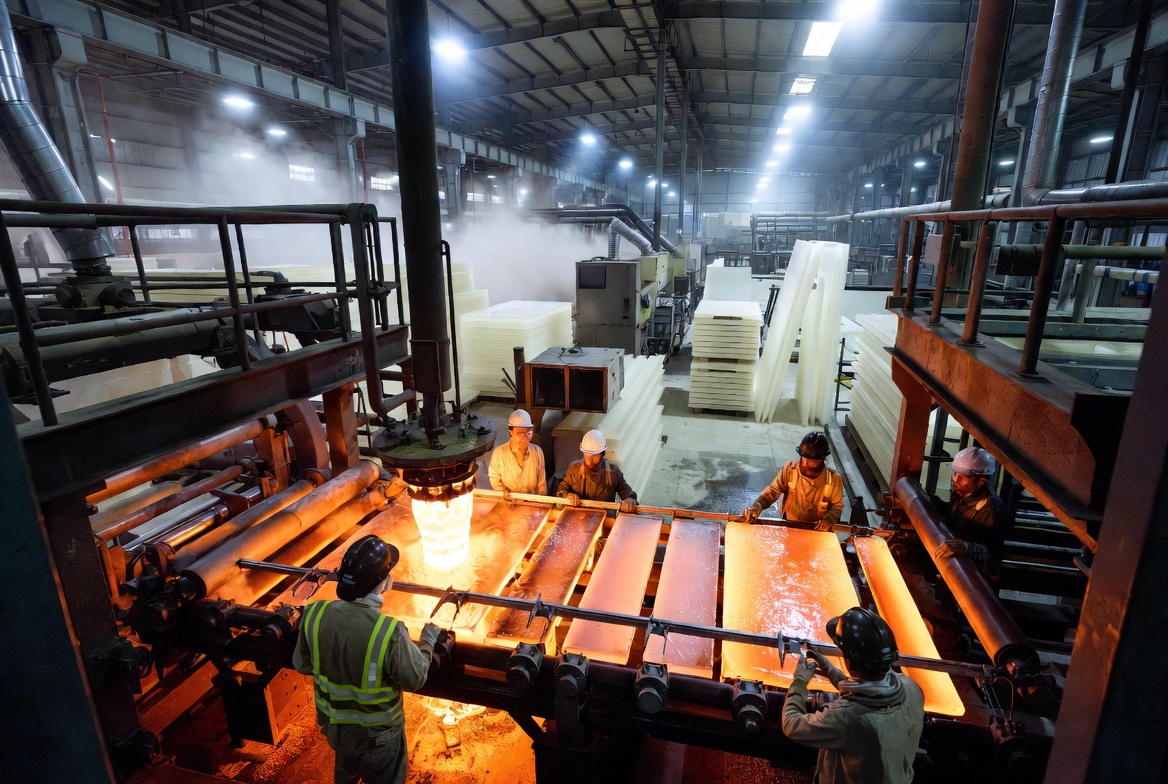
Bullet resistance in acrylic comes down to two production variables: material thickness and manufacturing process. There are two primary methods used industry-wide.
- Cast acrylic: A methyl methacrylate monomer solution is poured into glass molds, then cured and hardened into sheets of the desired thickness. Cast acrylic generally offers denser, more consistent molecular structure, which is why most bullet-resistant grades rely on this method.
- Extrusion: Acrylic granules are heated and pushed through a die to form continuous sheets or rods. Extruded acrylic is faster and cheaper to produce but typically used for non-ballistic applications.
For actual bullet resistance, single-piece bullet-resistant acrylic panels typically measure between 1¼ inch and 1⅜ inch (roughly 32mm to 35mm) thick, with thickness scaled to the level of protection required. This is a critical sourcing detail that many buyers overlook — a thin acrylic sheet marketed loosely as "security glazing" without a specified thickness and test certificate should be treated with skepticism.
Ballistic performance for security glazing isn't a marketing term — it's governed by formal testing standards. Understanding these ratings is essential before specifying any bullet-resistant acrylic product.
According to Underwriters Laboratories, Level 1 protection means the material must prevent complete penetration, fragment passage, or spalling to a degree that would injure a person standing directly behind the barrier. In practical terms, UL 752 Level 1 bullet-resistant acrylic is rated to withstand three shots from a small-caliber handgun, such as a 9mm or .357 Magnum.
The table below summarizes the standards most commonly referenced in the security glazing industry.
| Standard | Region | Typical Use Case | Key Detail |
|---|---|---|---|
| UL 752 | United States | Doors, windows, security glazing | 10 protection levels, most common U.S. benchmark |
| ASTM F1233-09 | United States | Glazing materials specifically | Focused on window and glazing assemblies |
| EN 1063 / EN 1522 | Europe | Windows, doors, blinds, shutters | Seven-tier BR classification from .22 cal upward |
| NIJ Standard 0108.01 | United States | Primarily body armor, sometimes materials | Less common for acrylic glazing, more relevant to soft armor |
For most commercial security glazing buyers outside military applications, UL 752 and EN 1063 are the two standards worth confirming with any supplier before purchase.
Bullet-resistant acrylic isn't a single uniform product. Manufacturers produce it in several visual formats to match the application.
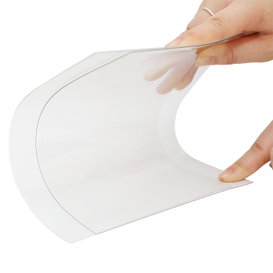
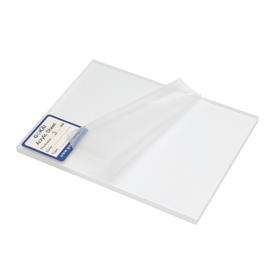
- Clear acrylic: The most widely specified option, valued for optical clarity in retail counters, teller windows, and reception areas where visibility matters as much as protection.
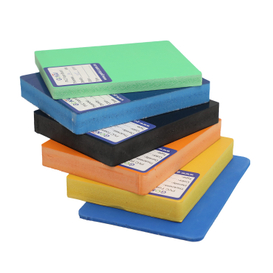
- Colored acrylic: Available in dyed variations for branding or aesthetic integration into a storefront or interior design scheme.
- Opaque acrylic: Blocks light entirely, often chosen for added privacy in sensitive areas such as detention facilities or cash-handling rooms.
Bullet-resistant acrylic sheet has moved well beyond banks and pawn shops. Current industry sourcing data shows demand concentrated in several sectors.
- Financial institutions: teller windows, ATMs, and drive-up banking stations.
- Government and public safety facilities: courthouses, police stations, and detention centers.
- Retail and convenience stores: point-of-sale enclosures and cashier partitions in high-risk locations.
- Transit infrastructure: bus shelters and ticket booths exposed to public access.
- Broadcast and exhibition environments: TV studios, trade show displays, and architectural feature walls requiring both security and design flexibility.
As a supplier producing OEM acrylic sheet for international buyers, we've seen a steady shift: clients increasingly request custom thickness and tint combinations rather than off-the-shelf panels, particularly for retrofitting existing storefronts where matching the surrounding glazing aesthetic matters as much as the ballistic rating itself.
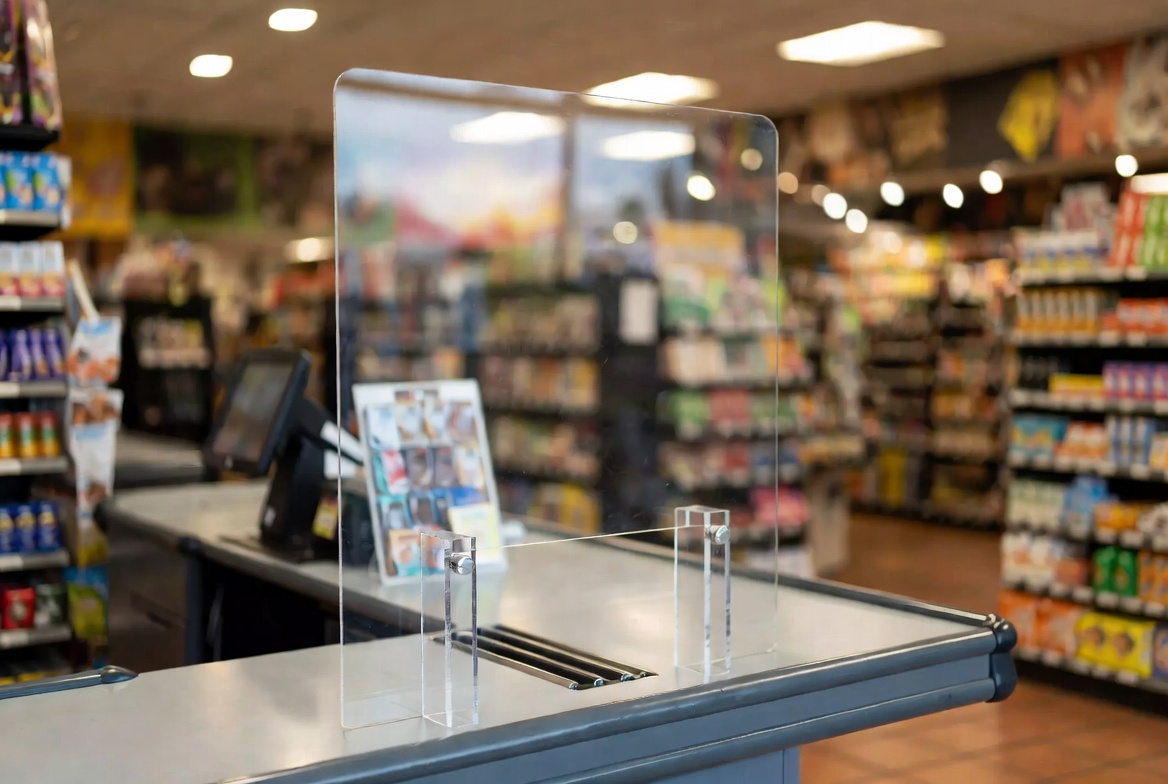
Buyers frequently ask why they should choose acrylic over laminated glass when both offer ballistic protection. The comparison usually comes down to cost, weight, and durability characteristics.
| Factor | Bullet-Resistant Acrylic | Laminated Bulletproof Glass |
|---|---|---|
| Cost | Roughly 30% of the cost of laminated glass | Significantly higher material and installation cost |
| Weight | Lighter, easier to handle and install | Heavier, requires reinforced framing |
| Shatter resistance | Better resistance to blunt-force impact | More prone to cracking from non-ballistic impact |
| Optical clarity | High, comparable to glass | High, but adds visible layering at greater thickness |
| Long-term durability | Prone to surface scratching over time | More scratch-resistant surface |
No security glazing material — acrylic or glass — is ever guaranteed to stop every type of ammunition. Buyers should think in terms of risk-appropriate protection levels, not absolute invulnerability.
For companies sourcing bullet-resistant acrylic sheet internationally, a few practical steps reduce risk significantly.
1. Request the actual test certificate, not just a product datasheet, confirming the specific UL 752 or EN 1063 level claimed.
2. Confirm sheet thickness in writing, since ballistic performance is directly tied to the panel's measured thickness, not just its stated rating.
3. Ask whether the sheet is cast or extruded, since cast acrylic is the industry standard for genuine ballistic-grade panels.
4. Clarify edge-finishing and framing compatibility, because improper mounting can compromise even a correctly rated panel.
5. Verify minimum order quantities and custom-cut tolerances if the project requires non-standard panel dimensions.
Manufacturers who can supply documented test data alongside custom OEM sizing tend to be the most reliable long-term partners, especially for buyers managing multi-site security installations across different regions.
Specifying bullet-resistant acrylic is not a decision to make on price alone. The right level of protection depends on your specific risk environment, local building codes, and the balance between visibility and security your project requires. If you're evaluating suppliers for custom acrylic sheet — bullet-resistant or otherwise — request detailed specification sheets, ask about cast versus extruded production, and confirm testing documentation before committing to an order.
Is all acrylic sheet bulletproof?
No. Standard acrylic sheet offers no ballistic protection. Only acrylic manufactured at specific thicknesses and tested to recognized standards qualifies as bullet-resistant.
What thickness of acrylic is needed to stop a 9mm bullet?
Bullet-resistant acrylic rated for Level 1 protection against 9mm rounds is typically produced in single panels between 1¼ inch and 1⅜ inch thick.
Is bullet-resistant acrylic cheaper than bulletproof glass?
Yes. Bullet-resistant acrylic generally costs around 30% of what laminated bulletproof glass costs, while also being lighter.
What is the difference between "bullet-resistant" and "bulletproof"?
"Bulletproof" implies absolute protection, which no material guarantees. "Bullet-resistant" is the technically accurate term, describing materials tested to withstand specific rounds under defined conditions.
Which testing standard should I ask my supplier about?
For North American projects, request UL 752 or ASTM F1233-09 documentation. For European projects, ask about EN 1063 or EN 1522 ratings.
Can bullet-resistant acrylic be custom-colored or tinted?
Yes. Bullet-resistant acrylic is available in clear, colored, and opaque finishes to match design or privacy requirements without compromising the ballistic rating.
1. Acme Plastics. "Is Plexiglass Bullet-Resistant? Your Guide." https://www.acmeplastics.com/content/is-plexiglass-bullet-resistant-your-guide/
2. TAP Plastics. "Category: Bullet-Resistant vs. Bulletproof." https://www.tapplastics.com
3. CIS World Services Group. "Bullet Resistance Standards." https://www.cisworldservices.org
4. Total Security Solutions. "A Guide to Codes and Compliance in Bullet-Resistant Construction." https://www.tssbulletproof.com
5. Global Security Glazing. "Bulletproof Acrylic Glass." https://www.globalsecurityglazing.com
6. Professional Plastics. "Bullet Resistant Plastic & Ballistic Panels." https://www.professionalplastics.com
7. Interstate Plastics. "AZCRYL BR Bullet Resistant Grade Cell Cast Acrylic Sheet." https://www.interstateplastics.com