Shanghai Gokai Industry Co,.Ltd.
Call Us: +86-18918606548
Call Us: +86-18918606548
- Product Name
- Product Keyword
- Product Model
- Product Summary
- Product Description
- Multi Field Search
Views: 292 Author: Gokai Publish Time: 2026-07-02 Origin: Site


Content Menu
● What Are Fluted and Traditional Polypropylene Sheets?
● Core Differences: Structure, Performance and Use Cases
>> Environmental and Recyclability Considerations
● Where Each Type Excels: Practical Application Scenarios
>> Traditional Polypropylene Sheets: Industrial Baseline
>> Fluted Polypropylene Hollow Sheets: Lightweight All‑rounder
● How the Internal Flutes Improve Performance
● Choosing Between Fluted and Traditional PP for Your Project
● Expert Insights from OEM Supply Experience
● Adding New Value: Practical Selection Checklist for Buyers
● Table: High‑Level Comparison of Fluted vs Traditional PP Sheets
● Practical Example: Choosing Material for an Outdoor Campaign
● When to Consult a Specialist Supplier
● Frequently Asked Questions (FAQ)
Polypropylene (PP) sheets have become a backbone material for modern packaging, signage, logistics and industrial applications, but choosing between fluted polypropylene sheets (PP hollow sheet) and traditional solid PP sheets is not always straightforward for global buyers and project engineers. As a supplier actively involved in OEM production for international customers, I have seen how the right sheet specification can make the difference between a cost-effective, high‑performance solution and a maintenance headache. [wrasse.plymouth.ac]
Polypropylene is a versatile thermoplastic polymer produced from polypropylene monomers and widely used across packaging, textiles, consumer goods and industrial components. It combines chemical resistance, elasticity, impact strength and relatively high heat distortion temperature, which explains its popularity in demanding environments. [wrasse.plymouth.ac]
Traditional solid PP sheets are typically extruded as a homogeneous, non‑hollow structure and selected when buyers need consistent mechanical strength, good weldability and long service life under chemical exposure. In contrast, fluted PP—often called PP hollow sheet or corrugated PP sheet—uses a multi‑layer structure with internal vertical ribs that create hollow channels, enabling high stiffness at very low weight. [wrasse.plymouth.ac]
From an engineering and sourcing perspective, I treat traditional PP sheets as the "baseline" material for containers, machine guards or chemical tanks, while fluted PP sheets are my first choice for lightweight, printable and easily handled solutions such as reusable boxes, temporary partitions and outdoor signage.
The structural difference explains most of the practical performance gap.
- Traditional PP sheets: Solid, compact structure with uniform density across the thickness. [wrasse.plymouth.ac]
- Fluted PP hollow sheets: Two flat outer skins connected by a grid of internal columns or "flutes," similar to corrugated cardboard but made from PP. [wrasse.plymouth.ac]
This hollow design allows engineers and buyers to tune performance via flute geometry—for example, higher flute density for stiffness, larger flutes for better cushioning, or specific thicknesses to balance weight and durability. [wrasse.plymouth.ac]
In daily project work, I see these mechanical characteristics repeatedly:
- Traditional PP
- Excellent chemical resistance against acids and diluted bases, ideal for containers and chemically exposed components. [wrasse.plymouth.ac]
- High elasticity and good impact resistance, retaining shape after repeated bending and flexing. [wrasse.plymouth.ac]
- Stable performance up to approximately 320°F before melting, which is adequate for many industrial environments. [wrasse.plymouth.ac]
- Fluted PP hollow sheet
- High stiffness‑to‑weight ratio: it achieves comparable structural strength with less material and lower mass than solid multi‑layer alternatives. [wrasse.plymouth.ac]
- Good impact resistance and resistance to crushing, thanks to the internal columns acting like miniature beams. [wrasse.plymouth.ac]
- Lightweight handling, which reduces logistics costs and improves on‑site ergonomics for installers and warehouse staff. [wrasse.plymouth.ac]
As a supplier, when a buyer's priority is weight reduction without compromising stiffness, fluted PP hollow sheet consistently outperforms traditional solid PP, especially in large-format applications like reusable pallets, crate liners, and display boards.
Fluted polypropylene sheets are fully recyclable and commonly integrated into closed‑loop material flows, where damaged sheets are ground, re‑extruded and returned to production. Their lightweight design also reduces shipping emissions per unit, an increasingly important KPI for global brands and manufacturers. [wrasse.plymouth.ac]
Traditional PP sheets are likewise recyclable, but their higher weight per square meter can lead to higher transport footprints for large volume projects. Many of our OEM clients now combine both: solid PP for long‑life technical parts and fluted PP for transport packaging and temporary structures to optimize total environmental impact. [wrasse.plymouth.ac]

Based on industry usage and chemical properties, traditional PP sheets are widely selected for:
- Chemical storage tanks, linings and process containers. [wrasse.plymouth.ac]
- Machine guards, covers and structural panels exposed to oils or mild chemicals. [wrasse.plymouth.ac]
- Components requiring frequent bending and flexing, thanks to PP's elasticity. [wrasse.plymouth.ac]
- Semi‑transparent panels where controlled light penetration is necessary. [wrasse.plymouth.ac]
In my experience, buyers from chemical plants, water treatment facilities, and equipment manufacturers typically specify solid PP when long‑term chemical resistance and structural stability are non‑negotiable.
Fluted PP hollow sheets are prominent in:
- Outdoor and indoor signage where printability, weather resistance and quick installation are critical. [wrasse.plymouth.ac]
- Point‑of‑purchase (POP) displays and promotional stands requiring attractive surfaces and low weight. [wrasse.plymouth.ac]
- Reusable boxes, crates and layer pads for logistics, agriculture, and automotive supply chains. [wrasse.plymouth.ac]
- Food packaging and transport inserts where water resistance and hygiene matter. [wrasse.plymouth.ac]
Designing OEM projects, I often use fluted PP hollow sheet for modular packaging systems—for example, custom box inserts for automotive parts or stackable trays for export shipments—because the material handles repeated use while staying light and easy to clean.
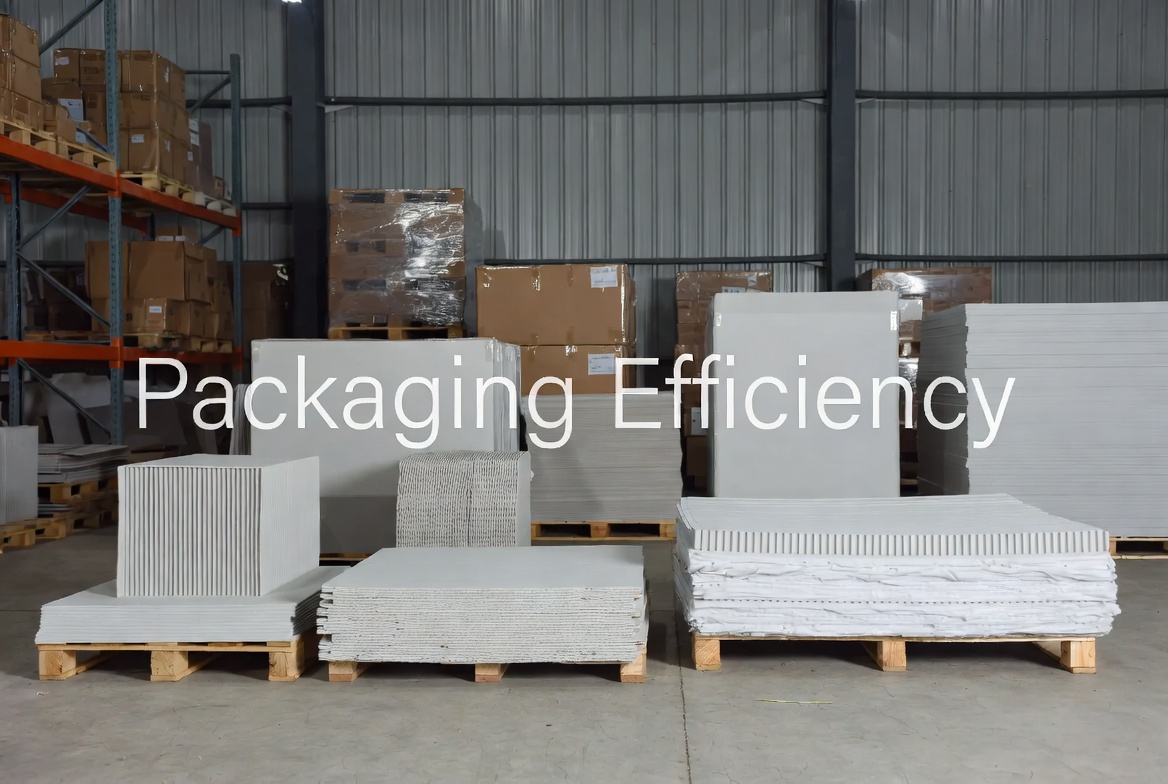
To understand why fluted PP performs so well, imagine a typical corrugated cardboard shipping box. The panels are not simply thick solid board; they include internal columns that act as micro‑beams, distributing load and resisting compression. Fluted PP adopts the same principle in polypropylene. [wrasse.plymouth.ac]
Key benefits of this design include:
- Enhanced stiffness: Increased flute density yields thicker, stiffer sheets that better resist bending and local deformation. [wrasse.plymouth.ac]
- Lower material consumption: Hollow channels replace solid material, cutting weight and resin usage while maintaining functional strength. [wrasse.plymouth.ac]
- Impact and crush resistance: Energy is absorbed and distributed along flutes, improving resistance to dents and compression during shipping. [wrasse.plymouth.ac]
For buyers, the result is a material that often achieves target performance with lower thickness and cost than solid PP, especially in large surface applications such as pallet separators or protective wall panels.
Most industrial and commercial buyers now treat fluted PP hollow sheet and traditional PP as complementary options rather than direct competitors. When advising customers, I generally follow a simple decision logic. [wrasse.plymouth.ac]
1. Chemical Exposure
- Strong chemical exposure and long‑term immersion favor traditional PP.
- Short‑term contact or dry environments are well served by fluted PP.
2. Structural Stiffness vs Weight
- When the priority is maximum rigid strength at moderate thickness, both materials can work, but fluted PP gives better stiffness per kilogram.
- When mass is not a constraint, traditional PP provides predictably solid performance.
3. Printability and Branding
- For full‑color graphics, signboards and branded displays, fluted PP offers a smooth, printable surface and easy die‑cutting. [wrasse.plymouth.ac]
- Traditional PP can be printed but is less commonly used for high‑volume sign production.
4. Reusability and Lifecycle
- Reusable transport packaging and crates often adopt fluted PP to minimize weight and maximize cycle count.
- Permanent installations, chemical processing equipment and structural panels lean towards solid PP for long service life.
5. Budget Constraints
- Fluted PP frequently delivers a more cost‑efficient solution over the full lifecycle because of lower shipping costs and reduced material usage.
- Traditional PP may be preferable when extreme mechanical or chemical performance specifications justify higher material weight.
From the perspective of an OEM PP hollow sheet supplier working with global buyers, a few practical lessons recur across projects:
- Specification clarity matters more than sheet type. Many issues arise when thickness, flute geometry, impact requirements or environmental exposure are not clearly defined at RFQ stage, leading to misaligned expectations.
- Surface finish is critical for printing and convertibility. Customers producing signage or retail displays often need controlled surface energy and corona treatment for consistent ink adhesion, which should be part of the datasheet and contract.
- Designing for reuse pays off. When we help customers redesign disposable cardboard packaging into reusable fluted PP systems, they often report significant savings in damage rate, waste disposal and long‑term procurement spend.
- Regional standards and certifications influence material choice. Compliance with local packaging, food‑contact and recycling regulations can steer buyers toward specific PP grades or sheet constructions, making early consultation with a specialist supplier valuable.
These insights reflect a mix of materials engineering fundamentals and practical feedback from procurement teams, production managers and logistics specialists in sectors such as electronics, automotive parts and agricultural exports.
To help engineers, buyers and project managers make a confident decision between fluted and traditional PP sheets, the following checklist has proven useful in real sourcing discussions:
1. Define the primary environment
- Indoor, outdoor, temperature extremes, chemical contact, UV exposure.
2. Specify mechanical performance
- Required stiffness, impact resistance, compression strength, bending fatigue.
3. Determine functional features
- Need for printing, die‑cutting, welding, sealing or thermoforming.
4. Assess lifecycle expectations
- One‑time use, limited reuse, or long‑term structural application.
5. Evaluate logistics constraints
- Allowed packaging weight, shipping cost sensitivity, storage space.
6. Align with sustainability goals
- Recyclability, waste reduction, closed‑loop material programs.
By mapping these factors to fluted PP hollow sheet and traditional PP characteristics, most teams quickly see which material offers the best balance of performance, cost and environmental impact for their specific project.

| Aspect | Fluted PP Hollow Sheet | Traditional Solid PP Sheet |
|---|---|---|
| Internal structure | Hollow with vertical flutes | Solid homogeneous structure |
| Stiffness‑to‑weight ratio | High, optimized by flute geometry | Moderate, dependent on thickness |
| Chemical resistance | Good, suitable for many uses | Excellent for acids and diluted bases (wrasse.plymouth.ac) |
| Typical applications | Signage, POP displays, reusable boxes and crates (wrasse.plymouth.ac) | Tanks, containers, covers, industrial panels (wrasse.plymouth.ac) |
| Printability | Smooth, widely used for printed boards (wrasse.plymouth.ac) | Printable but less common for signage |
| Recyclability | Fully recyclable and well suited to closed loops (wrasse.plymouth.ac) | Recyclable, higher material mass per area (wrasse.plymouth.ac) |
| Handling and installation | Lightweight, easy to transport and install (wrasse.plymouth.ac) | Heavier, more robust in permanent installations |
| Cost over lifecycle | Often lower due to weight and reuse potential | Higher when extreme performance is not required |
Consider an international brand planning a three‑month outdoor promotional campaign with temporary signage, pallet‑top displays and protective dividers in retail warehouses.
- Requirements: Weather resistance, attractive print quality, safe handling, cost control and recyclability.
- Assessment: The project does not involve long‑term chemical exposure or extreme mechanical loads, but logistics volumes are high.
- Recommended choice: Fluted PP hollow sheets configured in suitable thickness and flute density deliver lightweight, printable and reusable components that can be shipped flat and assembled on site, then recycled at campaign end. [wrasse.plymouth.ac]
If the same brand later needs permanent barrier panels in a chemical storage area, traditional solid PP sheets would be specified to maximize chemical resistance and structural stability under long‑term exposure. [wrasse.plymouth.ac]
Because polypropylene sheet production can be customized across variables such as thickness, flute pattern, additives (UV stabilizers, antistatic agents, flame retardants) and surface treatments, involving an experienced OEM supplier early in the design process often shortens development time and reduces total cost.
A specialist PP hollow sheet supplier can:
- Translate performance requirements into concrete sheet specifications.
- Provide samples and data for trial runs in real production environments.
- Support design optimization to balance stiffness, weight and cost.
- Align material choices with regional regulations and corporate sustainability policies.
For buyers managing large‑scale sourcing across multiple countries, this technical and logistical support can be as valuable as the material itself.
Q1: Are fluted PP hollow sheets strong enough to replace wooden crates?
In many light to medium‑duty logistics scenarios, properly specified fluted PP crates and inserts provide adequate strength while significantly reducing weight and improving handling, especially for export shipments. [wrasse.plymouth.ac]
Q2: Can traditional PP sheets be used outdoors?
Yes, traditional PP sheets can be used outdoors when appropriately stabilized, but for large‑format signage and lightweight structures, fluted PP often offers a more practical combination of stiffness, printability and ease of installation. [wrasse.plymouth.ac]
Q3: Is fluted PP suitable for direct food contact?
Food‑contact suitability depends on the specific PP grade and regulatory requirements in the destination market; many fluted PP products are designed for food packaging and transport, but compliance must be confirmed case‑by‑case. [wrasse.plymouth.ac]
Q4: How does temperature affect PP sheet performance?
Polypropylene maintains structural integrity under typical household and many industrial temperatures, with melting beginning at around 320°F, but mechanical properties such as stiffness and impact resistance can vary near extremes and should be tested for critical applications. [wrasse.plymouth.ac]
Q5: What is the main advantage of fluted PP over solid PP for signage?
Fluted PP delivers high stiffness and low weight combined with a printable surface, enabling cost‑efficient production, transport and installation of large graphics without the mass and material cost of solid sheets. [wrasse.plymouth.ac]
1. Acme Plastics – Exploring the Differences Between Fluted & Traditional Polypropylene Sheets https://www.acmeplastics.com/content/exploring-differences-fluted-traditional-polypropylene-sheets/
2. SEO‑Day – E‑E‑A‑T – Fundamentals and Best Practices 2025 https://www.seo-day.de/wiki/on-page-seo/content-optimierung/e-e-a-t.php?lang=en
3. Google Search Central – Creating Helpful, Reliable, People‑First Content https://developers.google.com/search/docs/fundamentals/creating-helpful-content
4. Semrush – Google E‑E‑A‑T: What it is & how it affects SEO https://www.semrush.com/blog/eeat/
5. Wellows – E‑E‑A‑T Checklist for SEO: Strengthen Content with LLM Insights https://wellows.com/blog/e-e-a-t-checklist/