Shanghai Gokai Industry Co,.Ltd.
Call Us: +86-18918606548
Call Us: +86-18918606548
- Product Name
- Product Keyword
- Product Model
- Product Summary
- Product Description
- Multi Field Search
Views: 248 Author: Gokai Publish Time: 2026-08-06 Origin: Site


Content Menu
● Why Workplace Safety Cannot Be an Afterthought
● Why Acrylic Sheet Is a Leading Machine Guard Material
● Acrylic vs. Polycarbonate: Choosing the Right Guard Material
● Beyond Machine Guards: Where Acrylic Sheet Adds Value
● A Step-by-Step Guide to Specifying Custom Acrylic Guards
● Best Practices for Installing Machine Guards
● Why Manufacturers Choose Gokai for Custom Acrylic Sheet Guards
Manufacturers looking for a cost-effective, high-clarity machine guard material increasingly turn to acrylic sheet (also known as Plexiglass) to protect workers without sacrificing visibility on the production floor. This guide breaks down why acrylic sheet remains a top choice for industrial safety barriers, how it compares to alternatives, and what buyers should know before sourcing custom guards from an OEM acrylic supplier.

Manufacturing floors are crowded with rotating shafts, nip points, and high-speed presses that create constant injury risk. A well-known industry survey found that 83% of senior management and operations personnel reported productivity gains after implementing structured safety programs. Beyond injury prevention, unguarded machinery also causes costly production stoppages when equipment jams or breaks down unexpectedly.
Under OSHA 29 CFR 1910.212, employers are required to guard any machine part, function, or process that could cause injury, including point-of-operation hazards, rotating parts, and flying debris. The ANSI B11.19-2010 standard supplements this by offering detailed engineering guidance where OSHA rules are less specific.
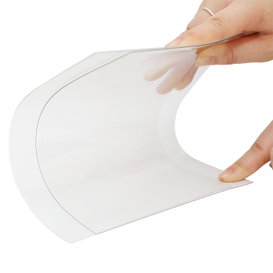
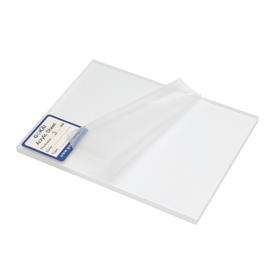
Acrylic sheet delivers a rare combination of optical clarity, strength, and machinability that makes it a practical solution for visible safety barriers.
- High clarity: Acrylic transmits light almost like glass, letting operators monitor equipment without removing guards.
- Impact resistance: Acrylic is roughly 17 times stronger than standard glass, making it far safer than glass barriers, which shatter into sharp shards on impact.
- Lightweight: Acrylic weighs about half as much as glass, easing installation and reducing structural load on guard frames.
- Shatterproof behavior: Even when broken, acrylic tends to crack rather than fragment into dangerous shards.
- Custom fabrication: Acrylic sheet can be thermoformed and laser cut into precise shapes, making it cost-effective for custom guard geometries.
- UV and scratch resistance: Acrylic resists yellowing and brittleness for decades, and light scratches can be buffed out or prevented with a protective coating.
Not every application calls for acrylic. Polycarbonate is significantly more impact-resistant, and understanding the trade-offs helps buyers specify the right material for each job.
| Property | Acrylic (PMMA) | Polycarbonate (PC) |
|---|---|---|
| Impact strength vs. glass | ~17x stronger | ~250x stronger |
| Clarity | Superior optical clarity | Slightly less clear, can yellow over time |
| Scratch resistance | Better; can be coated | More prone to scratching |
| Cost | Generally lower | Higher |
| Best fit | Visibility-focused guards, moderate-impact zones, display shields | High-impact zones, power presses, flying-debris hazards |
Industry specialists note that polycarbonate is the better fit when impact resistance and toughness matter most, while acrylic makes sense when clarity, appearance, and a more controlled environment are the priority. For guards near power presses or areas with frequent tool drops, some standards explicitly recommend high-impact materials like polycarbonate. For general point-of-operation shields, viewing windows, and moderate-risk zones, acrylic remains the preferred, more economical option.
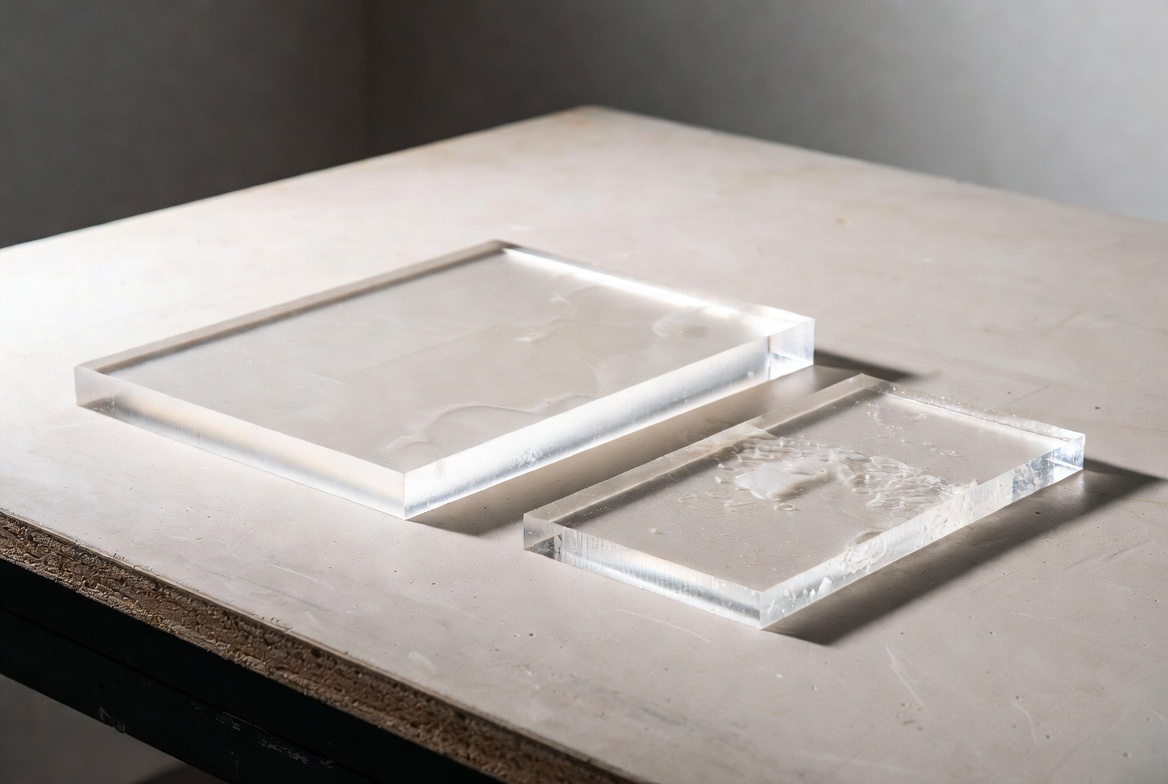
Acrylic's versatility extends well past safety barriers, which is why manufacturers increasingly standardize on it across multiple plant functions.
- Noise barriers: Acrylic panels reduce sound transmission on the factory floor while preserving sightlines.
- Chemical-resistant tanks: Acrylic's corrosion resistance makes it suitable for chemical storage and processing tanks.
- Laboratory and QA equipment: Safety shields, specimen trays, and display cases benefit from acrylic's clarity and break resistance.
- Retail and display applications: Many manufacturers also use acrylic for signage, product displays, and lighting fixtures, extending its ROI beyond the shop floor.
Sourcing the right acrylic guard from an OEM supplier requires more than a size specification. Following a structured process reduces rework and delays.
1. Define the environment and function. Decide whether the guard is indoor or outdoor, and whether it needs to be structural, decorative, or purely protective.
2. Select cast or extruded acrylic. Cast acrylic offers superior optical quality and thickness consistency; extruded acrylic is more economical for large, simple panels.
3. Specify thickness and finish. Confirm thickness, color, surface finish, and any special properties such as UV stabilization or anti-glare coating.
4. Supply precise drawings. Provide 2D drawings in DXF, DWG, or vector formats with clear dimensions, hole positions, and edge-treatment notes.
5. Align on quality benchmarks. Specify required optical clarity, color consistency, and any certifications or batch inspection reports needed.
6. Approve a physical sample. For critical or highly visible installations, request and approve a sample before committing to full production.
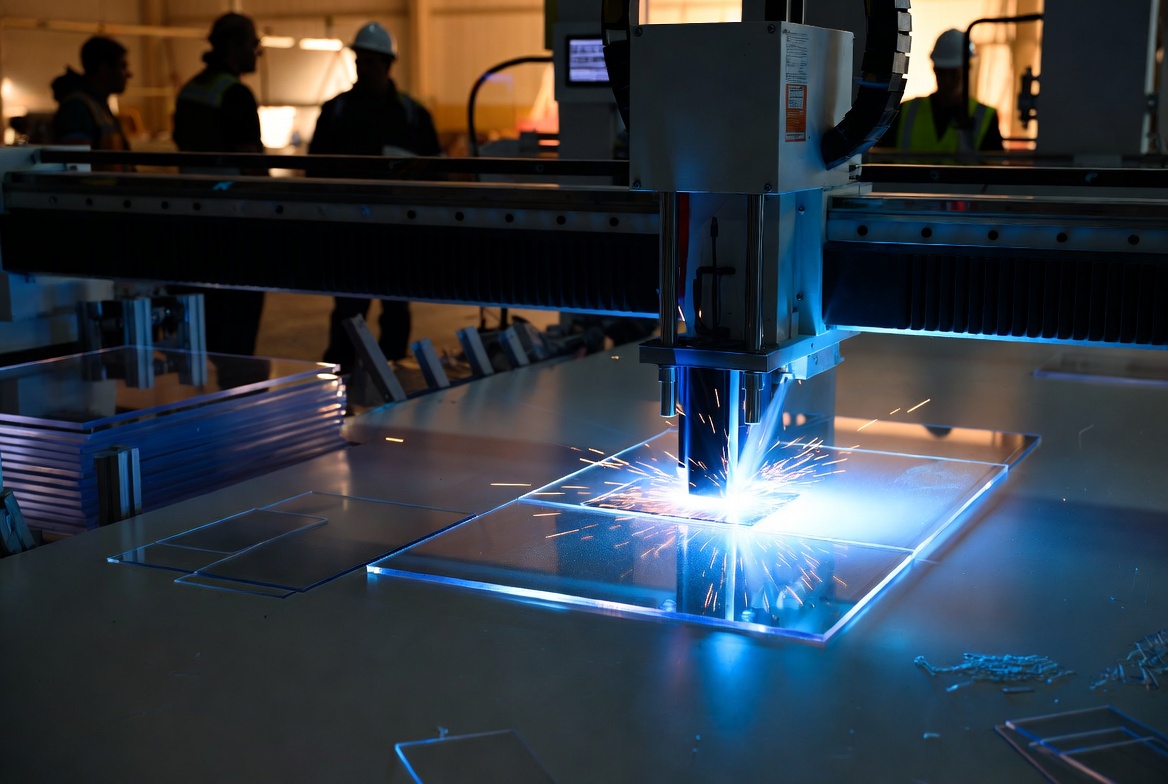
Even the best acrylic sheet fails to protect workers if installation is careless. Manufacturers should treat installation as a distinct safety project rather than an afterthought.
- Audit high-risk zones first. Machines with a history of jams or near-miss incidents should be prioritized for guarding upgrades.
- Involve floor operators. Workers who run the equipment daily often know exactly where visibility gaps or pinch points exist.
- Use qualified installers. Guards should be mounted so they cannot be removed without a special tool, preventing operators from bypassing protection.
- Maintain OSHA-compliant clearances. Follow the maximum allowable opening widths defined for the distance from the hazard point, as outlined in machine guarding standards.
- Document and retrain regularly. OSHA requires comprehensive worker training on guarding systems, and this should be refreshed as equipment or guards change.
Sourcing acrylic sheet from an experienced OEM partner reduces lead times and ensures consistent optical and mechanical quality across large orders. A reliable supplier should offer cast and extruded acrylic options, custom thickness and color matching, precision laser cutting and thermoforming, and documented quality control for every batch. This level of consistency matters most for global manufacturers running multi-site safety programs where guard specifications must match exactly across facilities.
If your factory needs custom-cut, laser-precise acrylic sheet guards or panels for machine safety, display, or industrial applications, contact Gokai's engineering team today for a tailored quote and free material sample.
Is acrylic sheet strong enough for machine guarding?
Yes, for most moderate-risk applications. Acrylic is about 17 times stronger than glass, though polycarbonate is recommended for high-impact zones like power presses.
What is the difference between cast and extruded acrylic sheet?
Cast acrylic offers better optical clarity and thickness uniformity, while extruded acrylic is generally more cost-effective for large, simple flat panels.
Does OSHA require specific materials for machine guards?
OSHA's 1910.212 standard does not mandate a specific material but requires that guards prevent contact with hazardous parts and remain securely mounted; ANSI B11.19 provides additional engineering detail.
Can scratched acrylic guards be repaired?
Yes. Light surface scratches on acrylic can typically be buffed out, and a scratch-resistant coating can be applied for high-traffic areas.
How do I get custom-sized acrylic sheets for my facility?
Work with an OEM supplier by providing dimensioned drawings, specifying material type and finish, and approving a sample before full production begins.
Why does acrylic yellow less than other plastics over time?
Acrylic has inherent UV resistance, which allows it to remain clear for decades without the yellowing or brittleness common in other clear plastics.
1. Acme Plastics – "Improving Manufacturing with Plexiglass" [https://www.acmeplastics.com/content/improving-manufacturing-with-plexiglass/]
2. Acrylic Clear Blocks For B2B Displays And OEM Projects [https://www.acmeplastics.com]
3. Top 10 Industries that Use Acrylic Sheets and Plexiglass [https://www.tapplastics.com]
4. OSHA – Machine Guarding Standards Overview [https://www.osha.gov/machine-guarding]
5. OSHA 7100 – Machinery & Machine Safeguarding [https://www.osha.gov]
6. Cutting Through the Confusion of Machine Guarding (ANSI B11.19) [https://www.ehstoday.com]
7. Acrylic vs Polycarbonate for Machine Guards – Modern Plastics [https://www.modernplastics.com]
8. Polycarbonate vs. Acrylic: The Complete Industrial Comparison [https://www.readyplastics.com]
9. Acrylic vs Polycarbonate Sheet: Complete Comparison Guide [https://www.plasticsheetsshop.com]
10. Acrylic Plastics Manufacturing Process Overview [https://www.thomasnet.com]