Shanghai Gokai Industry Co,.Ltd.
Call Us: +86-18918606548
- Product Name
- Product Keyword
- Product Model
- Product Summary
- Product Description
- Multi Field Search
Views: 266 Author: Gokai Publish Time: 2026-11-27 Origin: Site


Content Menu
● What Counts as Thick APET Sheet for Hand Cutting?
>> APET and PETG Are Not Interchangeable Cutting Specifications
● Inspect Shipping Damage Before Cutting APET Sheet
>> Separate Packaging Damage from Cutting Problems
>> Decide Whether a Damaged Sheet Is Usable
● Choose Hand Tools for Cutting Thick APET Sheet
>> Can You Score and Snap Thick APET Sheet?
● How to Cut Thick APET Sheet with Hand Tools: Step by Step
>> 1. Confirm the Finished Dimensions
>> 2. Prepare a Clean Work Surface
>> 4. Support and Clamp the Sheet
>> 5. Start with Light Strokes
>> 6. Maintain a Steady Cutting Rhythm
>> 7. Support the Final Section
● Troubleshoot Common APET Hand-Cutting Problems
● Specify Better Packaging for International APET Shipments
>> Build Packaging Around the Actual Failure Risks
>> Ask for Evidence Before Dispatch
● Validate the Cutting Method Before Ordering in Volume
● Plan OEM APET Sheet Orders with Gokai
>> Can I cut thick APET sheet with a hacksaw?
>> What is the best hand tool for cutting APET sheet?
>> Can a utility knife cut thick APET sheet?
>> Should I remove protective film before cutting?
>> Why does APET chip at the end of a cut?
>> Is supplier cutting better than hand cutting?
To cut thick APET sheet with hand tools, use a sharp, fine-toothed hand saw, support the material close to the cutting line, and work with steady, controlled strokes. Avoid treating a thick panel like thin packaging film: scoring and snapping is not a dependable default when edge quality and dimensional accuracy matter.
For international buyers, however, successful cutting starts before the saw touches the sheet. Poor transport packaging can leave scratched surfaces, crushed corners, or damaged edges that complicate fabrication. This guide explains how to choose a cutting method, inspect incoming material, and specify better protection when sourcing OEM PET sheet from Gokai.

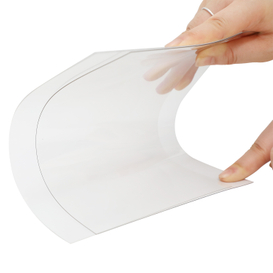
APET means amorphous polyethylene terephthalate. It is a polyester sheet material used in applications such as displays, protective panels, and packaging components.
"Thick" is a practical description, not a universal fabrication category. The important question is whether the material can be cut cleanly with your available tools, support arrangement, and required finish.
Brett Martin's Marpet fabrication guide recommends sawing or milling its APET sheets above 1.5 mm when clean, smooth edges are required. This is product-specific guidance—not a guaranteed cutoff for every supplier's material.
For purchasing decisions, use the following framework:
| Cutting requirement | Practical approach |
|---|---|
| A few short, straight cuts | A fine-toothed hand saw may be suitable |
| Long cuts through substantial panels | Request a sample trial before committing |
| Repeated parts with tight tolerances | Consider supplier cutting or machining |
| Visible, polished edges | Specify additional finishing |
| Material with cracked edges | Inspect and isolate damage before fabrication |
My recommendation from a buyer-focused perspective is simple: judge the method by the finished part, not merely by whether the sheet can be separated.
PETG is glycol-modified polyester. Although APET and PETG can both be processed with conventional tools, their fabrication limits should not be assumed identical.
Confirm the material designation on the quotation, technical documentation, and delivery label. Advice written specifically for PETG should not automatically become the acceptance standard for an APET order.
A poorly protected shipment can turn a straightforward cutting job into a dispute about material quality.
Before opening the package completely, photograph the pallet or crate, straps, corners, and any visible impact marks. Then check representative sheets from accessible positions within the pack.
Look for:
- Crushed or chipped corners.
- Cracks extending inward from an edge.
- Abrasion underneath torn protective film.
- Dirt or hard particles trapped between sheets.
- Uneven support or obvious panel distortion.
- Unsecured sheets that have shifted during transport.
Do not assume that every rough edge was caused by the saw. Record the original condition before marking or trimming the sheet.
Keep questionable material separate. Cutting away damage before documenting it can make the original problem harder to establish.
A small damaged corner may fall entirely outside your finished part. A crack extending into the required cutting area is a different matter.
Mark the intended component outline and compare it with the damaged region. Do not use a universal trim allowance: the acceptable distance depends on crack extent, final use, and customer requirements.
For load-bearing or protective applications, obtain application-specific approval rather than treating cosmetic trimming as proof of suitability.
A sharp, fine-toothed hand saw is a sensible starting point. Manufacturer guidance for APET supports hand sawing with closely spaced teeth.
The complete setup matters as much as the saw.
| Item | Purpose | Selection consideration |
|---|---|---|
| Fine-toothed hand saw | Separates the sheet | Sharp teeth and a stable blade |
| Straightedge and square | Establish accurate cut lines | Check before marking |
| Soft-faced clamps | Limit movement | Avoid concentrated pressure |
| Clean support boards | Reduce vibration | Support both sides of the cut |
| File or deburring tool | Remove sharp burrs | Use light, controlled passes |
| Abrasive paper and block | Refine the edge | Test on an offcut |
| Eye protection | Protect against chips | Wear throughout cutting |
A hacksaw can be useful for short cuts where its frame provides enough clearance. For long cuts, frame depth may become the limiting factor.
Avoid choosing an extremely fine blade solely because it promises a smoother finish. If chips cannot clear effectively, cutting becomes slow and the blade may bind. Test the blade on the actual sheet thickness.
Do not make score-and-snap your default method for thick APET.
Manufacturer guidance distinguishes thin-sheet cutting and punching from sawing thicker material. It does not establish a universal score-and-snap thickness for all APET grades.
For a thick panel, hand sawing provides a more controllable route than repeatedly deepening a knife groove and forcing a break. Never compensate for poor progress by applying excessive knife pressure.

Check thickness, cut length, required squareness, and edge appearance before starting.
Decide whether the marked line represents the finished edge or includes material for filing. Allowance should reflect a sample cut, not an assumed standard.
For fitted parts, verify the opening or mating component directly where possible.
Remove chips, grit, screws, and other hard debris from the bench.
Leave protective film in place during fabrication where supplied and suitable. Manufacturer guidance recommends retaining it to help prevent surface damage.
Film is not a substitute for cleanliness. A trapped chip can still mark the surface when the sheet slides or is clamped.
Mark on the protective film when practical. Use a square to check the line against the reference edge.
For a long cut, mark both endpoints and connect them with a reliable straightedge. Position any finishing allowance on the waste side.
Do not scratch a deep guide line into a surface that must remain visually clear.
Support the sheet close to the cutting line without placing supports in the blade path.
Both the retained panel and the offcut need support. An unsupported offcut can bend downward near the end of the cut and damage the remaining edge.
Use padded clamps with enough pressure to prevent movement. Stop tightening once the sheet is secure; visible bowing means the setup needs adjustment.
Begin at the waste side of the line.
Use short, gentle strokes to establish a groove before increasing the stroke length. Keep your free hand away from the blade path.
If the saw jumps or catches immediately, stop and check blade condition, support, and starting angle.
Let the teeth remove material rather than forcing the blade through.
Watch for:
- Increasing resistance.
- Excessive vibration.
- Material sticking around the teeth.
- Whitening or chipping along the cut.
- The blade drifting away from the line.
Pause when these signs appear. Clear loose chips safely, check support, and reassess the blade.
Do not add an unapproved cutting oil. Polyester fabrication guidance warns that some cutting fluids can contain incompatible chemicals.
Reduce pressure as the cut approaches completion.
Keep the offcut supported until separation is complete. Do not twist it away to save the last few strokes.
For valuable panels, having another person support a large offcut can be more useful than trying to finish quickly.
Remove sharp burrs with a suitable file or deburring tool, using light passes.
If sanding is necessary, test the abrasive sequence on scrap first. Sanding improves smoothness but does not automatically create a transparent, polished edge.
Check the finished part for dimensions, squareness, chips, cracks, and surface scratches before removing the remaining film.
| Problem | Possible cause | Corrective action |
|---|---|---|
| Chipped edge | Dull blade, aggressive pressure, vibration | Replace the blade and improve support |
| Wandering cut | Blade flex, poor starting groove | Re-establish control; leave finishing allowance |
| Binding | Sheet movement or unsuitable blade | Stop, check clamping, and test another blade |
| Scratched face | Debris beneath the sheet | Clean the bench and retain suitable film |
| Broken final corner | Unsupported offcut | Support the waste through separation |
| Cracks near the start | Existing damage or unstable setup | Inspect the edge and change the starting position |
These are diagnostic possibilities, not proof of a single cause. Record the material batch, thickness, blade, and setup when investigating repeated problems.
For overseas buyers, packaging specification deserves the same attention as sheet thickness and dimensions.
"Standard export packing" leaves too much open to interpretation. Instead, describe the protection required and ask the supplier to confirm the proposed arrangement.
A useful purchasing checklist includes:
1. Surface protection appropriate to the ordered finish.
2. Clean interleaving where necessary to prevent sheet-to-sheet abrasion.
3. Edge and corner protection.
4. Rigid top and bottom protection.
5. A pallet or base that adequately supports the pack.
6. Restraint against movement without direct strap damage.
7. Outer wrapping appropriate to the agreed transport conditions.

These are specification recommendations, not a claim that every shipment requires an identical package.
The final design should reflect sheet dimensions, pack weight, handling equipment, route, and unloading conditions.
Request photographs showing the protective film, edge protection, base, top cover, and completed package.
Agree on labels identifying material, thickness, dimensions, quantity, and batch information.
For recurring orders, retain the approved packing photographs as a reference. This gives both parties a clearer standard than "pack as before."
A sample trial is one of the most useful steps a buyer can take.
Request material matching the intended grade and thickness. Then use the same saw, operator, bench arrangement, and finishing process planned for production.
Record:
- Time per cut.
- Dimensional deviation.
- Edge appearance.
- Finishing time.
- Visible defects.
- Usable yield after trimming.
For an illustrative comparison, hand cutting may appear cheaper because no machining charge appears on the supplier's invoice. However, the real comparison must also include labor, rejected parts, finishing, and disposal.
Compare total usable cost, not sheet price alone. No universal savings percentage applies.
Gokai supplies PET sheet products and supports customized requirements for international B2B buyers.
When requesting an OEM quotation, provide the APET designation, thickness, dimensions, quantity, intended application, and cutting requirements. Include the surface finish and packaging expectations.
Gokai's published PET range includes APET sheets in multiple thicknesses and sizes, with customized dimensions available. Confirm the current specification and suitability for your application before ordering.
For your next project, send Gokai a dimensioned drawing, required quantities, destination, and photographs of any previous packaging failures. Request a sample-cutting review and an agreed packing proposal before approving the production order.
Yes, for suitable short cuts. Use a sharp blade and stable support. Check frame clearance before starting a long cut.
For straight manual cuts, a fine-toothed hand saw is a practical starting point. The best blade depends on thickness, chip clearance, and the required finish.
It should not be the default choice. Forcing a knife through thick material reduces control. Sawing is generally the more appropriate approach when clean edges matter.
Usually, leave suitable film in place during fabrication. Inspect it first and keep the bench clean so trapped debris does not scratch the sheet.
Possible causes include unsupported waste, excessive pressure, or blade problems. Support the offcut and reduce force as separation approaches.
It can be better for repeated parts, long cuts, or demanding tolerances. Compare the full cost and inspect sample parts before deciding.
1- Brett Martin — *Marpet Product Guide*, fabrication guidance covering APET and PETG, including hand sawing, protective film, cutting fluids, and thin-sheet cutting limitations. Its numerical recommendations apply to the named products, not automatically to every APET grade. [brettmartin]
2- Exolon — *Vivak and Axpet Solid Polyester Sheets*, machining guidance covering fine-toothed hand saws, chip removal, and different processing limits for polyester sheet products. Manufacturer document hosted by PAKO Sign Parts. [hr.pakosignparts]
3- Gokai — *PET Sheet*, company-published information on APET products, available dimensions, thickness range, applications, and customization. Supplier descriptions are not independent performance verification. [gokai.com]
4- Gokai — *PETG Sheet*, company-published identification of PETG as glycol-modified polyethylene terephthalate and its product customization options. [gokai.com]