Shanghai Gokai Industry Co,.Ltd.
Call Us: +86-18918606548
- Product Name
- Product Keyword
- Product Model
- Product Summary
- Product Description
- Multi Field Search
Views: 267 Author: Gokai Publish Time: 2026-11-28 Origin: Site


Content Menu
● Understanding PVC Foam Board Before Comparing Suppliers
● 1: Flame-Retardant PVC Foam Board Cannot Burn
>> What Fire-Performance Evidence Should Buyers Request?
>> Why the Finished Assembly Matters
● 2: Smell Alone Reveals Whether PVC Foam Board Is Safe Indoors
>> Formaldehyde Claims Need a Defined Meaning
>> What to Check for Indoor Applications
● 3: Abrasion-Resistant PVC Foam Board Must Be Scratchproof
>> Scratch Resistance and Abrasion Resistance Are Different
>> Compare Tests Under Matching Conditions
● How to Choose the Right PVC Foam Board Structure
● A Practical PVC Foam Board Sample-Approval Process
>> 1: Record the Proposed Specification
>> 3: Trial Your Actual Production Process
>> 4: Define Pass-or-Fail Criteria
● Outdoor PVC Foam Board: Check More Than Water Resistance
>> Specify the Grade for the Exposure
>> Allow for Temperature-Related Movement
● An OEM Purchasing Checklist for Global Buyers
● Discuss Your PVC Foam Board Project With Gokai
>> Is PVC foam board fireproof?
>> Does PVC foam board smell mean it is unsafe?
>> Is PVC foam board scratchproof?
>> Can PVC foam board be used outdoors?
>> Is higher-density PVC foam board always better?
>> What should I send for an OEM quotation?
Choosing PVC foam board should involve more than a lighter test, a quick sniff, or a scratch from a key. For importers, sign makers, furniture manufacturers, and distributors, these shortcuts can create misleading expectations about fire performance, indoor suitability, and surface durability.
At Gokai, we supply PVC foam board and related sheet materials with OEM support for global customers. Our approach to material selection starts with the intended application—not a universal claim that one board suits every project.
 misconceptions and turns them into practical purchasing decisions. You will also learn how to compare board structures, evaluate samples, and prepare specifications that make bulk orders easier to control.
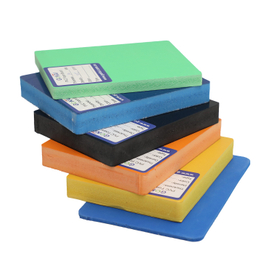
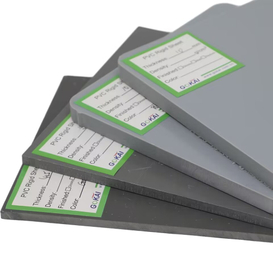
PVC foam board is a lightweight, rigid sheet made from polyvinyl chloride with a cellular internal structure. Common applications include printed signs, retail displays, decorative panels, furniture components, and exhibition graphics.
However, "PVC foam board" describes a material category, not one fixed performance level.
Thickness, density, surface construction, additives, and finishing all influence how a sheet behaves. Two white panels that look similar may respond differently to printing, routing, fastening, heat, or outdoor exposure.
It is also important to distinguish PVC foam sheets from PVC flooring. Flooring products can have dedicated wear layers, backing systems, and application-specific classifications. Their test results should not automatically be applied to signage or furniture boards.
From a procurement perspective, the useful question is not simply, "Is this good PVC?"
It is, "Does this exact grade meet the demands of my finished product?"
A flame-retardant material is not necessarily noncombustible. Some PVC sheet products can show self-extinguishing behavior under specified conditions, but that does not mean they cannot ignite, suffer heat damage, or contribute smoke during a fire.
A handheld lighter demonstration cannot establish whether a panel meets a building project's requirements.
Ask for documentation covering the actual product being supplied:
- Product name and grade identification.
- Tested thickness and relevant color or formulation.
- Test method and classification.
- Laboratory details and report date.
- Installation conditions and limitations.
A classification belongs to the product and conditions described in the report. It should not be extended to every sheet sold by the same supplier.
Likewise, terms such as "fireproof," "self-extinguishing," and "flame-retardant" should not be treated as interchangeable.
A bare sheet may perform differently from a finished panel containing printed inks, decorative films, adhesives, or backing materials.
For wall panels, exhibition installations, and public interiors, buyers should establish which evidence the project authority requires before ordering.
My recommendation is to write the required classification and applicable product configuration into the purchase specification. Avoid accepting "fire-resistant material" as a complete technical description.
Do not conduct improvised burn tests in a workshop or office. They are not a substitute for laboratory testing and can create unnecessary exposure to combustion products.
Buyers understandably notice odor when opening a shipment. However, smell is not a reliable way to determine chemical identity, emission levels, or suitability for an occupied space.
A noticeable odor deserves investigation. Conversely, little or no odor does not demonstrate that a product meets indoor-emission requirements.
Claims such as "completely harmless," "zero emissions," or "safe because it has no smell" require evidence, not reassurance.
PVC foam board is not the same material system as an adhesive-bonded wood panel. Nevertheless, that distinction alone does not prove that every finished PVC product has zero formaldehyde emissions or meets every indoor-air requirement.
The full product may include pigments, processing additives, coatings, films, and adhesives.
Ask suppliers to distinguish between:
- No intentionally added formaldehyde.
- A measured formaldehyde-emission result.
- A broader volatile organic compound emission assessment.
These statements answer different questions. None should be substituted for another.
For cabinetry, displays, and interior decorative panels, request:
1. A current safety data sheet.
2. Product-specific technical information.
3. Relevant emission-test documentation where required.
4. Information about applied laminates, coatings, and adhesives.
5. Handling, storage, and ventilation guidance.
Health effects from volatile chemicals depend on the substance, concentration, and duration of exposure. A generic statement about PVC cannot resolve every finished-product question.
Ventilation can help reduce airborne concentrations, but it should not replace material verification or investigation of persistent, unusual odors.
A key dragged across a sheet creates concentrated contact pressure. Repeated wiping, sliding contact, and handling cause different types of surface wear.
A visible scratch does not automatically mean the material will fail in service. Equally, surviving one casual scratch attempt does not establish long-term durability.
Scratch resistance concerns damage from localized contact, often involving a sharp point or edge.
Abrasion resistance concerns progressive wear caused by repeated rubbing or movement.
Other relevant properties include indentation resistance, impact resistance, print adhesion, and resistance to cleaning chemicals.
A printed exhibition sign and a frequently handled cabinet component need different balances of these properties.
When reviewing a wear report, check:
- The tested surface or coating.
- Abrasive type.
- Applied load.
- Number of cycles.
- Reported endpoint, such as mass loss or visible damage.
For example, ASTM D4060 addresses abrasion resistance of organic coatings using a Taber abrader. It should not be presented as a universal test requirement for every uncoated PVC foam sheet.
Ask the laboratory or technical supplier which method suits the actual surface and intended use.
For purchasing decisions, a repeatable application trial is more informative than an uncontrolled demonstration with a knife.
Once these misconceptions are removed, buyers can compare construction types more effectively.
| Board type | General construction | Selection priority |
|---|---|---|
| Free-foam PVC board | Cellular PVC sheet | Weight, print quality, flatness, and fabrication behavior |
| Celuka PVC foam board | Foamed core with a denser surface skin | Surface hardness, machining, and component suitability |
| Co-extruded PVC foam board | Foamed core with separately extruded outer skins | Skin quality, finish consistency, and handling durability |
| Laminated PVC foam board | PVC foam substrate with an applied decorative layer | Adhesion, surface performance, and finished-panel requirements |

These descriptions are starting points, not guaranteed rankings.
A denser surface may improve handling resistance, but buyers should still test the actual product. Density alone cannot establish screw retention, bending performance, or suitability for a demanding installation.
Ask for samples representing the proposed production specification, rather than selecting from an unlabeled sample collection.
Sample approval should reproduce the work your customer will actually perform. A small, attractive swatch rarely reveals everything that matters.
Use the following process before committing to a bulk order.

Identify the sample's grade, dimensions, thickness, density, color, surface finish, and protective film.
Photograph the sample and retain its identification details. Without traceability, a successful test may be difficult to connect to the eventual shipment.
Check thickness at several positions, including the center and edges. Examine flatness, surface defects, and cut-edge cell structure.
Where density verification matters, use measured mass and volume with consistent units. Agree on the procedure and acceptable range before comparing results.
Print with the intended ink system. Route with the planned tooling. Test the specified adhesive, laminate, or mechanical fixing.
Inspect for edge chipping, print defects, poor bonding, surface marking, and dimensional distortion.
For furniture components, evaluate the assembled connection rather than relying only on a screw inserted into a loose offcut.
Replace vague requirements such as "premium quality" with measurable acceptance criteria.
Examples include agreed thickness tolerances, approved color references, acceptable surface defects, and documented fabrication results.
Retain an approved reference sample and require written review of changes to the agreed specification.
Low water absorption does not automatically make every PVC foam sheet suitable for prolonged outdoor exposure.
Sunlight, temperature changes, panel dimensions, mounting conditions, and surface color all affect performance.
Request a grade intended for the proposed environment and ask for supporting technical information.
Discuss:
- Direct sunlight and expected exposure period.
- Local temperature conditions.
- Panel size and support spacing.
- Printing, paint, or laminated finishes.
- Relevant weathering evidence and warranty limitations.
Avoid promising a fixed outdoor lifespan without conditions and product-specific support.
PVC sheets expand when heated and contract when cooled. Installation details should accommodate that movement.
Follow the selected grade's fabrication and mounting instructions. Depending on the system, these may address fixing clearances, support arrangements, and fastening pressure.
Dark finishes can increase solar heat absorption. Confirm coating compatibility and thermal limitations before approving a large exterior panel.
An OEM specification turns general expectations into information that suppliers, inspectors, and production teams can use.
Before requesting quotations, prepare the following:
| Requirement | Information to provide |
|---|---|
| Application | Signage, display, furniture component, or decorative panel |
| Board construction | Free-foam, Celuka, co-extruded, or laminated |
| Dimensions | Length, width, thickness, and tolerances |
| Material targets | Density range, color reference, and surface finish |
| Processing | Printing, routing, laminating, bonding, or fastening |
| Exposure | Indoor conditions or defined outdoor environment |
| Evidence | Required test methods, reports, and acceptance criteria |
| Branding | Protective film, labeling, and packaging requirements |
| Shipment | Quantity, destination, packing, and inspection arrangements |
Compare quotations against the same specification. A lower sheet price may not deliver a lower finished-product cost if it causes extra rejects, fabrication delays, or transit damage.
Gokai supplies PVC foam board and related sheet materials with OEM support for international customers.
Send your application, target dimensions, density requirements, quantity, destination, and required performance documentation. Include printing, machining, outdoor exposure, or private-label requirements where relevant.
Request a specification review and representative samples before approving bulk production. The objective is a board that performs reliably in your process—not simply one that looks convincing in a demonstration.
Do not assume so. Some grades offer documented flame-retardant or self-extinguishing performance under specified conditions. Verify the exact classification and its applicability to your product and installation.
Odor alone cannot establish safety or compliance. Investigate unusual or persistent smells and request relevant product documentation. For emission-sensitive interiors, use appropriate product-specific test evidence.
No universal scratchproof claim is appropriate. Surface construction and finishing affect damage resistance. Test the proposed grade under representative handling, cleaning, and contact conditions.
Certain grades can suit outdoor applications. Confirm sunlight resistance, thermal limitations, mounting instructions, and the intended exposure period rather than relying only on water resistance.
No. Density affects weight and can influence performance, but board construction, thickness, surface properties, and installation also matter. Select against the application rather than density alone.
Provide the application, board type, dimensions, tolerances, density target, color, finish, quantity, destination, packaging needs, and required testing. Include an approved reference sample when available.
1. [Aibo Foam Board — "Three Misunderstandings of PVC Foam Board Cognition"]. Original editorial basis for the three misconceptions. Its flooring-related test descriptions and unsupported safety assurances were not adopted. [aibofoamboard]
2. [Gokai — "PVC Foam Board"]. Manufacturer information supporting product categories, application examples, customization discussions, and quotation requirements. Company statements are not independent certification of a particular grade. [gokai.com]
3. [Palram — "PALIGHT: PVC Foam Sheets"]. Technical context for fabrication, printing, lamination, heat sensitivity, and application-specific outdoor selection. Product-specific values are not presented as Gokai specifications. [palram]
4. [Palram — "PALIGHT" Technical Brochure]. Supports the distinction between self-extinguishing behavior and universal fire claims, and the importance of thickness, type, and color when interpreting classifications. [palram]
5. [U.S. Environmental Protection Agency — "Volatile Organic Compounds' Impact on Indoor Air Quality"]. Supports discussion of emissions, exposure, health-effect variability, and ventilation. It does not certify PVC foam board products. [epa]
6. [U.S. Environmental Protection Agency — "Liquid Coatings: Generic Verification Protocol"]. Documents ASTM D4060 as an organic-coating abrasion method and the importance of controlled testing conditions. [archive.epa]
7. [Palram Americas — "FAQs"]. Supports general discussion of PVC sheet thermal expansion and the need to follow product-specific installation instructions. [palram]