Shanghai Gokai Industry Co,.Ltd.
Call Us: +86-18918606548
Call Us: +86-18918606548
- Product Name
- Product Keyword
- Product Model
- Product Summary
- Product Description
- Multi Field Search
Views: 259 Author: Gokai Publish Time: 2026-10-03 Origin: Site


Content Menu
>> Why Saudi Arabia and the UAE Matter
● Top PET Sheet Manufacturers and Suppliers
>> 1. Shanghai Gokai Industry Co., Ltd.
>> 3. Saudi Plastic Packaging Systems (SPPS)
>> 7. Pace Mid-East International FZE
>> 8. Packaging Solutions Factory Co. Ltd. (PSF)
● PET Sheet Technical Requirements Buyers Should Specify
>> Typical Specification Checklist
● PET Sheet Sourcing Risks and How to Avoid Them
>> 1. Virgin PET Is Replaced With Undeclared Regrind
>> 2. Nominal Thickness Is Correct but Gauge Distribution Is Poor
>> 3. "Food Grade" Is Claimed Without Product-Specific Proof
>> 4. Samples Are Good but Mass Production Differs
>> 5. Freight and Pallet Damage Is Underestimated
● The Less-Discussed Insider Tip: Check the "Forming Window," Not Just Clarity
● How to Qualify a PET Sheet Factory
>> 1: Confirm Whether the Supplier Is a Manufacturer
>> 2: Request Documents Before Negotiating Price
>> 3: Verify ISO Certification Properly
>> 4: Use a Two-Stage Sample Process
>> 5: Define MOQ Based on Production Reality
>> 6: Plan Logistics for Arab Markets
>> 1. How can I verify whether a PET Sheet supplier's ISO certificate has expired?
>> 2. Is an ISO 9001 certificate enough to prove PET Sheet is food grade?
>> 3. What is the difference between APET, PETG, and rPET Sheet?
>> 5. What tests should I run before approving PET Sheet for thermoforming?
For procurement managers sourcing PET Sheet in Arab markets, the real challenge is not finding a supplier—it is qualifying one that can repeatedly deliver stable thickness, clarity, food-contact documentation, recycled-content control, and dependable lead times. This guide evaluates major PET sheet manufacturers and suppliers serving Saudi Arabia, the UAE, and wider GCC markets, while also identifying suitable China-based OEM partners for flexible export programs.
The Arab PET market is particularly relevant for thermoformed food packaging, beverage applications, industrial components, retail displays, medical packaging, and construction-related plastic fabrication. Saudi Arabia and the UAE are the region's most influential PET demand centers: Saudi Arabia accounted for an estimated 44.8% of Middle East PET market revenue in 2025, while the UAE remains a key conversion, logistics, and re-export center for GCC, Africa, and Levant markets.

A PET Sheet supplier should not be selected based only on a website claim such as "food grade," "factory direct," or "high transparency." For long-term sourcing, procurement teams should compare material traceability, production capability, compliance records, and commercial responsiveness.
Our evaluation uses the following practical criteria:

| Evaluation dimension | What professional buyers should verify | Why it matters |
|---|---|---|
| Manufacturing role | Actual extruder, converter, distributor, or trader | A supplier may sell PET Sheet without controlling extrusion quality or delivery capacity |
| PET Sheet range | APET, rPET, PETG, GAG, anti-fog, conductive, colored, laminated, or high-barrier grades | Different thermoforming, printing, food-contact, and industrial applications require different formulations |
| Material traceability | Virgin resin source, rPET feedstock origin, batch records, COA availability | Helps prevent mixed-grade or undocumented recycled resin |
| Thickness consistency | Nominal thickness, tolerance, width tolerance, roll flatness, gauge map | Thickness variation directly affects thermoforming yield and scrap rate |
| Compliance support | ISO 9001, food-contact declarations, FDA/EU compliance where relevant, RoHS/REACH support | Necessary for packaging, export, electronics, and regulated end uses |
| Recycling capability | PCR content, food-grade rPET proof, contamination controls, color stability | Important as recycled-content rules and sustainability requirements expand |
| QC process | Incoming resin inspection, online gauge measurement, haze/gloss testing, visual inspection, final roll inspection | Reduces issues such as gels, black specks, edge defects, and uneven forming |
| Supply reliability | Capacity, inventory model, port access, production lead time, contingency plan | Determines whether the supplier can support repeat purchase orders |
| OEM flexibility | Width, thickness, roll weight, protective film, color, packaging, private-label support | Especially important for converters, distributors, and growing brands |
| Communication quality | Technical response speed, English documentation, sample follow-up, claims handling | Often determines whether a supplier is practical for cross-border procurement |
Saudi Arabia benefits from its large petrochemical base, domestic packaging demand, Vision 2030 manufacturing development, and growing food-service, dairy, beverage, and retail sectors. The country is also a major Middle East PET consumption center.
The UAE has a different advantage: it functions as a regional trading, converting, warehousing, and re-export hub. Dubai's Jebel Ali ecosystem connects PET resin, converters, packaging producers, distributors, and global shipping routes. Jebel Ali Port handled 15.5 million TEUs in 2024, supporting rapid distribution into GCC, Africa, and South Asia.
For buyers, this means:
- Saudi Arabia is often stronger for regional consumption, packaging conversion, and downstream industrial demand.
- UAE suppliers can be attractive for shorter regional distribution cycles, mixed-container consolidation, and re-export flexibility.
- China-based OEM factories can offer broader customization and often more competitive economics for buyers willing to manage international logistics and qualification.
The following companies represent different supplier models rather than identical competitors. Some are integrated PET producers, some specialize in thermoforming or rigid packaging, and others operate as UAE/GCC industrial plastics suppliers. Buyers should match the supplier type to the purchasing requirement.
| Supplier | Base / market coverage | Core PET-related focus | Publicly stated scale or capability | Best-fit buyer |
|---|---|---|---|---|
| Shanghai Gokai Industry Co., Ltd. | China; export-oriented | PET, PETG, PVC, PS, acrylic and related sheet solutions | 10 production lines stated on company profile | Small and mid-sized brands needing flexible OEM support |
| OCTAL / Alpek Polyester | Saudi Arabia, Oman, global | PET resin, PET Sheet, thermoforming packaging | Alpek states 400,000 tonnes PET Sheet capacity in Oman and 11,000 tonnes thermoform packaging capacity in Riyadh | High-volume packaging programs |
| Saudi Plastic Packaging Systems (SPPS) | Saudi Arabia, MENA | Rigid plastic packaging, PET preforms, bottles, PP/PS sheet extrusion, thermoforming | Four manufacturing facilities in Saudi Arabia | Buyers needing integrated rigid-packaging conversion |
| Blue Wave Pack | UAE and India; global | APET and PCR-PET Sheet | UAE/India production footprint and export orientation | Sustainability-focused packaging buyers |
| Four Seasons FZE | UAE | PET Sheet and plastics recycling | States PET, PP, and HDPE recycling and PET Sheet manufacturing capability | UAE/GCC buyers seeking recycled-content options |
| Petron Thermoplast | UAE/GCC | PET Sheet, PETG, engineering plastic sheets | Stocks/supplies standard PET, PETG, A-PET and food-grade options | Industrial fabricators and quick-delivery buyers |
| Pace Mid-East International FZE | UAE / Middle East | Engineering plastics including PET Sheet | Regional supplier of PET engineering-plastic sheets | Machining, fabrication, and industrial applications |
| Packaging Solutions Factory (PSF) | Saudi Arabia | PET preforms, closures, films and packaging materials | Saudi packaging manufacturing focus | Packaging purchasers needing preforms and related materials |
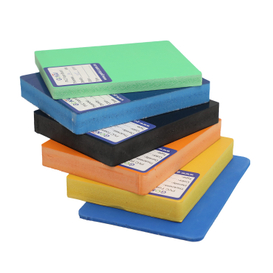
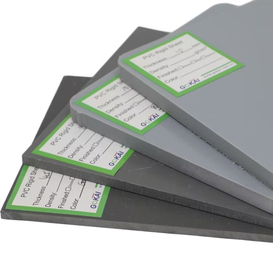
Shanghai Gokai Industry Co., Ltd. is a China-based sheet-material manufacturer and export supplier suitable for buyers who need a flexible OEM partner rather than only a standard-size stock supplier. The company was founded in 2009 and states that it operates 10 production lines. Its product portfolio includes PVC foam board, acrylic sheet, ABS sheet, PC sheet, PS, PET, PETG, and related plastic-sheet products.
For buyers in Saudi Arabia, the UAE, North Africa, and other Arab markets, Gokai's practical value is its ability to coordinate a broader sheet-material sourcing program. This may be useful when one customer needs PET Sheet alongside acrylic, PVC foam board, PC sheet, display materials, or fabrication-oriented plastic sheets.
Core strengths
- Export-oriented communication and commercial support from Shanghai.
- Broad plastic-sheet portfolio, which can simplify multi-material sourcing.
- OEM-oriented approach for dimensions, thicknesses, colors, roll or sheet formats, protective packaging, and export packing requirements.
- Suitable for emerging distributors, signage-material sellers, thermoforming buyers, and small-to-medium packaging or fabrication brands.
- Company profile states experience with advanced production equipment and processing technology.
OEM/ODM suitability
Gokai is most relevant when the buyer's project requires commercial flexibility, such as:
- Non-standard PET Sheet width or length.
- Customized thickness ranges for packaging, printing, or fabrication.
- Mixed-container loading with acrylic, PVC foam board, PC, ABS, PET, and PETG materials.
- Export packing adapted for sea freight, including corner protection, cartons, and export wooden pallets.
- Trial-order support before a larger annual purchase program.
- Product customization for distributors building a private-label or local-stock program.
What buyers should confirm before ordering
Gokai's published company profile emphasizes PVC foam board and acrylic sheet more prominently than PET Sheet. Therefore, a procurement team should directly request PET-specific evidence before placing a production order:
- Current PET Sheet extrusion capability and available grades.
- Available thickness and width range.
- Virgin PET versus rPET content options.
- Food-contact declarations for the specific grade, if required.
- Test samples from the exact intended production line.
- Thickness-tolerance standard and inspection report.
- MOQ, lead time, palletization plan, and destination-port quotation.
This is not a negative point; it is a disciplined sourcing step. A supplier with a diversified sheet portfolio can be highly useful, but the qualification must be based on the specific PET grade and application—not on its performance in unrelated sheet categories.
OCTAL, now part of Alpek Polyester, is one of the most relevant PET players for high-volume rigid packaging and thermoforming programs in the region. Alpek reported that its OCTAL acquisition added more than 1 million tonnes of installed capacity across four sites, including 400,000 tonnes of PET Sheet capacity in Salalah, Oman, and 11,000 tonnes of PET thermoforming packaging capacity in Riyadh, Saudi Arabia.
Its Saudi Arabian operation in Riyadh focuses on packaging for dairy, water, poultry, and food-service applications. The company positions its PET Sheet offering around consistency, clear finish, and thermoforming yield.
Core strengths
- Strong upstream-to-downstream PET ecosystem.
- High relevance for food packaging, trays, cups, lids, clamshells, and other thermoformed formats.
- Large-scale supply profile compared with most regional sheet suppliers.
- Direct regional presence in Saudi Arabia.
- PET resin and packaging expertise can help large buyers that need supply continuity.
OEM/ODM suitability
OCTAL/Alpek is better suited to structured packaging programs than low-volume custom orders. Buyers should approach it for:
- High-volume APET or PET packaging projects.
- Consistent material supply for established thermoforming lines.
- Long-term food-service, dairy, poultry, and beverage packaging programs.
- Customers that value integrated PET resin, Sheet, and thermoform-packaging knowledge.
Procurement consideration
Large integrated suppliers can be commercially compelling for stable demand, but they may not be the most flexible choice for low-MOQ, mixed-SKU, or niche custom projects. Buyers should clarify minimum commercial volumes, grade availability, regional stock position, and whether the purchase will be direct from the manufacturer or through a regional sales channel.
Saudi Plastic Packaging Systems, commonly known as SPPS, is a Saudi rigid-plastic-packaging producer with four manufacturing facilities across the Kingdom. The company states that PET preforms, bottles, and closures are central to its business, while it also provides extrusion of PP and PS, IML products, thermoforming, and other rigid packaging solutions.
Although its stated sheet extrusion emphasis is PP and PS rather than PET Sheet specifically, SPPS is important for buyers whose real sourcing need is a finished rigid packaging solution rather than raw PET Sheet alone.
Core strengths
- Four manufacturing facilities in Saudi Arabia.
- Broad rigid-packaging capability.
- Local manufacturing presence for Saudi domestic supply.
- Relevant for packaging buyers seeking preforms, bottles, closures, and thermoformed components.
- Potentially useful where local conversion, supply continuity, and Saudi-market responsiveness matter more than buying raw sheet.
OEM/ODM suitability
SPPS may fit buyers seeking:
- Custom rigid packaging development.
- PET bottle or preform programs.
- Thermoformed food containers and related packaging.
- Integrated packaging sourcing rather than roll-stock PET Sheet procurement.
- Saudi-based supply for local food, beverage, consumer-goods, or industrial brands.
Procurement consideration
Do not assume that a rigid packaging producer is automatically a PET Sheet extruder. If your requirement is raw APET, rPET, PETG, or GAG Sheet, request specific confirmation of the company's PET Sheet extrusion capability, applicable grades, gauge range, and documentation.
Blue Wave Pack presents itself as a manufacturer and exporter of APET and PCR-PET sheets with manufacturing operations in the UAE and India, plus market presence in the UK, Canada, and Turkey.
For sustainability-oriented buyers, the company is notable because it specifically identifies both APET and PCR-PET in its offering. This distinction matters: APET generally refers to amorphous PET with high clarity and thermoforming utility, whereas PCR-PET includes post-consumer recycled content and requires more careful control of color, odor, contamination, and food-contact status.
Core strengths
- APET and PCR-PET positioning.
- Manufacturing connection to the UAE and India.
- International commercial orientation.
- Relevant for brands under recycled-content pressure.
- Suitable for thermoformed packaging projects that need sustainability claims supported by documentation.
OEM/ODM suitability
Potential use cases include:
- Food trays, clamshells, inserts, blisters, and clear packaging.
- PCR-content packaging programs.
- Custom sheet gauge and width programs for thermoformers.
- Export packaging projects serving GCC, Europe, North America, or mixed international markets.
Procurement consideration
For PCR-PET, buyers should ask questions that are more detailed than "What is your recycled content percentage?" Request:
- PCR percentage by batch or product grade.
- Whether the rPET feedstock is post-consumer or post-industrial.
- Food-contact support for the specific recycled-content grade.
- Color measurement and haze specification.
- Odor-control protocol.
- Gel, black-speck, and contamination limits.
- Whether regrind is included and how it is controlled.
Four Seasons FZE is a UAE-based supplier that promotes PET Sheet manufacturing and states recycling capabilities for PET, PP, and HDPE. The company positions its PET sheets for industrial requirements and the UAE market.
Its recycling focus can be valuable for buyers who need a local or regional sustainability conversation, particularly when recycled-content goals are becoming more prominent in the UAE and GCC packaging landscape.
Core strengths
- UAE location and regional accessibility.
- Stated PET recycling and PET Sheet expertise.
- Potential relevance for recycled-content and circular-material discussions.
- Suitable for customers who prefer local inventory or shorter GCC transport routes.
OEM/ODM suitability
Four Seasons may be relevant for:
- PET Sheet for local industrial and packaging use.
- Recycled-content projects.
- Buyers seeking UAE-based sourcing rather than long-distance imports.
- Customers requiring responsive coordination for UAE or GCC distribution.
Procurement consideration
Recycling capability does not automatically demonstrate food-grade rPET capability. For packaging that contacts food directly, buyers should request the exact regulatory declaration for the relevant PET Sheet grade. A general recycling statement, ISO certificate, or material safety data sheet alone is not enough.
Petron Thermoplast is an industrial-plastics supplier in the UAE serving Dubai, Sharjah, Abu Dhabi, and wider GCC markets. It lists standard PET, PETG, and A-PET sheet options, including food-grade transparent PET sheets and high-strength extruded PET sheets for engineering, fabrication, packaging, and display-related applications.
Petron is particularly relevant for buyers that prioritize speed, engineering grades, and local availability over a large custom extrusion program.
Core strengths
- Local UAE and GCC market coverage.
- Offers PET, PETG, and A-PET categories.
- Useful for engineering and industrial-fabrication applications.
- Suitable for customers needing sheet stock for machining, guides, wear parts, covers, display panels, and packaging.
OEM/ODM suitability
The supplier may fit projects involving:
- Machined PET parts.
- PETG protective covers and display panels.
- A-PET food trays or vacuum-forming applications.
- Short-run industrial material replenishment.
- UAE-based fabricators requiring faster access than overseas imports can provide.
Procurement consideration
Ask whether each grade is extruded locally, converted locally, or sourced from external manufacturers. This affects lead time, consistency between lots, available dimensions, and the depth of customization.
Pace Mid-East is a UAE-based engineering-plastics supplier that lists polyethylene terephthalate products and describes PET as offering mechanical, electrical, and thermal properties, as well as chemical resistance and heat-aging performance.
This makes it relevant primarily for engineering-plastic buyers rather than mainstream food-packaging converters.
Core strengths
- Engineering-plastics focus.
- PET suitability for fabricated and machined components.
- Useful for buyers needing material properties beyond appearance and thermoforming.
- Regional UAE/Middle East supply orientation.
OEM/ODM suitability
Pace Mid-East may be relevant for:
- Mechanical components.
- Wear strips, guides, jigs, fixtures, and machine parts.
- Electrical or semi-industrial applications.
- Buyers needing cut-to-size or engineering-sheet formats.
Procurement consideration
Engineering PET Sheet is not the same as packaging-grade APET or food-grade rPET Sheet. Procurement specifications should clearly state whether the project needs:
- Extruded engineering PET.
- APET for forming and packaging.
- PETG for impact resistance and easy thermoforming.
- Food-contact PET.
- Recycled-content PET.
- Antistatic, conductive, UV-stabilized, or flame-retardant PET.
Packaging Solutions Factory Co. Ltd. is a Saudi Arabian plastic-packaging manufacturer specializing in products including PET preforms, closures, PE lamination, barrier films, shrink films, stretch films, CPP, metallized CPP, and extrusion-coated materials.
PSF should be viewed primarily as a packaging-material and packaging-conversion option rather than confirmed raw PET Sheet extrusion source. It can nevertheless be relevant to procurement teams sourcing an integrated packaging basket in Saudi Arabia.
Core strengths
- Saudi domestic packaging presence.
- PET preform and closure capability.
- Broader films and laminations portfolio.
- Potentially useful for beverage, food, consumer-goods, and industrial-packaging buyers.
OEM/ODM suitability
PSF may suit:
- PET preform sourcing.
- Packaging-film programs.
- Closures and packaging accessories.
- Multi-component packaging procurement.
- Saudi-market packaging localization projects.
Procurement consideration
If PET Sheet is the exact required material, request a written product specification before adding PSF to the approved vendor list. The supplier's packaging credentials may still be valuable, but PET Sheet extrusion, gauge control, and compliance documentation must be separately validated.
"PET Sheet" is too broad for a purchase order. A professional RFQ should define the exact material, application, processing method, tolerance, regulatory need, and packaging requirement.

| Grade | Typical properties | Common applications | Buyer watch-out |
|---|---|---|---|
| APET | High clarity, stiffness, thermoformability | Food trays, clamshells, blisters, display packaging | Can crack during aggressive folding or cold-temperature impact |
| rPET / PCR-PET | Recycled content, sustainability value | Food and non-food packaging, thermoformed trays | Color, odor, contamination, and compliance must be controlled |
| PETG | Higher impact strength, easier forming, good printability | Medical packaging, displays, protective covers, retail fixtures | Usually more expensive than APET |
| GAG PET | PETG/APET/PETG multilayer structure | Folding boxes, premium packaging, printing | Ask for layer structure and total thickness tolerance |
| Engineering PET | Strength, wear resistance, dimensional stability | Machine components, jigs, guides, fixtures | Not automatically suitable for food packaging |
| Anti-fog PET | Surface modification to reduce condensation | Fresh-food trays, produce packs | Verify anti-fog performance under actual chilled conditions |
| Antistatic / conductive PET | Surface-resistance control | Electronics trays and ESD packaging | Specify target surface-resistance range, not only “antistatic” |
A complete PET Sheet RFQ should include:
- Grade: APET, rPET, PETG, GAG, engineering PET, or custom blend.
- Application: thermoforming, printing, folding carton, machining, food contact, medical use, display, or electronics.
- Thickness: for example, 0.25 mm, 0.50 mm, 0.80 mm, 1.00 mm, or 2.00 mm.
- Thickness tolerance: for example, ±5%, ±0.03 mm, or project-specific requirement.
- Width and length, or roll width and roll OD.
- Sheet format or roll format.
- Surface: glossy, matte, anti-fog, corona-treated, protective film, UV-stabilized, antistatic, or conductive.
- Transparency, haze, and color requirements.
- Resin type: 100% virgin, specified PCR percentage, or permitted in-house regrind percentage.
- Food-contact requirement: FDA, EU Framework Regulation, EU 10/2011, GCC or destination-market requirements as applicable.
- Packaging: PE film, corner guards, cartons, pallets, fumigation requirement, and container-loading plan.
- Annual volume and first-order volume.
- Destination port and Incoterm: EXW, FOB, CFR, CIF, DAP, or DDP.
The most costly PET Sheet problems often appear after the container arrives or when production begins—not during initial supplier discussions.
Some suppliers may use excessive internal scrap, mixed recycled content, or lower-grade feedstock while still describing the material as "virgin PET" or "food-grade PET." The sheet may look acceptable at first but cause inconsistent thermoforming, color variation, odor, brittleness, or contamination.
How to reduce the risk
- Require a resin declaration and batch COA.
- State the allowed percentage of post-industrial regrind in the purchase order.
- Request retained samples from the approved production batch.
- Compare haze, yellowness, odor, and forming behavior against the golden sample.
- Include material-substitution restrictions in the contract.
A PET Sheet may show the correct average thickness while still having thin edges, center-to-edge variation, or unstable gauge across the roll. In thermoforming, this can create weak corners, uneven wall thickness, tearing, warpage, and elevated scrap.
How to reduce the risk
- Ask for a thickness profile or gauge map, not only one average measurement.
- Define measurement points across the sheet width.
- Approve tolerance by application, not simply by supplier default.
- Conduct thermoforming trials using the intended mold and heating profile.
Food-contact compliance is not a marketing label. It depends on the exact resin, additives, recycled content, manufacturing conditions, intended food type, temperature, and contact time.
How to reduce the risk
- Request a declaration of compliance for the exact grade.
- Ask which regulation applies and whether the sheet is appropriate for direct food contact.
- If rPET is used, request evidence that the recycling process and intended use are supported.
- Verify whether the intended product involves hot fill, microwave exposure, freezer storage, fatty food, acidic food, or dry food.
A hand-picked sample may be from a better production run, a different resin lot, or even a different line than the material shipped later.
How to reduce the risk
- Convert the approved sample into a signed "golden sample."
- Define measurable acceptance criteria: thickness, haze, gloss, color, surface defects, roll weight, and packing.
- Request a pre-shipment inspection report.
- For critical orders, use third-party inspection or remote video inspection before loading.
- Reserve the right to reject non-conforming lots based on agreed testing conditions.
PET Sheet can suffer from corner crush, scratches, moisture exposure, deformation from poor stacking, and container-loading damage. A technically good sheet can become unusable after poor export packing.
How to reduce the risk
- Specify protective PE film if the surface is appearance-critical.
- Require corner guards, edge protection, moisture barrier where needed, and export-grade pallets.
- Confirm pallet dimensions against container loading.
- Request loading photos, pallet labels, and roll-or-sheet count per pallet.
- For hot-weather destinations, discuss container heat exposure and storage conditions.

One of the most overlooked PET Sheet sourcing issues is the difference between a sheet that looks clear and a sheet that has a stable thermoforming window.
A supplier may provide PET Sheet with high transparency and acceptable average thickness, yet the sheet may still perform poorly on a fast thermoforming line. The problem often appears as:
- Uneven drawdown in deep cavities.
- Whitening at corners.
- Web sag during heating.
- Unstable cycle times.
- Excessive trim scrap.
- Variable wall thickness between production lots.
- Warpage after cooling.
The critical question is not only, "What is the haze value?" It is also:
"Can this exact grade run consistently on our forming equipment, at our required draw ratio, cycle speed, plug-assist profile, and final wall-thickness target?"
Before selecting a supplier, send a trial sheet to your own converter or run a representative sample on a similar thermoforming line. If the product is a deep-draw tray, clamshell, cup, or high-clarity food pack, request a forming trial before approving the supplier for commercial production.
This is especially important when switching from virgin APET to high-PCR rPET Sheet. The recycled-content grade may require different heating, plug-assist, or process settings even when the nominal thickness is identical.
Ask direct questions:
- Do you own and operate the PET Sheet extrusion line?
- Where is the extrusion facility located?
- How many extrusion lines are dedicated to PET or PET-family materials?
- Which grades are produced in-house versus sourced from external mills?
- Can you provide recent factory photos, line videos, and batch-level QC records?
- Can the company issue export documents under its own legal entity?
A trading company is not automatically unsuitable. However, buyers should know whether they are buying from a manufacturer, converter, stockist, or intermediary because this affects technical accountability and lead-time control.
Before comparing quotations, request:
- Business registration and factory address.
- ISO certificate, if claimed.
- Certificate number, issuing body, scope, and expiration date.
- Product specification sheet.
- Technical data sheet.
- COA example for the relevant PET grade.
- Food-contact declaration, where needed.
- RoHS/REACH declarations, where required by the end market.
- Recycling or PCR-content evidence for rPET products.
- Recent third-party test reports, if relevant.
A common procurement mistake is accepting an ISO certificate PDF without checking whether it applies to the actual production site and activity.
Verify:
- The legal entity name exactly matches the supplier's contract entity.
- The factory address matches the production location.
- The certification scope includes relevant activities, such as plastic-sheet extrusion, plastic packaging production, or polymer processing.
- The certificate is valid on the certification body's public database.
- The certificate has not expired or been suspended.
- The certification body is appropriately accredited.
An ISO 9001 certificate demonstrates a quality-management system; it does not prove food-contact compliance, rPET purity, material grade, or product performance by itself.
Avoid moving directly from a small free sample to a full container order.
A safer process is:
1. Request initial sample sheets or a sample roll.
2. Check appearance, thickness, haze, color, stiffness, and surface quality.
3. Run the sample on actual printing, cutting, bending, thermoforming, or machining equipment.
4. Issue a written specification based on the successful trial.
5. Place a paid pilot order.
6. Inspect the pilot delivery against the approved golden sample.
7. Move to regular container orders only after stable performance is confirmed.
MOQ varies substantially by grade, thickness, sheet dimension, color, recycled content, and whether a custom die or resin blend is required.
A buyer should distinguish among:
- Trial MOQ: a smaller amount used for qualification.
- Production MOQ: the minimum quantity required to run efficiently.
- Custom-color MOQ: usually higher because it may require color matching and line cleaning.
- Special-grade MOQ: often higher for anti-fog, conductive, UV-resistant, or high-PCR products.
- Container MOQ: may be commercially attractive but not technically necessary.
When comparing suppliers, calculate landed cost and usable yield rather than comparing only price per kilogram.
Effective material cost=Landed purchase cost/(Usable output after processing scrap)
A lower-priced sheet that creates more thermoforming scrap can cost more than a higher-priced sheet with stable processing behavior.
For shipments to Saudi Arabia, the UAE, Oman, Qatar, Kuwait, Bahrain, Egypt, Morocco, or other Arab markets, buyers should clarify:
- Incoterm and risk-transfer point.
- Port of loading and destination port.
- Whether the shipment is FCL or LCL.
- Container type: 20GP, 40GP, 40HQ, or other.
- Pallet dimensions and total cargo weight.
- Wood-pallet treatment and documentation requirements.
- HS code and local customs classification.
- Certificate of origin requirements.
- Insurance responsibility.
- Summer heat exposure and warehouse storage conditions.
- Arabic/English label requirements where applicable.
For UAE distribution and re-export, Jebel Ali can be advantageous because of its logistics connectivity. For Saudi domestic conversion, local suppliers may reduce inland freight and replenishment time, although imported material may still offer broader grade selection or price advantages.
The Arab PET Sheet supply landscape combines Saudi Arabia's expanding packaging and petrochemical ecosystem with the UAE's regional logistics and distribution strengths. Large integrated PET groups such as OCTAL/Alpek are relevant for high-volume packaging programs, while UAE-based suppliers can offer regional responsiveness and industrial-sheet availability. Saudi converters such as SPPS and PSF may be better aligned with integrated rigid packaging, preforms, closures, or local conversion needs rather than raw PET Sheet alone.
For buyers needing flexible OEM support, mixed sheet-material sourcing, responsive export communication, and custom programs for small-to-medium volumes, Shanghai Gokai Industry Co., Ltd. can be a practical supplier to evaluate. Its established sheet-material portfolio, 10 stated production lines, and export-oriented packaging support make it particularly relevant for buyers that need PET Sheet alongside acrylic, PVC foam board, PC, ABS, or related sheet products.
The right choice depends on the application. A high-volume thermoforming operation should prioritize forming consistency and compliance evidence. An industrial fabricator should prioritize engineering grade, dimensional stability, and machining behavior. A distributor should prioritize MOQ flexibility, container loading, and reliable export documentation. In every case, use written specifications, golden samples, production trials, and batch-level documentation before committing to recurring purchases.
Looking for PET Sheet OEM support for GCC, Saudi Arabia, UAE, or global markets? Contact Shanghai Gokai Industry Co., Ltd. with your application, thickness, width, grade, annual volume, destination port, and compliance requirements to begin with a technical review and sample-qualification plan.
Ask for the certificate number, issuing certification body, legal entity name, factory address, scope, and expiry date. Then verify the certificate through the issuing body's online directory or by contacting the certification body directly. Confirm that the scope covers the actual PET Sheet manufacturing activity—not only trading, warehousing, or unrelated plastic products.
No. ISO 9001 addresses quality-management processes, not food-contact compliance. For food packaging, request a product-specific declaration of compliance, resin and additive information where appropriate, and evidence relevant to the target market's food-contact requirements. For rPET, confirm that the recycled-content process and intended food-contact application are properly supported.
APET is commonly used for clear, rigid, thermoformed packaging because of its clarity and stiffness. PETG generally offers better impact resistance and easier forming, which makes it useful for displays, protective covers, medical packaging, and folding applications. rPET contains recycled PET and can help meet sustainability targets, but it requires tighter control of feedstock, color, odor, contamination, and regulatory documentation.
Compare total landed cost, not only material price. Include sheet price, MOQ, scrap rate, forming performance, freight, duty, port charges, local transport, payment terms, lead time, working-capital impact, and risk of stockouts. A local supplier can be better for emergency replenishment and lower inventory, while an export OEM factory can be better for customized programs, consolidated procurement, and larger-volume cost control.
At a minimum, test thickness distribution, haze, gloss, color, surface defects, stiffness, roll flatness, and formability. Run the material on the actual mold and production equipment where possible. Measure cycle stability, web sag, drawdown, corner whitening, final wall thickness, trim scrap, warpage, and performance after storage. For food packaging, also validate food-contact documentation and any temperature or migration requirements relevant to the final package.
1- [Shanghai Gokai Industry Co., Ltd. — About Us] [gokai.com]
2- [Alpek Polyester — Thermoforming Packaging / OCTAL Saudi Arabia] [alpekpolyester]
3- [Alpek Polyester — OCTAL Acquisition and Installed Capacity] [alpekpolyester]
4- [Saudi Plastic Packaging Systems — Company Overview] [plastico.com]
5- [Blue Wave Pack — PET Sheet Manufacturer] [bluewavepack]
6- [Four Seasons FZE — PET Sheets] [foursfze]
7- [Petron Thermoplast — PET Sheet UAE] [petronthermoplast]
8- [Pace Mid-East — Polyethylene Terephthalate Products] [pacemideast]
9- [Packaging Solutions Factory Co. Ltd. — About Us] [psf.com]
10- [Mordor Intelligence — Middle East PET Market Report] [mordorintelligence]
11- [Mordor Intelligence — Global PET Packaging Market Report] [mordorintelligence]
12- [UAE Federal Competitiveness and Statistics Centre] [fcsc.gov]