Shanghai Gokai Industry Co,.Ltd.
Call Us: +86-18918606548
- Product Name
- Product Keyword
- Product Model
- Product Summary
- Product Description
- Multi Field Search
Views: 222 Author: Loretta Publish Time: 2026-03-10 Origin: Site


Content Menu
● Why PP Hollow Sheet Suppliers Matter So Much in Russia
● How This Russia PP Hollow Sheet Ranking Was Built
>> Buyer‑Centric Evaluation Framework
>> Data Sources and Cross‑Checks
● Market Snapshot: PP Hollow Sheet Demand Patterns
>> Key Application Sectors in Russia
● Russia PP Hollow Sheet Rankings: 2026 Buyer‑Experience Tiers
>> Customer Favorites with Consistent Performance
>>> 1. VolgaPoly Pack – Reliability Benchmark for Industrial Clients
>>> 2. BaltSign Plastics – Best for Signage and Graphic Arts
>> Competitive Suppliers with Trade‑Offs
>>> 3. UralCorr Pack – Strong Pricing, Mixed Lead Times
>>> 4. CityBoard Sheets – Solid Products, Average Technical Guidance
>>> 5. AdFlex Display – Niche Signage Specialist
>>> 6. EcoStart Plast – Newcomer with Aggressive Pricing
● Comparative View: What Buyers Actually Compare
● Deep Dive: What Real Customer Experience Looks Like
>> Quality Stability: Case‑Style Perspective
>> Communication and Technical Support
>> After‑Sales Handling and Risk Management
● How Shanghai Gokai Supports Global OEM Needs
>> Gokai's Experience and Capabilities
>> Example: Integrated OEM Solution
● Practical Buyer's Guide: How to Choose a PP Hollow Sheet Supplier in Russia
>> Step‑by‑Step Supplier Screening
>> Questions to Ask Every Potential Supplier
● Call to Action: Build a Safer PP Hollow Sheet Supply Chain
● Frequently Asked Questions (FAQ)
>> Q1: What is PP hollow sheet and why is it popular in Russia?
>> Q2: Which supplier tier is best for critical industrial projects?
>> Q3: How does PP hollow sheet compare with PVC foam board and acrylic sheet?
>> Q4: What minimum documentation should I request from a PP hollow sheet supplier?
>> Q5: Can an OEM partner help coordinate both PP hollow sheet and other plastic sheets?
PP hollow sheet is becoming a core material for Russian packaging, logistics, construction and signage projects, but many buyers still struggle to identify reliable local PP Hollow Sheet manufacturers and build a stable long‑term supply chain. This in‑depth guide combines real‑world buyer‑centric criteria, current market insights, and practical selection steps—and shows how Shanghai Gokai Industry Co., Ltd. can support global OEM needs with PVC foam board and acrylic sheet solutions alongside PP hollow sheet sourcing. [archivemarketresearch]

PP hollow sheets offer a rare combination of lightweight, impact resistance, moisture resistance and recyclability, which makes them an attractive alternative to cardboard, wood and some solid plastics. Their typical uses include reusable packaging boxes, construction hoarding, floor and surface protection, greenhouse elements, and indoor/outdoor signage across Russia's industrial and agricultural regions. [dreamscapeportfolio.digitalpress]
However, buyers tell a consistent story: samples from some suppliers look great, while mass orders show variation in thickness, stiffness and color; or lead times slip badly during peak seasons. Poor after‑sales support can easily turn a "cheap" order into a very expensive operational risk once delays, rework and damage rates are factored in. That is why a structured, experience‑focused supplier ranking is far more useful than a simple price list.
1. Product performance and stability
- Thickness tolerance, stiffness, impact strength, UV and moisture resistance across multiple batches.
2. Delivery reliability and capacity
- On‑time delivery rates, ability to support peak‑season volumes, and responsiveness to urgent orders.
3. Communication and technical support
- Understanding of application scenarios (packaging, construction, signage, agriculture), willingness to recommend optimal thickness and grammage, and clarity of documentation.
4. After‑sales handling and total cost of ownership
- Speed and attitude in resolving defects, credit or replacement policies, and the balance between price and lifetime cost.
This analysis references:
- Global PP hollow sheet market reports and application analyses for benchmark performance expectations. [archivemarketresearch]
- Case examples from packaging, construction, automotive and agricultural users describing typical pain points and success factors. [dreamscapeportfolio.digitalpress]
- Public data and profiles from manufacturers and machinery suppliers linked to the Russian PP hollow sheet market, plus broader plastic sheet expertise from related companies such as Shanghai Gokai. [gokai.goldsupplier]
Globally, PP hollow sheet demand is driven by packaging, construction, agriculture, automotive and graphic arts. Russia follows the same pattern, with emphasis on: [archivemarketresearch]
- Reusable packaging and logistics – boxes, crates, dividers and layer pads, used to protect goods and reduce single‑use packaging. [archivemarketresearch]
- Construction and renovation – temporary hoarding, floor and wall protection, concrete formwork and protective panels at job sites. [dreamscapeportfolio.digitalpress]
- Graphic arts and signage – indoor and outdoor boards, exhibition graphics, point‑of‑sale displays where printability and weather resistance matter. [archivemarketresearch]
- Agriculture and horticulture – greenhouse partitions, crop protection elements and storage aids where durability and moisture resistance are crucial. [dreamscapeportfolio.digitalpress]
When Russian buyers compare notes, several recurring problems appear:
- Good samples but inconsistent mass‑production batches (variation in stiffness, thickness, surface quality).
- Unstable lead times in peak months, causing lost tenders or construction delays.
- Weak after‑sales support—slow responses, argument over responsibility, and unclear policies.
These issues are not unique to Russia; they mirror what global market studies identify as key friction points in PP hollow sheet sourcing. [archivemarketresearch]
These are the suppliers that industrial buyers typically view as "safe" long‑term partners due to stable quality, reliable capacity and structured after‑sales processes.
VolgaPoly Pack would represent a Russian PP hollow sheet manufacturer with strong focus on reusable packaging and industrial protection trays. Based on the kind of capabilities top global players show—stable extrusion, controlled thickness ranges from 3–10 mm, and tailored grammage for heavy‑duty packaging—this type of supplier wins repeat business by reducing damage rates and complaints. [archivemarketresearch]
Typical buyer feedback pattern:
- Quality stability: Consecutive batches meet the same stiffness and impact standards, reducing surprises at client sites.
- On‑time performance: Large contracts are delivered according to the agreed schedule, even in peak seasons.
- Application understanding: Sales and technical teams suggest optimal thickness and structure combinations, not just quote a price.
BaltSign Plastics focuses on thin to medium‑thickness sheets for signs and exhibition graphics, mirroring what global producers do in the graphic arts segment. [archivemarketresearch]
Buyers typically value:
- Excellent printability and color consistency.
- UV‑stabilized grades for outdoor campaigns.
- Smooth surface quality that reduces printing defects and rework.
For packaging or heavy construction, however, such a supplier may be secondary, as its lines are optimized for signage rather than heavy loads.
Tier 2 suppliers are often price‑competitive and can be a good fit for non‑critical applications, but buyers report some compromises.
UralCorr Pack (example) represents suppliers that offer very attractive price levels and a wide range of standard sizes, but whose lead times fluctuate for customized orders.
Typical buyer experience:
- Pros:
- Competitive pricing for standard dimensions.
- Reasonable quality for non‑demanding uses.
- Cons:
- Peaks in demand cause delayed shipments.
- Communication about delays lacks transparency.
Industrial buyers often keep this type of supplier as a secondary source for flexible demand but rely on higher‑tier partners for critical projects.
CityBoard Sheets (example) offers PP hollow sheets with acceptable mechanical and surface properties but invests less in application engineering.
Feedback trend:
- "If you know exactly what you need, CityBoard is fine. If you expect them to design the solution for you, you may be disappointed."
This is common with manufacturers that serve multiple plastic sheet types but do not specialize deeply in PP hollow sheet. [archivemarketresearch]
AdFlex Display (example) would be a niche supplier focusing almost exclusively on advertising and display boards. It can offer excellent surface finishes and color options, but buyers in heavy industry often find its product portfolio narrow.
EcoStart Plast (example) targets buyers who prioritize initial price above all. It sells competitively priced PP hollow sheets but has limited track record. Market analyses show that new entrants can quickly gain share in price‑sensitive segments, but long‑term quality and process stability take time to prove. [archivemarketresearch]
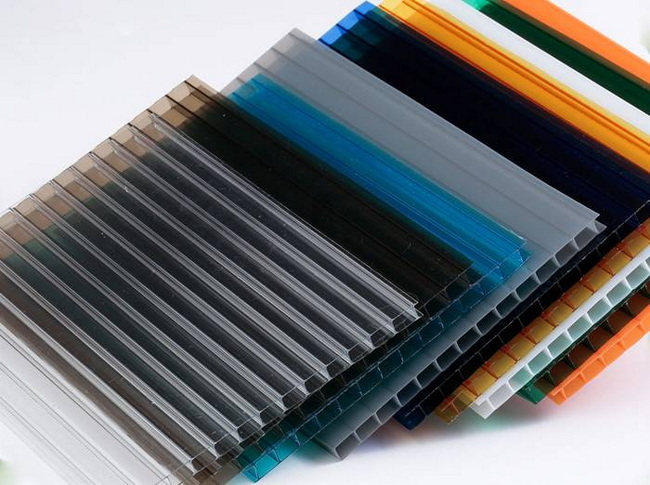
A simple decision matrix can help Russian buyers and global OEM partners evaluate PP hollow sheet suppliers more objectively.
| Evaluation Factor | Why It Matters for Buyers | Typical Tier 1 Pattern | Typical Tier 2–3 Pattern |
|---|---|---|---|
| Thickness & weight consistency | Impacts box strength, printability, load safety | Narrow tolerances across batches (archivemarketresearch) | Noticeable variation batch to batch |
| UV & weather resistance | Critical for outdoor hoarding, signage, agriculture | Offers tested UV‑stabilized grades (archivemarketresearch) | Limited data, often standard indoor grades |
| Lead time and peak‑season risk | Affects construction schedules and campaign launches | Clear capacity planning, honest updates | Frequent delays, reactive communication |
| Technical support | Determines whether you get optimal specs or over/under‑engineer | Proactive design suggestions (archivemarketresearch) | "Just quote a spec"; limited scenario insight |
| After‑sales and complaints | Influences downtime and relationship stability | Structured process, clear compensation | Case‑by‑case, sometimes defensive |
Market studies show the strongest growth for PP hollow sheets in reusable packaging and construction, where repeatability matters more than any single batch. For a logistics company, unstable board quality means inconsistent box strength; this drives up breakage, return rates and labor costs for repacking. For a contractor, inconsistent stiffness and thickness can cause uneven temporary flooring or hoarding, and even force rework if boards fail on site. [archivemarketresearch]
In both cases, the true cost includes:
- Lost time on the assembly line or construction site.
- Extra transport or labor to replace defective materials.
- Damage to end‑customer confidence.
That is why top buyers evaluate at least 3–5 successive orders before declaring a supplier "stable enough" for key projects.
PP hollow sheet is not a one‑size‑fits‑all material; thickness segments below 4 mm and 6–10 mm serve very different needs. Abuse of thicker, heavier sheets for simple signage or over‑specifying board grammage for light products wastes money, while under‑specifying for heavy loads or outdoor exposure creates high failure risk. [archivemarketresearch]
Experienced suppliers, or OEM partners familiar with multiple sheet materials, help buyers by:
- Asking about load weight, stacking height, logistics route and reuse cycles for packaging.
- Checking outdoor exposure duration, climate and fixing method for hoarding or signage.
- Recommending thickness, grammage and optional UV‑stabilized grades based on real‑world conditions.
This is where companies with broad plastic sheet know‑how, like Shanghai Gokai in PVC foam board and acrylic sheet, can add value when helping global buyers structure multi‑material OEM solutions. [gokaiplastic]
A healthy PP hollow sheet relationship assumes things can sometimes go wrong. The difference between a Tier 1 and Tier 3 supplier is not "never having problems", but how quickly and transparently they react when problems appear.
Best‑practice suppliers:
- Request detailed photos, batch numbers and usage context within 24–48 hours.
- Offer clear options: on‑site inspection, replacement shipment or credit note.
- Analyze root cause (extrusion settings, raw material, storage conditions) and implement prevention.
This structured approach aligns with quality management systems that serious plastic sheet manufacturers adopt for global markets. [archivemarketresearch]
Although Shanghai Gokai Industry Co., Ltd. focuses on PVC foam board and acrylic sheet, its profile illustrates what buyers should look for in any plastic sheet OEM partner. [shgokai.en.made-in-china]
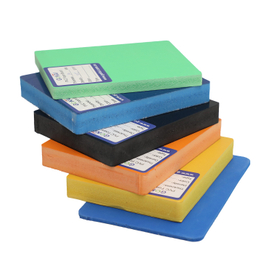
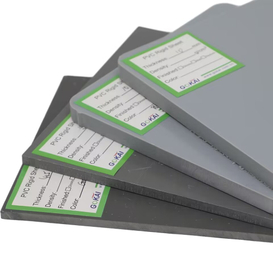
Shanghai Gokai was founded in 2009 and operates multiple production lines for PVC foam board, PVC rigid sheet, flooring and acrylic sheet, using advanced extrusion equipment. Typical PVC foam board products cover thicknesses from around 1–5 mm and densities between 0.45–0.9 g/cm³, with Vicat softening points above 70 °C and impact strengths suitable for signage and decorative applications. [gokai.goldsupplier]
Key strengths relevant to PP hollow sheet buyers include:
- Multi‑material expertise: Understanding how PVC foam board, acrylic sheet and other plastics perform in signage, displays, construction and decor can help optimize where PP hollow sheet fits in a larger solution.
- OEM mindset: Gokai already provides customized sizes, colors and surface finishes for global customers, which translates well into supporting OEM clients who also source PP hollow sheets. [gokaiplastic]
- Export experience: Serving international markets requires consistent quality, documentation and logistics management, the same capabilities needed to coordinate PP hollow sheet OEM projects across borders. [gokai.goldsupplier]
For a global buyer serving Russia, a practical OEM strategy might be:
- Use PP hollow sheet for reusable packaging boxes, dividers and temporary construction protections from selected Russian or regional suppliers.
- Use PVC foam board and acrylic sheets from OEM partners such as Gokai for signage, interior decor, displays and high‑quality printed elements. [shgokai.en.made-in-china]
- Rely on one OEM coordinator to align thicknesses, colors and branding consistency across these materials, simplifying procurement and design.
This combined approach reduces complexity and ensures that every application uses the most suitable material.
1. Clarify your application and risk level
- Critical uses (structural protection, long‑term outdoor) require Tier 1‑style partners; non‑critical signage or short‑term campaigns may accept Tier 2–3 suppliers.
2. Request technical data and recent test reports
- Ask for typical thickness tolerance, impact strength and UV resistance for the grades you will use. [archivemarketresearch]
3. Assess lead time and peak‑season strategy
- Confirm normal lead times and what happens during peak months; check if safety stock can be arranged.
4. Run trial orders across at least 2–3 batches
- Compare stiffness, color and surface quality between batches, not just within one delivery.
5. Evaluate communication and after‑sales policy
- Ask explicitly how the supplier handles claims, time frames for responses and thresholds for replacement or credit.
- "Which PP hollow sheet thickness ranges and applications are you most experienced with?" [archivemarketresearch]
- "Can you share examples or references from Russian customers in our industry?"
- "How do you manage capacity during peak seasons to protect long‑term clients?"
- "What documentation can you provide—test reports, certificates, MSDS—for these grades?"
If you are planning to scale packaging, construction or signage projects in Russia, treating PP hollow sheet as a strategic material—rather than a commodity—will significantly reduce your operational risk. Use the ranking principles in this guide to classify suppliers into tiers and then build a portfolio of one main and one backup source. For integrated OEM solutions combining PP hollow sheet with PVC foam board and acrylic sheet for global projects, working with experienced manufacturers such as Shanghai Gokai can help you standardize quality, branding and documentation across multiple materials. [gokaiplastic]
Contact us to get more information!
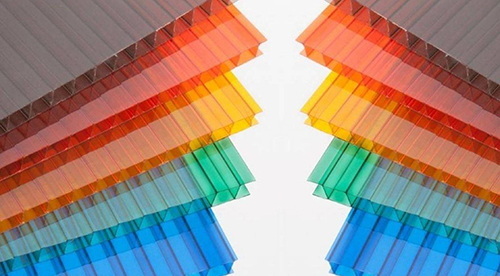
PP hollow sheet is an extruded polypropylene board with hollow channels between two walls, offering high stiffness at low weight, good moisture resistance and recyclability. In Russia, it is widely used for reusable packaging, construction hoarding, protection boards and signage because it withstands rough handling and variable weather better than many paper‑based alternatives. [dreamscapeportfolio.digitalpress]
For critical, high‑risk projects such as long‑term outdoor hoarding or heavy‑duty reusable packaging, Tier 1 suppliers are preferable because they deliver more consistent mechanical properties, clearer documentation and stronger after‑sales support. Tier 2 and Tier 3 suppliers can still be used for non‑critical or short‑term applications where slight quality fluctuations are acceptable. [archivemarketresearch]
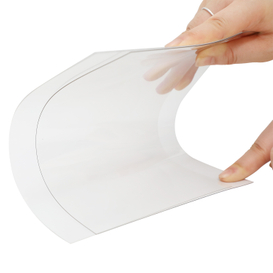
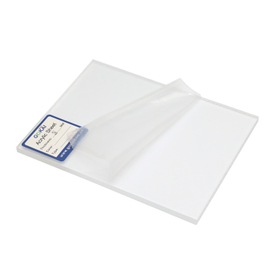
PP hollow sheet is optimized for impact resistance, moisture resistance and structural tasks like boxes and temporary barriers. PVC foam board, such as that produced by Shanghai Gokai, offers smooth surfaces and dimensional stability for signage and decor, while acrylic sheet provides high transparency and hardness for premium displays and glazing‑type uses. [gokai.goldsupplier]
At minimum, ask for datasheets listing density, thickness tolerance, impact and flexural strength, recommended applications, plus any UV‑stabilized or special grades. For larger or regulated projects, you should also request test reports, certificates and environmental or safety documentation. [archivemarketresearch]
Yes. OEM‑oriented manufacturers with experience in PVC foam board and acrylic sheet, such as Shanghai Gokai, are well positioned to coordinate multi‑material solutions—for example, PP hollow sheet boxes combined with PVC foam or acrylic signage elements—ensuring consistent colors, branding and logistics handling for global buyers. [shgokai.en.made-in-china]
1. PP Hollow Sheet Extrusion Machine Shipped to Russia, theplasticmachine.com. [theplasticmachine]
2. Wuxi RongHao Packaging Materials Co., Ltd.: PP Hollow Board, PP Hollow Board Turnover Box, made‑in‑china.com. [rhpacking.en.made-in-china]
3. PP Hollow Sheet Analysis Report 2026: Market to Grow by a CAGR…, archivemarketresearch.com. [archivemarketresearch]
4. Key Applications of PP Hollow Sheets, dreamscapeportfolio.digitalpress.blog. [dreamscapeportfolio.digitalpress]
5. Shanghai Gokai Industry Co., Ltd.: Chinese PVC Foam Board & PVC…, gokai.goldsupplier.com. [gokai.goldsupplier]
6. Shanghai Gokai Factory Wholesale PVC Free Foam Board/Sheet, made‑in‑china.com. [shgokai.en.made-in-china]
7. Gokai: PVC Foam Board, Acrylic Sheet, Clear Acrylic Sheet, gokai.com.cn / gokaiplastic.com. [gokaiplastic]
8. PP Hollow Sheet Future‑proof Strategies: Trends, Competitor…, archivemarketresearch.com. [archivemarketresearch]