Shanghai Gokai Industry Co,.Ltd.
Call Us: +86-18918606548
- Product Name
- Product Keyword
- Product Model
- Product Summary
- Product Description
- Multi Field Search
Views: 222 Author: Loretta Publish Time: 2026-04-03 Origin: Site


Content Menu
● The French Advantage in PS Sheet Production
● Leading PS Sheet Manufacturers and Suppliers in France
>> 4. GOKAI (Strategic OEM Partner)
● Technical Performance: GPPS vs. HIPS
● Addressing the Information Gap: 2026 Market Insights
>> I. The Digital Product Passport (DPP)
>> II. Surface Treatment Innovations
>> III. The Strategic Sourcing "Mix"
● How to Verify Supplier Authority and Quality
● Optimizing the Call to Action (CTA)
● Frequently Asked Questions (FAQ)
>> 1. What are the standard dimensions for PS sheets in France?
>> 2. Is PS (Polystyrene) recyclable in the French system?
>> 3. How does temperature affect PS sheets during transport to France?
>> 4. Can I get custom colors for HIPS sheets?
>> 5. What is the difference between PS sheet and Acrylic (PMMA)?
As a seasoned specialist in the global polymer supply chain, I have closely monitored the evolution of the French industrial landscape. France is no longer just a consumer of raw materials; it has become a sophisticated hub for high-performance plastics. Whether you are a procurement manager for a luxury cosmetics brand in Paris or a high-volume signage distributor in Lyon, navigating the Polystyrene (PS) sheet market requires a blend of local regulatory knowledge and global sourcing agility.
In this comprehensive analysis, we explore the leading PS sheet manufacturers and suppliers in France, identify critical market shifts toward circularity, and provide the technical data necessary to optimize your B2B procurement strategy.

The French market is defined by some of the most stringent quality and environmental standards in the world. With the implementation of the AGEC Law (Anti-Waste for a Circular Economy), French manufacturers have shifted their focus from simple extrusion to advanced material science.
For a B2B buyer, sourcing from a French-aligned supply chain ensures that products meet rigorous safety certifications, particularly for food-contact applications and high-traffic retail environments.
The following companies represent the pinnacle of production capacity, technical innovation, and logistical reliability within the French territory.
Headquartered in France, Multiplast is a cornerstone of the domestic plastics industry. They have successfully bridged the gap between industrial utility and environmental responsibility.
Specialization: High-Impact Polystyrene (HIPS) designed for the building and DIY sectors.
Strategic Value: They offer robust take-back programs for scrap material, aligning perfectly with French sustainability mandates.
A titan in plastic transformation, Millet operates at a scale that few can match. While their portfolio is diverse, their PS sheet extrusion line is specifically engineered for the high-precision demands of the pharmaceutical and food packaging industries.
Specialization: Multi-layer co-extruded PS sheets with enhanced barrier properties.
Strategic Value: ISO-certified facilities that guarantee batch-to-batch consistency for automated production lines.
Part of the prestigious Primo Group, their French division focuses on custom-engineered profiles and technical sheets. They are the preferred partner for specialized industrial applications where standard off-the-shelf dimensions are insufficient.
Specialization: UV-stabilized and custom-tinted PS sheets.
Strategic Value: Strong Research & Development (R&D) support for OEM projects requiring specific polymer blends.
Recognizing that French businesses require a balance of quality and cost-efficiency, Gokai serves as a vital global partner. By specializing in high-volume PS sheet OEM services, Gokai enables French distributors to scale their inventory with materials that mirror European technical specifications at a competitive price point.
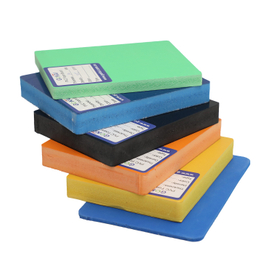
Specialization: High-transparency GPPS and versatile HIPS for the signage and display industry.
Strategic Value: Flexible customization of sheet thickness (0.5mm to 15mm) and surface finishes that meet the aesthetic standards of the French market.
While Vink operates as a distributor rather than a primary manufacturer, their influence on the French supply chain is undeniable. With multiple regional warehouses, they provide the "just-in-time" delivery that is essential for modern lean manufacturing.
Specialization: Wide-spectrum distribution of technical plastics.
Strategic Value: Localized inventory reducing lead times for urgent project requirements.
To maximize SEO efficiency and operational success, it is vital to utilize the correct material grade for the specific application.
| Technical Property |
GPPS (General Purpose) |
HIPS (High Impact) |
| Optical Clarity |
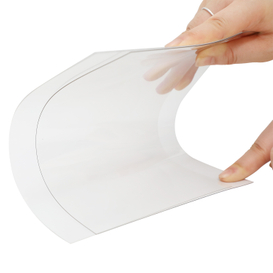
90%+ (Glass-like) |
Opaque / Translucent |
| Flexural Strength |
High (Rigid) |
Moderate (Flexible) |
| Impact Resistance |
Brittle |
High (Rubber-modified) |
| Common Application |
Protective glazing, lighting |
Signage, thermoformed trays |
Pro Tip: For high-end retail displays in France, I recommend a Hybrid PS blend that offers the clarity of GPPS with the stress-crack resistance of HIPS.

To outperform competitors, procurement teams must look beyond the price-per-sheet and evaluate these three emerging trends:
The European Union is moving toward mandatory digital tracking for plastic materials. Forward-thinking suppliers are now integrating QR-coded batch tracking. This ensures that every PS sheet can be traced back to its resin origin, a crucial factor for French brands aiming for "Green Brand" status.
In the French printing sector, traditional PS sheets often suffer from poor ink adhesion. We are seeing a surge in demand for Corona Treated PS sheets. This process increases the surface tension of the sheet, allowing for vibrant, long-lasting UV digital printing—a must for luxury POS (Point of Sale) materials.
The most resilient French companies utilize a "70/30 Sourcing Strategy." They secure 70% of their baseline volume through Global OEM specialists like Gokai to maintain healthy margins, while sourcing 30% from local manufacturers for high-speed, customized "Made in France" artisanal projects.
When vetting a PS Sheet Supplier, use this four-pillar framework:
Material Virginity: Ensure the supplier provides a certificate of analysis (COA) confirming the ratio of virgin resin to recycled content. Excessive regrind leads to "yellowing" over time.
Dimensional Tolerance: In automated CNC machining, a 0.1mm variance can cause production halts. Verify that the supplier uses high-precision extrusion dies.
Certification Transparency: For the French market, look for REACH and RoHS compliance documentation as a minimum baseline.
Logistical Infrastructure: Does the supplier understand the complexities of French customs (for imports) or the local "eco-tax" (Taxes Foncières) implications for warehousing?
The French PS sheet market is evolving rapidly. Whether you are looking for a domestic manufacturing partner or a high-capacity OEM provider to expand your wholesale reach, the key is technical transparency.
Ready to upgrade your supply chain? Contact our technical team today to request a sample pack of our high-impact and general-purpose PS sheets, engineered specifically for the European market.

While the global standard is 1220 x 2440mm, many French industrial designers prefer the 1000 x 2000mm or 2050 x 3050mm formats to minimize waste in European-standard frames.
Yes. PS is identified by resin code #6. In France, industrial PS waste is highly sought after for mechanical recycling into insulation materials and new plastic sheets.
PS has a relatively low heat deflection temperature (approx. 70°C-80°C). During summer shipping or storage in southern regions like Occitanie, ensure the sheets are stored away from direct sunlight to prevent warping.
Absolutely. Professional OEM suppliers can match specific RAL or Pantone colors. This is particularly popular for French corporate branding in retail environments.
PS is lighter and more affordable than Acrylic. While Acrylic has better long-term UV resistance, PS is the preferred choice for indoor applications and short-to-medium-term outdoor signage due to its superior cost-to-performance ratio.