Shanghai Gokai Industry Co,.Ltd.
Call Us: +86-18918606548
Call Us: +86-18918606548
- Product Name
- Product Keyword
- Product Model
- Product Summary
- Product Description
- Multi Field Search
Views: 222 Author: Loretta Publish Time: 2026-02-04 Origin: Site


Content Menu
● Why the UK Needs Reliable WPC Foam Board Manufacturers and Suppliers
● Shanghai Gokai Industry Co., Ltd. and Its Role in the UK Market
● Key Features of WPC Foam Boards from Leading Global Suppliers
>> Material structure and performance
>> Standard dimensions and finishes
● Typical Applications of WPC Foam Boards in the UK
>> Exterior and specialized applications
● How UK Buyers Evaluate WPC Foam Board Manufacturers and Suppliers
● OEM Collaboration Models for UK WPC Foam Board Brands
● Practical Tips for Working with WPC Foam Boards
● How WPC Foam Boards Support Sustainability Goals
● Why UK Distributors Partner with Global Manufacturers like Shanghai Gokai
● FAQ – WPC Foam Board Manufacturers and Suppliers
>> 1. What is the main advantage of WPC foam board compared with traditional wood panels?
>> 2. How do WPC Foam Board Manufacturers and Suppliers ensure consistent quality?
>> 3. Can UK companies create private‑label WPC foam board ranges with overseas manufacturers?
>> 4. What are the most common applications for WPC foam boards supplied to the UK?
>> 5. What should UK buyers check before choosing a WPC foam board supplier?
As demand for durable, sustainable, and low‑maintenance building materials grows, WPC (Wood Plastic Composite) foam boards are becoming a core choice for architects, fabricators, and furniture brands across the UK and Europe. This article explores how to identify top WPC Foam Board Manufacturers and Suppliers, how international OEM partners such as Shanghai Gokai Industry Co., Ltd. support UK buyers, and what criteria matter most when selecting a long‑term supply partner.

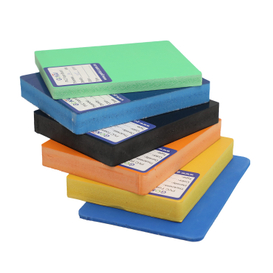
WPC foam board is a hybrid sheet material made by combining PVC or similar thermoplastic resins with wood fiber or wood powder through an extrusion and foaming process. The result is a light yet rigid panel that combines the machinability of wood with the weatherability and stability of plastics, making it suitable for both interior and exterior environments.
Compared with traditional timber or standard PVC boards, WPC foam boards offer enhanced resistance to moisture, rot, and insect attack, which is vital in damp or outdoor UK conditions. At the same time, the foamed structure keeps weight relatively low, simplifying handling on site and reducing structural loads, while still delivering the stiffness needed for furniture, cladding, signage, and partitions.
The UK construction, interior fit‑out, and signage sectors are subject to tight deadlines, rigorous performance standards, and increasingly strict sustainability targets. These pressures mean that reliable WPC Foam Board Manufacturers and Suppliers are essential partners rather than optional vendors, especially when projects involve large volumes, long service life, and demanding environmental exposure.
Regulation is another key factor driving demand for proven WPC foam board solutions. Fire performance, structural safety, and environmental compliance all need materials that come with test reports, certifications, and traceability. Specifiers are therefore more likely to favour WPC Foam Board Manufacturers and Suppliers with clear documentation, consistent product properties, and a track record of supplying projects across Europe and the UK.
Shanghai Gokai Industry Co., Ltd. is a specialist manufacturer focused on researching, developing, and producing board and sheet materials, mainly PVC foam board and acrylic sheet. Founded in 2009, the company operates with around ten production lines and has positioned itself as an export‑oriented producer serving markets such as the UK, Europe, North America, the Middle East, and Asia.
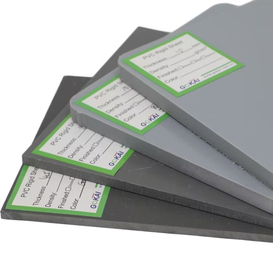
Gokai's portfolio covers PVC foam boards, PVC Celuka foam boards, rigid PVC sheets, acrylic sheets, and a broader family of board and sheet products, with WPC foam board and WPC‑related materials as part of its extended offering. The company invests in advanced extrusion equipment and processing technology, allowing close control over density, thickness, and surface finish, which are critical for WPC Foam Board Manufacturers and Suppliers that demand stable quality.
From a service perspective, Shanghai Gokai Industry Co., Ltd. focuses on export support and OEM cooperation. Many of its products are tailored for international partners, including distributors, brand owners, and converters that require private‑label or customized WPC foam board series. For UK‑based WPC Foam Board Manufacturers and Suppliers, this OEM strength makes it easier to build comprehensive product lines without installing their own foam‑board production facilities.
Although exact specifications differ among WPC Foam Board Manufacturers and Suppliers, leading producers share several technical characteristics and performance priorities.
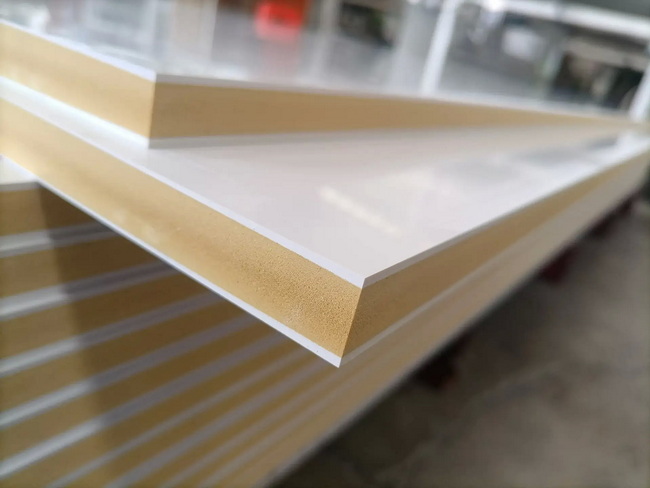
WPC foam boards are typically produced from a mixture of PVC resin or other compatible thermoplastic resins with wood fibers or wood flour, plus stabilisers, lubricants, and other additives. The extrusion process creates a closed‑cell foamed core that combines rigidity with relatively low weight, enhancing both handling and mechanical performance.
This composite structure yields several practical benefits:
- High resistance to water, rot, and biological attack, which helps the boards perform well in humid indoor spaces and outdoor applications.
- Strong impact and indentation resistance, making the boards suitable for high‑traffic areas and heavy‑use furniture installations.
- Improved dimensional stability compared with many standard timber‑based products, reducing the risk of warping and swelling in fluctuating climate conditions.
Most WPC Foam Board Manufacturers and Suppliers follow standard panel dimensions to simplify fabrication and logistics. Common formats include sheet sizes around 1220 × 2440 mm and other large formats designed to minimise joints and waste on site. Thickness ranges typically start around 3–5 mm and extend up to 30–40 mm, allowing the same material family to serve as thin cladding, structural cabinet carcasses, and more robust exterior components.
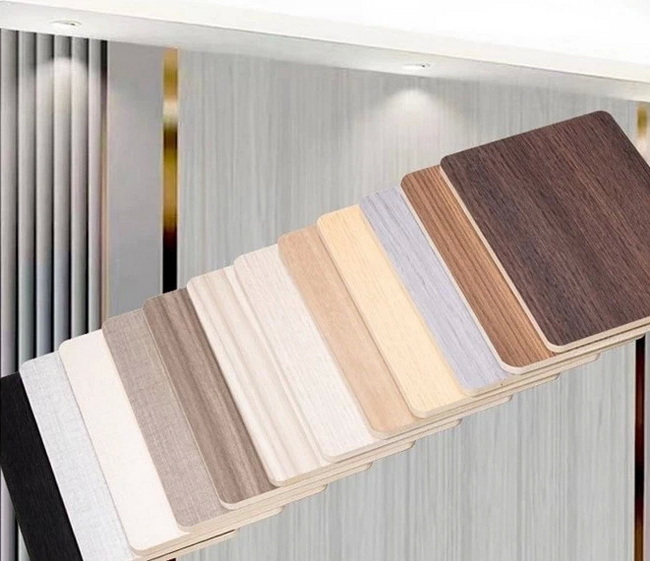
Surface finishes are generally smooth, matte, or slightly textured to support painting, lamination, or direct digital printing. Some WPC Foam Board Manufacturers and Suppliers also offer pre‑finished surfaces that are ready for installation, along with colour‑through formulations that maintain appearance even when edges are machined.
WPC foam boards are valued for their versatility and are increasingly used across residential, commercial, retail, and public projects in the UK. Because the boards combine moisture resistance, strength, and ease of processing, they can act as a single material solution in many of these application areas.
In interior environments, WPC foam boards are widely used for furniture, cabinetry, and decorative elements. Kitchen and bathroom cabinets benefit from the boards' moisture resistance, while retail fixtures, shelving, and storage units benefit from their dimensional stability and ability to hold screws securely. Interior wall cladding, ceiling panels, and decorative partitions are another common use, where WPC foam boards provide a clean, uniform surface that can be finished in many different styles.
Exhibition stands and modular displays are further examples in which WPC foam boards excel. The boards stand up well to frequent assembly and disassembly, offer predictable machining characteristics, and provide a good substrate for printing, vinyl graphics, or laminates. For UK brands that frequently refresh retail environments or trade show stands, working with experienced WPC Foam Board Manufacturers and Suppliers can therefore significantly simplify material planning.
Outdoors, WPC foam boards are used in decking, garden structures, fences, and façade cladding. The combination of UV stabilisation, weather resistance, and slip‑resistant textures makes them suitable for terraces, balconies, and poolside applications. In cladding and soffit systems, WPC foam boards help maintain aesthetic consistency while reducing maintenance intervals when compared with unfinished timber.
Specialised uses include marine‑adjacent or high‑moisture environments such as docks, boat elements, and outdoor furniture that must tolerate continuous exposure to water and weather. Additionally, signage, wayfinding systems, and outdoor advertising structures often rely on WPC foam boards because of their smooth, printable surfaces and their ability to preserve structural integrity in exposed locations.
For UK fabricators, wholesalers, and project owners, selecting the right WPC Foam Board Manufacturers and Suppliers is a strategic decision that influences both project performance and long‑term costs. A methodical assessment process helps reduce risk and ensures that supplied materials match the expectations of specifiers and end‑users.
Key evaluation criteria include:
1. Certification and compliance
Buyers should look for CE marking, fire‑test reports, and documentation that demonstrates compliance with relevant European and UK standards. Certifications from recognised bodies show that WPC foam boards meet minimum requirements for safety, mechanical performance, and environmental impact. For projects subject to rigorous building regulations, this documentation is essential.
2. Production capacity and stability
Reliable WPC Foam Board Manufacturers and Suppliers maintain multiple extrusion lines and can provide clear data on monthly and annual capacity. This transparency helps UK buyers gauge whether the manufacturer can support large or growing demand, as well as stable lead times during seasonal peaks. It also allows distributors to manage stock levels without frequent stock‑outs or delays.
3. Quality control and consistency
A robust quality system should include checks of thickness, density, surface flatness, colour uniformity, and mechanical properties. Leading WPC Foam Board Manufacturers and Suppliers will often share descriptions of their inspection procedures and may be willing to provide sample test data. Consistent quality reduces fabrication problems, improves yield, and cuts down on complaints from end customers.
4. Product range and customisation
A wide product range across thicknesses, sizes, densities, and colours is important for distributors who serve multiple sectors such as furniture, construction, and signage. Customisation capability also matters: some UK brands want bespoke colours, surface textures, or formulations tailored to specific applications. An OEM‑friendly manufacturer can adapt its recipes and production settings to meet these requirements.
A common model in the UK market is for local companies to develop their brand, sales network, and technical support while outsourcing production to experienced WPC Foam Board Manufacturers and Suppliers overseas. This arrangement allows UK businesses to focus on marketing, application engineering, and customer service, while leveraging the economies of scale and technical expertise of a dedicated manufacturing partner.
In a typical OEM partnership:
- The UK partner defines the target product portfolio, including board sizes, thickness ranges, density classes, colours, and performance criteria such as fire rating or specific mechanical properties.
- The manufacturer works with these requirements to adjust formulations, select suitable additives, and fine‑tune extrusion parameters, then provides sample boards for testing.
- After approval of pilot batches, full‑scale production runs are scheduled and integrated into the factory's planning. Finished goods are consolidated and shipped to UK ports, where the local partner takes over warehousing, distribution, and after‑sales service.
Shanghai Gokai Industry Co., Ltd. fits well into this OEM pattern, with its focus on PVC foam boards, acrylic sheets, and related materials, as well as its established export channels into the UK and other regions. UK WPC Foam Board Manufacturers and Suppliers can build stable private‑label ranges by working closely with Gokai to develop and refine formulations that meet local expectations.
Even when materials are sourced from top WPC Foam Board Manufacturers and Suppliers, correct handling and fabrication practices are essential for optimal results. For UK contractors, joiners, and fabricators, the following guidelines are useful starting points:
- Storage: Store WPC foam boards flat on level, dry supports, protected from direct sunlight and excessive heat where possible. This avoids warping or surface discolouration before installation.
- Cutting and machining: Use sharp, carbide‑tipped blades and bits, similar to tooling recommended for hardwoods or dense plastics. Suitable feeds and speeds reduce chipping and produce clean edges.
- Fastening and bonding: Follow the manufacturer's instructions on screw types, pilot holes, and spacing, as WPC foam boards may require specific fasteners or fixing patterns. When using adhesives, choose products compatible with PVC and composites.
- Thermal movement: Plan for expansion and contraction, especially in exterior applications. Leave appropriate gaps at joints and follow system‑specific recommendations for decking or cladding assemblies.
- Surface finishing: Test paints, laminates, or printing inks on sample off‑cuts to confirm adhesion and appearance before committing to full‑scale production.
Sustainability is a growing consideration for UK buyers evaluating WPC Foam Board Manufacturers and Suppliers. Although WPC foam boards do incorporate plastics, they also replace large volumes of solid wood and can help reduce the need for frequent replacements due to water damage or biological attack.
Many producers use recycled wood fibers and, in some cases, recycled plastic components in their formulations, supporting circular‑economy objectives. The long service life of WPC foam boards reduces material turnover, which can be an advantage in lifecycle assessments compared with materials that require frequent maintenance or replacement. When combined with responsible sourcing and efficient logistics, WPC foam boards become part of a broader sustainable material strategy for construction and design.
For UK distributors and brands, partnering with an experienced global manufacturer such as Shanghai Gokai Industry Co., Ltd. offers several strategic benefits beyond simple price competitiveness. First, it enables access to a broader catalogue of board and sheet products, including PVC foam board, WPC foam board, rigid PVC sheet, and acrylic sheet, all from a single supplier. This simplifies procurement, freight consolidation, and inventory planning.
Second, established manufacturers with international experience typically have strong technical teams and well‑documented product data, making it easier for UK partners to respond to project queries and provide accurate information to specifiers. Third, OEM‑oriented WPC Foam Board Manufacturers and Suppliers can assist with branding, packaging, and customised specifications, allowing UK partners to differentiate themselves in a competitive market.
Finally, long‑term partnerships with global producers help UK companies ensure continuity of supply during demand spikes or market disruptions. A manufacturer with multiple lines, flexible planning, and a global export network is better positioned to support urgent orders or expand capacity as the UK market for WPC foam boards continues to grow.
For the UK market, the most successful WPC Foam Board Manufacturers and Suppliers are those that combine proven technical performance, strong certifications, and the flexibility to support private‑label and customised solutions. WPC foam boards deliver a compelling balance of durability, moisture resistance, and design versatility, making them ideal for both interior and exterior applications ranging from cabinets and furniture to decking and cladding.
International OEM partners like Shanghai Gokai Industry Co., Ltd. play a vital role in this landscape by providing advanced production capabilities, consistent quality, and export‑ready logistics that align with UK requirements. By carefully assessing certification, capacity, quality systems, and customisation options, UK stakeholders can select WPC Foam Board Manufacturers and Suppliers that will support demanding projects and long‑term growth, while helping them meet performance, sustainability, and cost objectives.
Contact us to get more information!
The main advantage of WPC foam board is its combination of moisture resistance, dimensional stability, and durability. Unlike many traditional wood panels, it does not swell or rot easily when exposed to water or humidity, which makes it suitable for kitchens, bathrooms, outdoor furniture, and exterior cladding. At the same time, it can be cut, drilled, and fastened using tools and techniques similar to those used with wood, simplifying adoption for joiners and fabricators.
Leading WPC Foam Board Manufacturers and Suppliers implement strict quality‑control procedures throughout production. They monitor raw materials, check density and thickness during extrusion, and inspect surface finish and dimensions before packaging. Many also maintain certifications and provide technical data sheets, enabling buyers to verify that each batch meets the required mechanical and environmental performance criteria for UK and European projects.
Yes. Many overseas WPC Foam Board Manufacturers and Suppliers offer OEM programmes that allow UK companies to build private‑label product lines. In these arrangements, the UK partner specifies sizes, thicknesses, densities, colours, and branding requirements, while the manufacturer adjusts formulations and production settings accordingly. The finished boards are then supplied under the UK brand's label, often with tailored packaging and marketing support.
Common applications include kitchen and bathroom cabinets, interior wall cladding, partitions, and furniture intended for humid or high‑traffic environments. Outdoors, WPC foam boards are frequently used for decking, fences, garden structures, and façade cladding systems. The boards are also popular in signage, exhibition stands, and retail displays, where their smooth, printable surfaces and impact resistance offer clear advantages over some traditional substrates.
UK buyers should verify certifications, fire‑test reports, and environmental credentials to ensure that the products meet local regulations and project requirements. They should also assess production capacity, range of sizes and thicknesses, and the robustness of the supplier's quality‑control system. Requesting samples, reviewing long‑term references, and discussing OEM or customisation options are additional steps that help identify WPC Foam Board Manufacturers and Suppliers capable of supporting long‑term partnerships and demanding applications.
1. https://www.gokai.com.cn
2. https://m.made-in-china.com/company-gokai123/info.html
3. https://gokai.goldsupplier.com/about.html
4. https://gokai.en.alibaba.com/company_profile.html
5. https://www.boardwaybuilding.com/n1898041/What-Are-the-Properties-and-Uses-of-WPC-Foam-Board.htm
6. https://www.boardwaybuilding.com/products2118594/WPC-Foam-Board.htm
7. https://demacmultiboard.com/applications-of-wpc-foam-boards.php
8. https://demacmultiboard.com/wpc-foam-boards.php
9. https://www.wallboardmanufacturer.com/foa-wpc-series/
10. https://www.aibofoamboard.com/aibo-community/uses-and-advantages-of-wpc-foam-boards.html
11. https://www.imarcgroup.com/wpc-foam-board-manufacturing-plant-project-report
12. https://www.shivkrupaindustry.com/wpc-foamboards/
13. https://icdn.tradew.com/file/201706/1572031/pdf/7682160.pdf
14. https://www.onsunwpc.com/wpc-foam-board-the-ultimate-guide/