Shanghai Gokai Industry Co,.Ltd.
Call Us: +86-18918606548
Call Us: +86-18918606548
- Product Name
- Product Keyword
- Product Model
- Product Summary
- Product Description
- Multi Field Search
Views: 266 Author: Gokai Publish Time: 2026-10-15 Origin: Site


Content Menu
● What Is Polycarbonate Solid Sheet?
>> Sheet Applications Are Different From Molded Products
● Everyday Uses for Polycarbonate Solid Sheet
>> 1. Machine Guards and Industrial Viewing Panels
>> 2. Protective Glazing and Public-Facing Barriers
>> 3. Room Dividers and Interior Partitions
>> 4. Canopies, Skylights, and Outdoor Glazing
>> 5. Retail Displays, Museum Covers, and Signage
>> 6. Greenhouses and Agricultural Panels
● Choosing Polycarbonate Sheet for the Application
● Polycarbonate Solid Sheet vs. Acrylic, Glass, and Hollow Sheet
>> Solid Sheet vs. Hollow Sheet
● Four Specifications That Prevent Costly Purchasing Mistakes
>> 1. Thickness and Support Conditions
>> 2. UV Protection and Surface Coatings
>> 3. Light Transmission and Appearance
>> 4. Fire and Chemical Performance
● Practical Fabrication, Installation, and Cleaning Advice
>> Allow for Thermal Expansion
>> Validate Cutting, Drilling, and Forming
>> Use a Controlled Cleaning Routine
● An OEM Procurement Checklist for Global Buyers
>> Approve Samples Before Volume Production
● Discuss Your Polycarbonate Sheet Requirements With Gokai
>> What is polycarbonate solid sheet commonly used for?
>> Can clear polycarbonate sheet be used outdoors?
>> Is polycarbonate solid sheet bulletproof?
>> What thickness should I choose for a machine guard?
>> Does solid polycarbonate provide better insulation than hollow sheet?
>> Can Gokai provide OEM polycarbonate sheet services?
Polycarbonate solid sheet is used for machine guards, protective glazing, room dividers, displays, and outdoor canopies because it combines transparency with strong impact resistance. For businesses sourcing custom polycarbonate sheets, however, choosing the right material requires more than finding a clear panel at an attractive price.
Thickness, surface protection, sunlight exposure, fabrication methods, and installation details all influence performance. A sheet suitable for an indoor display may not be appropriate for an exposed roof or a safety-critical enclosure.
At Gokai, we supply polycarbonate solid sheet and other sheet materials, with OEM services for global customers. This guide takes a practical procurement perspective: where solid polycarbonate works, which limitations matter, and what buyers should confirm before placing an order.

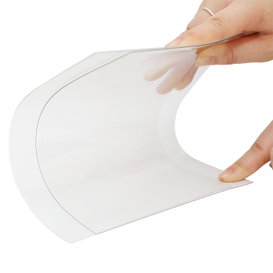
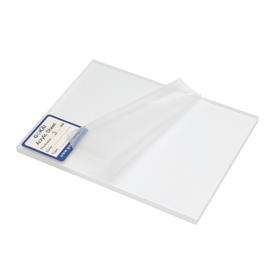
Polycarbonate solid sheet is a continuous, non-cellular panel made from polycarbonate thermoplastic. Unlike hollow or multiwall sheet, it has no internal air channels.
Its combination of clarity, toughness, and fabrication flexibility makes it useful when people need visibility through a protective barrier. Available product families include clear, tinted, textured, UV-protected, and abrasion-resistant options.
These features are not interchangeable. A UV-protective layer helps resist outdoor weathering, while an abrasion-resistant coating addresses surface wear. Buyers should request the exact grade rather than assume every sheet includes both.
Polycarbonate also appears in eyewear, electronics, automotive components, and optical media. However, many of those products are manufactured from molded resin rather than fabricated sheet.
For sheet buyers, the more relevant applications include cut panels, machined guards, formed covers, partitions, and glazing. This distinction helps avoid specifying ordinary stock sheet for products requiring specialized molding, optical quality, or certification.
Clear polycarbonate sheet allows operators to observe equipment while a barrier separates them from moving components or process debris.
Typical applications include:
- Inspection windows in equipment enclosures.
- Transparent covers around production machinery.
- Protective panels for automated workstations.
- Viewing sections in industrial partitions.
The important purchasing question is not simply whether polycarbonate is impact-resistant. It is whether the complete guard can withstand the anticipated hazard.
Sheet thickness, unsupported span, fixing method, operating temperature, and chemical exposure require review. A strong panel can still fail if its frame or fasteners are inadequate.

Solid polycarbonate can replace glass where impact exposure and handling weight are major concerns. Examples include protective screens, vandalism-resistant glazing, and observation panels.
Published manufacturer comparisons describe certain solid polycarbonate products as having around 200 times the impact resistance of glass. That figure is a product comparison, not a universal design value or proof of compliance.
For a safety-related installation, request evidence relevant to the intended application. Consider the panel, frame, anchoring, and surrounding structure together.
Ordinary polycarbonate sheet must not be described as bulletproof. Bullet-resistant barriers require specifically tested materials and assemblies with an appropriate protection rating.
Polycarbonate room dividers can separate spaces while preserving daylight and visual openness. They suit offices, workshops, retail interiors, and adaptable work areas.
Clear panels support visibility. Tinted or textured finishes can reduce direct views and introduce visual separation.
From a specification perspective, decide first whether the partition prioritizes transparency, privacy, appearance, or durability. Then confirm surface finish and light transmission with a sample.
Do not infer an acoustic rating from sheet thickness alone. Sound performance depends on the complete partition, including perimeter seals and installation details.
UV-protected polycarbonate solid sheet is used for entrance canopies, rooflights, covered walkways, and other daylighting applications.
Outdoor suitability depends on the selected grade. Blocking ultraviolet radiation through a panel is not the same as protecting the panel itself against weathering.
Ask whether UV protection is provided on one side or both sides, and follow the specified installation orientation.
Also evaluate:
- Local wind and snow loads.
- Support spacing and panel deflection.
- Thermal movement.
- Water drainage and edge details.
- Solar heat gain and glare.
- Applicable building requirements.
A clear roof can admit abundant daylight without necessarily delivering comfortable temperatures beneath it.
Polycarbonate can serve as a transparent protective cover where breakage resistance matters. Applications include display enclosures, product presentation panels, and protective fronts for signs.
Surface appearance deserves attention because frequent cleaning can introduce visible scratches.
For example, a museum display needs both protection and a clear viewing experience. The specification should address optical quality, cleaning procedures, fabrication marks, and surface durability—not just impact resistance.
Where printing or bonding is planned, confirm compatibility with the selected surface treatment before production.
Solid polycarbonate can provide clear glazing for selected greenhouse panels, doors, and protective windows.
However, it should not be treated as equivalent to multiwall sheet. Hollow constructions provide air spaces that can improve insulation, while solid sheet offers an uninterrupted viewing surface.
The best choice depends on climate, crop requirements, condensation management, structure design, and heating costs.
For agricultural projects, discuss light transmission and diffusion alongside UV characteristics. Maximum transparency is not automatically the best growing environment for every crop.
Use the following table as a starting point rather than a final engineering specification.
| Application | Main purchasing priority | Specification to verify |
|---|---|---|
| Machine guard | Visibility and hazard containment | Thickness, supports, chemical exposure |
| Outdoor canopy | Weathering and structural performance | UV protection, loads, expansion allowance |
| Interior partition | Appearance and space separation | Finish, dimensions, fixing details |
| Display cover | Clarity and surface condition | Optical quality, cleaning, coating |
| Greenhouse panel | Suitable daylight and climate control | Transmission, diffusion, thermal performance |
| Security glazing | Defined protection level | Tested assembly and applicable rating |
This approach prevents a common sourcing mistake: ordering by material name and thickness alone.
Two panels with the same nominal thickness may have different coatings, light transmission, dimensional tolerances, or intended service conditions.
Polycarbonate is generally selected when impact resistance takes priority. Acrylic remains a useful alternative when appearance and surface characteristics dominate and impact exposure is lower.
Do not assume either material is universally better. Compare samples under the expected lighting, cleaning routine, and handling conditions.
For frequently touched displays, consider surface protection rather than relying only on the base material.
Solid polycarbonate offers lower handling weight and substantially greater impact resistance than conventional glass in published product comparisons.
Glass may still suit projects that prioritize surface hardness or particular glazing characteristics.
The decision should include maintenance and replacement costs, not only purchase price. A lightweight panel may simplify handling, but it still needs properly designed supports.
Choose solid sheet when uninterrupted visibility, machined edges, or specific fabrication requirements matter.
Consider hollow sheet when a lightweight cellular construction and improved insulation are important.
Do not transfer thermal-performance claims from multiwall products to solid panels. Compare documented values for the actual thickness and glazing arrangement.

There is no universal "best thickness" for every application.
A small viewing panel and a wide outdoor canopy face different demands. Provide the supplier with panel dimensions, support spacing, loads, and the intended fixing method.
Safety-critical designs should receive appropriate engineering review.
State whether the sheet will be used indoors, outdoors, or near a strong sunlight exposure.
For outdoor projects, confirm UV protection, protected-side identification, warranty conditions, and maintenance requirements.
If scratch resistance matters, specify that separately. Not every coating supports the same bending, forming, or printing processes.
Some commercial clear solid polycarbonate products offer up to approximately 90% light transmission. Actual values vary with grade, thickness, color, and surface finish.
For Gokai orders, request the agreed product data rather than adopting another manufacturer's figures.
Use approved samples to establish acceptable tint, haze, texture, and visible surface condition.
Polycarbonate is not automatically noncombustible, and a generic material description does not establish a fire classification.
Request documentation for the specified grade and thickness when regulations or project specifications require it.
Chemical compatibility also needs checking. Cleaning agents, oils, adhesives, and sealants can affect the sheet, especially where mechanical stress is present.
Polycarbonate expands and contracts with temperature changes. Rigidly trapping a panel can cause distortion, stress, or damage.
Provide movement allowance in the framing system and use the manufacturer's guidance for clearances, hole dimensions, and fastening arrangements.
Avoid applying one standard gap to every project. Panel length, temperature range, frame design, and material properties influence the required allowance.
Before processing a full order, fabricate a sample using the intended tools and settings.
Check edge quality, hole position, dimensional accuracy, and surface condition. Remove sharp machining defects and avoid unnecessary stress around fixing points.
Where bending or thermoforming is required, verify the grade's processing instructions. Coated products may have different forming limitations from uncoated sheet.
Start with lukewarm water, a mild compatible detergent, and a soft cloth or sponge. Rinse thoroughly.
Avoid abrasive pads and dry wiping dusty surfaces, which can introduce scratches. Confirm any stronger cleaning chemical with the sheet manufacturer before use.
Keep protective film in place during handling where appropriate, but remove it according to the supplier's instructions.
A useful RFQ describes the finished application, not just "clear polycarbonate sheet."
Send Gokai the following information:
1. Application, installation environment, and destination market.
2. Required thickness, dimensions, quantity, and tolerances.
3. Color, texture, transparency, and surface requirements.
4. UV-protection or abrasion-resistance requirements.
5. Drawings and planned fabrication operations.
6. Required testing, documentation, and acceptance criteria.
7. Packaging, labeling, delivery schedule, and shipping destination.
Confirm which customization options are available for the requested order. Do not assume every coating, dimension, or processing service is included.
Use a sample approval process to reduce avoidable disputes.
Compare appearance under realistic lighting. Measure dimensions and thickness. Trial the intended cutting, drilling, cleaning, and installation methods.
Record the approved specification in writing, including acceptable surface defects and packaging requirements. Retain a reference sample where practical.
This turns an informal purchasing conversation into a repeatable quality standard.
Send Gokai your drawings or panel dimensions, intended application, estimated order quantity, and destination market.
Request a quotation based on a clearly defined specification, together with the relevant product information and sample options. Confirm the material and acceptance criteria before approving bulk production.

Common uses include machine guards, protective glazing, interior partitions, display covers, outdoor canopies, and selected agricultural panels. Each application requires an appropriate grade and installation design.
Yes, when the selected product is suitable for outdoor service. Confirm UV protection, installation orientation, warranty conditions, and structural requirements before ordering.
No. Ordinary stock sheet does not establish ballistic protection. Bullet-resistant applications require a tested material or assembly with a rating appropriate to the expected threat.
Thickness depends on the hazard, panel size, supports, fastening method, and operating environment. Use the machine's risk assessment and relevant design requirements rather than a generic thickness recommendation.
Not necessarily. Multiwall constructions use internal air spaces to improve insulation. Compare documented thermal values for the specific products and complete glazing systems.
Gokai offers OEM services for global customers. Submit your application, dimensions, quantity, appearance requirements, and documentation needs so the proposed supply specification can be confirmed.
1. [Piedmont Plastics — "Everyday Uses For Polycarbonate Sheet"].
Original article used to identify application topics and content gaps. Its broad statements about bullet resistance, fire performance, chemical resistance, and insulation have been qualified rather than repeated as universal properties. [piedmontplastics]
2. [Brett Martin — "Marlon FS: Rooflights, Glazing & Fabrication"].
Manufacturer information supporting solid-sheet applications in protective screening, machine guards, and glazing; product-specific comparisons concerning impact resistance and weight; and the need to accommodate thermal expansion. These figures are not Gokai product guarantees. [brettmartin]
3. [Brett Martin — "Marlon FSX: Rooflights, Glazing & Fabrication"].
Manufacturer information supporting UV-protected solid polycarbonate for external glazing, the distinction between protective surface layers and untreated sheet, and thermal-movement considerations. [brettmartin]
4. [Palram Industries — "PALSUN Flat Solid Polycarbonate Sheet"].
Manufacturer information supporting solid-sheet applications, color and diffusion options, and product-specific light transmission of up to 90%. This value must not be applied to all grades or presented as a verified Gokai specification. [palram]
5. [Palram Industries — "PALSUN" Product Brochure, PDF].
Technical reference for light transmission, glazing characteristics, thermal expansion, and cleaning with mild detergent, water, and a soft cloth. [palram]
6. [Palram Industries — "PALSUN Technical Guide," Distributor-Hosted PDF].
Technical reference for avoiding abrasive cleaning, preventing scratches from dry wiping, and considering thermal expansion during fabrication and installation. Obtain current grade-specific instructions before production. [astragroupsa.co]
7. [UL Solutions — "Testing and Certification for Bullet-Resistant Materials"].
Authoritative source explaining that bullet-resistant materials and assemblies require testing against defined threats under UL 752. Supports the distinction between ordinary impact-resistant sheet and rated ballistic protection. [ul]
8. Gokai company information supplied in the commissioning brief.
Source for the statements that Gokai supplies polycarbonate solid sheet and offers OEM services to global customers. No additional manufacturing capacity, certification, warranty, or completed customer project has been assumed.