Shanghai Gokai Industry Co,.Ltd.
Call Us: +86-18918606548
Call Us: +86-18918606548
- Product Name
- Product Keyword
- Product Model
- Product Summary
- Product Description
- Multi Field Search
Views: 267 Author: Sunny Publish Time: 2026-10-10 Origin: Site


Content Menu
● What Is Plexiglass Acrylic Sheet?
● Why Use Acrylic Sheet for Commercial Projects?
>> Optical Clarity and Presentation Quality
>> Flexible Fabrication and Product Design
>> Practical Limitations to Recognize
● Cast vs. Extruded Acrylic Sheet: Which Should You Choose?
● Match Acrylic Sheet Specifications to the Application
>> Retail Displays and Presentation Products
>> Illuminated Signs and Channel Letters
>> Outdoor Panels and Installed Components
● How to Cut, Drill, and Bond Plexiglass Acrylic Sheet
>> Cutting Acrylic Without Excessive Heat or Chipping
>> Drilling Acrylic Without Cracking
>> Bonding and Finishing Acrylic Components
● Design Acrylic Installations for Thermal Movement
● An OEM Acrylic Sheet Qualification Workflow
>> 1: Define the Finished Product
>> 2: Agree on Measurable Specifications
>> 3: Test Representative Samples
>> 4: Approve a Reference Sample
● What Published Customer Feedback Can Teach Buyers
● Compare Total Cost, Not Just Sheet Price
● Turn Your Acrylic Project into a Repeatable Production Specification
● Frequently Asked Questions About Plexiglass Acrylic Sheet
>> Is plexiglass the same as acrylic sheet?
>> Is cast acrylic always better than extruded acrylic?
>> What thickness should I use for my project?
>> Can acrylic sheet be used outdoors?
>> Why does acrylic crack around screw holes?
>> Can Gokai support custom acrylic sheet orders?
Plexiglass acrylic sheet can turn a simple design into a clear, lightweight, professional-looking product. Whether you are developing retail displays, illuminated signage, protective partitions, or custom OEM components, success depends on more than choosing a sheet that looks transparent. You need the right material grade, fabrication process, installation details, and supply specifications.
At Gokai, we supply acrylic sheet and other board materials with OEM services for global customers. Our approach to project planning starts with a practical principle: specification comes before price comparison.
This guide explains how to select, process, and purchase acrylic sheet with fewer avoidable problems, from prototype development to repeat production.

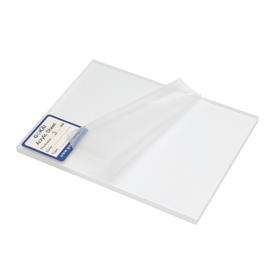
Plexiglass is a commonly used name for acrylic sheet, a rigid thermoplastic made from polymethyl methacrylate, or PMMA. Buyers also encounter branded acrylic products, but a familiar material name alone does not define manufacturing method, thickness tolerance, color, or application suitability.
Acrylic is popular because it combines optical clarity with versatile processing options. It can be cut, drilled, routed, engraved, formed, and bonded into many useful shapes.
However, not every acrylic sheet behaves identically. Cast and extruded materials differ, while clear, translucent, colored, and specialty grades serve different purposes.
For purchasing purposes, "clear plexiglass, 3 mm" is only a starting description—not a complete specification.
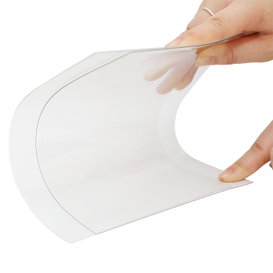
Clear acrylic provides a glass-like appearance for product displays, viewing panels, and decorative components. Certain colorless acrylic grades offer approximately 92% light transmission.
Treat this figure as grade-specific technical information, not a guaranteed result for every supplier, thickness, color, or surface finish. Request the proposed material's data sheet when optical performance matters.
For illuminated signage, maximum transmission is not always the goal. A suitable translucent sheet must also diffuse light and conceal individual light sources.
Acrylic supports straight panels, routed components, engraved signs, bonded display boxes, and thermoformed parts.
This flexibility allows designers to combine visible surfaces and functional features within one material family. However, fabrication creates heat and mechanical stress. A sheet that looks excellent before processing may still crack, distort, or show poor edge quality if machining conditions are unsuitable.
Prototype the complete process, not just the outline of the part.
Acrylic is not unbreakable, scratch-proof, or noncombustible. Impact performance depends on grade, thickness, geometry, and support.
Do not select ordinary acrylic solely because an application requires "safety glazing." Building glazing, machine protection, and other safety-critical uses require application-specific assessment and appropriate documentation.
Likewise, outdoor suitability should be verified for the selected grade and color rather than inferred from a generic weather-resistance claim.
Cast acrylic is produced through casting processes. Extruded acrylic is manufactured continuously by processing PMMA through extrusion equipment.
Both can serve useful commercial applications. The best choice depends on the finished component and production method.
| Purchasing factor | Cast acrylic sheet | Extruded acrylic sheet |
|---|---|---|
| Typical project fit | Engraved signage, premium displays, machined components | Repetitive panels, formed products, cost-sensitive applications |
| Thickness consistency | Specify and verify permitted variation | Often offers tighter thickness consistency |
| Laser engraving | Commonly produces a contrasting white appearance | Typically produces a clearer, lower-contrast appearance |
| Fabrication evaluation | Test machining, polishing, bonding, and forming | Test heat response, edge quality, bonding, and forming |
| Buying priority | Match grade and appearance to the application | Balance dimensional consistency with processing requirements |

Neither manufacturing method eliminates the need for testing.
For example, a routed component that fits into a narrow channel may need tighter thickness control than a decorative panel. Conversely, an engraved logo may prioritize contrast over minimal thickness variation.
Specify measurable acceptance limits rather than assuming that "cast" automatically means better for every project.
Display products depend on surface quality, edge finish, and consistent appearance.
Define:
- Clear, frosted, or colored appearance.
- Visible-face scratch acceptance.
- Finished dimensions and hole locations.
- Edge treatment.
- Bond-line appearance.
- Expected cleaning method.
Check these features after assembly. A minor surface defect that seems acceptable on a loose sheet may become conspicuous under display lighting.
Sign faces require coordinated material and lighting selection.
Evaluate the proposed sheet using the actual LED modules, spacing, cabinet depth, and internal reflective surfaces. Check both daytime appearance and nighttime illumination.
An approved color swatch does not necessarily predict the appearance of a lit sign. Retain an illuminated reference sample when color consistency is commercially important.
Outdoor installations introduce temperature movement, moisture exposure, sunlight, and wind loading.
Confirm weathering suitability, mounting details, and applicable requirements before ordering. Thickness must reflect panel span, support arrangement, loads, and acceptable deflection—not merely what is commonly available.
For large or safety-critical panels, obtain qualified design guidance.
Choose tools and machine settings appropriate to the acrylic grade, thickness, and geometry. Suitable methods include saw cutting, CNC routing, and compatible laser systems.
Before production:
1. Support the sheet securely.
2. Use sharp tooling intended for acrylic processing.
3. Control vibration and chip accumulation.
4. Adjust feed and speed to avoid excessive heat.
5. Inspect the first parts for chips, melting, and dimensional errors.
Keep protective masking in place where compatible with the operation. For laser cutting or forming, verify that the masking is suitable; do not assume every protective film can remain attached.
Cooling requirements vary. Follow material and equipment guidance rather than applying one coolant rule to every cut.
Acrylic-compatible drill geometry helps reduce grabbing and fracture. Backing the sheet with suitable material also helps prevent damage as the bit exits.
Clamp the workpiece securely without distorting it. Reduce feed near breakthrough and check that drilling produces controlled chips rather than melting.
Hole diameter, edge distance, and mounting clearance should be defined together. A clean hole can still fail if it sits too close to an edge or is tightened against an unsuitable fastener.
Inspect trial holes before committing to a full production batch.
Solvent cementing can produce neat acrylic joints, but it is not the correct method for every assembly. Joint geometry, material compatibility, stress, and service conditions all matter.
Prepare mating surfaces carefully and follow the adhesive manufacturer's application and curing instructions. Use appropriate ventilation and protective equipment.
Do not judge bond quality from appearance alone. Test representative assemblies under expected handling conditions.
Machining and polishing can introduce stress. Where required, follow the material manufacturer's annealing guidance rather than improvising a temperature cycle.
Acrylic expands and contracts as temperature changes. Rigidly trapping a panel can create stress, bowing, or cracking.
As an illustrative calculation, a coefficient of approximately 0.000072 per °C gives about 2.9 mm of length change for a one-meter panel experiencing a 40°C temperature increase. This is not a universal installation clearance: confirm the coefficient for the selected grade and consider the full installation conditions.
A practical mounting review should address:
- Clearance within frames or channels.
- Fastener-hole sizing.
- Compatible gaskets and washers.
- Support and load transfer.
- Assembly temperature and service-temperature range.
- Avoidance of excessive tightening.
The goal is controlled support with room for movement, not loose or unstable installation.

A structured qualification process helps turn material descriptions into repeatable purchasing requirements.
Provide drawings, application photographs, service conditions, and expected annual demand.
Explain what failure would look like: visible scratches, unacceptable bowing, poor engraving contrast, mismatched color, or cracking after assembly.
Record material type, thickness limits, dimensions, flatness requirements, color reference, surface acceptance, and packaging.
For cut-to-size acrylic sheet, distinguish raw-sheet tolerance from finished-part tolerance.
Process samples with the intended tooling, adhesives, lighting, and cleaning products.
Include the complete sequence. A cutting-only test cannot establish whether the finished part will survive bonding, mounting, and cleaning.

Retain a signed reference sample and an inspection record. For illuminated products, document the lighting arrangement used during approval.
This gives purchasing, production, and inspection teams a shared benchmark.
Check whether larger quantities reproduce the approved sample's performance. Review incoming damage, thickness variation, usable yield, processing time, and reject reasons.
A trial order is more informative than relying on a single attractive sample.
Confirm specification changes in writing. Require traceable batch identification and agreed inspection records.
Review packaging and transport performance alongside material quality. A technically suitable sheet has little value if it arrives damaged.
Gokai has published a case involving an unnamed U.S. signage manufacturer producing illuminated channel letters and retail storefront signs.
The reported problems included thickness variation, scratched surfaces, and color differences between batches. The response combined sample testing, tighter production controls, approved color references, custom sizing, and protective-film selection.
The published customer feedback emphasized consistent quality, optical clarity, responsive technical support, and pre-shipment inspection. These comments are supplier-published feedback, not independently verified review data.
The case also reports reduced scrap and improved finished-sign appearance, but does not provide audited before-and-after figures.
Its practical lesson is still useful: qualification should cover the entire material-to-product workflow. Buyers should verify similar improvements through their own inspection records and trial production.
A lower unit price does not necessarily produce a lower finished-part cost.
Compare quotations using the same material specifications, delivery terms, and quality expectations.
| Cost element | Question to ask |
|---|---|
| Material yield | How many acceptable parts fit on each sheet? |
| Preparation | Will custom sizing reduce internal cutting? |
| Processing | Are extra finishing or machine adjustments needed? |
| Rejection | What defects cause scrap or rework? |
| Protection | Does packaging preserve saleable surface quality? |
| Logistics | What are the agreed freight and import responsibilities? |
Use actual trial-order results wherever possible. Custom sizing may improve yield, but benefits depend on nesting, handling, packaging, and production volume.
A successful acrylic project combines suitable material, controlled fabrication, movement-aware installation, and clear acceptance criteria.
Start with the finished product's requirements. Validate the sheet through representative processing. Then use approved samples and written specifications to guide repeat orders.
Send Gokai your drawings, target dimensions, thickness, color reference, estimated quantity, and intended application. Request a specification review and sample plan before bulk production, so your purchasing decision rests on verified project performance rather than a generic material description.
Plexiglass is commonly used to describe acrylic sheet. For purchasing, specify PMMA type, manufacturing method, thickness, finish, and application rather than relying on the general name.
No. Cast acrylic is often attractive for engraving and demanding fabrication, while extruded acrylic can offer tighter thickness consistency. Test the proposed grade against the actual product requirements.
Thickness depends on span, support, loads, acceptable deflection, and fabrication. Decorative signs, shelving, and glazing have different requirements. Do not treat one common thickness as suitable for every application.
Suitable acrylic grades can serve outdoor applications. Confirm weathering information, color performance, installation movement, and relevant requirements for the specific grade and finished product.
Possible causes include drilling damage, insufficient clearance, excessive tightening, unsuitable hole placement, and chemical exposure. Review both fabrication and mounting rather than assuming material quality is the only cause.
Gokai offers OEM support for global customers. Share the required dimensions, thickness, color, quantity, application, and packaging needs so the available options, tolerances, sampling arrangements, and delivery terms can be confirmed.
1. Acme Plastics — "Your Guide to Using Plexiglass in Your Next Project." Original article used to identify the starting topics and practical information gaps; the rewritten structure and wording are original. [acmeplastics]
2. ACRYLITE — "Cast Physical Properties." Manufacturer documentation supporting the grade-specific 92% light-transmission figure, machining considerations, thermal movement, and annealing guidance. Its branded performance information is not presented as a Gokai guarantee. [acrylite]
3. ACRYLITE — "Extruded (FF) #2 Signs: Fabrication Technical Information." Supports sign fabrication, acrylic-compatible drilling, backing material, and the thermal-expansion coefficient used in the illustrative calculation. [acrylite]
4. ACRYLITE — "Glazing Technical Information." Supports grade-specific transparency information and the need to allow expansion and contraction in framing systems. [acrylite]
5. ACRYLITE — "LED Sign Grade Fabrication Manual." Supports the distinction between transmission and diffusion, plus grade-dependent drilling, clamping, masking, and fabrication considerations. [acrylite]
6. Graphics Pro — "How Acrylic Type Affects Laser Engraving and Cutting," July 11, 2022. Supports manufacturing-method differences, thickness-consistency considerations, and contrasting engraving appearances. [graphics-pro]
7. PLEXIGLAS — "Approvals." Supports the caution that ordinary acrylic is not noncombustible. Published classifications apply to the documented products, not automatically to every acrylic sheet. [plexiglas]
8. Gokai — "Cast Acrylic Sheet Cooperation with US Signage Client," by Jason, September 21, 2026. Source for the supplier-reported signage case and paraphrased customer feedback. The client is unnamed, and the page does not provide independently audited results or quantified savings. [gokai.com]
9. Gokai — "Acrylic Sheet Manufacturers." Supports the company's published cast and extruded acrylic product information. Actual customization, tolerances, and order terms require project-specific confirmation. [gokai.com]