Shanghai Gokai Industry Co,.Ltd.
Call Us: +86-18918606548
Call Us: +86-18918606548
- Product Name
- Product Keyword
- Product Model
- Product Summary
- Product Description
- Multi Field Search
Views: 267 Author: Gokai Publish Time: 2026-10-12 Origin: Site


Content Menu
● What Is Polycarbonate Solid Sheet?
● Key Benefits of Polycarbonate Solid Sheet
>> High Impact Resistance for Protective Applications
>> High Light Transmission With Lower Handling Weight
>> Fabrication Flexibility for Custom Components
>> Outdoor Durability With the Correct UV Protection
>> Grade-Specific Heat and Fire Performance
● Where Polycarbonate Solid Sheet Works Best
>> Machine Guards and Inspection Windows
>> Canopies, Skylights, and Exterior Screens
>> Displays, Partitions, and Equipment Covers
● Solid Polycarbonate, Multiwall Sheet, or Acrylic?
● A Practical Thermal Expansion Example
● How to Install and Clean Solid Polycarbonate Sheet
>> Plan the Mounting Before Cutting
>> Control Cutting and Drilling Quality
>> Check Chemical Compatibility
>> Use a Gentle Cleaning Method
● An OEM Purchasing Checklist for Global Buyers
>> Validate Samples Before Approving Production
● Common Specification Mistakes to Avoid
● Discuss Your Polycarbonate Solid Sheet Requirements With Gokai
>> Is Polycarbonate Solid Sheet Suitable for Outdoor Use?
>> Is Solid Polycarbonate Sheet Scratch-Resistant?
>> What Thickness Should I Choose?
>> Can Polycarbonate Solid Sheet Be Bent?
>> Is Ordinary Polycarbonate Sheet Bulletproof?
>> Can Gokai Support OEM Orders?
Polycarbonate solid sheet combines impact resistance, transparency, and fabrication flexibility, making it a practical choice for protective glazing, machine guards, canopies, and custom industrial components. However, choosing the right sheet involves more than comparing thickness and price. Outdoor exposure, surface wear, installation details, and compliance requirements all influence long-term performance.
At Gokai, we supply polycarbonate solid sheet and provide OEM services for global customers. Our approach begins with a practical question: what must the finished panel do in its actual operating environment?
This guide explains the material's benefits, its limitations, and the specifications buyers should confirm before ordering.

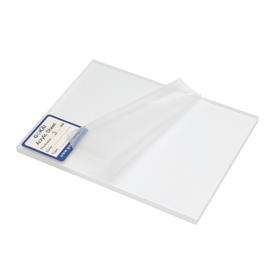
Polycarbonate solid sheet is a dense thermoplastic panel without the internal channels found in hollow or multiwall sheets. Its continuous structure supports transparent glazing, fabricated covers, and protective components.
Clear, tinted, textured, and specialized surface options serve different purposes. A transparent machine guard prioritizes visibility, while a privacy screen may require light diffusion.
The term "polycarbonate" identifies the material family, not a complete performance specification. Two sheets with similar appearances may differ in ultraviolet protection, abrasion resistance, fire classification, and suitability for forming.
For buyers, the most useful starting point is specification: define the application before selecting the grade.
Polycarbonate's impact resistance makes it valuable where accidental contact, flying debris, or vandalism could damage conventional glazing.
Typical applications include:
- Industrial machine guards.
- Protective equipment covers.
- Public-area glazing.
- Transparent partitions.
- Sports and recreational barriers.
However, impact resistance does not mean indestructibility. Panel thickness, unsupported span, fastening details, temperature, and chemical exposure affect performance.
Standard solid sheet must not be treated as bullet-resistant glazing. Ballistic protection requires a specifically designed, tested system, including the glazing and its supporting frame.
Clear grades can provide high visible-light transmission. For example, Palram reports up to 90% for certain PALSUN products, while Exolon's flame-retardant clear-sheet data show transmission varying with thickness.
These are product-specific figures, not universal guarantees.
Solid polycarbonate is also lighter than ordinary glass at comparable thickness. This can simplify handling and reduce panel-related dead load, although the supporting structure still requires appropriate design.
When optical appearance matters, request a sample. Thickness, tint, texture, and coatings can change both brightness and visual clarity.
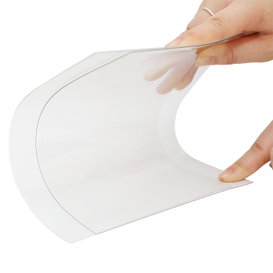
Polycarbonate sheet can be cut, drilled, machined, and formed into useful shapes.
This flexibility supports applications such as curved covers, inspection windows, equipment housings, and fabricated shields.
However, forming methods have limits. Cold bending requires an acceptable minimum radius, while thermoforming requires controlled heating and may require predrying.
For OEM projects, specify the finished component rather than assuming every sheet grade will behave identically during fabrication.
Polycarbonate's ability to screen ultraviolet radiation should not be confused with its resistance to prolonged outdoor weathering.
Outdoor applications generally require a suitably UV-protected grade. Co-extruded protective layers help preserve appearance and material performance under sunlight.
Confirm:
- Whether protection covers one side or both sides.
- Which surface must face outward.
- Whether cut edges require special consideration.
- What the supplier's weathering warranty actually covers.
A sheet selected for indoor fabrication should not automatically be substituted into an exposed canopy.
Polycarbonate can serve demanding thermal applications, but allowable temperatures vary by grade, loading, and exposure duration.
Likewise, fire performance belongs to a defined product specification. Exolon FR documentation, for example, identifies particular ratings at specified thicknesses and warns that certificates have limits in scope and validity.
For regulated projects, request current documentation for the exact sheet being supplied. A generic statement such as "flame retardant" is not a substitute for an applicable classification.
Industrial guards need visibility, impact performance, and secure mounting.
Material selection should consider possible fragments, operating temperature, cleaning chemicals, and the consequences of panel failure. Thickness alone cannot establish whether a guard is adequate.
If frequent cleaning or rubbing is expected, evaluate whether an abrasion-resistant grade is necessary. Also check how any coating affects machining or forming.
UV-protected solid polycarbonate can provide daylight and a continuous glazed appearance in exterior structures.
The design must account for wind, snow where applicable, drainage, support spacing, and thermal movement.
Tinted sheets may reduce visible-light transmission, but tint alone does not establish solar heat-control performance. Request relevant optical and solar data when comfort beneath the glazing matters.
Solid sheet is useful where transparent panels face repeated handling or accidental impact.
Examples include retail fixtures, protective display covers, workplace partitions, and equipment windows.
For these applications, surface appearance can be as important as mechanical strength. Review samples under the actual lighting conditions and inspect them after representative cleaning.
The strongest material is not automatically the best material for every project.
| Material | Practical reason to consider it | Main point to verify |
|---|---|---|
| Solid polycarbonate | Impact resistance, transparency, and fabricated protective components | Surface durability, UV grade, and mounting design |
| Multiwall polycarbonate | Lightweight roof assemblies where insulation matters | Structure, edge sealing, drainage, and thermal performance |
| Acrylic sheet | Display applications where appearance and surface properties guide selection | Whether its impact performance suits the risk |
| Glass | Applications prioritizing glass-specific optical or surface characteristics | Weight, breakage behavior, and glazing requirements |

Solid polycarbonate should not be promoted as equivalent to multiwall sheet for insulation.
Multiwall products use internal air spaces, while solid sheet has a continuous structure. For building applications, compare declared thermal performance for the complete glazing arrangement rather than relying on broad material claims.
One easily overlooked installation issue is thermal movement.
Polycarbonate expands when heated and contracts when cooled. If a panel is restrained too tightly, movement can contribute to distortion or stress around fixings.
Consider an illustrative calculation using the 0.070 mm/m/°C coefficient reported in Exolon FR technical documentation:
- Panel length: 2 meters.
- Temperature increase: 40°C.
- Calculated length increase: 5.6 mm.
The calculation is:
ΔL=0.070×2×40=5.6 mm
This is an engineering illustration, not a universal fixing allowance or a Gokai product specification.
Actual detailing must consider the purchased grade, panel dimensions, installation temperature, frame geometry, and the manufacturer's instructions. Sheet temperature under sunlight may also differ from surrounding air temperature.
The purchasing lesson is straightforward: confirm expansion provisions before finalizing holes, edge clearances, and framing.

Start with the relevant installation guide and project drawings.
Check support spacing, edge engagement, compatible gaskets, movement allowances, and the orientation of any UV-protected surface.
Do not choose roof thickness solely from a photograph or another project's purchase order. Loads and support arrangements differ.
For structural glazing or safety-critical guards, obtain a project-specific assessment from a qualified professional.
Use suitable tooling and support the sheet during fabrication.
Clean cuts and properly positioned holes help reduce local stress. Avoid damaged edges, unnecessary notches, and forcing a misaligned panel into position.
Mechanical fasteners should not clamp the sheet so tightly that they prevent the movement required by the approved mounting design.
If components will be supplied predrilled, include hole positions and tolerances in the approved drawing.
Polycarbonate is not compatible with every cleaner, adhesive, sealant, or process chemical.
A product described as suitable for glass may still be unsuitable for polycarbonate.
Ask for compatibility guidance covering the actual substances used in service. Pay particular attention to cleaning agents, oils, solvents, and sealing products.
For unfamiliar chemicals, sample evaluation is useful, but a brief trial does not replace appropriate long-term compatibility evidence.
Manufacturer guidance commonly recommends water, mild detergent, and a soft cloth.
Rinse loose grit away before wiping. Avoid abrasive pads, dry rubbing, and unapproved chemicals.
For coated sheets, follow the coating-specific instructions. A cleaning method suitable for one grade may not be approved for another.
A useful quotation request describes performance and delivery needs, not just sheet dimensions.
| Specification | Information to provide |
|---|---|
| Application | Guard, canopy, window, display, or fabricated component |
| Dimensions | Thickness, width, length, and required tolerances |
| Appearance | Clear, tinted, opaque, textured, or diffusing |
| Outdoor exposure | UV protection requirement and exposed surfaces |
| Surface requirements | Standard finish or abrasion-resistant option |
| Fabrication | Cutting, drilling, bending, or thermoforming needs |
| Compliance | Applicable classifications and supporting documents |
| Delivery | Quantity, destination, packaging, and labeling |
Special features should be confirmed individually rather than assumed available in every thickness or order quantity.
A practical approval process includes:
1. Review the proposed grade and technical documents.
2. Check sample dimensions, color, and surface condition.
3. Trial the planned fabrication method.
4. Evaluate representative cleaners and mounting materials.
5. Approve the final specification and packaging requirements.
A sample establishes an agreed reference. It does not certify every future sheet or replace required third-party testing.
For repeat orders, retain the approved sample, drawing revision, and purchase specification.

The most expensive problems often start with incomplete requirements.
Avoid these shortcuts:
- Selecting indoor-grade sheet for outdoor exposure.
- Treating high impact resistance as ballistic certification.
- Assuming a thicker panel automatically makes a compliant guard.
- Ignoring scratches in applications requiring clear visibility.
- Specifying a fire rating without identifying thickness and grade.
- Ordering fabricated panels before resolving thermal movement.
- Assuming every tinted sheet provides the same heat-control performance.
A lower initial price can become poor value if the panel requires replacement, cannot be fabricated successfully, or arrives unsuitable for the intended installation.
Send Gokai your drawings, operating environment, required dimensions, target quantity, and delivery destination.
Ask for a proposed material specification, suitable samples, available technical documentation, and an OEM quotation. Confirm special coatings, fabrication services, and compliance needs before placing the order.
A clearly defined requirement helps turn a sheet purchase into a component that fits its intended application.
Yes, when a suitable outdoor grade is selected. Confirm UV protection, exposed-side orientation, installation requirements, and the scope of any warranty.
Standard polycarbonate can scratch during handling or cleaning. Abrasion-resistant grades may improve surface durability, but buyers should verify coating performance and fabrication restrictions.
There is no universal answer. Thickness depends on dimensions, support spacing, loads, impact risks, and applicable requirements. Use product guidance and project-specific assessment.
Yes. Suitable grades can be cold bent within specified limits or thermoformed under controlled conditions. Confirm minimum radius, heating requirements, and coating compatibility before production.
No. Ordinary sheet must not be represented as certified ballistic protection. Bullet-resistant glazing requires an appropriately tested system and installation.
Gokai provides OEM services for global buyers. Send your application, dimensions, quantity, appearance requirements, and destination so the proposed supply specification can be confirmed.
1. [Acme Plastics — "The Applicational Benefits of Polycarbonate Sheets"]. Original article used to identify the principal benefit topics and areas requiring more precise technical treatment. Published July 17, 2018; the page also displays February 24, 2020. [acmeplastics]
2. [Palram Industries — PALSUN Flat Solid Polycarbonate Sheet]. Manufacturer information supporting discussion of impact resistance, fabrication, weather-resistant product options, and up to 90% light transmission for specified products. [palram]
3. [Palram Industries — PALSUN Brochure and Technical Information]. Technical guidance concerning light transmission, UV-protected versus general-purpose grades, thermal expansion, temperature exposure, and cleaning. These values are Palram product references, not Gokai test results. [palram]
4. [Exolon Group — Exolon FR Solid Flame-Retardant Polycarbonate Sheet]. Technical data supporting the grade-specific fire-performance discussion, thickness-dependent light transmission, and thermal expansion calculation. The document expressly limits certificates by scope and validity. [exolongroup]
5. [Exolon — Multiwall Polycarbonate Sheets Technical Manual, hosted by Aikolon]. Reference for distinguishing multiwall structure and product-specific performance from solid-sheet characteristics. [aikolon]
6. [Gokai — Polycarbonate Sheet Product Information]. Company-published information supporting Gokai's solid-sheet supply, co-extruded UV-protection options, dimensional customization, and OEM purchasing support. Specific order requirements remain subject to confirmation. [gokai.com]