Shanghai Gokai Industry Co,.Ltd.
Call Us: +86-18918606548
Call Us: +86-18918606548
- Product Name
- Product Keyword
- Product Model
- Product Summary
- Product Description
- Multi Field Search
Views: 222 Author: Gokai Publish Time: 2026-04-18 Origin: Site


When you stand in front of a finished frame, what you see is art—but what protects that art is engineering. Choosing between plexiglass (acrylic) and glass is not just an aesthetic decision; it is a decision about safety, durability, shipping risk, and lifetime value. [acmeplastics]
As a global acrylic sheet supplier (Gokai) working with OEM and custom framing partners, we have helped thousands of projects switch from traditional glass to high-performance acrylic glazing in galleries, retail chains, museums, schools, and DIY studios. This guide combines hands-on experience with up-to-date industry data so you can decide which material is best for your next custom frame. [cutmy.co]
Below is a practical, at-a-glance comparison for framing applications.
| Factor | Plexiglass / Acrylic Sheet | Glass (Soda-lime) |
|---|---|---|
| Weight | About 50% lighter than glass of equal thickness (acmeplastics) | Heavy, increases as size and thickness increase (acmeplastics) |
| Shatter resistance | Highly impact-resistant, does not shatter into sharp shards (acmeplastics) | Brittle; can crack or shatter under impact (acmeplastics) |
| Scratch resistance | More prone to surface scratches; can be polished or protected with coatings (acmeplastics) | Naturally more scratch-resistant (acmeplastics) |
| Optical clarity | Transmits over 92% of visible light; very clear (xometry) | Also very clear; traditional "glass look" (shermangallery) |
| UV protection | Can be manufactured to block up to ~98% UV (museum-grade) (acmeplastics) | Standard glass offers limited UV protection (shermangallery) |
| Static and dust | Can carry static; proper cleaning and anti-static care needed (acmeplastics) | Less static; easier to keep dust off during installation (acmeplastics) |
| Cutting and fabrication | Needs proper tools; 1/8" (3 mm) can be trickier to score and snap (acmeplastics) | Easier to cut with a glass cutter and snap (acmeplastics) |
| Shipping and handling | Lightweight and shatter-resistant, cheaper and safer to ship (acmeplastics) | Heavier and breakable; higher shipping risk and cost (acmeplastics) |
| Cost of material | Higher per sheet than basic glass (acmeplastics) | Lower per sheet, but shipping and breakage can offset savings (acmeplastics) |
| Typical best use cases | Large frames, high-traffic or public areas, children's spaces, traveling exhibits (acmeplastics) | Small traditional frames, budget-sensitive local projects (acmeplastics) |

Plexiglass is a trade name often used generically for acrylic sheet, a transparent thermoplastic made from polymethyl methacrylate (PMMA). In framing, you will also see terms like "acrylic glass," "acrylic glazing," or simply "acrylic." [shermangallery]
From a materials-engineering perspective, acrylic offers a combination of properties that are especially attractive for framing:
- High light transmission: Quality clear acrylic transmits over 92% of visible light, comparable to optical glass. [xometry]
- Low density: Typical relative density is around 1.19 g/cm³, roughly half that of glass, which explains the significant weight savings. [xometry]
- Impact resistance: Acrylic is much more impact-resistant than ordinary glass, making it safer in schools, public venues, or high-traffic areas. [tru-vue]
- Thickness range: Available from approximately 2 mm up to 50 mm, allowing both standard and heavy-duty glazing solutions. [cutmy.co]
For framing, 2–3 mm (about 1/8") is common for most wall art and photographs. [acmeplastics]

From a supplier and installer's perspective, these are the reasons plexiglass has become the default choice for many modern framing workflows.
Acrylic weighs about 50% less than glass of the same thickness. This matters in several ways: [shermangallery]
- Easier installation on large walls or tall spaces.
- Less risk of frames pulling out wall anchors over time.
- Safer for children's rooms, schools, hospitals, and public corridors where impact risk is higher. [tru-vue]
For large frames (e.g., posters, panoramic prints, large-format photography), the weight advantage becomes dramatic. Many professional framers now refuse to ship oversized glass frames because of the breakage risk, but they will ship acrylic confidently. [flacrylic]
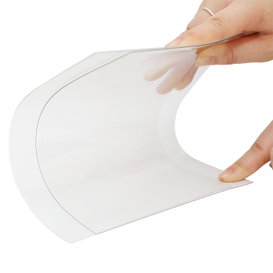
Unlike glass, acrylic does not shatter into sharp shards when it breaks; it tends to crack or flex instead. That: [acmeplastics]
- Reduces the risk of injuries if a frame falls.
- Protects artwork from fragments that could scratch or cut the surface.
- Makes acrylic the preferred choice for high-traffic environments and traveling exhibitions. [flacrylic]
This is one of the main reasons museums, galleries, and event organizers lean toward acrylic for pieces that travel. [tru-vue]
Because of its low weight and shatter resistance, custom-cut acrylic glazing is almost always cheaper and safer to ship than glass. For OEM customers and e-commerce brands, that translates into: [shermangallery]
- Lower damage rates and fewer returns due to broken glass.
- Lower shipping costs, especially in international or cross-border shipments.
- More predictable quality on arrival, which directly improves customer reviews. [getpassionfruit])
As a global acrylic sheet supplier, Gokai often supports OEM framing businesses that are scaling internationally; switching to acrylic glazing is usually one of the first optimizations we recommend for logistics and customer satisfaction.

Standard clear acrylic already offers some UV filtering, but specialty acrylic grades can be engineered to block up to around 98% of UV radiation. These "museum" or "conservation" grades help: [acmeplastics]
- Protect original artworks, delicate prints, and archival photographs from fading.
- Extend the life of retail displays and branded graphics exposed to sunlight.
- Provide peace of mind to collectors and institutional buyers. [tru-vue]
By contrast, typical window glass or basic framing glass offers significantly less UV protection unless it is specially coated or laminated. [shermangallery]
Acrylic is not perfect. A professional buyer or serious DIY framer should also understand its trade-offs.
Compared with glass, uncoated acrylic is easier to scratch. This can happen: [cutmy.co]
- During cutting and handling in the workshop.
- While cleaning with rough cloths or paper towels.
- If abrasive cleaners are used.
However, there are practical solutions:
- Use anti-scratch coated acrylic for high-use or public installations. [cutmy.co]
- Clean with a soft microfiber cloth and acrylic-safe cleaner, not dry paper towels or harsh chemicals. [tru-vue]
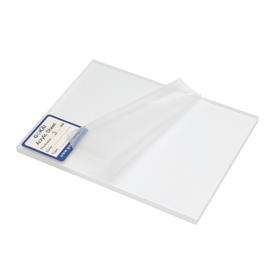
- Keep protective films on both sides until the very last step of framing.
Scratches are not always permanent; light surface marks can often be polished out with the right polishing compound and technique. [cutmy.co]
Acrylic can build up a static charge, particularly in dry environments, which attracts dust particles. To manage this: [acmeplastics]
- Wipe the surface with an anti-static cleaner or cloth before assembly. [tru-vue]
- Avoid over-rubbing the surface when dry.
- In professional workflows, use ionizing air blowers or anti-static guns for high-value art.
Glass is not immune to dust, but it typically carries less static charge, so dust control is a bit simpler. [acmeplastics]
Custom framing acrylic is commonly about 1/8" (3 mm) thick, which makes it more difficult to "score and snap" cleanly with basic tools compared with glass. For clean edges and repeatable results, we recommend: [cutmy.co]
- Ordering acrylic pre-cut to size from your supplier, especially for volume OEM orders.
- Using the correct blades, routers, or saws if you must cut in-house. [cutmy.co]
- Avoiding cheap, dull cutters, which cause chipping, crazing, or melted edges.
Glass, by contrast, is straightforward to cut with a glass cutter and a simple scoring-and-snap technique. [acmeplastics]
Glass remains a valid and sometimes ideal choice for certain framing scenarios.
Glass is commonly preferred when:
- Budget is tight and sizes are small: For small frames sold locally (no shipping), cheap float glass can be cost-effective. [shermangallery]
- A traditional look is desired: Some customers associate the weight and feel of glass with a more classic, "premium" appearance. [flacrylic]
- Scratch resistance is essential and interaction is gentle: In cases where the surface may be occasionally wiped but is not heavily abused, glass does well. [acmeplastics]
Pros of glass:
- Lower material cost: Basic glass is usually cheaper per square meter than acrylic. [shermangallery]
- High scratch resistance: Glass resists fine surface scratches better than uncoated acrylic. [acmeplastics]
- Easy cutting: Standard tools and techniques are widely understood and inexpensive. [acmeplastics]
Cons of glass:
- Heavy and fragile: Breakage risk is high during shipping, moving, and installation. [shermangallery]
- More dangerous failures: When glass shatters, it creates sharp shards that can injure people and damage artwork. [tru-vue]
- Limited UV protection in basic variants: Without coatings, glass lets in a significant amount of UV that can fade artwork. [shermangallery]
For many modern framing applications—especially large-format, shipped, or safety-critical installations—acrylic glazing has overtaken glass as the default. [flacrylic]
To decide between plexiglass and glass, focus on how the frame will be used. Here is a simple decision framework based on questions professional framers ask their clients. [mobileframing.com]
Professionals often run through this checklist: [mobileframing.com]
1. How large is the frame?
2. Will it travel or be shipped?
3. Is it in a public or high-traffic environment?
4. Is UV protection important for the content?
5. What is the realistic budget—including shipping and replacement risk?
6. How often will it be cleaned or handled?
- Choose plexiglass (acrylic) if:
- The frame is large (poster-size or bigger).
- The piece will be shipped, moved, or hung in a public/high-traffic space.
- The artwork is valuable or irreplaceable and needs strong UV protection.
- You are building an OEM or e-commerce framing line and need to minimize breakage and returns. [flacrylic]
- Choose glass if:
- The frames are small, local, and budget-driven.
- The risk of breakage is low (e.g., frames will not be shipped).
- You want a traditional feel and accept the trade-offs in weight and fragility. [shermangallery]
If you decide to use plexiglass, choosing the right acrylic sheet specification is crucial to performance.
- For most standard wall art and photographs, 2–3 mm (around 1/8") is sufficient. [cutmy.co]
- For oversized pieces, public installations, or large signage, you may need thicker acrylic (4–6 mm or more) to prevent bowing and to add impact resistance. [cutmy.co]
> Practical tip: Always confirm the maximum frame size, mounting method, and expected load before finalizing thickness.
- Standard clear acrylic is suitable for posters, prints, and decorative art not exposed to intense sunlight. [shermangallery]
- UV-filtering or "museum-grade" acrylic is recommended for:
- Limited editions and originals.
- Archival photography.
- Pieces near windows or in bright galleries. [tru-vue]
Ask your supplier for technical data sheets showing UV transmission curves to ensure the product meets your protection targets. [xometry]
- Glossy clear acrylic: Maximum clarity and color vibrancy, with more visible reflections. [shermangallery]
- Non-glare or matte acrylic: Reduces reflections, ideal for bright spaces and overhead lighting. [tru-vue]
- Specialty coatings: Anti-scratch, anti-static, and anti-reflective coatings can significantly improve usability and longevity in demanding environments. [cutmy.co]
As a global acrylic supplier, Gokai typically supports two models:
- Cut-to-size OEM supply:
- Best for e-commerce brands and frame manufacturers who need ready-to-assemble parts.
- Reduces labor and tooling investment in-house.
- Full sheet supply for fabrication:
- Ideal if you have your own CNC, panel saws, or fabrication workshop.
- Offers more flexibility for custom sizes and last-minute changes.
Your volume, machinery, and logistics operations will dictate which model is more cost-effective.

Beyond material selection, the user experience (UX) of the final framed product depends on clarity, glare control, and cleanliness.
To maintain the appearance of acrylic glazing:
- Use soft microfiber cloths rather than paper towels to avoid micro-scratches. [tru-vue]
- Clean with mild, acrylic-safe cleaners; avoid alcohol, ammonia, or solvents that can craze or cloud the surface. [tru-vue]
- Apply anti-static sprays or wipes in dry environments to reduce dust attraction. [acmeplastics]
Provide simple printed or digital care instructions with your frames; this small step often dramatically improves long-term customer satisfaction and reviews. [getpassionfruit])
To enhance the visual experience for end users:
- Pair high-clarity acrylic with high-quality prints and neutral backing boards. [shermangallery]
- Use non-glare or museum-grade acrylic for brightly lit spaces. [tru-vue]
- For retail and gallery installs, consider visual storytelling: show side-by-side examples of glass vs acrylic, so customers can see the difference in glare, weight, and breakage risk. [flacrylic]
From our work with international framing brands and OEM partners, we see consistent patterns:
- Lower total cost of ownership: Although per-sheet costs can be higher, lower shipping damage, fewer returns, and higher customer satisfaction make acrylic more economical over the product lifecycle. [flacrylic]
- Better scalability for online sales: Acrylic enables safe, predictable shipping of large frames, opening up categories that are almost impossible with glass. [flacrylic]
- Improved safety compliance: Many markets and building codes increasingly favor shatter-resistant glazing for public and educational environments. [tru-vue]
As a supplier, we often help OEM customers standardize around a small set of acrylic specifications that cover 80–90% of their product range, simplifying purchasing and production while improving consistency.

If you are planning to scale a framing line, upgrade from glass, or launch a new wall-art product:
1. Define your main use cases (home decor, corporate, education, museum, retail).
2. List typical frame sizes and shipping regions to determine optimal thickness and packaging.
3. Decide on UV, non-glare, and scratch-resistance requirements by segment (e.g., standard vs premium).
4. Talk to an acrylic sheet specialist who can propose grade, thickness, and cut-to-size options aligned with your budget and logistics.
As a dedicated acrylic sheet supplier, Gokai provides:
- OEM and private-label support for framing brands.
- Technical guidance on sheet selection and performance.
- Cut-to-size, bulk, and custom-spec production for global customers.
If you are evaluating plexiglass vs glass for your next custom framing project or product line, contact our team to discuss a tailored acrylic glazing solution that balances protection, appearance, and total cost.
1. Is plexiglass as clear as glass for picture frames?
Yes. Quality clear acrylic transmits over 92% of visible light, which is comparable to, and in some cases better than, standard glass used in framing. [xometry]
2. Does plexiglass turn yellow over time?
Modern, high-quality acrylic sheets are formulated to resist yellowing and maintain clarity over many years, especially when sourced from reputable manufacturers and used indoors. [xometry]
3. How do I prevent scratches on acrylic glazing?
Use anti-scratch coated acrylic where possible, keep the protective film on until installation, and always clean with a soft microfiber cloth and acrylic-safe cleaner, not paper towels or abrasive products. [cutmy.co]
4. Is glass always cheaper than plexiglass?
Glass is usually cheaper per sheet, but for large sizes and shipped products, higher shipping costs and breakage rates can make acrylic more cost-effective overall. [flacrylic]
5. Which is better for valuable artwork: glass or plexiglass?
For valuable or irreplaceable artwork, museum-grade UV-filtering acrylic is often preferred because it combines strong UV protection with shatter resistance and lower weight, reducing both fading and physical risk. [acmeplastics]
- Acme Plastics – Plexiglass vs. Glass: Which is Better for Custom Framing?
https://www.acmeplastics.com/content/plexiglass-vs-glass-which-is-better-for-custom-framing/ [acmeplastics]
- Sherman Gallery – Choosing Between Plexiglass and Regular Glass for Custom Picture Framing
https://www.shermangallery.com/post/choosing-between-plexiglass-and-regular-glass-for-custom-picture-framing-your-art [shermangallery]
- Cut My – Technical Specification for Acrylic Sheets
https://www.cutmy.co.uk/acrylic-technical-specification/ [cutmy.co]
- Technical Data Sheet – Acrylic (PMMA)
https://xometry.eu/wp-content/uploads/2020/11/datasheet-acrylic_3.pdf [xometry]
- Tru Vue – Glass or Acrylic? Considerations for Framed Artwork
https://tru-vue.com/zh-TW/2014/10/glass-or-acrylic-considerations-for-framed-artwork/ [tru-vue]
- Passionfruit – How to Optimize Your Ecommerce Site for E-E-A-T in 2025 (Like a Pro)
https://www.getpassionfruit.com/blog/how-to-optimize-your-ecommerce-site-for-e-e-a-t-in-2025-(like-a-pro) [getpassionfruit])
- Innovation Visual – Google's EEAT Guidelines: How to Remain Compliant
https://www.innovationvisual.com/knowledge-hub/resources/google-eeat-guidelines-how-to-remain-compliant [innovationvisual]
- Wellows – E-E-A-T Checklist for SEO: Strengthen Content with LLM Insights
https://wellows.com/blog/e-e-a-t-checklist/ [wellows]
- Mobile Framing – Plexiglass vs Glass for Framing: Which Is Best for Artwork?
https://mobileframing.com.au/plexiglass-vs-glass-for-framing-which-is-best-for-artwork/ [mobileframing.com]
- Flacrylic – Plexiglass or Glass? The Real-World Guide for Custom Framing Projects
https://flacrylic.com/plexiglass-or-glass-for-custom-framing-projects/ [flacrylic]