Shanghai Gokai Industry Co,.Ltd.
Call Us: +86-18918606548
Call Us: +86-18918606548
- Product Name
- Product Keyword
- Product Model
- Product Summary
- Product Description
- Multi Field Search
Views: 266 Author: Gokai Publish Time: 2026-10-24 Origin: Site


Content Menu
● How This Supplier Shortlist Was Selected
● Why Source PETG Sheet Through France?
>> A Strong Plastics-Processing Ecosystem
>> Local Distribution Can Simplify Procurement
>> What Recent Industry Data Actually Shows
● Supplier Comparison: Capacity, MOQ, and Certification Evidence
● Five PETG Sheet Manufacturers and Suppliers to Evaluate
>> 1. Shanghai Gokai Industry Co,. Ltd.: International OEM Alternative for French Buyers
>> 2. Vink France: Established Distribution and Cut-to-Size Supply
>> 3. Sunclear: National Distribution with PETG Processing Documentation
>> 4. Richardson Matières Plastiques: Application-Focused PETG Distribution
>> 5. thyssenkrupp Plastics France: Broad Semi-Finished Plastics Sourcing
● Specify the Material Before Comparing Prices
>> Distinguish PETG from Other Transparent Sheets
>> Use Grade-Specific Processing Instructions
>> Ask for Relevant Compliance Evidence
● Common Procurement Traps and How to Avoid Them
>> Material Substitution Hidden Behind a Generic Description
>> Comparing Nominal Thickness Instead of Accepted Yield
>> Treating Historical Documents as Current Approval
● Lock the Forming Setup, Not Just the Grade
● How to Qualify Samples, Factories, and Logistics
>> 1: Verify the Contracting and Manufacturing Entities
>> 2: Request Representative Samples
>> 3: Compare Landed Cost and Delivery Responsibility
>> 4: Establish Repeat-Order Controls
● FAQ
>> 1. How can I check whether a supplier's ISO certificate has expired or been suspended?
>> 2. Can a French distributor guarantee that its PETG sheet was manufactured in France?
>> 3. Does a food-contact declaration cover every food and temperature?
>> 5. Is a CE certificate enough to approve PETG sheet for a machine guard?
France offers professional buyers an established plastics-processing ecosystem, regional distribution networks, and access to technical support for material selection and fabrication. However, sourcing PETG sheet in France requires an important distinction: a company selling sheet locally is not necessarily the company extruding it. Several established French suppliers operate primarily as distributors of semi-finished plastics rather than PETG sheet manufacturers.
This guide compares five sourcing options: four France-based distribution businesses and one international OEM alternative, Shanghai Gokai Industry Co,. Ltd. Gokai appears first as the commissioning supplier, not as a French manufacturer or the winner of an independently audited ranking.
For procurement managers, the deciding factor should be traceability: whether a supplier can connect the quoted material, approved sample, manufacturing source, compliance documents, and delivered production batch.

A useful supplier assessment goes beyond catalog size or an attractive quotation. The selection framework below focuses on the evidence needed to qualify a long-term PETG sheet partner.
| Assessment area | Evidence buyers should request | Procurement purpose |
|---|---|---|
| Manufacturing identity | Legal company name, factory address, extrusion site, and distributor authorization where relevant | Distinguishes the manufacturer from intermediaries |
| Quality management | Current certificates with matching company names, sites, and scopes | Establishes which operations the certificate actually covers |
| Material engineering | Grade-specific technical data, processing guidance, and documented alternatives | Supports application development and controlled material selection |
| Quality control | Thickness inspection maps, visual standards, batch identification, and release records | Makes acceptance criteria measurable |
| Supply continuity | Available stock, production-slot confirmation, replenishment plans, and delivery history | Tests delivery reliability |
| OEM support | Written customization scope, sample approval process, packaging options, and change control | Prevents misunderstandings before production |
| Compliance | Application-specific declarations and supporting evidence | Avoids relying on irrelevant certificates |

The shortlist uses public company information, product documentation, government business records, and industry publications. It is not based on factory visits, laboratory comparisons, or verified customer-performance data.
France's advantage lies in its wider network of processors, tooling businesses, distributors, and application specialists—not simply in the number of companies advertising PETG sheet.
Polyvia's January 2025 industry report identified 3,009 plastics-processing establishments in France at the end of 2023, employing nearly 132,000 people and generating €39.65 billion in revenue. These figures cover plastics processing broadly; they are not PETG sheet market figures.
The same report identifies Auvergne-Rhône-Alpes as France's leading plastics region. Oyonnax is a diversified processing center, while Sainte-Sigolène has particular strength in plastics extrusion. These clusters provide relevant industrial infrastructure, but their presence does not establish that a shortlisted distributor manufactures PETG locally.
French distribution networks can be useful when buyers need regional stock, smaller replenishment orders, material-selection assistance, or cut-to-size sheet.
Vink advertises French stock and custom cutting. Sunclear reports 16 national branches and its own logistics organization. Richardson states that it operates 11 French stores serving professional customers. Availability still needs confirmation for the exact grade, thickness, and quantity required.
For larger, repeatable OEM programs, procurement teams can compare this local-service model with direct international supply. The appropriate route depends on order frequency, customization depth, inventory requirements, and total delivered cost.
Polyvia's 2025 report states that French exports of plastic products reached €11.1 billion in 2023, up 20% in value from 2019. This demonstrates the scale of the broader industry, but it should not be presented as PETG sheet export data or a PETG demand forecast.
Publication year and measurement year must remain separate. A report released in 2025 can contain 2023 statistics; labeling those figures "2025 production" would mislead buyers.
The following table compares sourcing models rather than pretending that distributors' warehouse networks are equivalent to factories' extrusion capacity.
| Supplier | Establishment or operating-history reference | Role and market focus | Capacity or service-scale evidence | PETG MOQ | Certification and compliance status |
|---|---|---|---|---|---|
| Shanghai Gokai Industry Co,. Ltd. | Founded in 2009 | China-based sheet supplier; worldwide OEM service stated in the company brief | About page reports 10 production lines across its stated business; PETG allocation and tonnage are not specified | Not established in reviewed information; request a written quotation | Current PETG-specific certificates and application documents require verification |
| Vink France | Founded in 1954 | French semi-finished plastics distributor serving industry, construction, and communication | Nine French branches; more than 15,000 references advertised; not PETG manufacturing capacity | Not established; confirm stock-sheet and custom-cut minimums separately | Request current site certificates and documents for the quoted grade |
| Sunclear | Legal entity created in 1984 | French distributor serving construction, communication, and industry | 16 national branches and own logistics; no PETG extrusion tonnage established | Not established; confirm branch-level terms | PETG technical documentation is available; current certificates require separate verification |
| Richardson Matières Plastiques | Plastics distribution activity since 1965 | French distributor serving industry, construction, and communication | 11 French stores; no PETG manufacturing capacity established | Not established; request order-specific terms | Request grade-specific documentation and current relevant certificates |
| thyssenkrupp Plastics France | French market presence since 1957 | B2B distributor of semi-finished plastics | Current site confirms distribution role; historical catalog describes eight branches, not current verified capacity | Not established; confirm stock and special-order minimums | Request current documentation; historical catalog classifications are not sufficient |
Company-history and service-scale information comes from the respective corporate sources and, for Sunclear's incorporation date, the French government business directory. None of these figures should be interpreted as verified annual PETG sheet output.
Gokai is headquartered in Shanghai, China, rather than France. Its inclusion provides an international comparison for buyers evaluating local distribution against an OEM-oriented sourcing relationship.
According to its About Us page, Gokai was founded in 2009 and specializes primarily in the research, development, and manufacture of PVC foam board and acrylic sheet. The page reports 10 production lines and lists PETG among materials associated with craft-product applications. It does not establish PETG-specific extrusion capacity, dedicated line count, or annual output.
The company brief supplied for this article states that Gokai offers PETG sheet and worldwide OEM services. That makes it relevant to small and midsized brands seeking a supplier willing to discuss customized purchasing requirements.
Its R&D-oriented corporate positioning provides a starting point for technical discussions. Nevertheless, PETG buyers should verify the actual manufacturing route and the engineering resources available for their project rather than transferring evidence from other sheet products.
For an OEM inquiry, ask Gokai to confirm:
- Available PETG grades, thicknesses, sheet sizes, and tolerances.
- Whether the quoted sheet is produced internally or through a manufacturing partner.
- Custom color, surface finish, masking-film, and packaging options.
- Sample quantities, production MOQ, and repeat-order conditions.
- Technical response ownership and approval procedures.
- Required declarations for the intended destination and application.
Gokai is therefore worth evaluating as a potentially cost-conscious, customization-focused alternative—not as a proven lowest-price supplier. Flexibility and communication efficiency should be tested through the quality of its quotation, sample response, and handling of specification changes.

Vink France states that it was founded in 1954 and operates nine branches across France. Its product range serves industry, construction, and visual communication. The company advertises more than 15,000 references, French stock, and custom cutting.
Its polyester category explicitly includes PET and PETG sheet. This matters because PET and PETG can appear together in distributor catalogs, even though buyers should not approve them as interchangeable materials without application testing.
Vink is a relevant option for procurement teams seeking:
- Stock-sheet sourcing within France.
- Cut-to-size panels for fabrication.
- Consolidated purchasing across several plastic materials.
- Regional support for recurring orders.
For OEM projects, the publicly established service is material supply and dimensional customization. Proprietary resin formulation, dedicated-color extrusion, or full product-design responsibility should be treated as separate capabilities requiring written confirmation.
Vink's technical catalog also distinguishes grade- and thickness-dependent characteristics, including fire classifications and UV-treated options. Buyers should identify the exact product reference rather than purchasing against the generic description "clear PETG."
The French government business directory records Sunclear's legal-entity creation date as May 2, 1984. Sunclear describes itself as a distributor serving construction, communication, and industry, with 16 national branches and its own logistics network.
Its PETG documentation includes a Marpet-g FS technical data sheet describing a clear copolyester sheet that can be thermoformed at relatively low temperatures without pre-drying. That statement belongs to the documented product and should not become a universal processing rule for all PETG grades or storage conditions.
Sunclear is worth considering for buyers who value:
- A France-based distribution relationship.
- Access to product-specific technical information.
- Regional logistics coordination.
- Material selection for display, industrial, and fabrication projects.
For OEM or project supply, confirm what Sunclear performs directly, what it arranges through partners, and which services remain the buyer's responsibility. Request written confirmation of cutting tolerances, available batch quantities, replenishment arrangements, and documentation delivery.
A national network improves access to service; it does not prove that every branch holds every PETG thickness.
Richardson states that its plastics distribution activity dates to 1965 and that it operates 11 French stores. Its principal customer sectors are industry, construction, and communication.
The company publishes a dedicated PETG product page describing transparent copolyester sheet for applications including covers, signage, displays, and protective components. It also highlights thermoforming and machining characteristics.
Richardson is relevant to buyers who need to discuss the application before selecting a material. A transparent display panel, a formed cover, and a safety-related guard may look similar on a drawing but require different validation.
Its likely procurement fit is professional material distribution with application support. Buyers should request a separate statement of any OEM services, such as:
- Cut-to-size supply.
- Drawing-based panel preparation.
- Scheduled project deliveries.
- Custom product sourcing through upstream manufacturers.
Do not assume that a distributor's ability to supply PETG establishes in-house extrusion or responsibility for the final component design.
thyssenkrupp Plastics France identifies itself as a specialist distributor serving businesses, traders, and processors. Its current offering addresses visual communication, construction, and industrial applications.
A company catalog states that the business has been present in the French market since 1957 and documents PETG polyester sheet offerings. Because that catalog is historical, its prices, stock lead times, branch count, and product classifications require fresh confirmation before use in a purchasing decision.
The business is relevant for procurement teams seeking a broader semi-finished plastics relationship rather than a PETG-only supplier.
Potential OEM-related discussions include material selection, sheet formats, project sourcing, and repeat deliveries. Custom extrusion, private-label arrangements, and dedicated manufacturing runs should be verified individually.
When requesting a quotation, require the current manufacturer name, product reference, technical data-sheet revision, and compliance package. A familiar distribution brand should not replace grade-level approval.
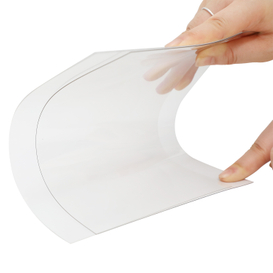
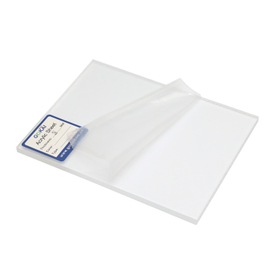
PETG is a glycol-modified copolyester. Its modification supports transparency and thermoforming performance, making it useful for displays, formed covers, and other fabricated components. Richardson's technical explanation specifically connects the modification with reduced crystallization and improved thermal-processing behavior.
However, "transparent polyester" is not a complete specification.
An RFQ should identify:
1. PETG material family and accepted commercial grade.
2. Thickness and permitted variation.
3. Sheet dimensions, squareness, and flatness.
4. Optical acceptance criteria, including visible defects.
5. Intended forming, printing, machining, or bonding process.
6. Indoor or outdoor exposure.
7. Operating temperature and cleaning chemicals.
8. Any permitted recycled content or material substitution.
Avoid importing performance claims from a different transparent plastic simply because both materials are clear.
Some PETG sheets can be thermoformed without pre-drying under the conditions described by their supplier. Sunclear's Marpet-g FS documentation provides one such example. That does not justify omitting the processing instructions for the actual grade being purchased.
Require a processing sheet covering heating conditions, masking removal, forming limitations, cooling, and storage. Validate the material using the production equipment and part geometry, not only a small cosmetic sample.
Certification terms are often used too loosely in plastic-sheet quotations.
- CE marking: It applies only when relevant harmonized product legislation requires it. It is not a general quality certificate for every plastic sheet, and it must not be applied where no applicable requirement exists.
- RoHS: This concerns restricted substances in electrical and electronic equipment. Material evidence may support an equipment manufacturer's compliance work, but RoHS is not a universal environmental approval for every PETG application.
- REACH: Request a dated statement identifying the relevant material and the Candidate List version considered. ECHA notes that inclusion of a substance can trigger immediate legal obligations.
- Food contact: For applicable plastic food-contact uses, request a Declaration of Compliance and supporting conditions of use. The relevant framework includes Regulation (EC) No 1935/2004, good manufacturing practice requirements, and Regulation (EU) No 10/2011, as amended.
Food-contact suitability depends on the material, intended food, temperature, contact duration, and other restrictions. A vague "food-grade" statement does not provide those conditions.
A quotation stating only "PET sheet" leaves the material identity unresolved when the project requires PETG. Distributor catalogs can include both PET and PETG within the same category.
Require the approved commercial grade on the quotation, purchase order, packing list, and batch documentation. Make substitutions subject to written approval and renewed qualification.
Two quotations can use the same nominal thickness while offering different tolerances and inspection standards.
Before comparing prices, define:
- Thickness measurement locations.
- Permitted variation across the sheet.
- Cosmetic rejection criteria.
- Usable area after trimming.
- Treatment of damaged edges and protective-film defects.
Compare the cost of accepted, usable parts—not just the price of purchased sheet.
An old catalog can establish that a supplier previously offered PETG. It cannot confirm today's stock, formulation, fire classification, or compliance status.
This distinction is particularly important when using the historical thyssenkrupp catalog reviewed for this guide. Obtain current, product-specific documents before ordering.
A less obvious qualification risk concerns sheet orientation and masking film.
A PETG technical manual reviewed for this guide instructs users to remove standard adhesive masking before thermoforming and notes that unrestrained heating can produce shrinkage in the extrusion direction. The exact behavior depends on the product and process.
The purchasing implication is important: an approved resin grade and nominal thickness may still leave production variables uncontrolled.
For formed components, record:
- Extrusion direction relative to the part layout.
- Which sheet face contacts the tool.
- Masking-film type and removal procedure.
- Heating and clamping conditions.
- Sample batch and production-batch references.
If panels are rotated during nesting or a masking film changes, repeat the relevant trial before releasing the full order. Treat these as controlled process variables rather than assuming every repeat delivery will behave identically.

Match the quotation, bank beneficiary, business registration, and certificate holder.
For a distributor, identify the upstream sheet manufacturer. For a factory, confirm that the declared site actually produces the quoted PETG grade.
Use a live production walkthrough or independent site inspection where the order value or application risk justifies it.
Use a staged approval process:
1. Obtain a labeled sample with the proposed grade and thickness.
2. Test it under the intended fabrication conditions.
3. Approve a documented reference sample.
4. Run a pilot order using the proposed commercial supply route.
5. Retain samples and inspection records from repeat batches.
An appearance sample is not enough for a part that must survive forming, cleaning, assembly, or extended service.
Ask each supplier to quote against the same delivery basis and destination.
Include material, cutting, packaging, freight, customs handling, applicable duties and taxes, and expected inspection costs. Separate the time needed to prepare the order from the time needed to transport it.
For sheet shipments, specify pallet dimensions, edge protection, maximum stacking, labeling, unloading arrangements, and damage-reporting procedures. Gokai's About Us page lists export wood pallets and corner-protection packaging, but the actual PETG shipment specification still needs agreement.
The supply agreement should address changes to grade, manufacturing site, recycled content, masking film, dimensions, and packaging.
Agree on notification, approval, and requalification responsibilities before the first commercial order—not after a production problem occurs.
Vink, Sunclear, Richardson, and thyssenkrupp Plastics France provide established distribution routes for buyers sourcing within France. Their documented strengths center on professional materials supply, regional service, and access to PETG products rather than verified PETG extrusion capacity.
Gokai provides an international OEM alternative for comparison, with PETG-specific capabilities, MOQ, compliance evidence, and production arrangements to be confirmed during qualification.
To request a project-specific proposal from Shanghai Gokai Industry Co,. Ltd., send your application, annual demand, initial order quantity, sheet dimensions, thickness tolerance, fabrication method, destination, and required compliance documents. Ask for a quotation, representative samples, and a written customization scope before approving production.
Search the company or certificate details through IAF CertSearch and compare the legal name, covered locations, standard, scope, and status with the supplier's documents. The platform supports validation and monitoring for suspended, withdrawn, or expired accredited certificates.
If a search is inconclusive, contact the issuing certification body directly. Do not approve the supplier solely because a PDF displays a future expiry date.
A French address establishes the distributor's location, not the sheet's manufacturing origin. The reviewed companies explicitly describe distribution activities, and Vink's catalog refers to global and European suppliers.
Request the manufacturer, production site, and origin information for the exact quoted grade and batch. Put any origin requirement into the purchase order.
No. The declaration and supporting information must address the relevant conditions of use, including food types, treatment and storage temperatures, contact duration, and restrictions.
A sheet accepted for one use should not automatically be approved for hot filling, repeated washing, or another materially different application.
The investigation should include grade identity, thickness distribution, heating settings, sheet orientation, clamping, and masking-film handling. The reviewed technical manual identifies masking removal and directional shrinkage as relevant processing considerations.
Compare retained samples and production records before deciding that resin substitution is the cause.
No. CE marking is tied to applicable product legislation; it is not a blanket endorsement of every sheet or every possible end use.
The responsible equipment team must determine the guard's performance requirements and validate the chosen material and design. Sheet documentation supports that assessment but does not replace it.
1- Gokai About Us — [https://www.gokai.com.cn/aboutus.html] [gokai.com]
2- Polyvia, January 2025 economic report — [https://www.polyvia.fr/sites/default/files/2025-01/DP_CONF%20PRESSE_15janv25_VF.pdf] [polyvia]
3- Vink France company history — [https://vink.fr/qui-sommes-nous/] [vink]
4- Vink PET and PETG range — [https://vink.fr/la-boutique/plaque-plastique/plaque-rigide/polyester-pet-petg.html] [vink]
5- Sunclear government business record — [https://annuaire-entreprises.data.gouv.fr/entreprise/sunclear-330338013] [annuaire-entreprises.data.gouv]
6- Sunclear company profile — [https://www.sunclear.fr/content/4-a-propos] [sunclear]
7- Richardson PETG product information — [https://www.richardson-plastiques.fr/tous-les-produits/polyester/petg] [richardson-plastiques]
8- thyssenkrupp Plastics France — [https://www.thyssenkrupp-plastics.fr/] [thyssenkrupp-plastics]
9- European Commission food-contact legislation — [https://food.ec.europa.eu/food-safety/chemical-safety/food-contact-materials/legislation_en] [food.ec.europa]
10- EU guidance on CE marking — [https://europa.eu/youreurope/business/product-rules-compliance/general-product-compliance/ce-marking/index_en.htm] [europa]
11- European Commission RoHS guidance — [https://environment.ec.europa.eu/topics/waste-and-recycling/rohs-directive_en] [environment.ec.europa]
12- ECHA Candidate List — [https://echa.europa.eu/candidate-list-table] [echa.europa]
13- IAF certificate validation — [https://www.iafcertsearch.org/] [iafcertsearch]
14- PETG processing manual — [https://eplast.no/Files/Images/PDF/PC_PMMA_PETG/PETG%20-%20TechnicalManual.pdf] [eplast]