Shanghai Gokai Industry Co,.Ltd.
Call Us: +86-18918606548
Call Us: +86-18918606548
- Product Name
- Product Keyword
- Product Model
- Product Summary
- Product Description
- Multi Field Search
Views: 222 Author: Gokai Publish Time: 2026-05-27 Origin: Site


Modern agriculture is in the middle of a quiet materials revolution, and plastics—especially polycarbonate hollow sheet and PP hollow sheet—are at the center of it. From greenhouses and tunnels to silage storage and livestock facilities, the right plastic sheet can directly influence yields, input costs, and long‑term sustainability. [journalijecc]
Below is an expert, experience‑driven guide designed for growers, integrators, and agricultural project owners evaluating plastic sheet solutions—especially those considering OEM supply from partners like Gokai for global projects. [gokai.com]

The agriculture industry increasingly relies on plastics beyond simple films—into engineered sheets used in structures, storage, and protection systems. Their popularity comes from a combination of factors that are difficult to match with glass, metal, or traditional wood: [journalijecc]
- Durability and impact resistance in harsh weather and farm environments. [smallbusinessjournals]
- Corrosion and moisture resistance, especially in contact with soil, water, and fertilizers. [alandsplastic]
- Lightweight construction, reducing structural loads and installation labor. [xhplasticsheet]
- Cost‑effectiveness over the lifecycle due to low maintenance and long service life. [macrotek.co]
On a modern farm or ranch you will see plastics in: greenhouses, crop tunnels, mulching and irrigation systems, silage covers, storage tanks, and even plastic lumber for barns and stalls. [slideshare]
Traditional agricultural plastics have already proven themselves in a wide set of applications. Understanding this baseline helps you see where polycarbonate hollow sheet and PP hollow sheet can upgrade performance. [journalijecc]
Stiff plastic sheeting is widely used to build greenhouses, cold frames, and low tunnels that capture solar heat and stabilize the growing environment. These structures enable: [smallbusinessjournals]
- Season extension in cold or unpredictable climates. [macrotek.co]
- Protection from wind, hail, and heavy rain that can damage tender plants. [xhplasticsheet]
- More consistent temperatures and humidity around high‑value crops. [smallbusinessjournals]
Plastic tunnels placed over low‑growing crops provide early‑season protection from frost and certain pests. By reducing stress in the establishment phase, they boost stand uniformity and yield potential. [nouvelles.umontreal]
Wrapping grain and forage in plastic keeps feed drier, cleaner, and more stable, minimizing spoilage losses. Plastic silage covers and wrap: [journalijecc]
- Protect against rain infiltration. [journalijecc]
- Reduce oxygen exposure, improving fermentation quality. [journalijecc]
Plastic sheeting is used in:
- Mulch films that increase soil temperature, suppress weeds, and conserve moisture. [nouvelles.umontreal]
- Irrigation systems, including drip systems, where plastic components and liners improve water efficiency. [nouvelles.umontreal]
Mulch film alone is estimated to account for about half of all agricultural plastics by mass, illustrating how central it is to intensive crop systems. [nouvelles.umontreal]
Plastic lumber and sheet have rapidly gained share in stalls, stables, and barns, replacing traditional wood. High‑density plastic boards: [macrotek.co]
- Resist impact from kicking, pushing, and rubbing animals. [journalijecc]
- Do not rot, warp, or mold under long‑term exposure to moisture and manure. [journalijecc]
- Are easy to clean and disinfect, supporting better biosecurity. [journalijecc]
The existing article from Piedmont Plastics highlights four major plastics in agricultural use. Each has distinct strengths: [journalijecc]
| Plastic type | Typical agricultural uses | Key benefits |
|---|---|---|
| PP (Polypropylene) | Trays, liners, PP hollow sheets for panels, packaging | Chemical resistance, corrosion resistance, food‑contact compliant, lightweight |
| PVC (Polyvinyl Chloride) | Tanks, pipes, stalls, water handling | Impact resistance, chemical resistance, easy to machine, economical |
| PC (Polycarbonate) | Greenhouse glazing, covers, shields | High impact resistance, excellent light transmission, can be UV‑stabilized |
| HDPE (High‑Density Polyethylene) | Tanks, sliding surfaces, plastic lumber | Strength, durability, good weatherability, low cost |
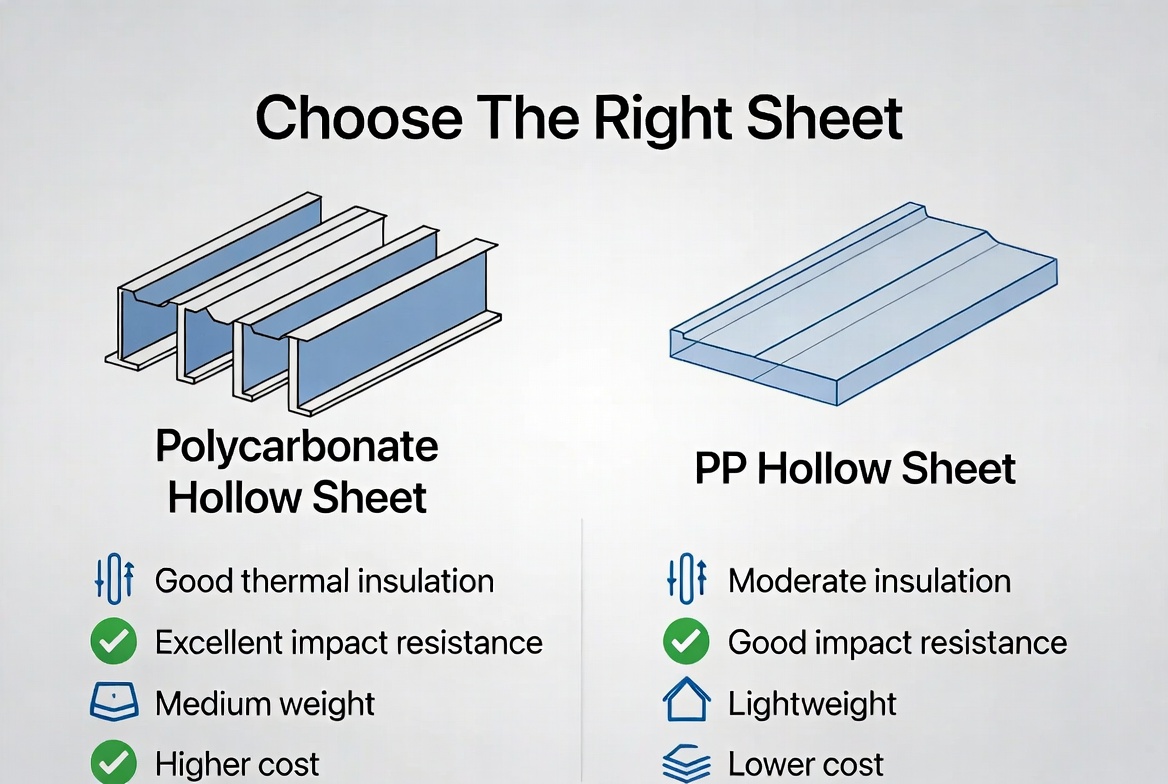
For structural and protective applications—especially greenhouses, crop covers, and industrial‑grade panels—polycarbonate hollow sheet and PP hollow sheet are emerging as best‑in‑class solutions. [corrugatedppsheets]
From my work with growers and agricultural engineers, polycarbonate hollow sheet is often the turning point when farms move from "basic" to high‑performance protected cultivation.
Polycarbonate hollow sheet is made by extruding polycarbonate into a multi‑wall, hollow structure that traps air between layers. This design provides: [xhplasticsheet]
- Excellent thermal insulation, reducing heat loss and stabilizing temperatures. [smallbusinessjournals]
- High light transmission with diffuse light that reduces leaf burn and improves canopy penetration. [xhplasticsheet]
- Very high impact resistance, far stronger than glass and many rigid plastics. [macrotek.co]
Many agricultural‑grade polycarbonate sheets include UV‑protective coatings on the surface, preventing yellowing and brittleness while also filtering harmful UV wavelengths for plants. [smallbusinessjournals]
You will typically see polycarbonate hollow sheets used for:
- Greenhouse roofing and walls for vegetables, fruits, flowers, and seedlings. [xhplasticsheet]
- Cold frames and nursery structures used for early propagation and hardening. [macrotek.co]
- Walkway covers, equipment shelters, and livestock shelters, where natural light and protection are both needed. [xhplasticsheet]
These sheets are especially valuable in regions with:
- Heavy snow or hail, where impact resistance prevents frequent breakage. [smallbusinessjournals]
- Large temperature swings, where the thermal insulation of the hollow core reduces energy costs. [macrotek.co]
Growers typically report improvements in:
- Yield and quality due to better control over temperature, light, and humidity. [smallbusinessjournals]
- Season extension, allowing earlier planting and later harvesting for higher annual production. [macrotek.co]
- Water efficiency, as enclosed structures reduce evaporation losses. [smallbusinessjournals]
Because the panels are lightweight, they are easier and faster to install than glass, and they reduce the structural steel requirements of the greenhouse frame. Over the life of the structure, this can significantly reduce total cost per square meter of covered area. [xhplasticsheet]
While polycarbonate is often the first choice for permanent greenhouse structures, PP hollow sheet (polypropylene hollow sheet) offers powerful advantages in lighter, modular, and multi‑purpose applications. [corrugatedppsheets]
PP hollow sheets are lightweight, stiff, and moisture‑resistant, with a fluted or honeycomb‑style hollow structure similar to corrugated board. Key advantages include: [alandsplastic]
- Resistance to water, many chemicals, and pests, making them suitable for outdoor and farm use. [corrugatedppsheets]
- Easy cutting, die‑cutting, and fabrication, making them ideal for custom panels, boxes, and dividers. [alandsplastic]
- Reusability, as boards are durable and can be cleaned and put back into use. [alandsplastic]
In agriculture, PP hollow sheets are commonly used for:
- Greenhouse panels and partitions, especially in small and medium structures. [corrugatedppsheets]
- Plant protection boards and crop shields to protect seedlings or row crops from wind and mechanical damage. [corrugatedppsheets]
- Seedling trays and nursery partitions that are washable and reusable. [corrugatedppsheets]
- Soil insulation covers and temporary side‑walls where thermal buffering and moisture protection are needed. [corrugatedppsheets]
Beyond the field and greenhouse, PP hollow sheets are widely adopted in packaging, advertising, and construction because of their strength‑to‑weight ratio and durability. For agricultural suppliers and exporters, this means a single material can serve both for product packaging and on‑farm applications, simplifying supply chains. [alandsplastic]
When I advise agricultural projects, I rarely recommend "one material for everything." Instead, I help teams match each use case to the right material–often combining polycarbonate hollow sheet and PP hollow sheet in the same project. [alandsplastic]
| Scenario | Recommended material | Why it works best |
|---|---|---|
| Permanent commercial greenhouses | Polycarbonate hollow sheetsmallbusinessjournals | Superior insulation, light transmission, UV protection, long life |
| High‑impact, hail‑prone environments | Polycarbonate hollow sheetsmallbusinessjournals | Exceptional impact resistance vs glass and films |
| Low‑cost greenhouse partitions or side panels | PP hollow sheetcorrugatedppsheets | Lightweight, economical, easy to replace |
| Seedling trays and plant protection boards | PP hollow sheetcorrugatedppsheets | Moisture resistance, easy cleaning, reusability |
| Temporary crop shields and signage on farm | PP hollow sheetcorrugatedppsheets | Printability and handling advantages |
| Livestock shelters with light transmission | Polycarbonate hollow sheetxhplasticsheet | Weather resistance, strength, controlled light |
In many cases, a blended solution—polycarbonate above for structural roofing and PP hollow sheet below for partitions, protection boards, or functional packaging—delivers the best total cost of ownership and operational flexibility. [alandsplastic]
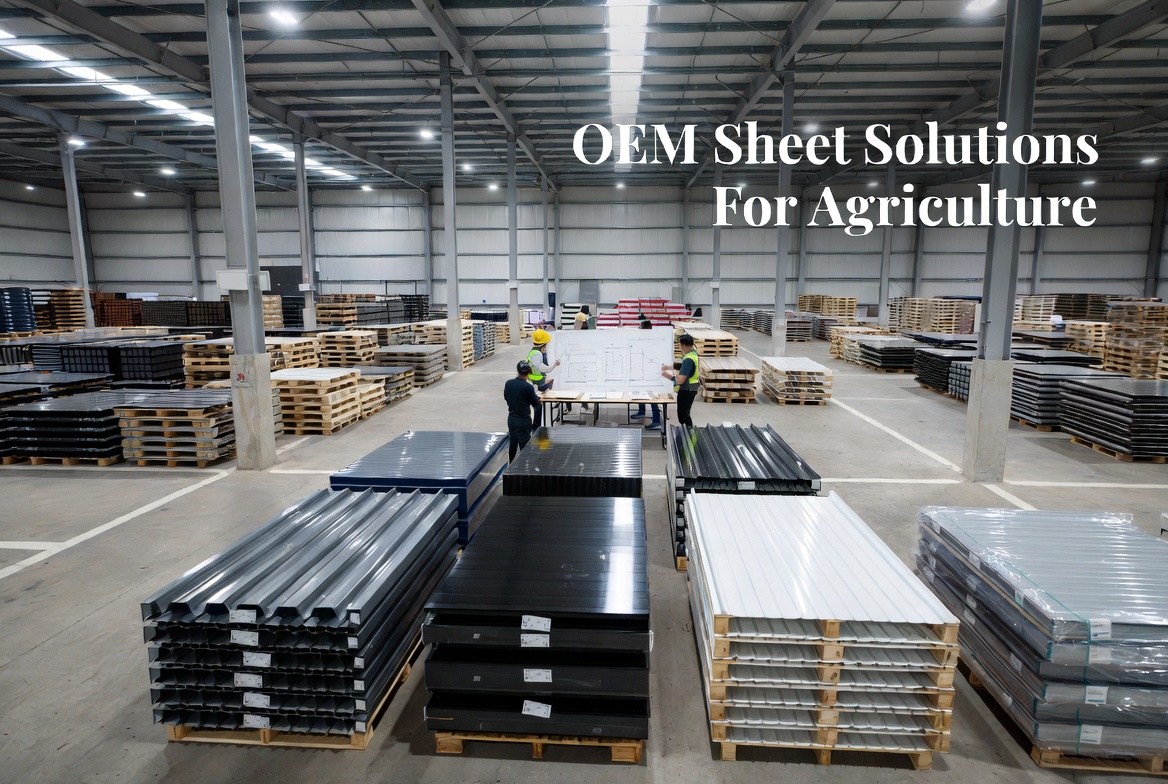
As a polycarbonate hollow sheet and PP hollow sheet supplier, Gokai is positioned to support global agricultural and industrial buyers with OEM services. For agricultural and greenhouse projects, this typically includes: [shgokai.en.made-in-china]
- Customized specifications: thickness, dimensions, colors, and UV‑coating options tailored to climate and crop type. [gokai.com]
- Application‑oriented advice: matching sheet type (PC vs PP) and configuration to greenhouse, livestock, or field use. [corrugatedppsheets]
- Consistent quality control crucial for large‑scale projects and repeat orders. [shgokai.en.made-in-china]
For integrators and distributors, partnering with an OEM‑capable supplier allows you to brand, configure, and bundle sheet solutions specifically for your local market—whether that is intensive horticulture, large‑scale greenhouses, or mixed crop‑livestock farms. [gokai.com]
To move from theory to decision, I often guide clients through a simple, structured checklist when choosing agricultural plastic sheets:
1. Define your primary objectives.
- Year‑round production, season extension only, or basic crop protection? [macrotek.co]
2. Clarify climate and risk profile.
- Heavy snow, hail, or high winds? Choose more impact‑resistant, insulated materials like polycarbonate hollow sheet. [xhplasticsheet]
3. Identify lifespan expectations.
- Short‑term structures (3–5 years) can lean more heavily on PP hollow sheet; long‑term (10+ years) often justify polycarbonate. [corrugatedppsheets]
4. Consider operational flexibility.
- Need frequent reconfiguration, temporary partitions, or movable crop shields? PP hollow sheet is easier to cut and handle. [alandsplastic]
5. Plan for cleaning and biosecurity.
- Both PC and PP hollow sheets are washable; in high‑biosecurity settings, prioritize surfaces with easy access and smooth finishes. [xhplasticsheet]
6. Align with budget and ROI.
- Compare not just initial material cost, but energy savings, yield gains, reduced breakage, and labor over the full life of the structure. [smallbusinessjournals]
Working through these points with your OEM supplier ensures you avoid over‑ or under‑specifying materials and maximize long‑term returns. [shgokai.en.made-in-china]
One legitimate concern many growers raise is the environmental impact of plastics. Research highlights that while plastics dramatically improve yield and resource efficiency, they must be managed more sustainably. [nouvelles.umontreal]
Current directions include:
- Designing longer‑life panels (such as UV‑stabilized polycarbonate hollow sheets) to reduce replacement frequency. [smallbusinessjournals]
- Developing better recycling pathways for structured sheets and mulch films at end‑of‑life. [slideshare]
- Optimizing use so that plastic covers and structures significantly reduce water, fertilizer, and pesticide use per ton of output. [nouvelles.umontreal]
For many operations, the net effect is still positive: plastics enable earlier planting, higher yields, and more efficient water and nutrient use when deployed correctly. Partnering with suppliers who understand both performance and end‑of‑life options is increasingly important. [gokai.com]
If you are planning a new greenhouse project, upgrading livestock shelters, or looking for reusable protection boards and trays, it pays to treat plastic sheet selection as a strategic decision, not a line item. [journalijecc]
Work with an OEM‑capable supplier like Gokai to:
- Match polycarbonate hollow sheet and PP hollow sheet grades to your climate, crop, and structure design. [gokai.com]
- Standardize specifications across multiple sites or export markets. [shgokai.en.made-in-china]
- Gain consistent, long‑term supply for replacement panels and future expansions. [shgokai.en.made-in-china]
A short technical consultation today can prevent years of higher energy costs, breakage, and under‑performing structures. [xhplasticsheet]
1. Are polycarbonate hollow sheets safe for food crops?
Yes. Agricultural‑grade polycarbonate hollow sheets are widely used in commercial greenhouses worldwide and are designed to be safe for food crop production when sourced from reputable manufacturers. [macrotek.co]
2. How long do polycarbonate hollow sheets typically last in greenhouse applications?
With proper UV stabilization and installation, polycarbonate hollow sheets can provide 10 years or more of service, depending on climate intensity and maintenance practices. [smallbusinessjournals]
3. Can PP hollow sheets be recycled after use?
PP hollow sheets are made from polypropylene, a thermoplastic that is technically recyclable where appropriate collection and recycling streams exist, though availability varies by region. [nouvelles.umontreal]
4. Are PP hollow sheets strong enough for greenhouse roofing?
PP hollow sheets are widely used for panels, partitions, and light structures, but for long‑span or high‑load greenhouse roofs, polycarbonate hollow sheet is typically preferred due to superior impact strength and weatherability. [corrugatedppsheets]
5. How do agricultural plastics affect sustainability?
While plastics raise concerns about waste, they also enable higher yields, improved water and nutrient efficiency, and reduced pesticide use, so the net sustainability effect depends on material choice, lifespan, and end‑of‑life management. [slideshare]
1. Piedmont Plastics – "Plastic Sheet in Agriculture: An Affordable and Effective Solution"
<https://www.piedmontplastics.com/blog/agriculture-plastics> [journalijecc]
2. Small Business Journals – "Polycarbonate Sheets In Agriculture: Advancing Modern Farming Practices"
<https://smallbusinessjournals.com/modern-farming-practices> [smallbusinessjournals]
3. CorrugatedPPSheets – "What Is Polypropylene Hollow Sheet and Its Uses"
<https://www.corrugatedppsheets.com/what-is-polypropylene-hollow-sheet-and-its-uses/> [corrugatedppsheets]
4. Shanghai Gokai Industry Co., Ltd. – PP Hollow Sheet Product Page
<https://www.gokai.com.cn/id/amp/pp-hollow-sheet.html> [gokai.com]
5. Université de Montréal – "Finding more sustainable ways to use plastics in agriculture"
<https://nouvelles.umontreal.ca/en/article/2023/12/12/finding-more-sustainable-ways-to-use-plastics-in-agriculture> [nouvelles.umontreal]
6. XH Plastic Sheet – "Introduction to the main applications of hollow polycarbonate sheets"
<https://www.xhplasticsheet.com/news/introduction-to-the-main-applications-of-hollow-polycarbonate-sheets/> [xhplasticsheet]
7. Jinan Alands Plastic – "What is the use of PP hollow sheet?"
<https://www.alandsplastic.com/news/news/What_is_the_use_of_PP_hollow_sheet_.html> [alandsplastic]
8. Macrotek – "Polycarbonate sheets in agriculture"
<https://macrotek.co.uk/agriculture/> [macrotek.co]
9. Nouvelles / Université de Montréal & Slideshare – "Single use plastics in agriculture"
<https://www.slideshare.net/slideshow/single-use-plastics-in-agriculture/166499039> [slideshare]