Shanghai Gokai Industry Co,.Ltd.
Call Us: +86-18918606548
Call Us: +86-18918606548
- Product Name
- Product Keyword
- Product Model
- Product Summary
- Product Description
- Multi Field Search
Views: 222 Author: Loretta Publish Time: 2026-02-13 Origin: Site


Content Menu
● Why Water Environment Matters So Much
● Best Plastics for Saltwater Environments
>> Top Saltwater Plastics: UHMW, HDPE, PVC
>> Common Saltwater Applications
● Best Plastics for Freshwater Environments
>> Top Freshwater Plastics: Polycarbonate, Acrylic, HDPE
>> Common Freshwater Applications
● Best Plastics for Brackish Water Applications
>> Top Brackish Plastics: CPVC, PTFE, Marine-Grade HDPE
>> Typical Brackish Water Projects
● Practical Material Selection Checklist
● Maintenance and Longevity Tips
● OEM and Custom Fabrication Considerations
● Take the Next Step for a Durable, Low-Maintenance Project
● Frequently Asked Questions (FAQ)
>> 1. Which plastic lasts the longest in saltwater?
>> 2. Is acrylic or polycarbonate better for aquariums?
>> 3. Can standard PVC be used in brackish water?
>> 4. What is the main advantage of marine-grade HDPE?
>> 5. How do I choose between UHMW and HDPE for dock components?
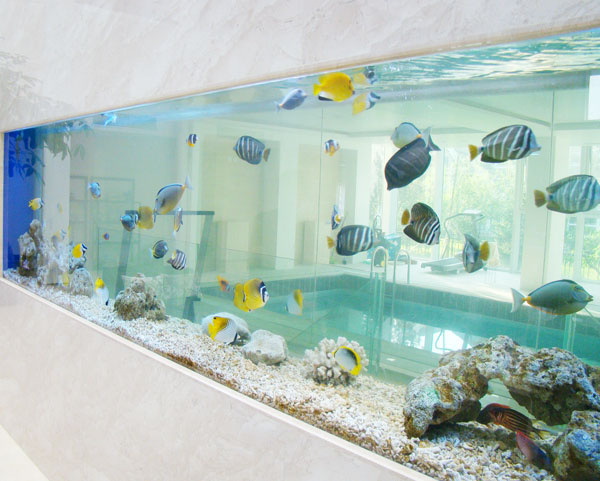
Choosing the right plastic for marine and aquatic environments is critical to ensure long service life, safety, and low maintenance costs in saltwater, freshwater, and brackish water projects. This in-depth guide explains which plastics work best in each environment, how to compare them, and how to select the right material for your specific application.
- Key environmental factors that damage plastics in water
- Best plastics for saltwater, freshwater, and brackish water
- Typical use cases: docks, aquariums, pipes, tanks, boat parts, offshore structures
- Practical selection checklist and maintenance tips
- OEM options and custom fabrication insights
Different water environments attack plastics in very different ways, so one universal material is rarely optimal. Understanding these factors helps you balance cost, lifespan, and performance.
- Salinity (salt content): Salt accelerates corrosion in metals and can stress some plastics over time, especially when combined with mechanical load and UV exposure.
- UV exposure: Sunlight breaks chemical bonds in many plastics, leading to embrittlement, color fading, and loss of impact strength if they are not UV-stabilized.
- Temperature fluctuations: Cold water can make some plastics brittle, while high temperatures may reduce strength and stiffness, affecting load-bearing components.
Selecting plastics that are engineered for the actual water chemistry and exposure conditions is the foundation of a cost-effective design.
Saltwater is among the harshest environments due to the combined effect of salinity, constant moisture, and sunlight. The following plastics consistently perform well in marine conditions.
These three plastics are widely used for docks, seawalls, and marine hardware because of their durability and corrosion resistance.
| Plastic | Key Strengths in Saltwater | Typical Marine Uses | Notes |
|---|---|---|---|
| UHMW (Ultra-High-Molecular-Weight Polyethylene) | Outstanding impact resistance, very low friction, high resistance to saltwater corrosion | Dock fenders, sliding pads, bumpers, wear strips | Excellent where parts must slide or absorb impact |
| HDPE (High-Density Polyethylene) | High chemical resistance, good UV stability with additives, strong and tough | Floating docks, pontoons, pipe systems, tanks | Good balance of cost and performance |
| PVC (Polyvinyl Chloride) | Good corrosion resistance, rigid, widely available, economical | Marine piping, seawalls, conduits, cable protection | UV resistance lower than HDPE or UHMW without UV stabilizers |
UHMW is ideal when components must endure repeated impact or friction, such as dock fenders and wear pads, because its low-friction surface reduces wear and noise. HDPE is often chosen for structural elements like floating dock modules and marine tanks thanks to its toughness and availability in UV-stabilized grades. PVC is common in pipes and seawalls where rigidity, corrosion resistance, and low cost are priorities, with UV-stabilized formulations recommended for outdoor exposure.
- Floating docks and pontoons
- Marine piping systems and manifolds
- Seawalls, bulkheads, and retaining structures
- Boat components such as trim boards, seats, and housings
Freshwater is less corrosive than saltwater, but clarity, impact resistance, and aesthetics are often more important, especially in aquariums and boat windows.
| Plastic | Key Strengths in Freshwater | Typical Uses | Notes |
|---|---|---|---|
| Polycarbonate | Very high impact strength, good optical clarity, good machinability | Boat windows, hatch covers, protective shields | Ideal where breakage resistance is critical |
| Acrylic | Excellent optical clarity and gloss, good weatherability, attractive appearance | Aquariums, display tanks, dock panels, glazing | Slightly less impact-resistant than polycarbonate but clearer |
| HDPE | High impact resistance, easy fabrication, good chemical resistance | Dock decking, structural panels, tanks | Opaque material used mainly for structural or non-transparent parts |
Polycarbonate is favored for boat windows and hatches because it offers exceptional impact resistance while still providing good transparency. Acrylic is often used in aquariums and display tanks thanks to its superior clarity and surface gloss, creating a visually appealing viewing experience. HDPE remains a strong choice for non-transparent components like floating modules, decking, and freshwater tanks, where structural performance and ease of fabrication matter more than clarity.
- Clear boat windows and windshields
- Public and private aquariums
- Freshwater storage tanks and process tanks
- Dock panels and decking
Brackish water, a mix of saltwater and freshwater, is common in estuaries, tidal rivers, and nearshore industrial zones. Fluctuating salinity and contaminants make material selection more complex.
| Plastic | Key Strengths in Brackish Water | Typical Uses | Notes |
|---|---|---|---|
| CPVC (Chlorinated PVC) | Handles corrosive chemicals and variable salinity, higher temperature resistance than standard PVC | Process piping, industrial tanks, outfalls | Good choice where both chemicals and brackish water are present |
| PTFE (Teflon) | Exceptional chemical resistance, performs in highly variable conditions | Linings, gaskets, seals, specialty fittings | Premium material for extreme environments |
| Marine-grade HDPE | Designed for harsh marine conditions, high impact resistance, strong UV performance | Bridges, offshore structures, high-duty components | Suitable for long-term structural elements |
CPVC is widely used in industrial piping and tank systems exposed to aggressive chemicals and fluctuating salinity. PTFE is reserved for critical components such as seals and linings where maximum chemical inertness is required in brackish water. Marine-grade HDPE is engineered for long-term outdoor exposure, making it well-suited for bridges, offshore support elements, and coastal infrastructure.
- Bridges and causeways crossing estuaries
- Industrial and municipal tanks near coastal zones
- Offshore platforms and auxiliary structures
To choose the best plastic for your specific marine or aquatic project, evaluate these factors step by step.
1. Define the water type
- Saltwater environments such as oceans, seas, and marinas.
- Freshwater environments such as lakes, rivers, and reservoirs.
- Brackish environments such as estuaries, tidal rivers, and coastal industrial zones.
2. Map exposure conditions
Level of UV exposure, for example fully outdoor versus covered installations.
- Temperature range and seasonal fluctuations.
- Continuous immersion versus splash or intermittent contact only.
3. Clarify mechanical requirements
- Whether components are load-bearing or non-structural.
- Expected impact exposure from boat collisions, wave action, or debris.
- Need for low friction or sliding surfaces.
4. Consider chemical and biological factors
- Presence of industrial chemicals, cleaning agents, or disinfectants.
- Biofouling risk from algae, barnacles, and other marine growth.
5. Set priorities: clarity versus toughness versus cost
- Transparent viewing needs, such as aquariums and windows, typically point to acrylic or polycarbonate.
- Heavy impact and wear conditions typically favor UHMW or HDPE.
- Complex chemical exposure often requires CPVC or PTFE.
Using this structured checklist helps engineers and buyers avoid under-specifying materials or overspending on unnecessarily exotic plastics.
Even the best plastic can fail early if maintenance is ignored. Simple preventive steps greatly extend service life. - Inspect regularly for surface cracks, discoloration, and deformation, especially near fasteners and high-stress points.
- Clean with compatible detergents to remove salt deposits, biofouling, and contaminants without damaging the plastic surface.
- Use proper fasteners and supports to prevent stress concentrations and edge cracking on panels and structural members.
- Select UV-stabilized grades when components are exposed to long-term sunlight, particularly in HDPE and PVC installations.
For OEMs and project owners, partnering with a specialized plastics manufacturer can dramatically simplify material selection and fabrication.
- Material matching: Experts can help match UHMW, HDPE, PVC, acrylic, polycarbonate, CPVC, PTFE, and marine-grade HDPE to specific environmental conditions and load requirements.
- Custom cutting and machining: Precision-cut panels, holes, and shapes reduce onsite labor and improve overall fit.
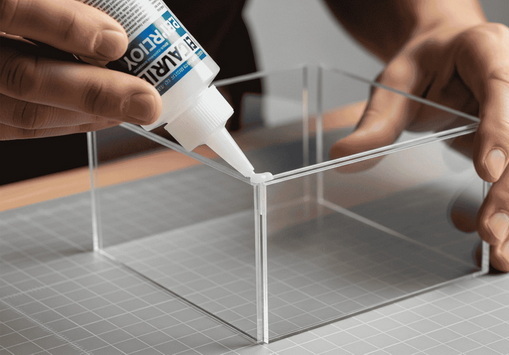
- Forming and bonding: Acrylic and polycarbonate can be formed into curved windows and tanks, while PVC and CPVC can be solvent-bonded into complex piping assemblies.
- Documentation and traceability: Reputable suppliers provide technical datasheets, compliance certificates, and long-term supply support.
For companies that specialize in PVC foam boards and acrylic sheets, this also means offering tailor-made OEM services for global customers, including branded panels, customized thicknesses, and project-specific surface finishes.
If you are planning a dock, aquarium, seawall, tank, or offshore structure, choosing the right plastic at the design stage will determine how well your project performs over its lifetime. A specialist supplier can help you compare materials and design a solution that fits your performance targets, regulatory requirements, and budget. Whether you need high-clarity acrylic, impact-resistant polycarbonate, structural HDPE, or engineered materials such as CPVC and PTFE, expert guidance will help you avoid costly trial and error.
Reach out to our technical team today to discuss your water environment, mechanical requirements, and design constraints. Together, we can specify a plastics solution that delivers long-term durability, reduced maintenance, and reliable performance in saltwater, freshwater, and brackish water applications.
Contact us to get more information!
In many dock and seawall projects, UV-stabilized HDPE and UHMW are preferred because they combine excellent saltwater resistance with high impact strength and strong UV stability. Exact lifespan always depends on design details, loading, and maintenance practices.
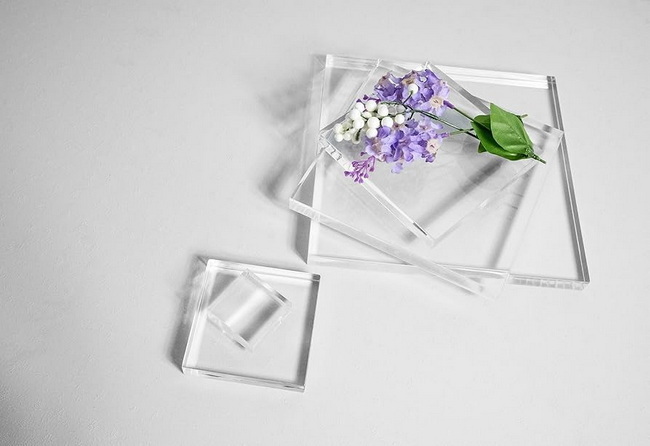
For display tanks where clarity and aesthetics are critical, acrylic is often chosen because of its superior optical clarity and high-quality surface finish. Where impact resistance and protection against accidental hits are more important, polycarbonate may be the safer option.
Standard PVC performs well in many water applications, but in brackish and chemically aggressive environments, CPVC is usually preferred due to its higher temperature capability and better chemical resistance. It is important to confirm chemical and temperature conditions before specifying PVC.
Marine-grade HDPE is formulated with enhanced UV and impact resistance, making it suitable for long-term exposure in harsh marine and brackish environments. It is commonly used in docks, pontoons, and structural components where both durability and low maintenance are required.
Use UHMW when you need very low friction and extreme impact resistance, such as sliding fenders and wear pads. Choose HDPE for larger structural elements like floating modules and panels, where stiffness, ease of fabrication, and cost efficiency are the main drivers.
1. https://www.acmeplastics.com/content/best-plastics-for-saltwater-freshwater-brackish-water/