Shanghai Gokai Industry Co,.Ltd.
Call Us: +86-18918606548
Call Us: +86-18918606548
- Product Name
- Product Keyword
- Product Model
- Product Summary
- Product Description
- Multi Field Search
Views: 222 Author: Gokai Publish Time: 2026-04-14 Origin: Site


As someone who spends a lot of time between the factory floor at Gokai and the studio tables of our OEM clients, I've seen both perfect frosted‑acrylic art panels and painfully peeling paint jobs. This guide brings that practical, industry‑side experience together with best practices from professional painters so you can paint on frosted acrylic (also called frosted plexiglass or P95 acrylic) with confidence. [justpaint]
Frosted and P95 acrylic sheets look similar, but behave differently when you paint them. Understanding the surface is the foundation of a durable finish. [cutmy.co]
- Frosted acrylic sheet has a matte, etched‑like finish on both sides, creating a diffuse, frosted look and giving paint excellent "tooth" on either face. [cutmy.co]
- P95 acrylic sheet has a matte finish on one side and a clear, glossy surface on the other, allowing you to create layered or reversible art by painting on one side and viewing from the other. [cutmy.co]
- Completely clear cast acrylic can also be painted, but usually needs light abrasion or a primer to improve adhesion. [justpaint]
From an expert perspective, this "tooth" is exactly why many artists prefer frosted or P95 acrylic over glass: it behaves more like a fine, synthetic canvas than a slippery plastic sheet. [justpaint]

Painting on frosted acrylic is not just a trend; it solves specific creative and technical problems. [cutmy.co]
- Better adhesion and fewer failures – the matte surface makes paint far less likely to bead or flake than on perfectly smooth plastic. [justpaint]
- Soft, diffused light effects – backlit frosted acrylic creates a glow that canvas simply cannot reproduce, ideal for signage and light‑box art. [cutmy.co]
- Dual‑sided creativity – with P95 you can design reversible or layered compositions that look different from front and back. [cutmy.co]
- Durability for events and displays – when combined with proper primer and sealer, painted acrylic panels withstand handling better than paper posters. [cutmy.co]
For OEM buyers, these same properties explain why brands increasingly specify painted acrylic panels for retail fixtures, illuminated logos, and decorative partitions instead of glass. [gokaiplastic]
Your first expert decision is not the paint—it's the sheet spec. [gokaiplastic]
| Use case | Recommended sheet | Why it works well |
|---|---|---|
| Backlit logo or sign | Frosted acrylic both sides (cutmy.co) | Even diffusion, strong tooth on both faces |
| Reversible art panel | P95 (matte one side) (cutmy.co) | Clear side preserves depth, matte side takes paint |
| 3D layered artwork (stacked sheets) | Clear + P95 mix (cutmy.co) | Clear layers for depth, P95 for painted focal layers |
| Protective "sandwich" framing | Clear frame‑grade acrylic (cutmy.co) | High optical clarity when used as a cover over painted surface |
Pro insight: At Gokai, artists who plan to layer multiple panels often order thinner clear and P95 sheets in custom sizes to keep the final artwork lighter and easier to mount. [gokai.com]
Most failed projects come from painting straight onto dusty, glossy plastic. A professional workflow always begins with controlled surface prep. [justpaint]
1. Remove protective film carefully. Peel slowly to avoid static that attracts dust. [cutmy.co]
2. Wash the surface. Use mild dish soap in water or a specialist cleaner like Novus #1 with a soft, lint‑free cloth. [justpaint]
3. Rinse and dry. Wipe with clean water, then dry using a microfiber cloth to avoid scratches and lint. [cutmy.co]
4. Inspect under raking light. Tilt the sheet near a window or lamp; any haze, fingerprints, or fibers you see now will show under paint. [cutmy.co]
On production orders, we standardize this cleaning step to reduce reject rates in painted panels for retail and architectural clients. [gokai.com]

If you're working on clear acrylic, or you want selective frosting for a specific design, add mechanical tooth. [community.glowforge]
- Use fine‑grit sandpaper (400–600 grit) and lightly scuff only the areas you plan to paint. [therpf]
- Sand in small circular motions, then clean again to remove dust. [justpaint]
- For DIY frosting on clear sheets, some makers also use frosted spray coatings designed for glass/acrylic to create an even matte layer. [facebook]
This controlled abrasion mimics the micro‑texture of P95 and greatly improves adhesion without sacrificing too much transparency. [justpaint]
Many hobby tutorials skip primer, but industry‑tested workflows do not. [cutmy.co]
On frosted and P95 sheets, you can paint directly, but an acrylic‑based plastic primer dramatically improves durability—especially for panels that will be handled or transported. [cutmy.co]
- Acrylic or plastic‑specific spray primers bond to PMMA and create an even, micro‑porous layer for paint. [cutmy.co]
- Primer reduces issues like peeling, chipping, and uneven absorption of the first paint layer. [cutmy.co]
In our OEM projects, primed panels show noticeably better performance in abrasion and tape‑pull tests compared with unprimed sheets, particularly on glossy sides. [gokaiplastic]
1. Work outdoors or in a well‑ventilated space; cover surrounding surfaces with newspaper or a tarp to avoid overspray. [cutmy.co]
2. Shake the can as instructed by the manufacturer, usually for 1–2 minutes. [cutmy.co]
3. Hold the can about 45–60 cm (around two feet) from the acrylic. [cutmy.co]
4. Spray in smooth, overlapping passes to create a thin, even coat rather than a heavy, wet layer. [cutmy.co]
5. Allow the primer to dry completely before you start painting; drying times vary, so follow the label. [cutmy.co]
Choosing the wrong paint is the fastest way to a cracked or flaking surface. Professional recommendations converge on acrylic‑based systems. [justpaint]
- Artist‑grade acrylic paints: Excellent adhesion, flexibility, and rich color; can be brushed, sponged, or sprayed. [justpaint]
- Acrylic inks: Thinner, ideal for line work, calligraphy, and airbrush effects on frosted acrylic. [justpaint]
- Quality spray paints for plastic: Useful for large, even color fields or gradients when combined with proper priming. [cutmy.co]
Avoid standard house paints or paints not rated for plastic; these typically have poor long‑term adhesion on acrylic. [cutmy.co]
Acrylic paints become more brittle at low temperatures because of their glass transition temperature, generally around 7–10 °C for many formulations. [paintingbestpractices]
- Do not paint or cure panels in very cold environments; allow them to dry at room temperature for a more flexible, resilient film. [paintingbestpractices]
- If using a hair dryer to speed drying, keep heat low and distance generous; overheating can warp acrylic and compromise primer or paint. [cutmy.co]
Here is a practical workflow we see succeed consistently with both studio artists and Gokai's OEM clients. [justpaint]
1. Clarify the design and viewing side. Decide whether the piece will be viewed from the painted side (matte look) or through the clear side (for P95, glass‑like finish with embedded color). [cutmy.co]
2. Prepare and prime as described above: clean, optionally scuff, and prime the painting surface. [justpaint]
3. Transfer your design.
- Create a firm line drawing on paper and place it beneath or behind the acrylic as a guide, then trace with a brush or marker. [cutmy.co]
4. Block in base colors.
- Start with thin, even layers of acrylic paint; avoid thick, gummy coats in early stages. [cutmy.co]
5. Build up layers gradually.
- Allow each coat to dry fully before adding the next to avoid lifting or muddying colors. [cutmy.co]
6. Add detail and line work.
- Use smaller brushes or acrylic paint markers for fine outlines, text, and decorative elements. [cutmy.co]
7. Let the panel cure.
- After the final coat, let it dry at least 24 hours (or per paint manufacturer's guidance) before sealing. [paintingbestpractices]
8. Seal the surface.
- Apply a spray‑on acrylic sealer to protect against scratches and abrasion. [cutmy.co]

Advanced users of frosted acrylic often want 3D depth and lighting tricks that go beyond flat panels. [facebook]
One powerful method is to stack multiple acrylic sheets, painting different parts of the composition on each layer. [cutmy.co]
- Use several thin panels instead of one thick sheet for easier handling and more visual depth. [cutmy.co]
- Paint background elements on the rear panel, mid‑tones on the middle layers, and highlights or text on the front panel. [cutmy.co]
- Once complete, you can glue or mechanically fasten panels together with spacers to enhance depth. [cutmy.co]
This technique is especially effective for brand logos, ice/snow effects, and theatrical props, sometimes combined with transparent glazes for semi‑transparent color. [facebook]
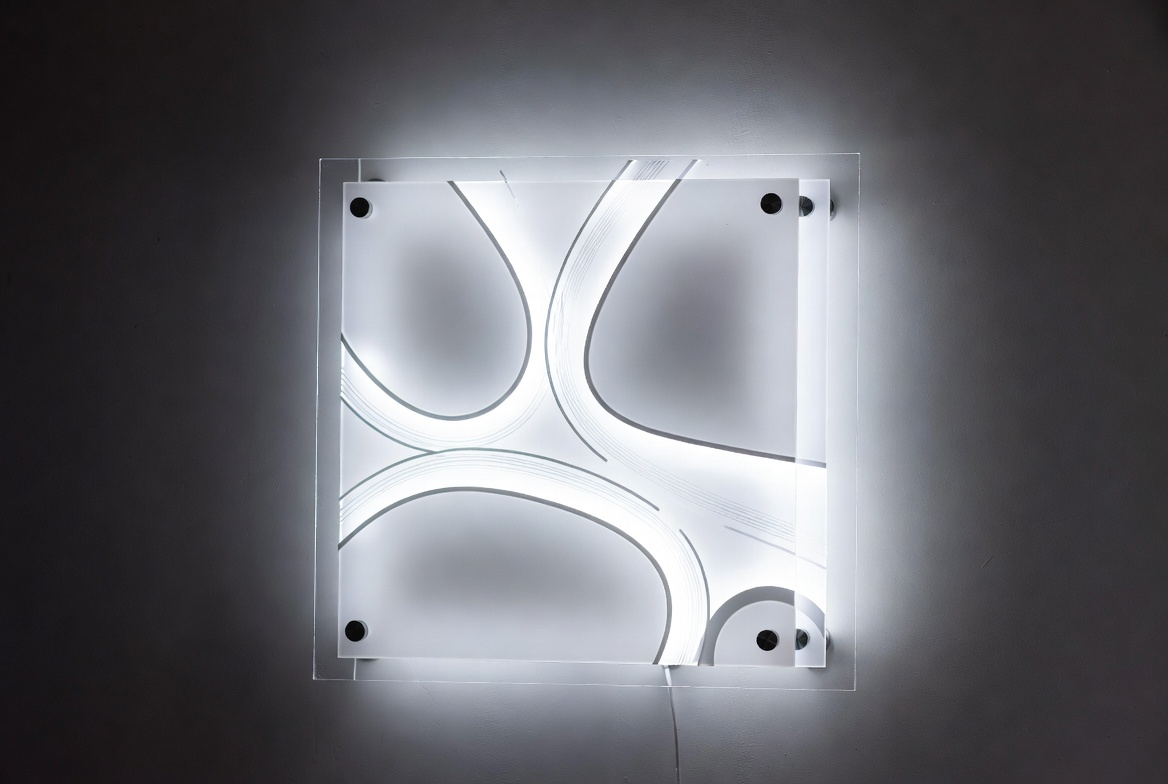
Frosted acrylic is also an excellent base for hybrid media. [cutmy.co]
- Vinyl decals adhere very well to painted acrylic for crisp lettering and brand marks in signage. [cutmy.co]
- Pre‑masked acrylic can be used as a stencil by cutting the protective film to create sharp paint edges. [cutmy.co]
- Some fabricators incorporate frosted sprays, glass varnishes, or clear polyurethane glazes to adjust transparency and glow. [community.glowforge]
Even when fully dry, unsealed acrylic paint on plastic can be scratched with something as soft as a fingernail. Long‑term protection is essential. [cutmy.co]
For most applications, a spray‑on acrylic sealer designed for artworks or plastics is the most practical choice. [cutmy.co]
- Look for sealers described as clear, non‑yellowing, and compatible with acrylic paint. [cutmy.co]
- For panels used in high‑touch environments (e.g., store fixtures), consider multiple thin coats rather than one heavy coat. [cutmy.co]
- Seal in a dust‑free, well‑ventilated area. [cutmy.co]
- Hold the can at the manufacturer's recommended distance and apply light, even passes. [cutmy.co]
- Allow adequate drying and curing time before stacking, framing, or shipping panels. [cutmy.co]
For demanding OEM projects, some clients also specify mechanical protection: for example, placing a clear frame‑grade acrylic cover sheet over a painted panel to physically isolate the artwork from contact. [cutmy.co]
From user feedback and shop‑floor experience, the same errors show up again and again. [justpaint]
- Using the wrong paint type – general wall paints or low‑quality craft paints often flake or scratch off. Stick with acrylic paints/inks for plastic. [justpaint]
- Skipping surface prep – painting over dust, fingerprints, or un‑scuffed glossy areas leads to poor adhesion and visible imperfections. [cutmy.co]
- Overheating the panel – aggressive use of heat guns or hair dryers can warp acrylic or cause micro‑cracks in primer and paint. [paintingbestpractices]
- Too‑thick layers – heavy coats trap moisture, extend drying time, and are more prone to cracking. Build color gradually in thin layers. [cutmy.co]
- Rough handling before sealing – stacking or shipping unsealed panels too early causes scuffs that are almost impossible to remove. [cutmy.co]
Treat your frosted acrylic panel as a finished product, not just a craft base, and handle it with the same care you would give finished glass. [gokaiplastic]
If you move from one‑off artworks to series production or B2B projects, working with an OEM acrylic supplier significantly simplifies your process. [gokai.com]
At Shanghai Gokai Industry Co., Ltd., we specialize in: [gokai.com]
- Supplying frosted, P95, clear, colored, and mirror acrylic sheets in custom sizes and thicknesses. [gokaiplastic]
- Providing OEM services for PVC foam board and acrylic sheet projects, tailored to global B2B clients. [gokai.goldsupplier]
- Supporting cut‑to‑size, drilling, and edge finishing requirements so panels are ready for painting, printing, or direct installation. [gokai.com]
For brands and fabricators, this means you can specify exact surface finish, optical clarity, and thickness, and then apply the painting workflow from this guide at scale. [gokaiplastic]
Whether you are an individual artist experimenting with backlit frosted panels or a procurement manager planning a new line of retail displays, the combination of proper surface prep, compatible acrylic paints, and quality sheet stock is what delivers professional, durable results. [gokaiplastic]
If you need reliable frosted or P95 acrylic sheets, cut‑to‑size and ready for painting, or you want to discuss a custom OEM solution for your brand, contact Gokai's team for technical advice, samples, and production support. [gokai.goldsupplier]

1. Do I always need primer on frosted acrylic before painting?
Not always, but a plastic‑safe acrylic primer significantly improves adhesion and durability, especially for pieces that will be transported, installed, or touched frequently. [cutmy.co]
2. Can I use oil paint on frosted acrylic panels?
Oil paint may adhere initially but is generally not recommended because of flexibility and aging differences between oil films and acrylic substrates; acrylic paints are safer long‑term on PMMA. [paintingbestpractices]
3. How do I stop painted acrylic from scratching during shipping?
Use an acrylic sealer, allow full curing, then protect with soft interleaving (foam sheets or non‑abrasive paper) or a clear cover panel during transport. [gokaiplastic]
4. Is there a way to "frost" existing clear acrylic instead of buying frosted sheet?
Yes. Light sanding with fine‑grit paper or applying specialized frosted spray coatings for glass/acrylic can create a matte surface suitable for painting. [facebook]
5. Can I backlight any painted frosted acrylic panel?
In most cases yes, but you'll get the best results with thinner, evenly painted areas and light‑diffusing frosted sheets; dense, opaque layers may block too much light. [gokaiplastic]
1. Acme Plastics – "How to Paint on Frosted Acrylic Plastic Panels" (original tutorial on frosted and P95 acrylic preparation, priming, sealing, and techniques).
https://www.acmeplastics.com/content/how-to-paint-on-frosted-acrylic-plastic-panels/ [cutmy.co]
2. Just Paint – "Painting on Acrylic Sheeting" (technical guidance on PMMA surfaces and surface preparation for acrylic paints).
https://justpaint.org/painting-on-acrylic-sheeting/ [justpaint]
3. Cut My – "Beginners Guide to Painting on Acrylic Sheets" (practical tips on primers, spray paints, and tool selection).
https://www.cutmy.co.uk/ideas-advice/painting-on-acrylic-sheet/ [cutmy.co]
4. Painting Best Practices – "How Cold Temperatures Affect Paintings: Risks and Precautions" (discussion of acrylic paint behavior at low temperatures and glass transition).
https://paintingbestpractices.com/paintings-cold-temperatures/ [paintingbestpractices]
5. Shanghai Gokai Industry Co., Ltd. – Official website and acrylic sheet product pages (OEM capabilities, product range, and application focus).
https://www.gokaiplastic.com
https://www.gokai.com.cn/acrylic-sheet.html [gokai.com]
6. User and community discussions on frosting acrylic (Glowforge Owners Forum, RPF, and related maker communities on sanding and frosted sprays).
https://community.glowforge.com/t/how-do-i-frost-clear-acrylc/68929
https://www.therpf.com/forums/threads/how-to-frost-clear-acrylic-plastic.64406/
https://www.facebook.com/groups/4513942185340216/posts/6916134541787623/ [therpf]
7. Maker and set‑design communities on mixed media and glaze techniques for ice and transparency effects on acrylic.
https://www.facebook.com/groups/setdesignersbuilders/posts/2806980272826856/ [facebook]