Shanghai Gokai Industry Co,.Ltd.
Call Us: +86-18918606548
Call Us: +86-18918606548
- Product Name
- Product Keyword
- Product Model
- Product Summary
- Product Description
- Multi Field Search
Views: 222 Author: Loretta Publish Time: 2026-02-11 Origin: Site


Content Menu
● What Is Marine Plastic and Why It Matters
● Step 1: Define Your Marine Project Requirements
>> Mechanical and Performance Requirements
● Step 2: Overview of Common Marine Plastics
>> High-Density Polyethylene (HDPE) Marine Board
>> PVC Sheets and PVC Foam Board
>> Acrylic (PMMA) for Marine Glazing
>> Other Relevant Marine Plastics
● Step 3: Key Factors When Selecting a Marine Plastic
>> Durability, Impact Resistance, and Fatigue
>> Water and Chemical Resistance
>> Weight and Structural Efficiency
>> Fabrication, Installation, and Lifecycle Cost
● When to Use PVC Foam Board vs. Solid Plastics
● Practical 6-Step Process for Selecting Marine Plastics
● Sustainability, Recycling, and Long-Term Responsibility
● Marine Plastic Options at a Glance
● Expert Tips for Choosing the Right Marine Plastic
>> Verify Certifications and Standards
>> Plan for Edges, Fasteners, and Repairs
● Call to Action: Partner with a Specialist for Your Next Marine Project
● Frequently Asked Questions (FAQ)
>> 1. What is the best plastic for boat decks?
>> 2. Is PVC foam board strong enough for structural marine use?
>> 3. How do I protect marine plastics from UV damage?
>> 4. Are marine plastics recyclable at the end of their life?
>> 5. How do I compare different marine plastics for a specific project?
Choosing the right marine plastic directly affects the safety, durability, and lifecycle cost of your boat, dock, or offshore structure. For OEM builders and serious DIYers, an informed material choice can prevent failures, reduce maintenance, and improve performance over many years in harsh saltwater environments.

Marine plastics are engineered polymers designed to withstand UV exposure, saltwater, impact, and constant mechanical stress in coastal and offshore environments. Compared with metals and wood, they offer excellent corrosion resistance, lower weight, and easier fabrication, making them a core material for modern boatbuilding and marina infrastructure.
Marine-grade options include HDPE, PVC, acrylic, ABS, polypropylene, and specialty PVC foam board cores for composite structures such as hulls, decks, and bulkheads. Selecting among them requires balancing mechanical strength, weight, UV stability, and total cost of ownership rather than just initial price.
Before comparing material datasheets, clarify where and how your component will be used. This step prevents over- or under-engineering and makes the final choice more predictable and cost-effective.
Ask these questions for your project environment:
- Will the part see full sun, partial shade, or mostly covered conditions?
- Is it used in seawater, brackish water, or freshwater?
- Are there large daily or seasonal temperature swings?
- Will it face continuous immersion, splash zones, or only occasional wetting?
Key environmental stressors include:
- UV radiation: UV is a main driver of plastic degradation in marine settings, leading to embrittlement, discoloration, and loss of strength.
- Saltwater exposure: Salts accelerate corrosion and can attack certain polymers, making low water absorption and chemical resistance essential.
- Temperature and thermal cycling: Repeated heating and cooling can cause warpage, loss of stiffness, and fatigue cracking in poorly matched materials.
Define how the plastic must perform, not just where it will be installed.
- Load-bearing: Does it support people, equipment, or structural loads such as decks, bulkheads, and superstructures?
- Impact resistance: Will it be hit by hulls, fenders, gear, or waves on docks, fender boards, and bumpers?
- Flexibility vs. rigidity: Some panels must flex slightly, while cores and frames must remain stiff under shear and compression.
- Weight sensitivity: For hulls and decks, lower weight improves speed, fuel efficiency, and stability.
Also consider chemical exposure from fuel, oils, cleaning agents, and antifouling chemicals, all of which can interact with polymers over time.
Below is a practical overview of the main plastic families used in marine projects and where they typically perform best.
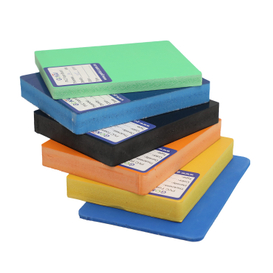
HDPE marine board is a workhorse for structural and semi-structural components. It offers high impact resistance, excellent moisture resistance, and good toughness, making it ideal for heavy-duty marine use.
Typical marine applications:
- Boat cabinets, countertops, doors, and hatches.
- Steps, ladders, trims, mouldings, and railings.
- Deck hardware backing plates, seat bases, and tackle centers.
- Dock components, fenders, and rub rails.
Key advantages include impact strength, low water absorption, chemical resistance, and long outdoor life when UV-stabilized. Its main limitations are relatively low stiffness compared with metal and potential creep under long-term high load.
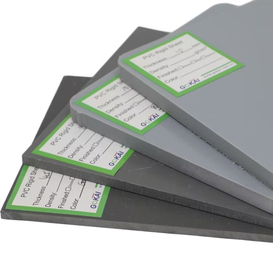
Rigid PVC sheet is widely used where good chemical resistance, dimensional stability, and cost-effectiveness are priorities. It is common in piping, cable trays, interior panels, and various topside components exposed to weather and spray.
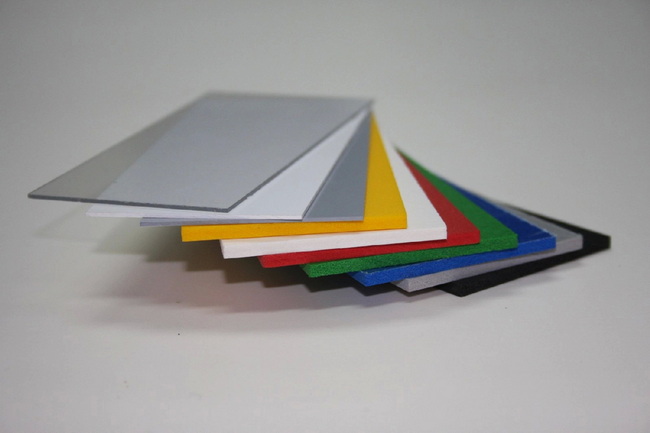
PVC foam board is a lightweight structural core used in sandwich composites for hulls, decks, bulkheads, and superstructures. Its closed-cell structure provides excellent water resistance, low resin uptake, and a high shear and compression strength-to-weight ratio.
Marine benefits of PVC foam board include:
- Very low water absorption, preventing swelling or rot.
- High shear and compression strength for stiff, load-bearing panels.
- Thermoformable and CNC-machinable for complex curves and custom shapes.
- Dimensional stability under temperature changes and moisture, supporting precise fits.
PVC foam cores are widely used in yachts, fishing boats, motorboats, and offshore structures to improve fuel efficiency and comfort by reducing weight while maintaining structural integrity.
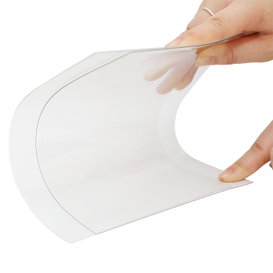
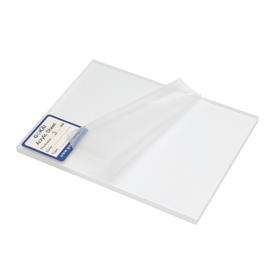
Acrylic is a transparent plastic with high optical clarity and good weatherability, ideal for windows, windshields, hatches, and skylights where visibility is critical. It offers excellent UV resistance and retains its clarity over time, provided proper grades are chosen and edges are finished correctly.
It is lighter and more impact-resistant than glass and is relatively easy to thermoform for curved marine windshields. However, it can scratch more easily than glass and requires appropriate cleaning practices to maintain a clear surface.
ABS is a tough, impact-resistant plastic often used for consoles, housings, covers, and interior trim parts that may face shocks and vibration. UV-stabilized grades or protective coatings are usually required for prolonged outdoor exposure.
PC+ABS blends combine the toughness of polycarbonate with processability and surface quality, giving high impact strength and good aesthetics for enclosures and control panels. These blends are best in covered or partially exposed areas and should use UV-stabilized grades in marine environments.
Engineering plastics such as ASA, polypropylene copolymers, and polyamides are also used selectively in marine applications.
- ASA offers excellent UV stability and color retention for exterior parts.
- UV-stabilized polypropylene copolymer provides good chemical resistance and low density for floats, containers, and buoys.
- Polyamides can provide high strength and fatigue resistance but need UV protection and careful management of moisture absorption.
Once you know your environment and load conditions, evaluate materials against the following critical factors.
Marine projects face continuous impacts, abrasion, and vibration, especially on hulls, docks, and working decks. Materials like HDPE and UHMWPE offer outstanding toughness and can handle repeated impacts without cracking. For sandwich structures, a high shear strength PVC foam core helps decks and hulls resist fatigue and delamination under cyclic loading.
Closed-cell PVC foam and marine HDPE are naturally hydrophobic and have low water absorption, ensuring stability and long-term buoyancy even under continuous immersion. This is critical for cores, buoyancy modules, and subsea housings where water ingress would add weight and risk failure.
Resistance to fuels, oils, cleaning agents, and marine chemicals reduces surface cracking and property loss over time. Many marine-grade PVC foams and HDPE boards are engineered to withstand common marine fluids with minimal degradation.
Coastal and offshore applications experience intense UV exposure, making UV-stabilized grades and additives essential. Materials such as ASA and specialized marine HDPE boards are formulated with stabilizers to maintain color and mechanical strength after years in the sun.
If you are using plastics not inherently UV-stable, specify UV-stabilized grades or plan for protective coatings, paints, or coverings to extend service life.
Weight reduction is a major driver in modern boat and yacht design because lower displacement improves speed, efficiency, and handling. PVC foam cores in composite sandwich panels provide high stiffness and strength at a fraction of the weight of solid laminates or traditional wood cores.
For non-core components, plastics like HDPE and polypropylene also offer a favorable strength-to-weight ratio compared with many metals, especially when corrosion protection for metals is factored in.
Ease of cutting, machining, bonding, and thermoforming strongly influences total project cost. PVC foam and HDPE sheets can be CNC machined and thermoformed to fit complex designs, reducing manual labor and improving consistency.
True lifecycle cost includes not only material and installation but also maintenance, downtime, and replacement. Higher-performance marine plastics may cost more upfront yet significantly reduce repainting, corrosion repair, and structural failures over years of service.

One common challenge for designers is knowing when a PVC foam core is the right choice versus solid HDPE or solid PVC sheet. The answer depends on whether your part must act as a structural panel or as a solid, impact-focused component.
Use PVC foam board when:
- You are building hulls, decks, bulkheads, or superstructures in sandwich construction with fiberglass or carbon fiber skins.
- Weight reduction and stiffness are more important than through-thickness impact resistance.
- You need a core that can be easily thermoformed or CNC-cut to curved or three-dimensional geometries.
Use solid plastics such as HDPE, solid PVC, or ABS when:
- Components are exposed to direct impacts on docks, fenders, rub rails, and steps.
- You need solid sections for fasteners and hardware mounting.
- Parts will be frequently drilled, tapped, or mechanically reworked during service.
For many marine projects, optimal performance comes from combining a PVC foam core in large structural panels with solid HDPE or PVC parts for edges, inserts, and high-impact zones.
To move from theory to practice, use this simple six-step selection workflow for your next marine project.
- Map the environment: Document UV exposure, water type (fresh, brackish, salt), immersion level, and temperature range for each component.
- Define loads and safety factors: Estimate static loads, impact events, vibration, and regulatory or class requirements, if any.
- Shortlist materials: Start with marine-grade HDPE, PVC or PVC foam, and acrylic for most common use cases, and add ASA, PP, or ABS as needed.
- Compare property data: Check density, tensile and shear strength, impact strength, water absorption, and recommended operating temperatures from technical datasheets.
- Prototype and test: Fabricate sample parts or panels and evaluate fit, finish, and performance under realistic conditions, including UV and salt spray where applicable.
- Optimize for production: Select materials and thicknesses that balance performance, fabrication complexity, and lifecycle cost for your production volume.
Following this structured process helps OEMs and boatbuilders move quickly while reducing the risk of costly redesign or in-service failure.
Marine plastics are increasingly scrutinized for their environmental impact, from production to end-of-life disposal. While the primary goal is safe, durable performance in harsh conditions, material choice also affects recyclability and waste management options.
Research on marine plastic pollution and UV-driven degradation shows that uncontrolled plastic waste can fragment into microplastics with long-term ecological effects. Choosing durable materials that resist premature fracture, implementing proper maintenance, and planning end-of-life routes such as dedicated recycling streams can help reduce the environmental footprint of marine projects.
Whenever possible, work with suppliers who can document material origins, offer take-back or recycling programs, or provide guidance on responsible end-of-life handling for marine plastic components.
| Material | Key Properties | Typical Marine Uses |
|---|---|---|
| HDPE marine board | High impact resistance, low water absorption, good chemical resistance, UV-stabilized grades available. | Cabinets, doors, steps, rails, deck hardware backing plates, dock components, and fenders. |
| Rigid PVC sheet | Good chemical resistance, dimensional stability, cost-effective, moderate impact strength. | Piping, cable trays, interior panels, topside covers, and seats. |
| PVC foam board | Closed-cell core, high strength-to-weight, low water absorption, thermoformable, CNC-machinable. | Composite hulls, decks, bulkheads, superstructures, buoyancy modules, offshore sandwich panels. |
| Acrylic (PMMA) | High optical clarity, good UV and weather resistance, lighter and tougher than glass. | Windows, windshields, hatches, skylights, clear instrument covers. |
| ABS / PC+ABS | Tough, impact-resistant, aesthetic surfaces; needs UV-stabilized grades or protection outdoors. | Consoles, housings, covers, interior trim, control panels. |
| ASA and PP copolymer | ASA: strong UV and weather stability; PP copolymer: low density, good chemical resistance. | Exterior trims, floats, containers, buoys, non-structural components. |
Beyond theory, the following practical tips help ensure you are confident in your final material decision.
Always evaluate physical samples of HDPE sheets, PVC foam boards, and glazing materials before finalizing your specification. Check stiffness, weight, machinability, and surface finish, and perform small-scale UV and saltwater tests if your application is critical.
When working with PVC foam cores, laminate small panels with your planned skins and test them under bending and localized compression to confirm stiffness and resistance to dings.
For professional marine projects, look for materials that comply with relevant standards and certifications such as DNV, ASTM, or ISO tests. Some structural PVC foams are certified to marine standards and tested for water absorption, compression strength, and long-term buoyancy performance at depth.
Documenting these certifications in your design file can support classification approvals and reassure clients that materials are suitable for their intended use.
Edges, joints, and fastener zones often see the highest stresses and are the first points of failure if not properly designed. For sandwich panels with PVC foam, design solid inserts or high-density core around fasteners, hinges, and hardware to avoid crushing and creep.
Ensure your chosen material can be repaired or replaced with reasonable effort. HDPE, for example, can be welded with appropriate equipment, while composites with PVC foam cores may require laminated repairs following established procedures.
Selecting the right marine plastic is one of the most important decisions you will make for the long-term success of your boat, dock, or offshore project. With clearly defined requirements and the right combination of HDPE, PVC foam board, acrylic, and other engineered plastics, you can achieve a lighter, stronger, and more durable design that stands up to harsh marine environments.
If you are planning a new build or upgrade, contact a professional marine plastic supplier or OEM partner to discuss your drawings, target performance, and fabrication needs. Request material samples and technical support, and use the six-step selection process outlined in this guide to choose the optimal marine plastic solution for your project with confidence.
Contact us to get more information!
Marine-grade HDPE and composite panels using PVC foam cores are widely used for decks because they provide good slip resistance, high impact strength, and low water absorption. The choice depends on whether you need a solid deck surface or a lightweight sandwich construction for maximum stiffness.
Yes, closed-cell PVC foam board is engineered as a structural core with high shear and compression strength for hulls, decks, bulkheads, and even deep-sea buoyancy modules when correctly designed and laminated. Matching density, thickness, and skin materials to the load case is critical for safe performance.
Choose UV-stabilized grades of HDPE, PVC, ABS, and PC+ABS, or select inherently UV-resistant materials such as ASA and marine-rated acrylic. In high-UV environments, coatings, paints, or physical shading can further reduce surface degradation and color fading.
Many single-polymer products, such as HDPE boards and some PVC materials, can enter established plastic recycling streams when properly sorted and cleaned. Composite parts using reinforced skins and foam cores are more challenging to recycle but can sometimes be repurposed, mechanically processed, or sent to specialized facilities.
Start by mapping your environment and mechanical requirements, then shortlist likely materials such as HDPE, PVC foam, and acrylic based on proven marine applications. Compare datasheet properties, request samples, and prototype critical parts to validate performance before committing to full-scale production.
1. https://www.acmeplastics.com/content/a-guide-to-choosing-the-right-marine-plastic-for-your-project/
2. https://www.acplasticsinc.com/informationcenter/r/marine-plastic-varieties
3. https://www.piedmontplastics.com/blog/marina-plastics
4. https://lep.co.nz/materials-plastics-selection-guide/hdpe-marine-board/
5. https://sky-composites.com/news/pvc-foam-core-for-boat-builders/
6. https://gems-mfg.com/choosing-the-right-plastic-materials-for-marine-applications-uv-resistance-saltwater-durability-and-mechanical-performance/
7. https://totalplastics.com/blog/marine-plastics-riding-the-wave/
8. https://www.pvc-foam.com/custom-shaped-structural-pvc-foam-for-marine-applications-high-performance-buoyancy-solution.html
9. https://www.pvc-foam.com/what-is-marine-foam-board-used-for.html
10. https://www.curbellplastics.com/product-category/material/hdpe/marineboard-hdpe/
11. https://www.sciencedirect.com/science/article/pii/S0025326X25007465
12. https://www.sciencedirect.com/science/article/pii/S0956053X25006324
13. https://www.intelmarketresearch.com/marine-plastic-recycling-market-7487
14. https://www.fibermax.eu/pvc-foam.html