Shanghai Gokai Industry Co,.Ltd.
Call Us: +86-18918606548
Call Us: +86-18918606548
- Product Name
- Product Keyword
- Product Model
- Product Summary
- Product Description
- Multi Field Search
Views: 222 Author: Gokai Publish Time: 2026-06-03 Origin: Site


Content Menu
● What This Guide Covers (and Who It's For)
● Why Plastics Dominate Modern Signage
● Core Plastics Used in Signage Today
>> Acrylic Sheet: Premium Clarity for Brand‑Forward Signs
>> Polycarbonate: Extreme Impact and Safety
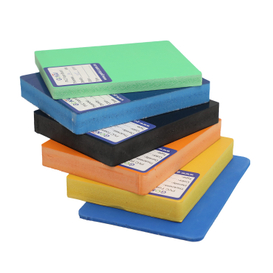
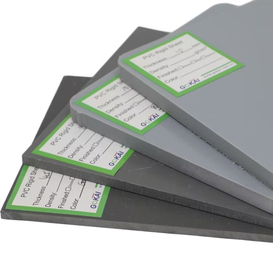
>> PVC Foam Sheet: Lightweight and Cost‑Effective Versatility
>> Aluminum Composite Panel (ACM/ACP): Structural Strength for Long‑Term Use
● Other Common Signage Plastics (and When to Use Them)
● Real‑World Applications: How Professionals Actually Choose
>> Election and Campaign Signs
>> Highway and Traffic‑Related Signage
>> Wayfinding and ADA‑Compliant Systems
>> Gas Station and Retail Forecourt Signs
● How to Choose Between Acrylic, PVC Foam Sheet, and ACP/ACM
>> Practical Material Selection Guide
● Expert Tips for OEM and Global Sourcing (Gokai Perspective)
● Best Practices for Signage Material Selection
● Call to Action: Get OEM‑Quality Sheet Materials for Your Next Sign Project
● Frequently Asked Questions (FAQ)
Designing signage today is no longer just about "what looks good." As someone who has worked with sign makers, brand managers, and industrial buyers across multiple markets, I see the same pattern again and again: the material you pick for your sign often determines whether it becomes a high‑ROI asset… or an expensive replacement job a year later.
In this guide, I'll walk through the most important plastics used in signage—focusing on acrylic sheet, PVC foam board, and aluminum composite panel (ACP/ACM)—and show how professional sign manufacturers actually choose between them in real projects. [theinsightpartners]

This article is written for:
- Commercial sign shops and print providers
- Brand and facility managers
- International buyers sourcing signage materials
- OEMs and distributors who need consistent sheet quality
You will learn:
- The core role of plastics in modern signage
- The strengths and limits of acrylic, PVC foam sheet, and aluminum composite panel (ACM/ACP) [theinsightpartners]
- How these compare with other common plastics like polycarbonate and fluted polypropylene
- Practical selection frameworks and real‑world examples from elections, gas stations, highways, and wayfinding projects
Throughout the article, I'll suggest where visuals (process photos, material cross‑sections, and comparison charts) can further boost engagement and clarity.
Plastics have become the default substrate for commercial and industrial signage because they combine three things that traditional materials struggle to offer at the same time: durability, design flexibility, and cost‑efficiency. [lairdplastics]
Key advantages that signage professionals care about:
- Weatherability: Engineered plastics resist UV, rain, and temperature swings better than many painted metals or wood. [lairdplastics]
- Lightweight handling: Installation is safer and cheaper when panels weigh a fraction of solid aluminum or glass. [theinsightpartners]
- Print and fabrication flexibility: Sheets can be cut, routed, thermoformed, and printed using UV, latex, or screen methods. [theinsightpartners]
From yard election signs to architectural wayfinding, material choice directly affects readability, maintenance cycles, and total cost of ownership for the end customer. [fingoweb]
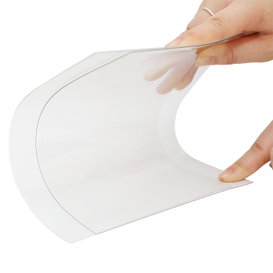
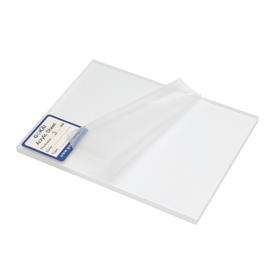
Acrylic is one of the most widely used plastics in signage, especially wherever brand image and visual impact matter. It delivers a glass‑like aesthetic without the weight or shatter risk.
Key properties for sign applications:
- High impact strength: Sign‑grade acrylic used in commercial signage can be up to ten times stronger than traditional acrylic and around thirty times stronger than glass with double strength, while remaining lighter and more economical than polycarbonate in many jobs.
- Optical clarity: Excellent light transmission makes acrylic ideal for backlit and edge‑lit graphics.
- Design versatility: Available in clear, opal, translucent, and solid colors; can be laser‑cut, CNC‑routed, and thermoformed.
Typical acrylic signage applications:
- Flat and pan‑faced exterior signs
- Channel letters for retail fascia
- Vacuum‑formed or thermoformed logo panels
- Interior branding panels and reception signs
From a UX perspective, acrylic is often the material of choice when the client's first requirement is "high‑end look" rather than "lowest price."
Polycarbonate occupies a more specialized niche, where impact resistance and safety are non‑negotiable.
Why sign engineers specify polycarbonate:
- High impact resistance: Much stronger than standard acrylic, maintaining performance even under repeated impact and temperature extremes.
- UV‑resistant grades: Engineered for outdoor exposure without rapid yellowing or cracking.
Typical applications:
- Thermoformed and flat sign faces for high‑traffic or vandal‑prone locations
- Electrical and non‑electrical signs that must withstand harsh weather or mechanical abuse
However, polycarbonate often comes at a higher material cost than acrylic, so it tends to be reserved for mission‑critical, safety‑driven installations.
PVC foam sheet (often called PVC foam board) is a workhorse material for both indoor and short‑to‑medium‑term outdoor signage.
Key properties:
- Rigid yet lightweight: The foamed core reduces weight, while the skin maintains sufficient rigidity.
- Uniform color and matte surface: Delivers a consistent appearance and minimizes glare in indoor environments.
- Easy to fabricate: Can be cut, routed, and printed directly; well‑suited to digital and screen printing.
Typical PVC foam sheet applications:
- Advertising and promotional displays
- Menu boards and POS displays
- Kiosks and exhibition panels
- Dimensional lettering and interior wayfinding
Most sign makers see PVC foam sheet as a high‑value option when the project demands a professional look but does not justify the cost of ACM or thick acrylic.
Aluminum Composite Panel (ACP/ACM) is a composite material consisting of a polyethylene core sandwiched between two aluminum sheets. This configuration delivers an excellent combination of rigidity, flatness, and low weight. [theinsightpartners]
Core benefits for sign projects:
- High dimensional stability: Panels remain flat with minimal warping, crucial for large‑format signage and architectural cladding. [theinsightpartners]
- Lightweight: Roughly half the weight of solid aluminum of comparable thickness, reducing structural load and installation effort. [theinsightpartners]
- Print and vinyl ready: Available in white, brushed, and matte finishes optimized for direct printing or film application. [theinsightpartners]
- Fire‑rated options: Brands like E‑PANEL™ and DIBOND® offer Class A fire performance for code‑sensitive projects. [theinsightpartners]
Common ACM/ACP applications:
- Outdoor building signs and corporate identity panels
- POP displays and shop fascias
- Wayfinding systems in transport hubs
- Architectural accents and cladding where branding and building envelope meet [theinsightpartners]
From an OEM supplier's standpoint, ACM sits at the intersection of architectural performance and signage functionality, making it ideal for global projects that require both aesthetics and compliance.
Beyond the three core materials above, sign professionals frequently specify other plastics when the project calls for specific performance or price points.
- Fluted polypropylene (coroplast): Lightweight, low‑cost sheet ideal for temporary and semi‑temporary signs such as election posters and short‑term promotions.
- Styrene and other commodity plastics: Often used for small indoor signs, shelf strips, and low‑stress displays.
These options rarely replace acrylic, PVC foam sheet, or ACM in long‑term brand signage, but they are invaluable tools for campaign and seasonal work.
Election campaigns demand maximum visibility at minimal cost.
Why fluted polypropylene wins here:
- Low weight and cost: Easy to mass‑produce, transport, and install across large geographic areas.
- Good weather resistance for short campaigns: Survives typical outdoor conditions for the duration of an election cycle.
PVC foam sheet and acrylic are usually reserved for headquarters signage or donor recognition panels, where durability and appearance matter more than unit cost.
Most permanent highway signs still rely on thick aluminum, but plastic plays a growing role in supplementary and temporary signage.
Use cases for plastics:
- Temporary detour, construction, and event signage printed on fluted polypropylene or other lightweight plastics
- Information signs that pair durable plastic substrates with high‑performance reflective vinyl films
In these environments, clarity, safety, and legibility under poor visibility often trump purely aesthetic considerations.
Wayfinding has evolved into a specialized discipline addressing accessibility, brand consistency, and user comfort in complex spaces like airports and hospitals. [geminimade]
Material selection trends:
- Acrylic sheets: Widely used for interior and exterior wayfinding plaques, thanks to durability and compatibility with tactile and braille elements.
- Foam sheet and expanded PVC: Common for interior directories and modular systems where frequent updates are required.
- Aluminum composites: Preferred for exterior wayfinding that doubles as architectural signage.
From a UX perspective, the goal is to create high‑contrast, easy‑to‑follow information that remains readable in different lighting and distances—a task where material finish (gloss vs. matte, glare control) is almost as important as typography.
Gas stations and roadside retail need signs that stay readable, branded, and illuminated in challenging environments.
Typical material mix:
- Acrylic or polycarbonate for illuminated price totems and canopy logos, paired with LED modules for 24/7 visibility.
- PVC foam sheet, polypropylene, or styrene for pump toppers and short‑term promotional panels.
Operators increasingly look at total cost of ownership, weighing the higher upfront cost of premium plastics against reduced maintenance, better energy efficiency with LEDs, and longer replacement cycles. [fingoweb]
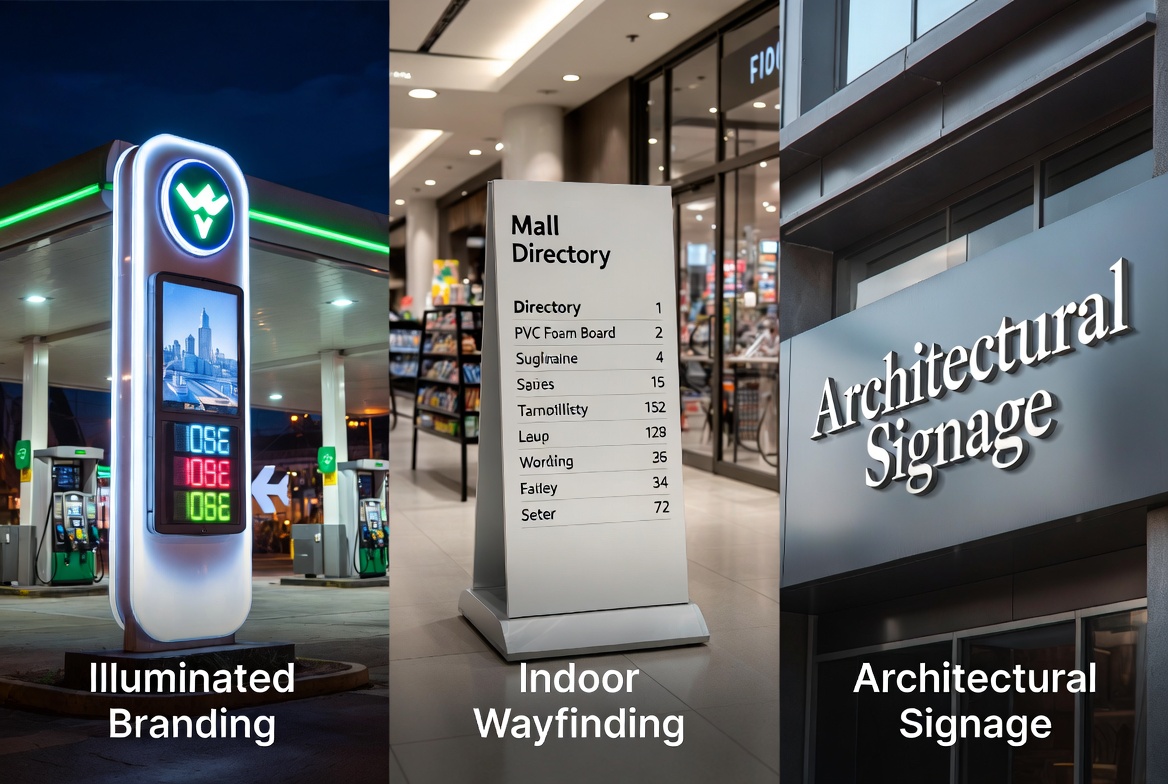
The table below summarizes core decision criteria sign professionals use when selecting a substrate.
| Criterion | Acrylic Sheet | PVC Foam Sheet | ACP / ACM Panel |
|---|---|---|---|
| Visual appearance | High‑end, glass‑like clarity, excellent for backlit signs | Matte, professional, ideal for indoor and mid‑term outdoor use | Architectural, metal‑like finish, very flat for large signs (theinsightpartners) |
| Durability | Strong and weather‑resistant; less impact‑resistant than polycarbonate | Good for indoor and some outdoor; not for extreme long‑term exposure | High structural stability, excellent for long‑term exterior signage (theinsightpartners) |
| Weight | Lighter than glass, heavier than PVC foam | Very lightweight, easy handling and installation | About half the weight of solid aluminum for similar stiffness (theinsightpartners) |
| Typical use cases | Channel letters, pan‑faced signs, premium branding | Displays, menu boards, kiosks, dimensional letters | Building signs, fascias, cladding, wayfinding systems (theinsightpartners) |
| Printability | Excellent for direct print and film application | Very good surface for digital and screen printing | Optimized versions (DIBOND®, Alumanate) for direct printing and vinyl (theinsightpartners) |
| Budget positioning | Mid to premium | Value / cost‑effective | Mid to premium, especially with branded ACM (theinsightpartners) |
In practice, many professional buyers maintain all three materials in their standard toolbox and choose according to:
1. Environment (indoor vs. outdoor, UV exposure, vandalism risk)
2. Lifespan (campaign vs. multi‑year installation)
3. Brand expectations (luxury vs. utilitarian)
4. Mounting and structural constraints (weight, wind load, surface flatness)
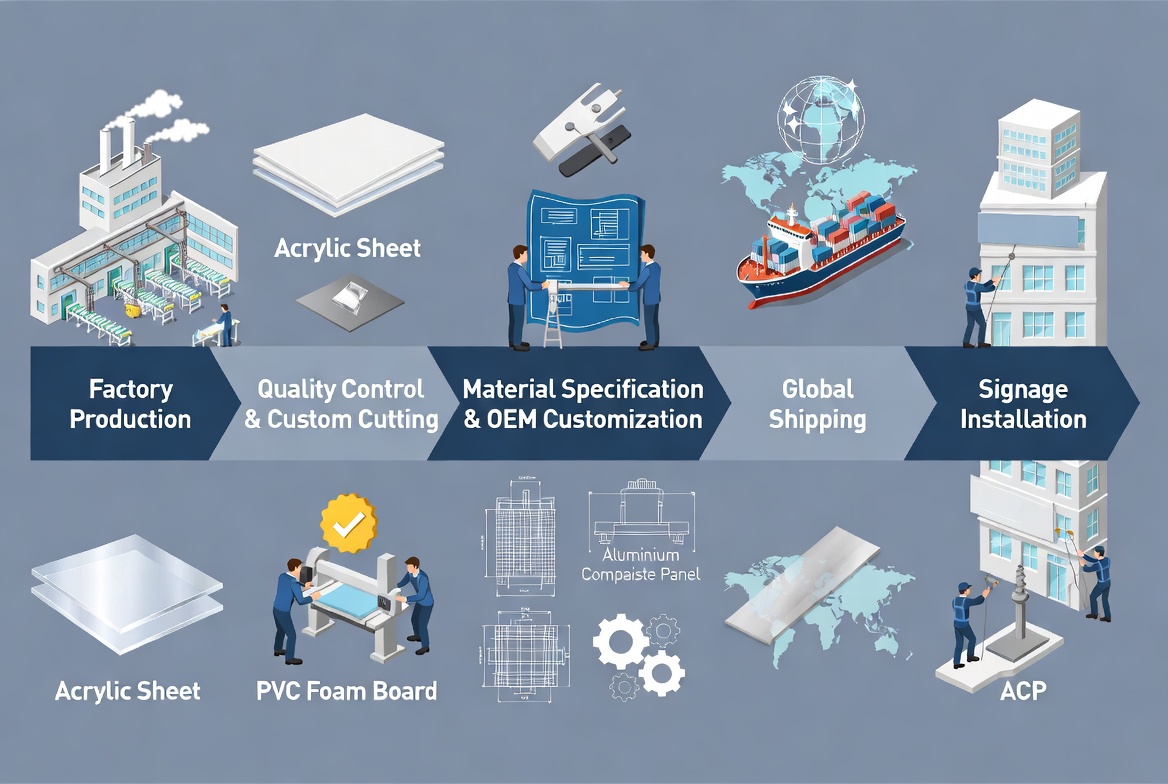
From the perspective of an OEM supplier like Gokai, which manufactures acrylic sheet, PVC foam board, and aluminum composite panel for global signage customers, the most successful projects share a few patterns:
- They start with clear technical specifications: sheet thickness, color, finish, fire performance, and printing method.
- They align substrate selection with end‑user expectations: a global retail brand rebranding 2,000 stores will prioritize consistency and color accuracy; a local election campaign will prioritize cost and speed.
- They use OEM capabilities such as cut‑to‑size, CNC routing, and OEM branding/packaging to streamline downstream fabrication and logistics.
This upstream clarity reduces rework for sign shops and ensures that the same material profile can be replicated reliably when the brand expands into new markets.
Even the best material will underperform if UX fundamentals are ignored. When planning a sign system, experienced designers evaluate:
- Legibility at distance: Contrast ratio, font weight, and surface finish (matte vs. glossy) should match viewing distance and lighting conditions.
- Glare and reflections: High‑gloss acrylic panels may need anti‑glare films or adjusted lighting in indoor environments.
- Maintenance reality: Materials in transportation hubs, industrial sites, or gas stations should be easy to clean and resistant to common chemicals and pollutants. [lairdplastics]
From user testing in wayfinding and retail, one consistent finding is that consistent material and finish across a location improves perceived quality and helps users trust the information presented. [geminimade]
If you are planning a new signage program—whether it is a national retail roll‑out, a series of gas station rebrands, or a municipal wayfinding upgrade—the right sheet material partner can significantly reduce risk and cost.
Gokai supplies acrylic sheet, PVC foam board, and aluminum composite panels tailored to signage applications, with OEM services for global customers, including cut‑to‑size production, color customization, and consistent export packaging.
To discuss your next project, request technical data sheets, or compare materials for a specific application, contact our team for a consultation and samples.
1. Is acrylic or polycarbonate better for outdoor illuminated signs?
Acrylic is often preferred when visual clarity and cost‑efficiency are priorities, while polycarbonate is chosen for high‑impact or vandal‑prone areas that demand maximum toughness.
2. Can PVC foam sheet be used permanently outdoors?
PVC foam sheet can perform well in many outdoor conditions, but for long‑term, high‑exposure installations, more dimensionally stable materials like ACM are typically recommended. [theinsightpartners]
3. When should I choose ACM over solid aluminum?
ACM offers similar surface appearance with much lower weight and improved flatness, making it ideal for large‑format signs, cladding, and branding panels where structural load and handling are concerns. [theinsightpartners]
4. What is the best material for election yard signs?
For cost‑sensitive, temporary campaigns, fluted polypropylene (coroplast) is widely used due to its low weight, easy installation with stakes, and adequate weather resistance over the campaign period.
5. How do I ensure color consistency across international signage projects?
Work with an OEM supplier that can standardize sheet color and finish, provide batch tracking, and coordinate with your printers' ink systems to minimize visible differences between regions over time. [theinsightpartners]
1. Laird Plastics – "Plastics Used in Signage: Practical Applications for Plastic Signage" (accessed 2026‑06‑02).
2. Laird Plastics – "Aluminum Composite Panels (ACM) — Lightweight, Durable, Architecturally Versatile Composite Panels" (accessed 2026‑06‑02). [theinsightpartners]
3. The Insight Partners – "Printed Signage Materials Market Trends, Size & Growth" (2024). [theinsightpartners]
4. Gemini – "Signage Trends for Sign Businesses in 2026" (2025). [geminimade]
5. Fingoweb – "Top 6 Digital Signage Trends for 2026" (2026). [fingoweb]
6. Signworld America – Product catalog for signage substrates (acrylic, PVC sheets, foam board, ACP). [signworldamerica]